
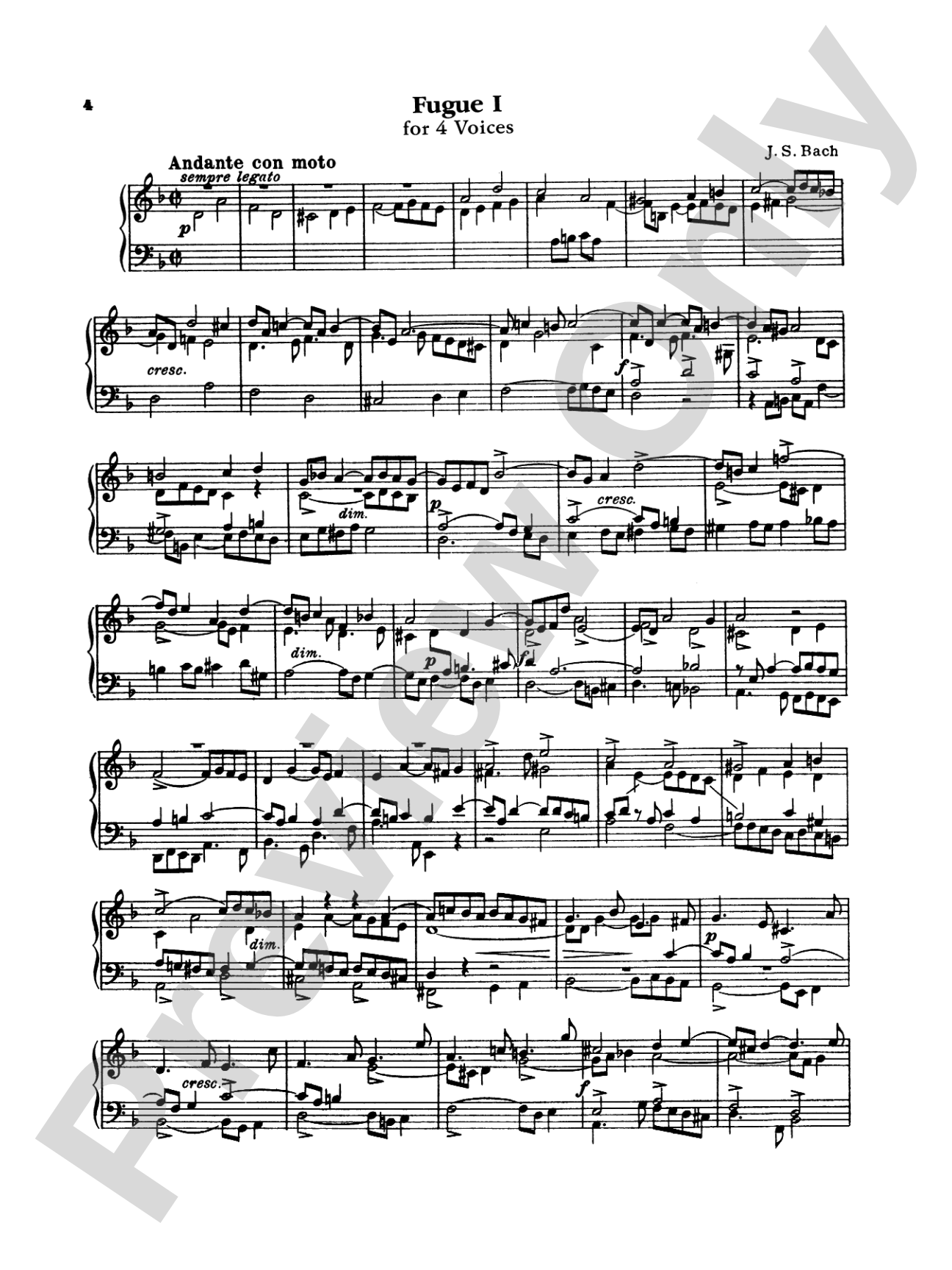
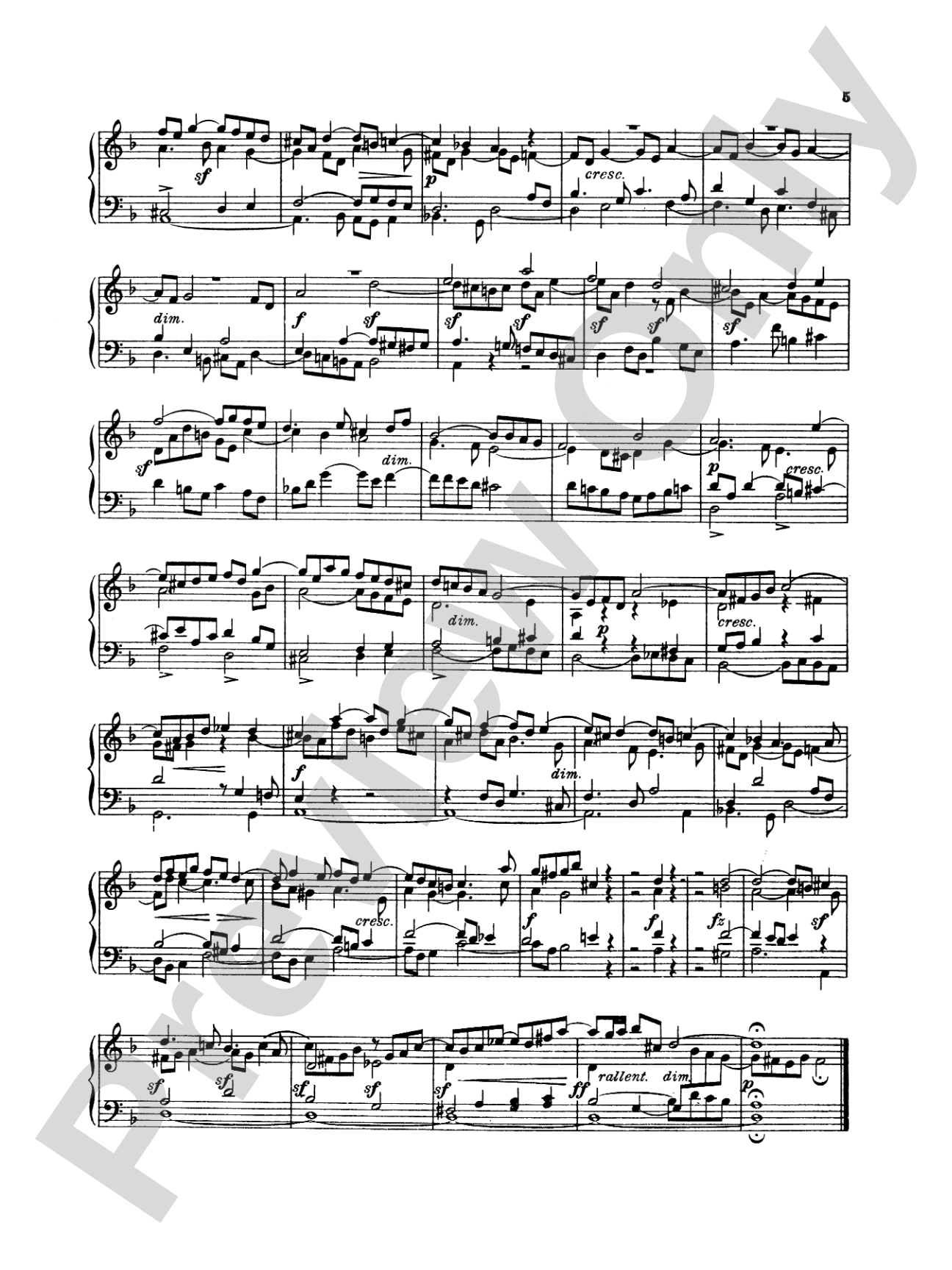

Bach: The Art of the Fugue (Ed. Carl Czerny): Piano Book
By Johann Sebastian Bach / ed. Carl Czerny
Item: 00-PK-0002853

$11.99
Pickup currently not available
Buy Extra Parts (Digital PDF Download)
Parts Added to Cart!
Related Items
The Art of the Fugue: Piano Book |
$11.95
|
View |
Description
The Art of Fugue, BWV 1080, is an incomplete work by Johann Sebastian Bach. It was most likely started at the beginning of the 1740s, if not earlier. "The governing idea of the work", according to Christoph Wolff, is "an exploration in depth of the contrapuntal possibilities inherent in a single musical subject." 83 pages.


Don't just read it, hear it, play along with it, and watch your students grow with it. In MakeMusic Cloud, Bach: The Art of the Fugue (Ed. Carl Czerny): Piano Book comes alive with professional accompaniment, adjustable tempo, and built-in practice tools that turn solo practice into real progress.
Open in the Player
Jump straight in and assign it today.
Start Your Free Trial
Open this title and explore the full library in minutes.
Sample Audio
No sample audio found.
Sample Video
No sample videos found.
Additional Details
Series:
Kalmus Edition
Publisher:
Alfred Music
Page Count:
88
SKU:
00-PK-0002853
More about this title
About the Composer: Johann Sebastian Bach
Johann Sebastian Bach (1685, 1750) was a German composer and organist whose work synthesized the musical languages of Northern and Southern Europe into a unified whole. His output spans nearly every genre except opera, and his mastery of counterpoint and fugal writing set the technical standard that composers still study today.
Bach's later works, composed during his final years at St. Thomas Church in Leipzig, represent his most abstract and experimental thinking. The Art of the Fugue stands as perhaps his most systematic exploration of what a single theme could yield when subjected to every contrapuntal technique available to him.
Why we love this
The Art of the Fugue stands as Bach's most systematic exploration of what one musical idea can become. Czerny's edition makes this intellectually rigorous work accessible to pianists without sacrificing the depth of Bach's original conception, allowing serious students to engage with counterpoint in its most distilled and profound form.
What to expect
Intellectual architecture rendered as sound. Each fugue unfolds with mechanical precision yet breathes with unmistakable musical intention. The experience is meditative and rigorous at once: you follow a single theme through transformations that feel inevitable in retrospect but genuinely generative in the moment.
Who it's for
Advanced pianists and music students with solid contrapuntal understanding who want to deepen their grasp of Bach's compositional logic. This edition also serves composers, music theory students, and educators who teach fugue through direct encounter with Bach's most systematic examples.
How to get the most out of it
- Approach each fugue as a study in voice independence rather than a single melodic line; map the entries of the subject across all four voices before beginning, noting where each voice drops out or becomes accompaniment.
- Observe rests and silence scrupulously; they create the architecture that separates contrapuntal strands and prevent the texture from becoming opaque.
- Differentiate articulation by voice. A subject stated in the soprano needs different weight than the same subject in the bass; clarity of line matters more than uniform legato.
- Practice slowly with the score visible; pencil in fingerings that allow smooth voice leading rather than optimal hand position, since Bach's counterpoint often demands counterintuitive fingering solutions.
How to use it
Feature a single fugue or pair of fugues on a recital alongside Bach's other keyboard works or Baroque repertoire from his contemporaries. This collection works best as a deep study piece rather than a full-program commitment; programming one complete contrapunctus demonstrates technical sophistication and offers the audience an intimate look at Bach's method.
Skills your students will build
- Tracking independent voices in dense textures
- Subject transformation and augmentation techniques
- Voice leading across four or more simultaneous lines
- Fugal form and harmonic progression
- Polyphonic fingering strategies