

Aya Ngena: TTB Choral Octavo
Traditional Zulu Folk Song / arr. Ruth Morris Gray
Item: 00-PO-0001754

$2.20
Minimum order quantity: 20 copies
Pickup currently not available
Related Items
Aya Ngena: SoundTrax Digital Audio Download |
$27.99
|
View | |
Aya Ngena: SATB Choral Octavo |
$2.20
|
View | |
Aya Ngena: 3-Part Mixed Choral Octavo |
$2.20
|
View | |
Aya Ngena: SSA Choral Octavo |
$2.20
|
View | |
Aya Ngena: SATB Choral Octavo |
$2.20
|
View | |
Aya Ngena: 3-Part Mixed Choral Octavo |
$2.20
|
View | |
Aya Ngena: SSA Choral Octavo |
$2.20
|
View | |
Aya Ngena: TTB Choral Octavo |
$2.20
|
View | |
Aya Ngena: Choral Octavo SoundTrax CD |
$27.99
|
View |
Description
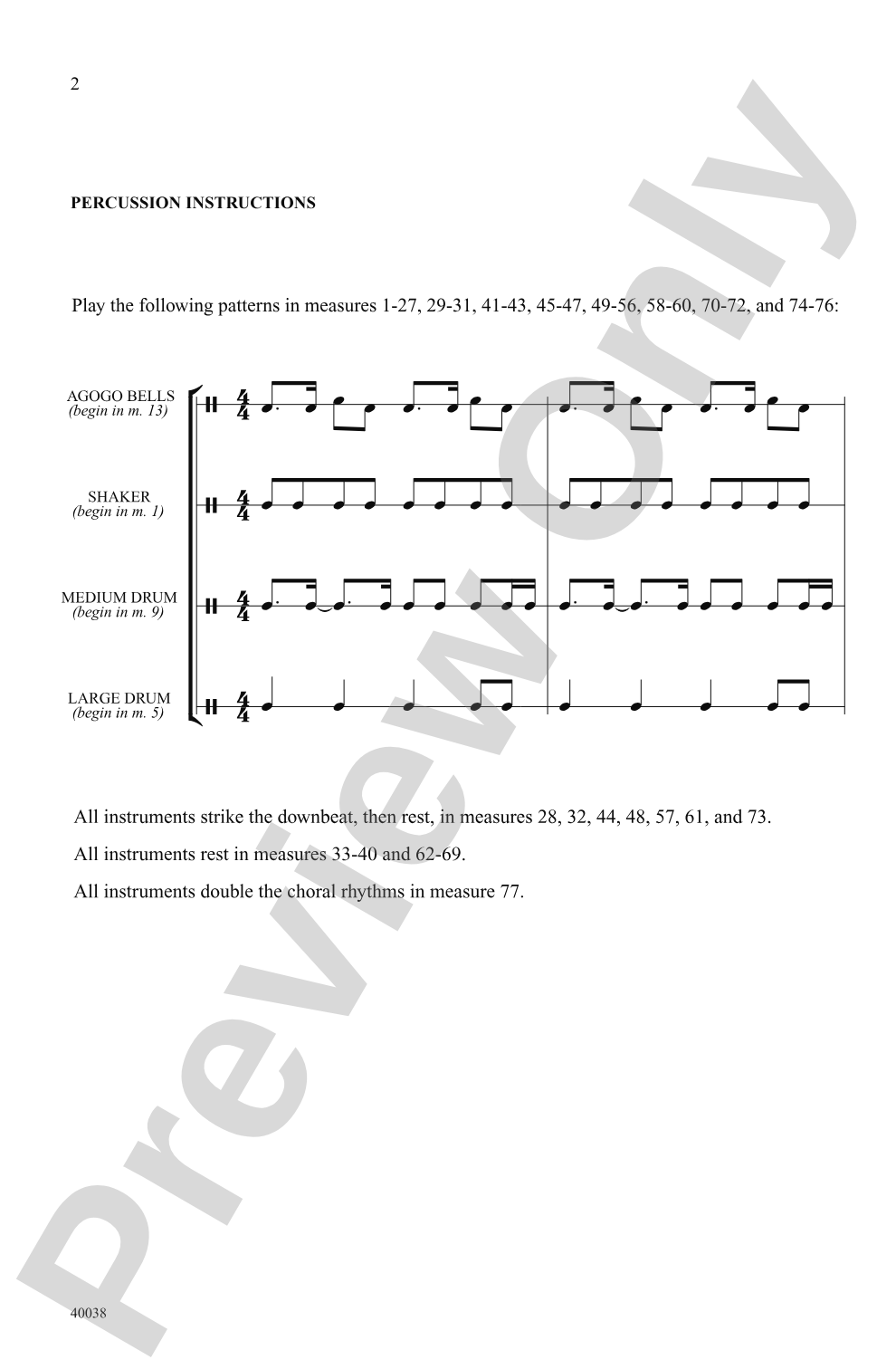
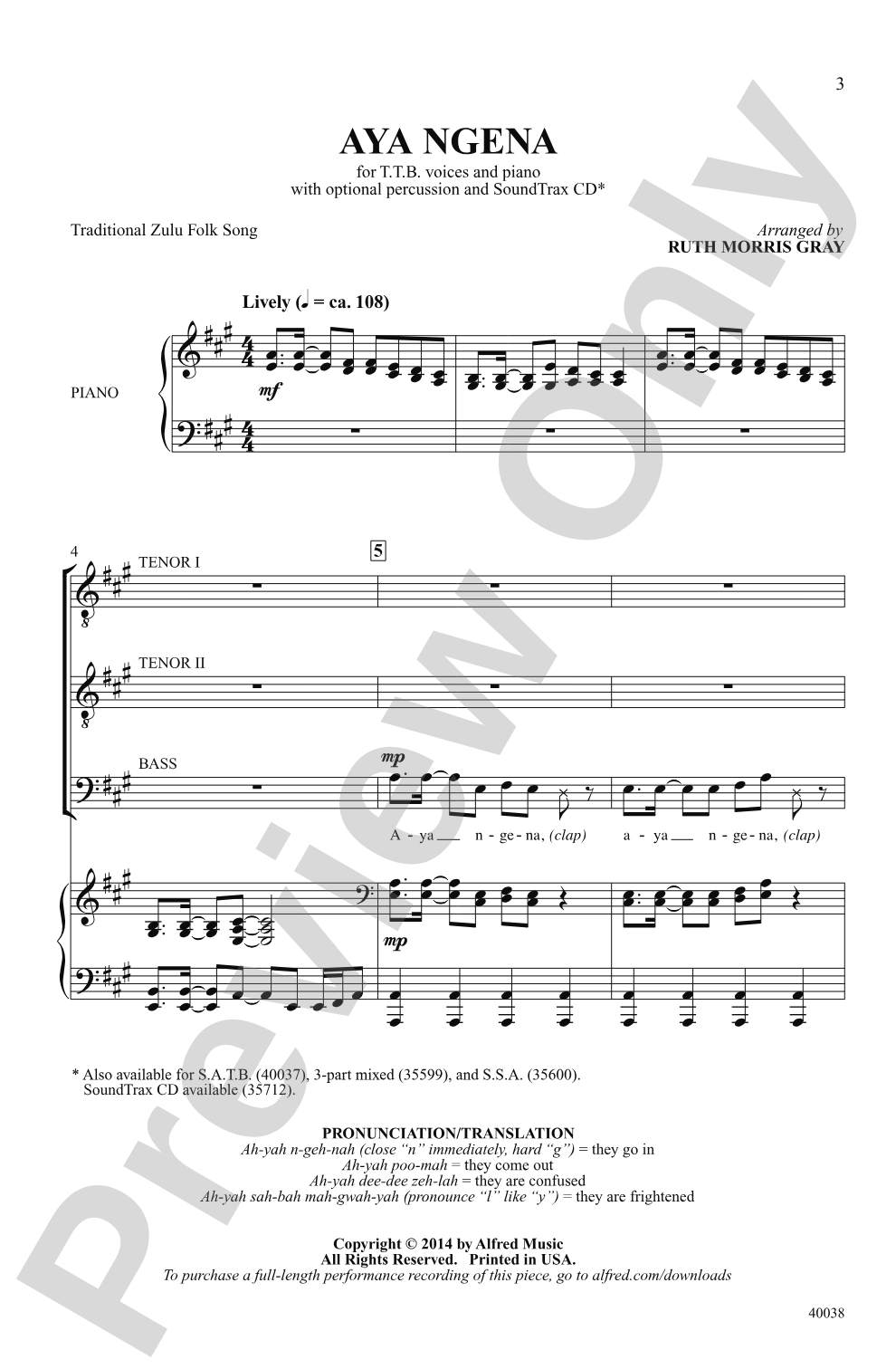
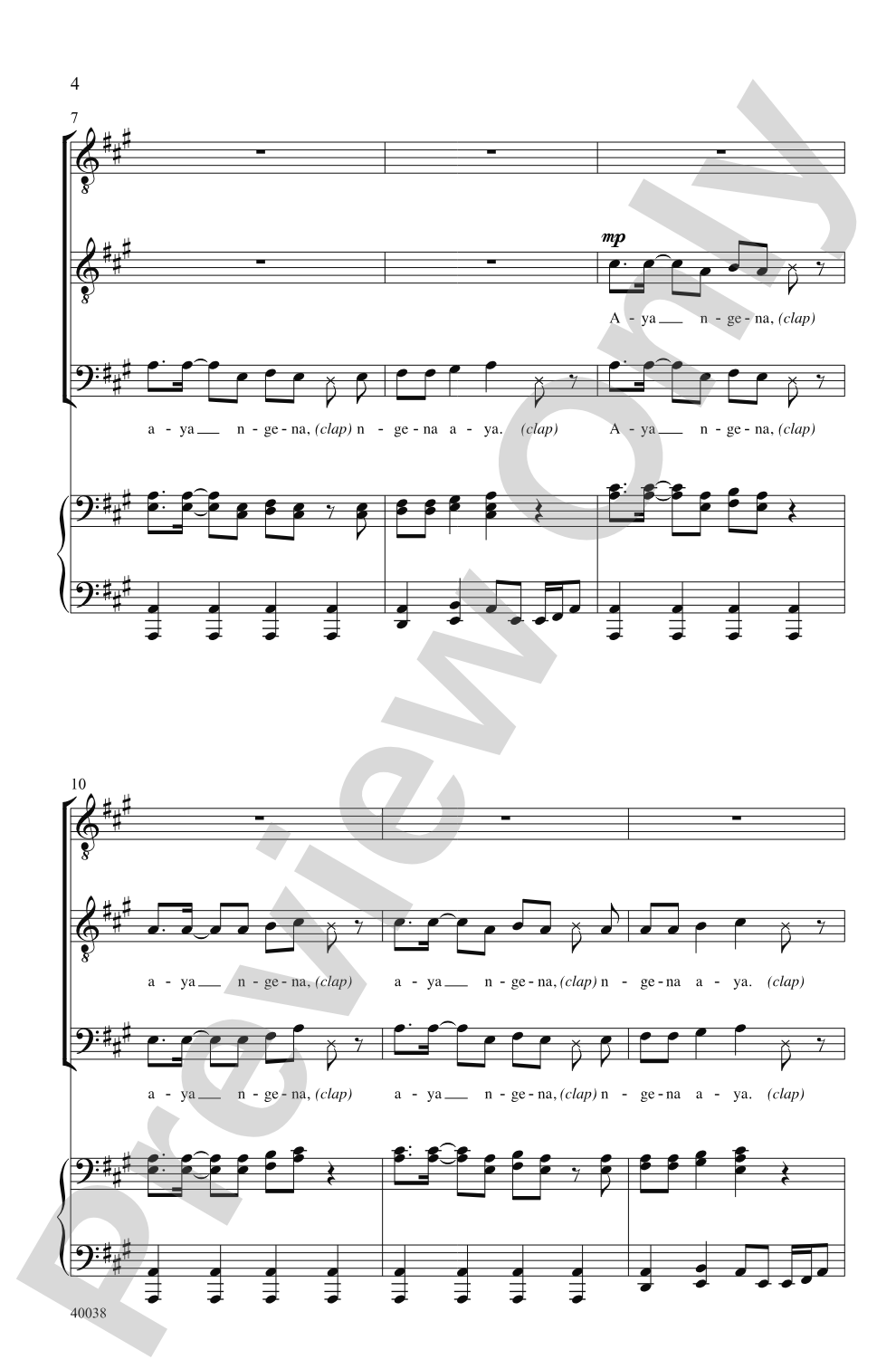
A popular choice for three-part groups, this authentic Zulu folk song is newly available for SATB and men's choirs. The rhythmic choral parts are routinely punctuated by brief solos and joyful handclaps. Add optional African percussion for even more fun. This title is available in Music Prodigy.


Don't just read it, hear it, play along with it, and watch your students grow with it. In MakeMusic Cloud, Aya Ngena: TTB Choral Octavo comes alive with professional accompaniment, adjustable tempo, and built-in practice tools that turn solo practice into real progress.
Open in the Player
Jump straight in and assign it today.
Start Your Free Trial
Open this title and explore the full library in minutes.
Sample Audio
1
Audio File
--:--
0:00
0:00
Sample Video
No sample videos found.
Additional Details
Series:
Alfred Choral Designs
Publisher:
Alfred Music
Page Count:
16
SKU:
00-PO-0001754
More about this title
About the Arranger: Ruth Morris Gray

Ruth Morris Gray brings two decades of choral direction to her work as Director of Choirs at Rosemead High School in California, where she has shaped singers since 2004. Her compositional output spans over 100 published works across multiple voicings and styles, grounded in formal training that includes degrees in piano performance and composition from Biola University and UC Santa Barbara, plus a California Single Subject Music Credential.
Beyond the rehearsal room, Gray's life reflects her curiosity and love of movement. She swims, travels internationally, reads widely, and cycles regularly with her husband. This blend of artistic discipline and adventurous spirit informs her approach to arranging world music for student choirs.
Why we love this
Gray's arrangement captures the infectious energy of this Zulu song while keeping the writing singable and dramatically engaging for TTB singers. The interplay between full chorus and featured solos, combined with optional handclaps and African percussion, gives singers genuine ownership of an authentic cultural piece. Directors will appreciate how much personality lives in just 16 pages.
What to expect
Aya Ngena radiates joy and movement. The rhythmic urgency of the choral writing and the call-and-response structure create an almost irresistible forward motion, while the optional percussion and physical elements (handclaps, staging) invite singers to inhabit the cultural roots of the music rather than simply perform it.
Who it's for
TTB choirs and three-part male ensembles looking for repertoire that energizes and educates. This title works equally well for high school choirs seeking authentic multicultural material and community or church groups wanting something beyond traditional Western sacred music.
How to get the most out of it
- Treat the solo passages as opportunities for students to step forward individually. Even if you rotate roles, those moments of exposure build confidence and clarify the call-and-response tradition embedded in the piece.
- Shape the rhythmic figures with precision. Handclaps work best when they're crisp and synchronized; consider a few rehearsal minutes devoted entirely to that groove, separate from singing.
- If you add African percussion (djembe, talking drum, shakers), introduce it gradually. Start with your singers owning the rhythm fully, then layer instrumentation so it enhances rather than overwhelms the vocal lines.
- Use the recorded accompaniment early in rehearsal to lock the harmonic foundation, then gradually reduce dependence so singers internalize the parts.
How to use it
This piece belongs in a concert that celebrates cultural diversity and gives your choir permission to make sound, move, and celebrate together. It pairs well with other world music selections or can stand alone as an energetic anchor in a festival or competition set. Consider programming it mid-set where its infectious rhythm can lift the energy of the room.
Skills your students will build
- Singing syncopated rhythmic patterns in three-part harmony
- Responding to call-and-response vocal structure
- Executing ensemble hand percussion and rhythmic coordination
- Integrating basic movement and staging with singing
- Building cultural literacy through authentic world music repertoire