

Ave Maria: SSA Choral Octavo
(Op. 52, No. 6)
Music by Franz Schubert / arr. Russell Robinson
Item: 00-PO-0005721
$2.05
Minimum order quantity: 20 copies
Pickup currently not available
Description
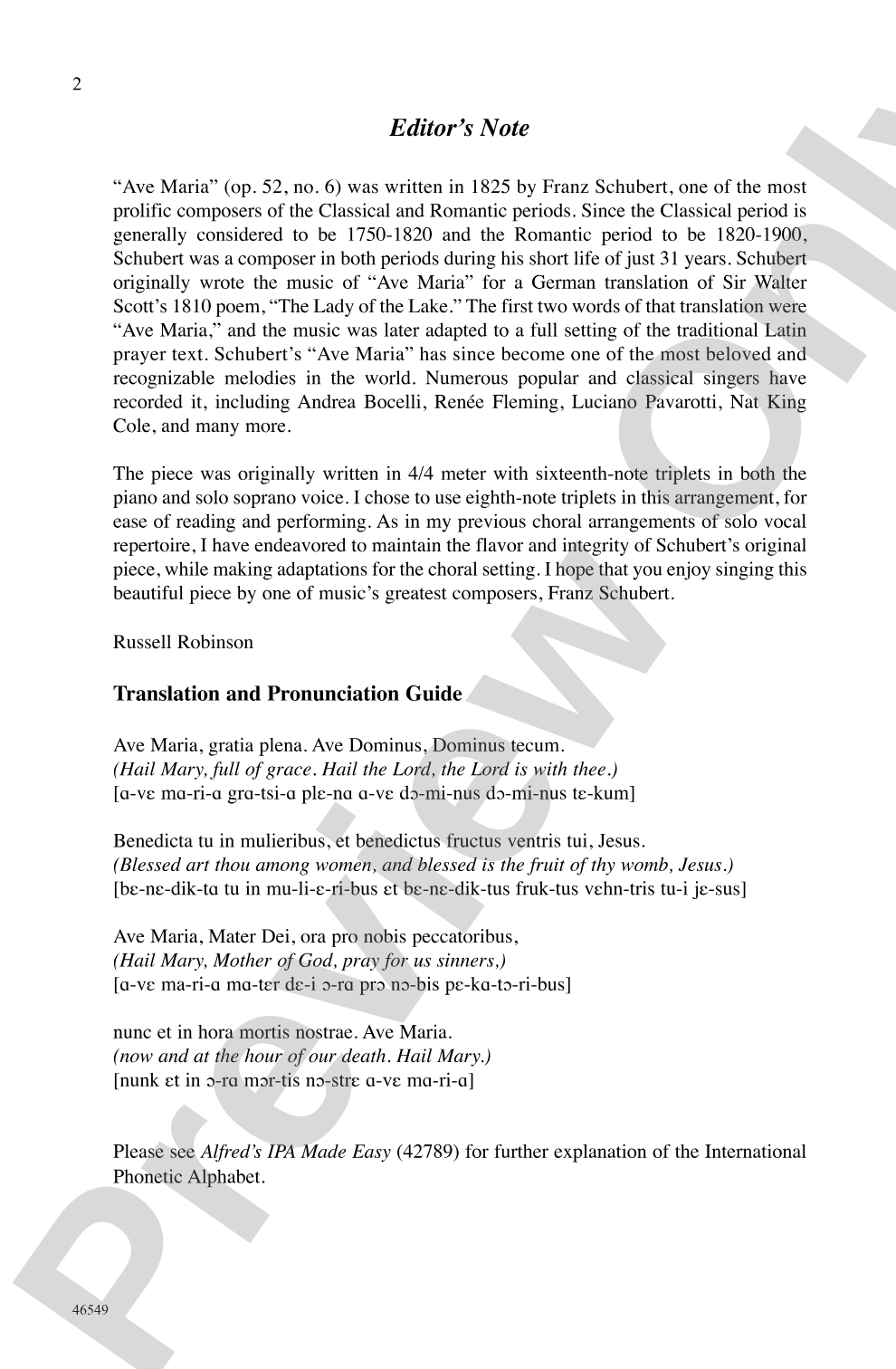
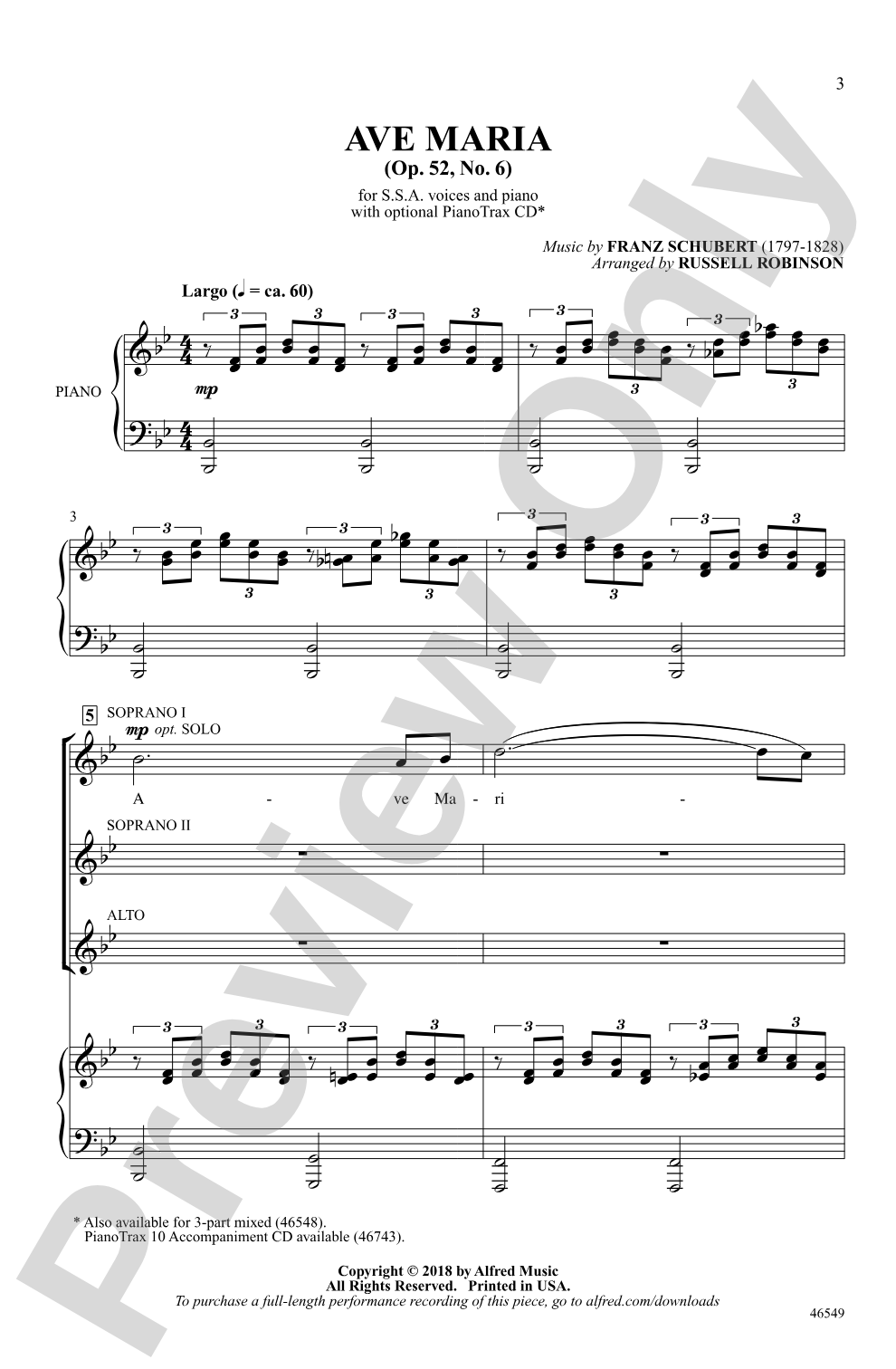
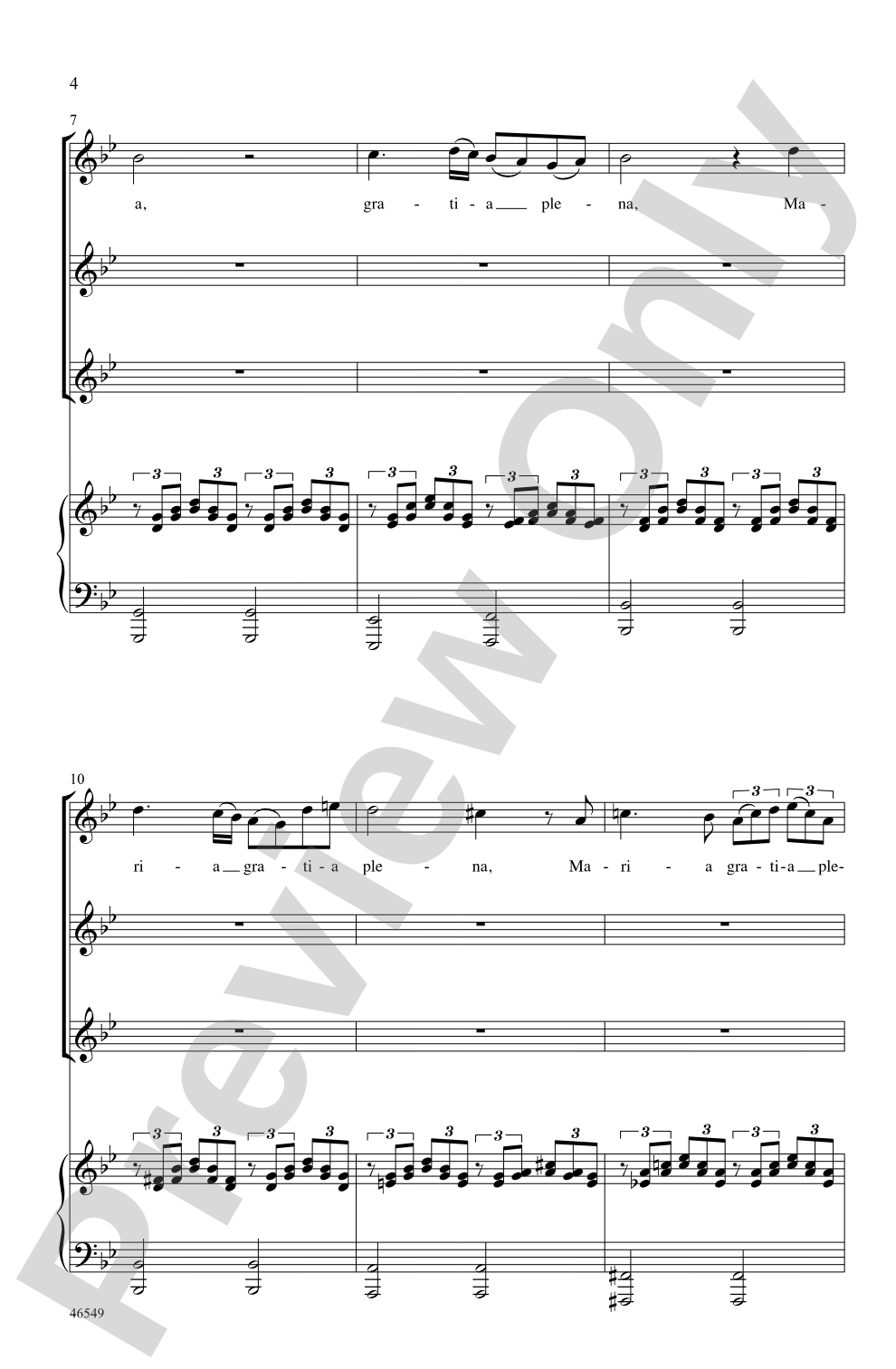
Presenting one of Franz Schubert's masterpieces, skillfully arranged for developing choral groups. An elegant combination of sectional features and homophonic choral texture, this arrangement allows conductors to work on both healthy singing technique and ensemble skills. Sensible voice leading enables beautiful intonation and blend.


Ave Maria: SSA Choral Octavo isn't in MakeMusic Cloud just yet...but it could be. Let us know you'd like to see it, and you'll help shape what comes next. In the meantime, start a free trial and dive into thousands of interactive titles your students can play along with today.
Request This Title
Tell us you want it.
Start Your Free Trial
Explore everything that's ready to play right now.
Sample Audio
1
Audio File
--:--
0:00
0:00
Sample Video
No sample videos found.
Additional Details
Series:
Alfred Choral Designs
Publisher:
Alfred Music
Page Count:
12
SKU:
00-PO-0005721
More about this title
About the Composer: Franz Schubert
Franz Schubert (1797-1828) was an Austrian composer who bridged the Classical and Romantic eras, leaving behind nearly a thousand works despite his brief life. His gift for melody and harmonic innovation shaped the development of the Lied, chamber music, and symphonic forms that continue to define the repertoire today.
Schubert's sacred vocal music occupies a unique space in choral literature. His Ave Maria stands as one of the most widely performed pieces in choral music, prized for its spiritual depth and accessibility across skill levels. Arrangers have long recognized how effectively his lyrical gift and clear harmonic language serve developing ensembles.
Why we love this
Russell Robinson's SSA arrangement captures the tenderness and spiritual resonance of Schubert's original while making it genuinely singable for developing choirs. The voice leading is transparent enough that your singers can hear themselves blend, yet the sectional scoring gives you moments to build textural variety and vocal independence. This is a piece that rewards careful work on intonation and phrasing without requiring technical gymnastics.
What to expect
Contemplative and intimate, with moments of luminous harmony that seem to lift the prayer skyward. Schubert's melody unfolds with an almost hymn-like grace, supported by rich but clear harmonic movement that feels both familiar and subtly complex. The piece invites singers into a meditative space rather than demanding virtuosity.
Who it's for
This octavo works well for developing treble choirs, high school choirs with strong sopranos and altos, and community ensembles preparing concert or festival repertoire. The SSA voicing accommodates groups with limited alto singers while maintaining harmonic integrity. It suits singers who are building confidence with four-part writing and musical maturity.
How to get the most out of it
- Approach the opening homophonic sections as opportunities to establish unified vowel shapes and consistent vibrato across all three parts. This foundation makes the sectional writing that follows much cleaner.
- Shape long phrases with gradual dynamic swell rather than obvious crescendo and diminuendo markings. Schubert's lyricism thrives on breath support that creates line without calling attention to technique.
- Balance the soprano line as the primary melodic voice while keeping alto and second soprano parts present and secure. Over-singing the melody undermines the sacred character.
- Attend to the text underlay carefully during rehearsal. Clear diction on sustained vowels supports both intonation and the emotional arc of the prayer.
How to use it
Program this as a concert centerpiece or contest piece that demonstrates your ensemble's control of blend and intonation. It pairs naturally with other sacred or art song arrangements, or as a contrasting rest point between more energetic repertoire. Consider it especially valuable for spring or holiday concerts where the spiritual quality deepens your program's arc.
Skills your students will build
- Sustaining long phrases with consistent breath support
- Matching vowel shapes across three parts for blend and intonation
- Balancing melody with harmonic parts in homophonic texture
- Singing through sectional voice leading without losing line
- Interpreting text expression in sacred music