

Ave Maria: 3-Part Mixed Choral Octavo
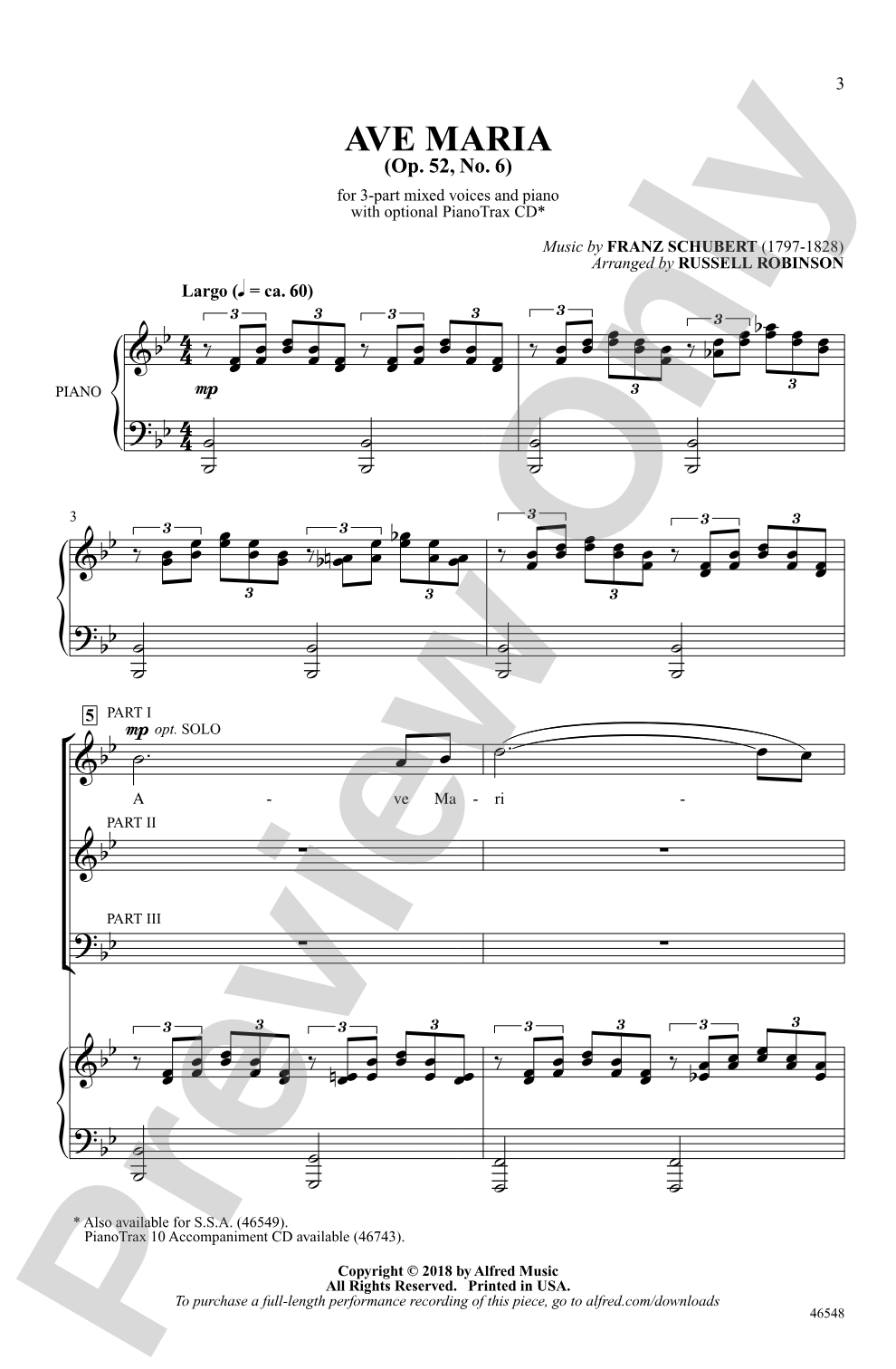
(Op. 52, No. 6)
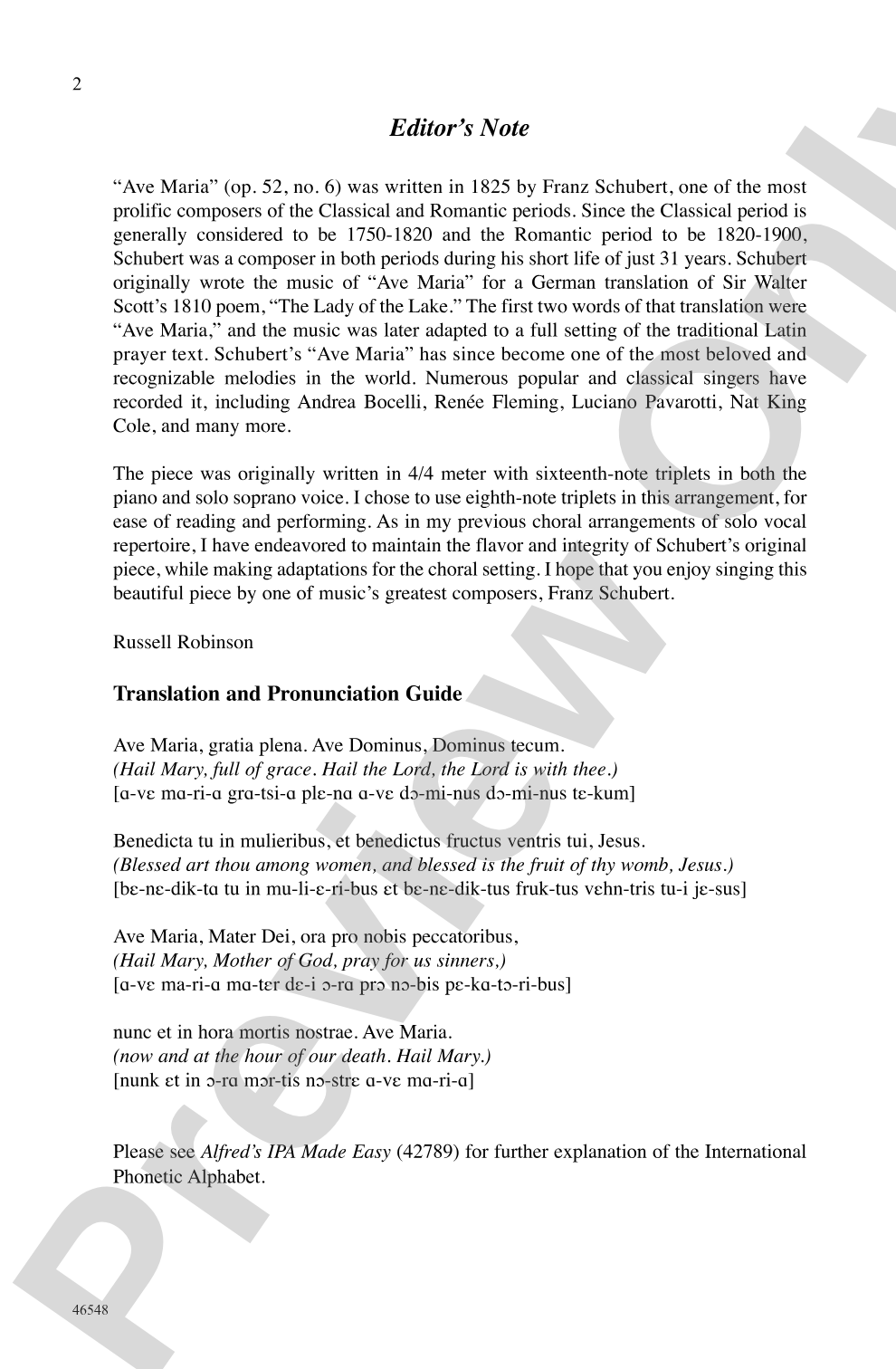
Music by Franz Schubert / arr. Russell Robinson
Item: 00-PO-0005720
$2.05
Minimum order quantity: 20 copies
Pickup currently not available
Description
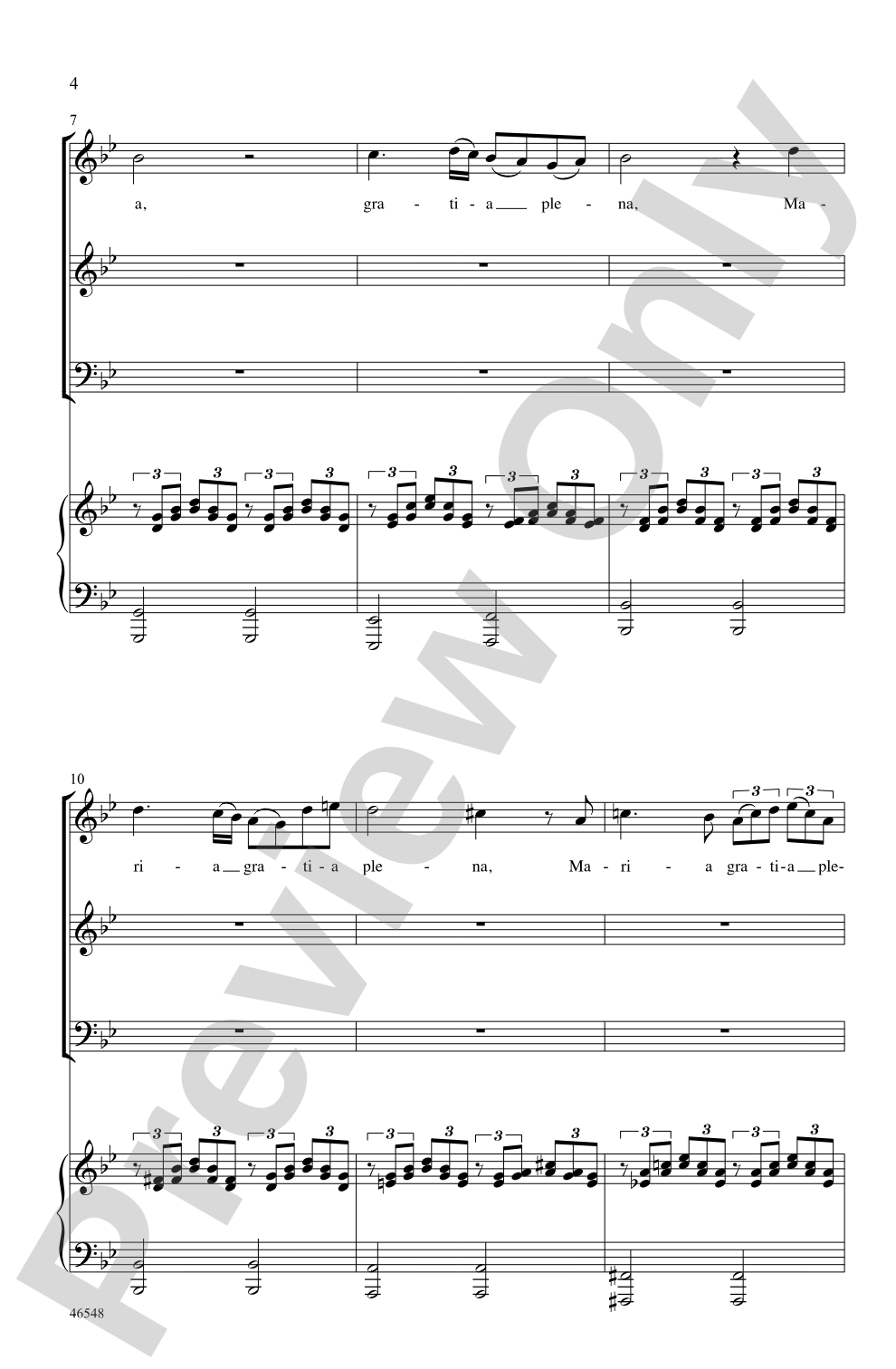
Presenting one of Franz Schubert's masterpieces, skillfully arranged for developing choral groups. An elegant combination of sectional features and homophonic choral texture, this arrangement allows conductors to work on both healthy singing technique and ensemble skills. Sensible voice leading enables beautiful intonation and blend.


Ave Maria: 3-Part Mixed Choral Octavo isn't in MakeMusic Cloud just yet...but it could be. Let us know you'd like to see it, and you'll help shape what comes next. In the meantime, start a free trial and dive into thousands of interactive titles your students can play along with today.
Request This Title
Tell us you want it.
Start Your Free Trial
Explore everything that's ready to play right now.
Sample Audio
1
Audio File
--:--
0:00
0:00
Sample Video
Additional Details
Series:
Alfred Choral Designs
Publisher:
Alfred Music
Page Count:
12
SKU:
00-PO-0005720
More about this title
About the Composer: Franz Schubert
Franz Schubert (1797-1828) composed over 600 works across nearly every musical genre, yet he never achieved the stable institutional position or widespread recognition that his talent deserved during his lifetime. His gift for melody was extraordinary; he could craft an unforgettable tune that felt both inevitable and surprising, which is nowhere more evident than in Ave Maria, one of the most performed sacred pieces in choral repertoire.
Schubert's sacred music emerged from a world of deep Catholic tradition in Vienna, yet his approach to religious texts was intensely personal and lyrical rather than strictly liturgical. Ave Maria in particular transcends denominational boundaries; its accessible beauty and emotional directness have made it a staple of choral concerts, weddings, and memorials worldwide. For music educators, Schubert represents the Classical-Romantic bridge, where formal structures meet profound expressive depth.
Why we love this
Russell Robinson's arrangement respects Schubert's original genius while opening the piece to developing choirs. The SAB voicing distributes the melodic and harmonic weight intelligently, creating moments where each part sings with real agency rather than padding the texture. This is the rare arrangement where students hear themselves contributing to something musically substantial, not simplified.
What to expect
A prayer set to music. The piece moves with quiet reverence and introspective calm, inviting rather than demanding emotional investment from singers and listeners alike. The arrangement preserves Schubert's gift for simplicity that feels profound, creating a moment of collective stillness in any concert.
Who it's for
Developing choral programs and contest-minded ensembles with a solid foundation in three-part voicing. This arrangement works beautifully for high school or community choirs seeking sacred repertoire that sounds substantial without requiring advanced soprano or bass range. Directors transitioning singers from unison or two-part music to mixed voicing will find the voice leading clear and singable.
How to get the most out of it
- Shape the opening phrases with subtle dynamic swells; resist the urge to sing it straight through at one volume. Let the natural arc of the melody guide you.
- Balance the sopranos' sustained notes against the inner voices' harmonic support. The altos and basses should be heard as equal conversational partners, not accompaniment.
- Attend to vowel consistency across sections when the voices move in homophonic passages. Precise vowel shapes will lock the blend instantly.
- Allow silence between phrases to breathe. This piece benefits from strategic pauses that let the reverent mood settle rather than rushing toward the final cadence.
How to use it
Program this as an anchor for a sacred or contemplative section of a concert, pairing it with other spiritually resonant works at a similar emotional temperature. It also serves as a natural opener for a program, settling an audience's attention immediately. Consider scheduling it for holiday concerts, memorial services, or contests where judges expect to hear a recognizable masterwork interpreted with care.
Skills your students will build
- Blending and balancing three independent voice parts with clear harmonic function
- Sustaining long phrases with controlled breath support and consistent vocal tone
- Singing pure vowels for intonation across SAB voicing
- Shaping melodic contour with subtle dynamic inflection rather than mechanical accent
- Reading and responding to sectional rehearsal markings and conducting gestures
- Understanding harmonic function in Classical-era sacred music