
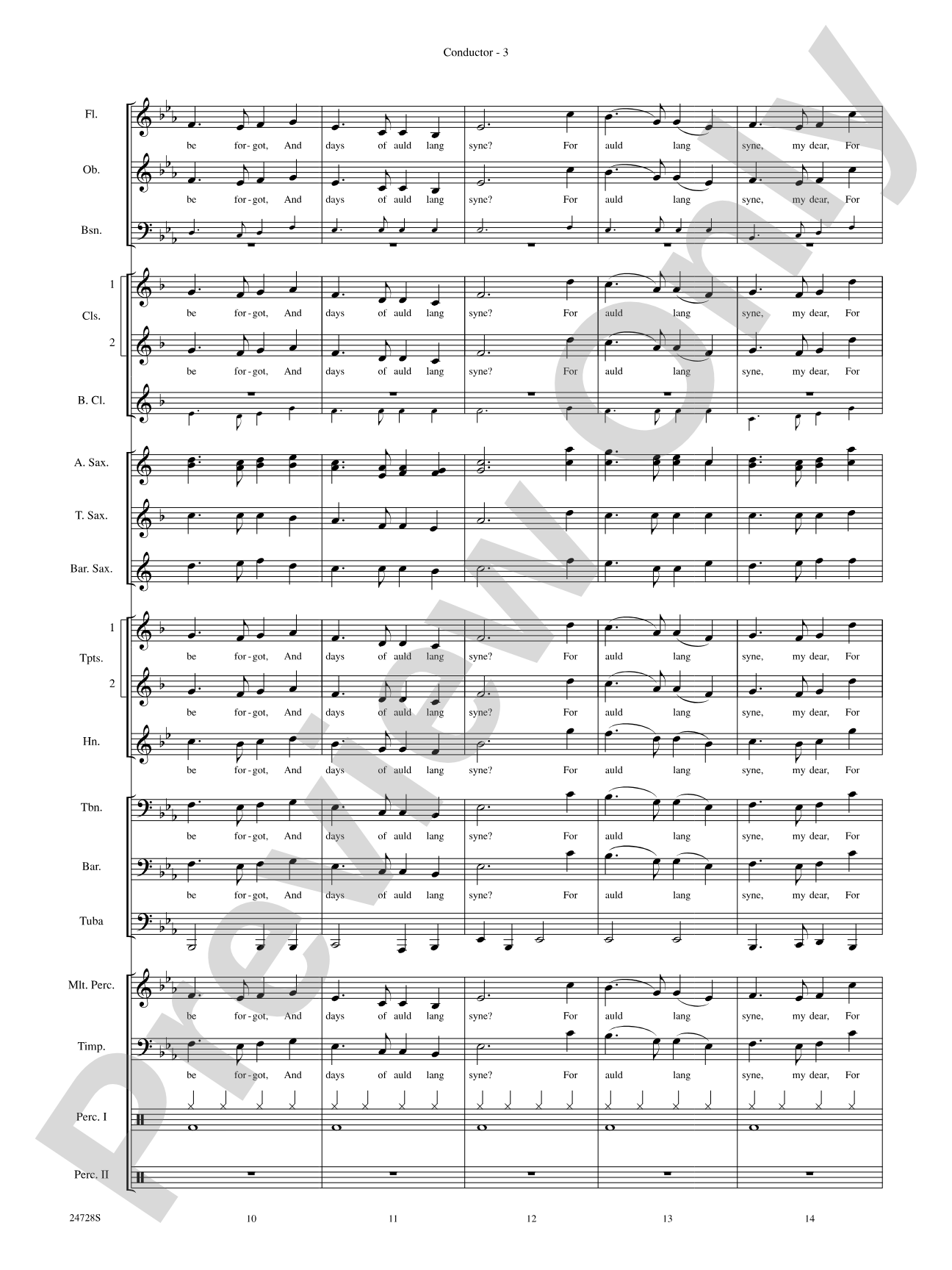
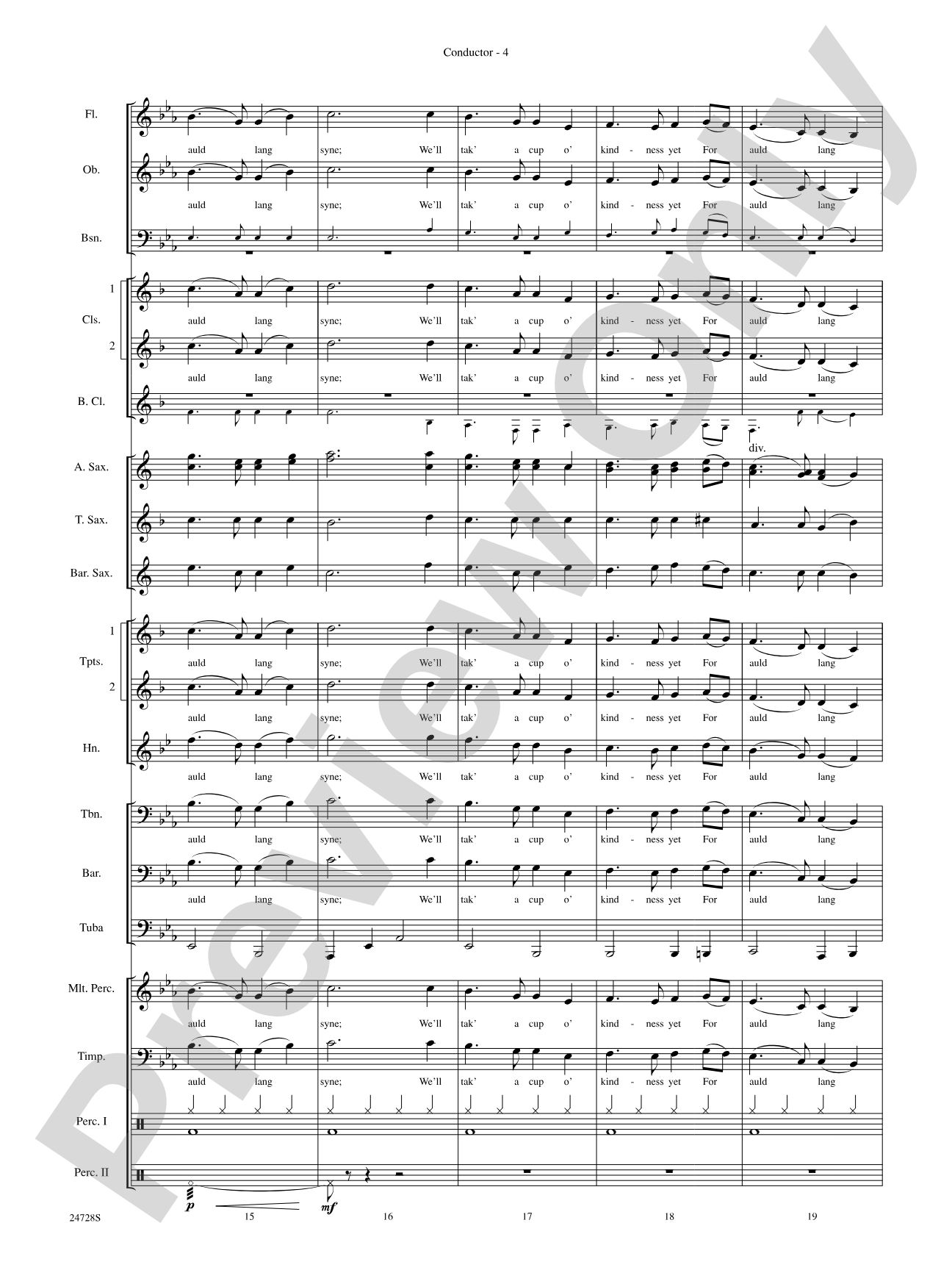
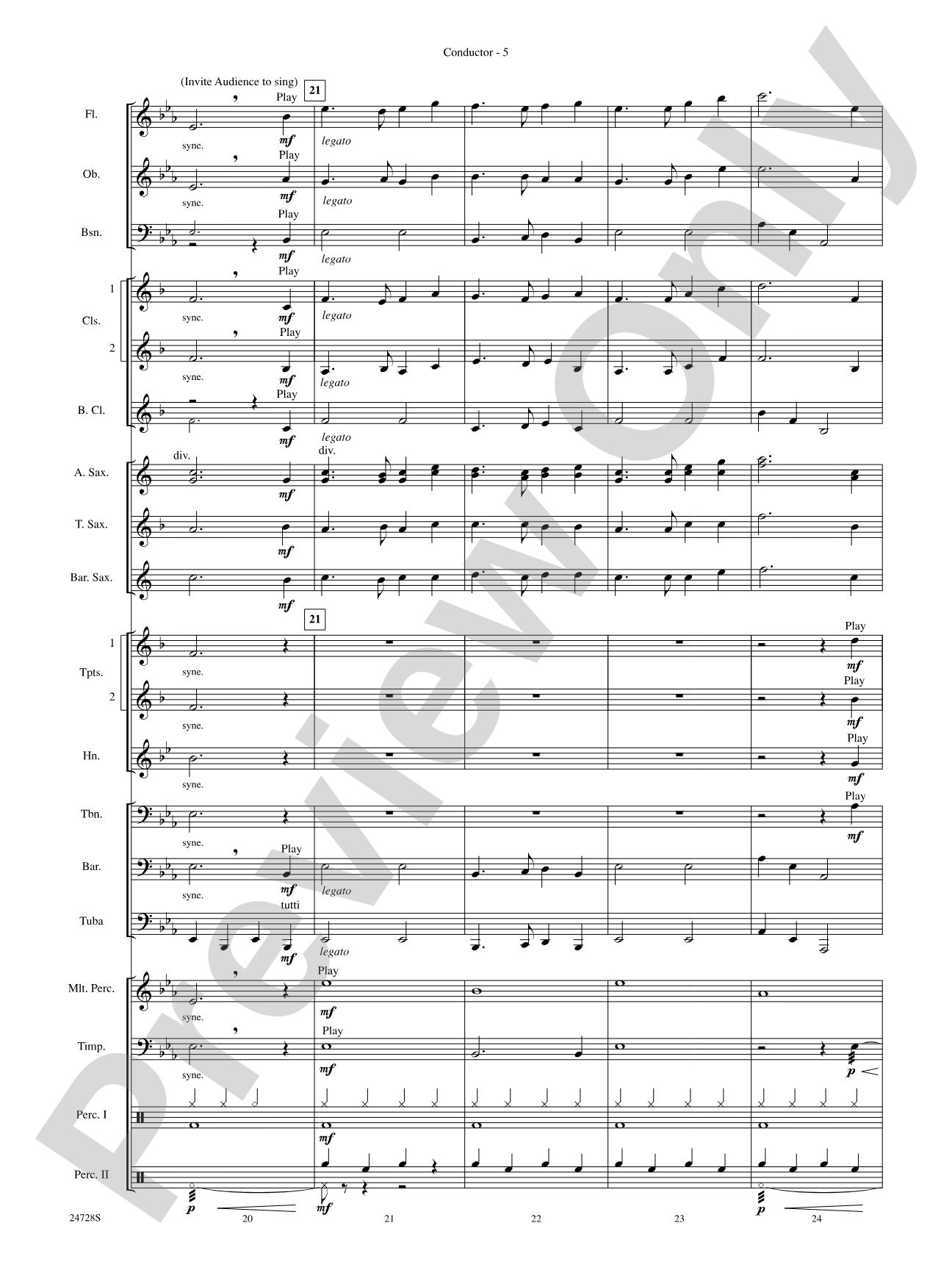
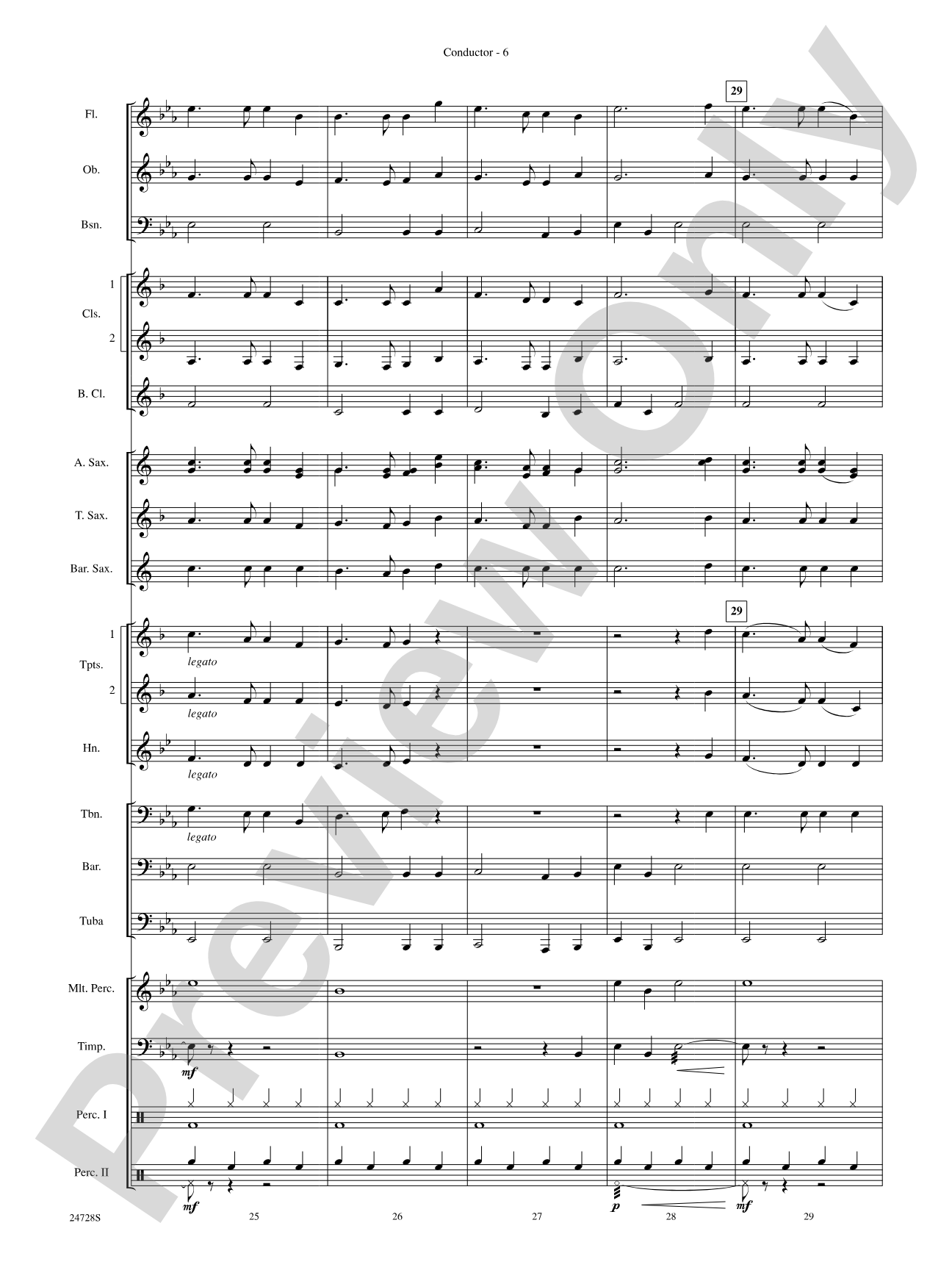
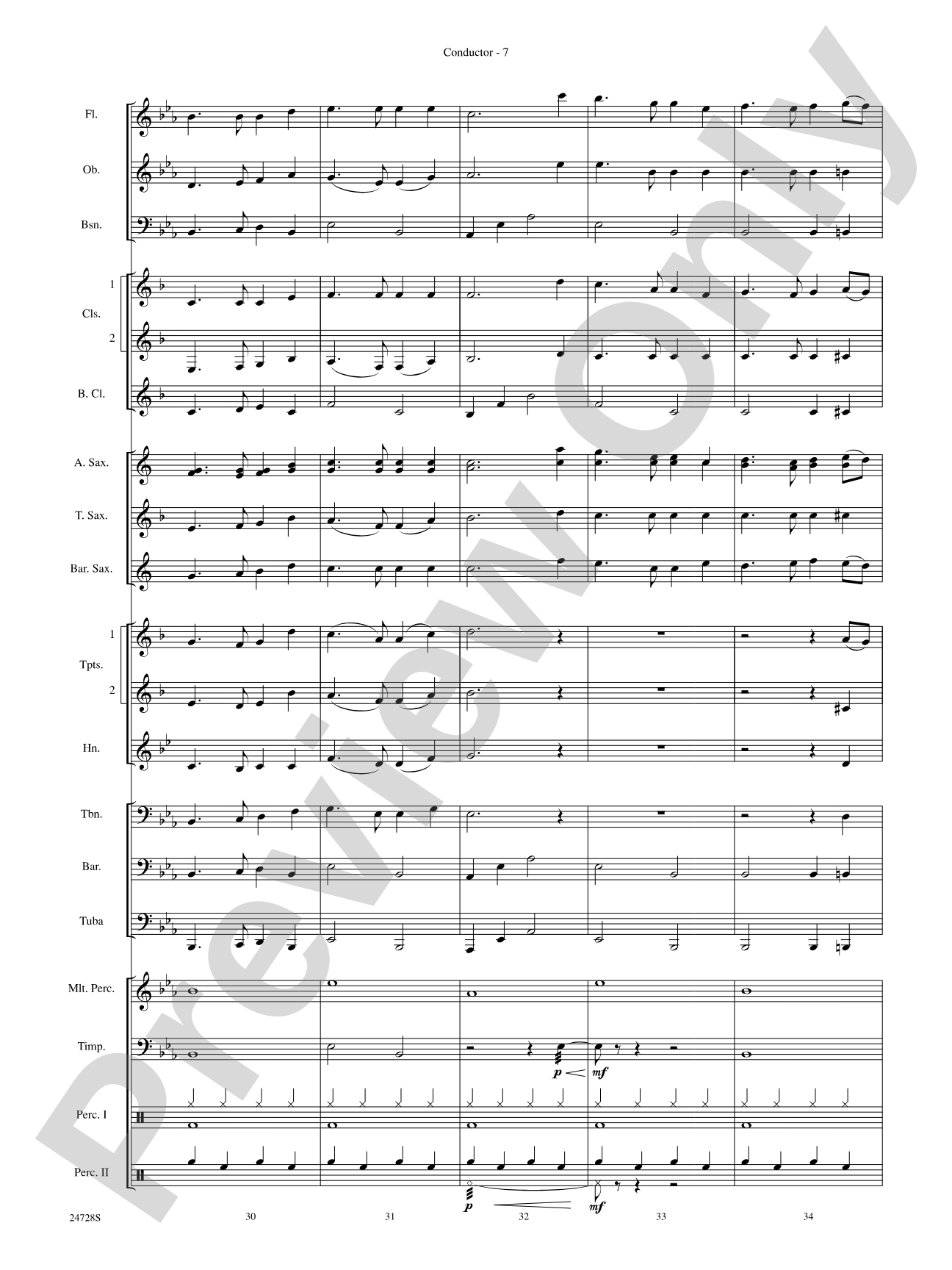
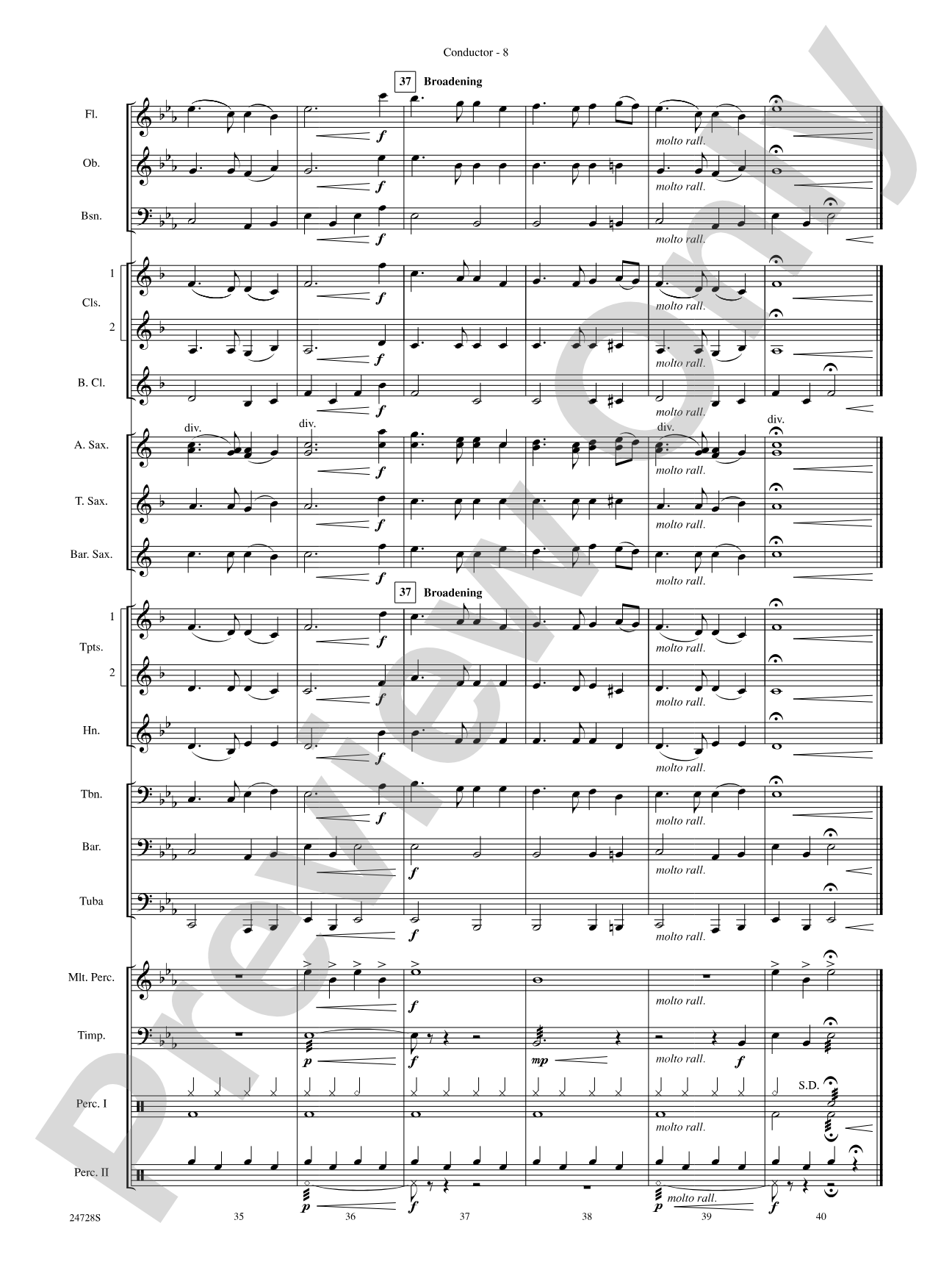

Auld Lang Syne (A Holiday Farewell for Band): Concert Band Conductor Score & Parts
Arr. Robert W. Smith and Michael Story
Grade: 2 (Easy)
Item: 00-PK-0000889

$56.00
Pickup currently not available
Buy Extra Parts (Digital PDF Download)
Parts Added to Cart!
Description
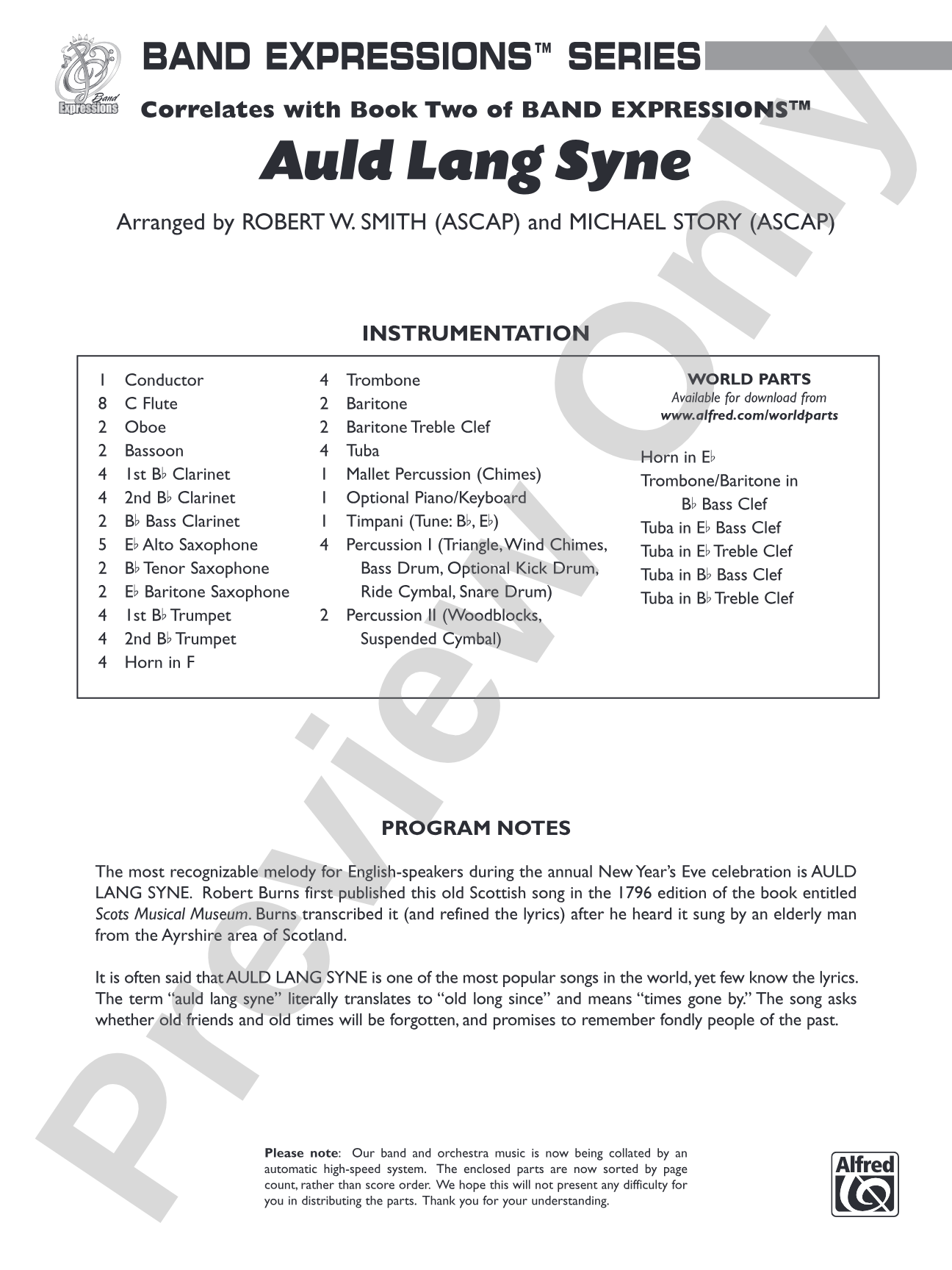
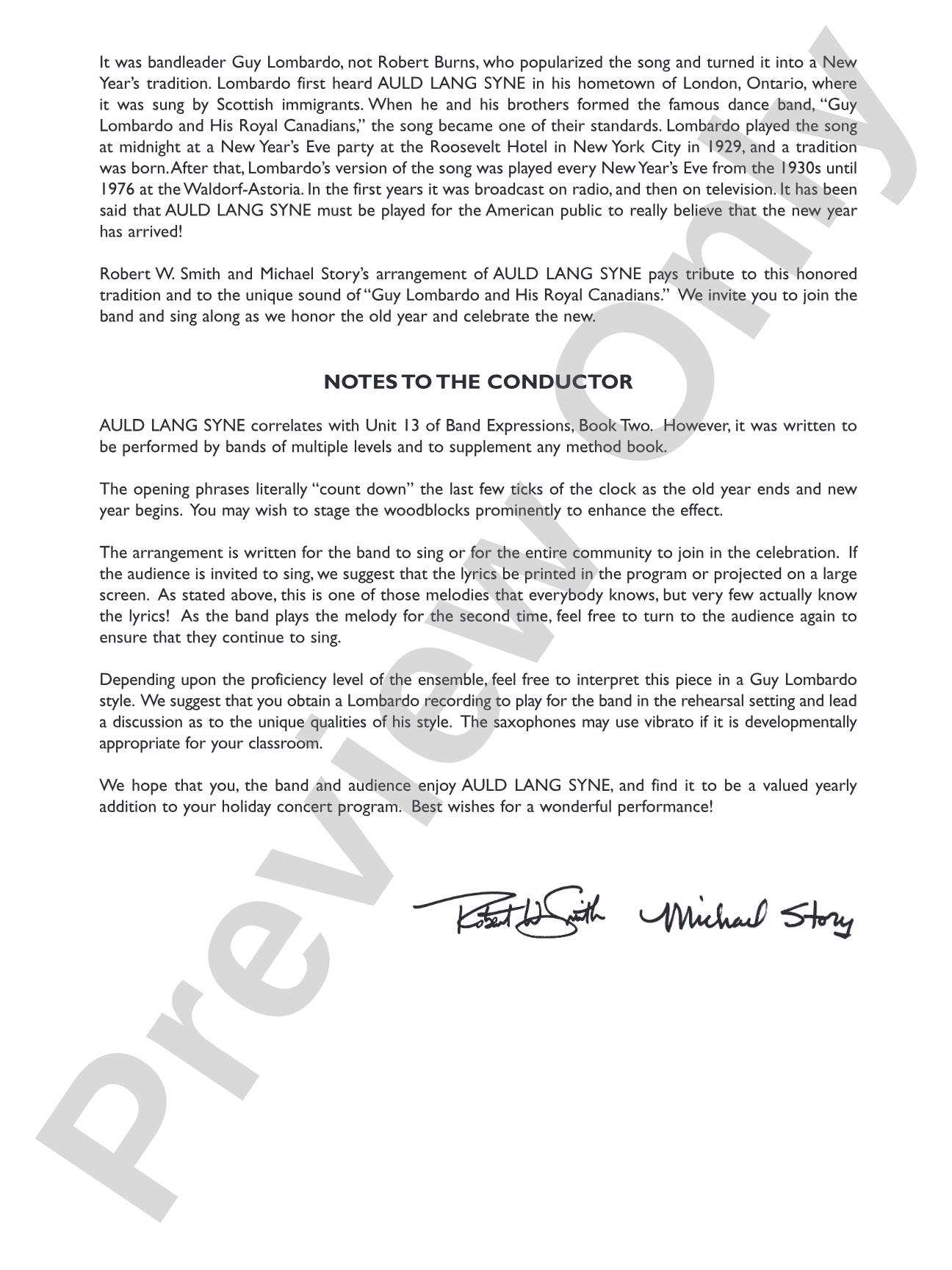
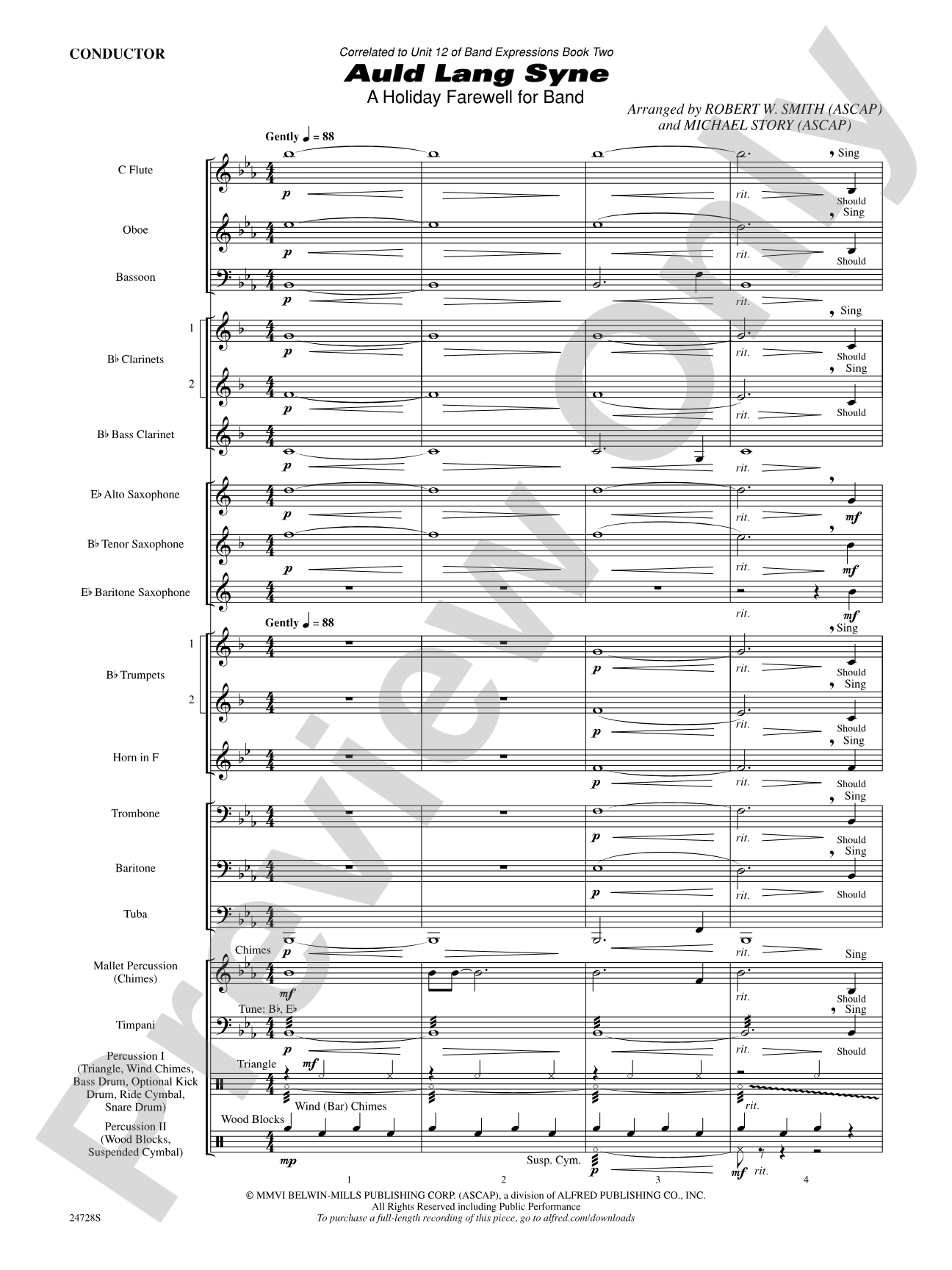
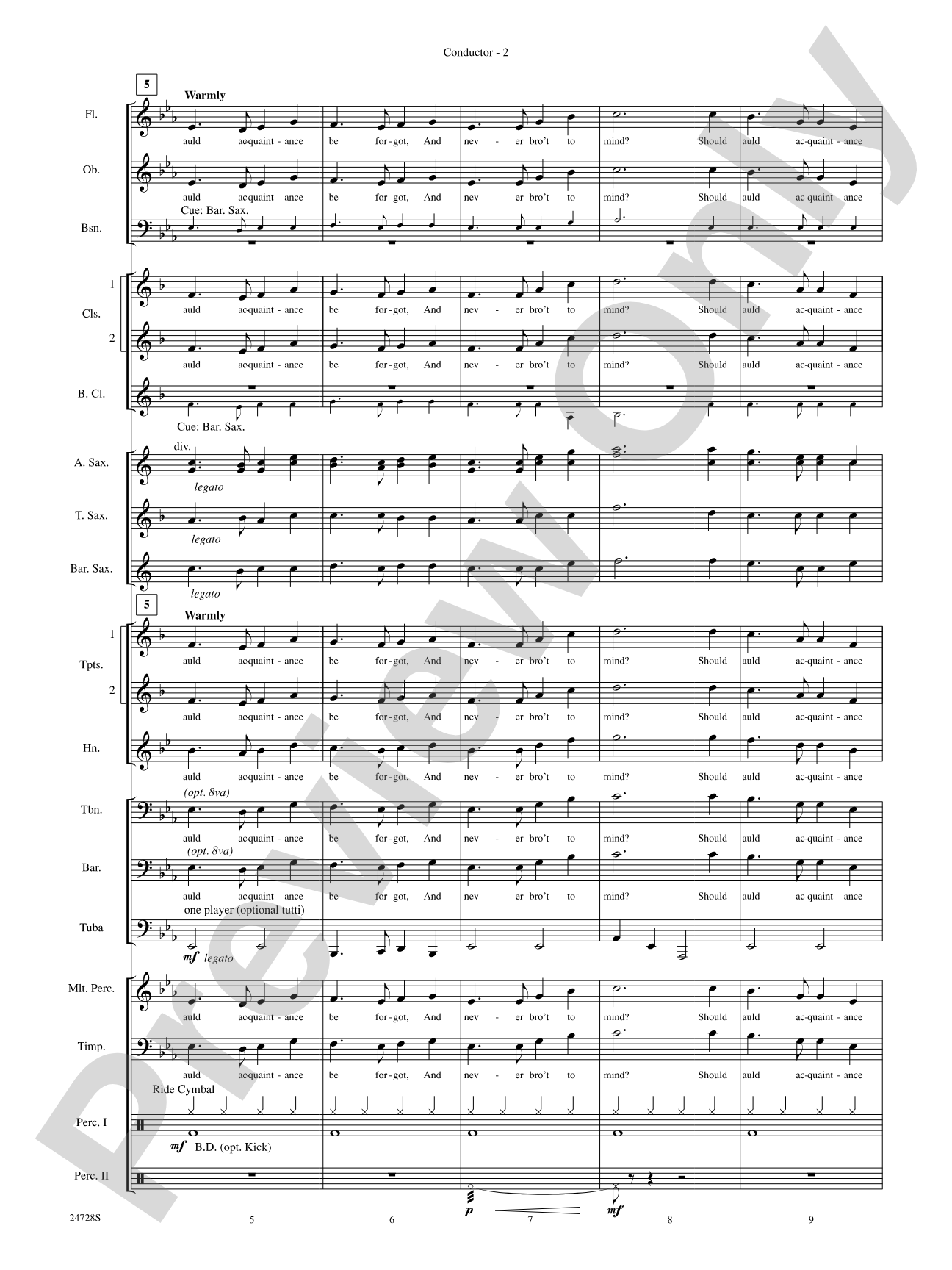
Father Time is counting down the hours. Finally, an arrangement of this year-ending and year-beginning standard for beginners. Although prepared for Band Expressions™ Book Two, it will ring in the New Year for students in any second year program. The singing section enhances their musical education. From the combined efforts of Robert W. Smith and Michael Story, "Auld Lang Syne" pays tribute to the honored tradition and to the unique melody. Invite your listeners to join the band and sing along as we honor the old year and celebrate the new.


Don't just read it, hear it, play along with it, and watch your students grow with it. In MakeMusic Cloud, Auld Lang Syne (A Holiday Farewell for Band): Concert Band Conductor Score & Parts comes alive with professional accompaniment, adjustable tempo, and built-in practice tools that turn solo practice into real progress.
Open in the Player
Jump straight in and assign it today.
Start Your Free Trial
Open this title and explore the full library in minutes.
Sample Audio
1
Audio File
--:--
0:00
0:00
Sample Video
No sample videos found.
Additional Details
Series:
Band Expressions
Publisher:
Alfred Music
Page Count:
130
SKU:
00-PK-0000889
More about this title
About the Arranger: Robert W. Smith

Robert W. Smith has established himself as one of the most frequently performed composers and arrangers for concert band and orchestra in the United States, with over 400 published works primarily distributed through Alfred Music. His education includes a Bachelor's degree in Music Education from Troy State University in Alabama and a Master's degree in Music from the University of Miami. Smith's original compositions, including his symphonies The Divine Comedy and The Odyssey, have reached audiences across North America, Europe, Australia, and Asia, while works like The Tempest have become foundational repertoire for developing ensembles.
Beyond the concert hall, Smith's music has appeared in high-profile broadcasts and events ranging from Olympic ceremonies to the opening of the Macy's Thanksgiving Day Parade telecast, the Ringling Brothers and Barnum & Bailey Circus, and Opening Day at Dodger Stadium. His work as a conductor and clinician has taken him across the United States and internationally to Canada, Japan, Australia, Italy, Austria, and the United Kingdom.
Why we love this
This arrangement respects the universality of the melody while making it genuinely accessible for second-year players. The inclusion of a singing section transforms a familiar tune into a participatory experience, inviting audiences to join your band in a way that feels organic rather than novelty. It strikes the balance that every director needs at season's end: music that sounds confident and complete without demanding advanced technical facility.
What to expect
There is both nostalgia and forward motion here, a sense of honoring what has passed while welcoming what comes next. The melody carries its own emotional weight, and this arrangement lets students play something their audiences recognize and want to hear, creating an immediate connection that deepens as the singing section begins.
Who it's for
This arrangement suits any second-year concert band program looking for repertoire that is both seasonally appropriate and musically substantive. It works equally well for students in Band Expressions Book Two and other curricula at the same level. Directors seeking a piece that builds ensemble sound while inviting audience participation will find this especially valuable.
How to get the most out of it
- Balance the singing section with instrumental lines so voices are supported but not overwhelmed; this works best when the audience feels invited rather than exposed.
- Work the ensemble's intonation in the unison passages, since the melody's simplicity means any pitch issues become immediately noticeable.
- Control the tempo to honor the reflective nature of the text while keeping forward momentum; avoid letting sentiment slip into lethargy.
- Bring out the harmonic changes with subtle dynamic shaping so listeners hear the arrangement's sophistication beneath the familiar tune.
How to use it
Program this as your closing selection for winter concerts, allowing the audience to stand and sing as your band plays. Its reflective character and participatory nature make it particularly effective as the final piece of a concert, bridging the gap between formal performance and the informal gathering that often follows. The accessibility ensures it lands well without sacrificing musical substance.
Skills your students will build
- Balancing melody against harmonic accompaniment
- Sustaining long tones with steady air support
- Coordinating with singers while maintaining instrumental integrity
- Shaping simple melodies through dynamic and articulation choices
- Reading parts in standard concert band voicing