
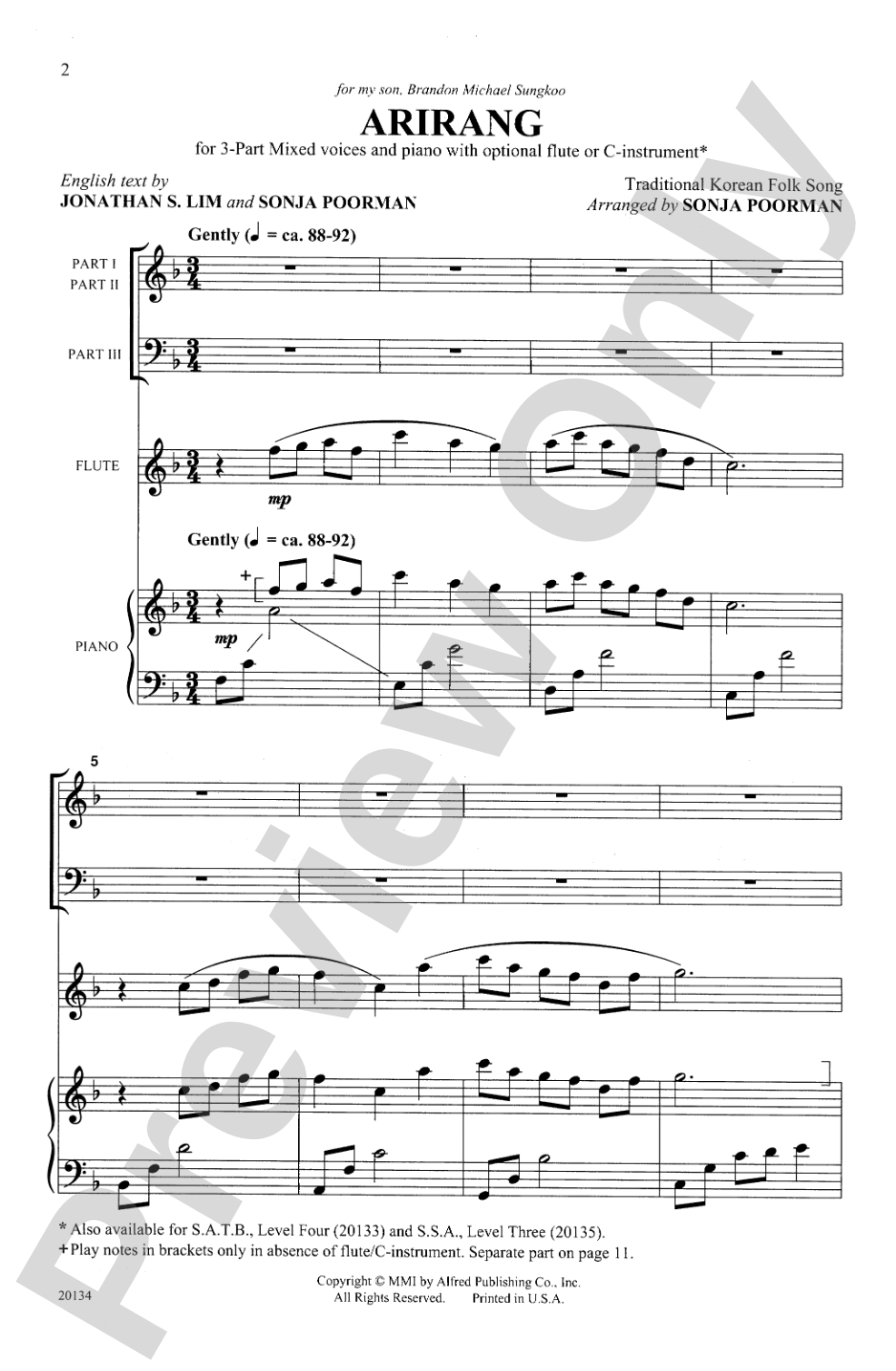
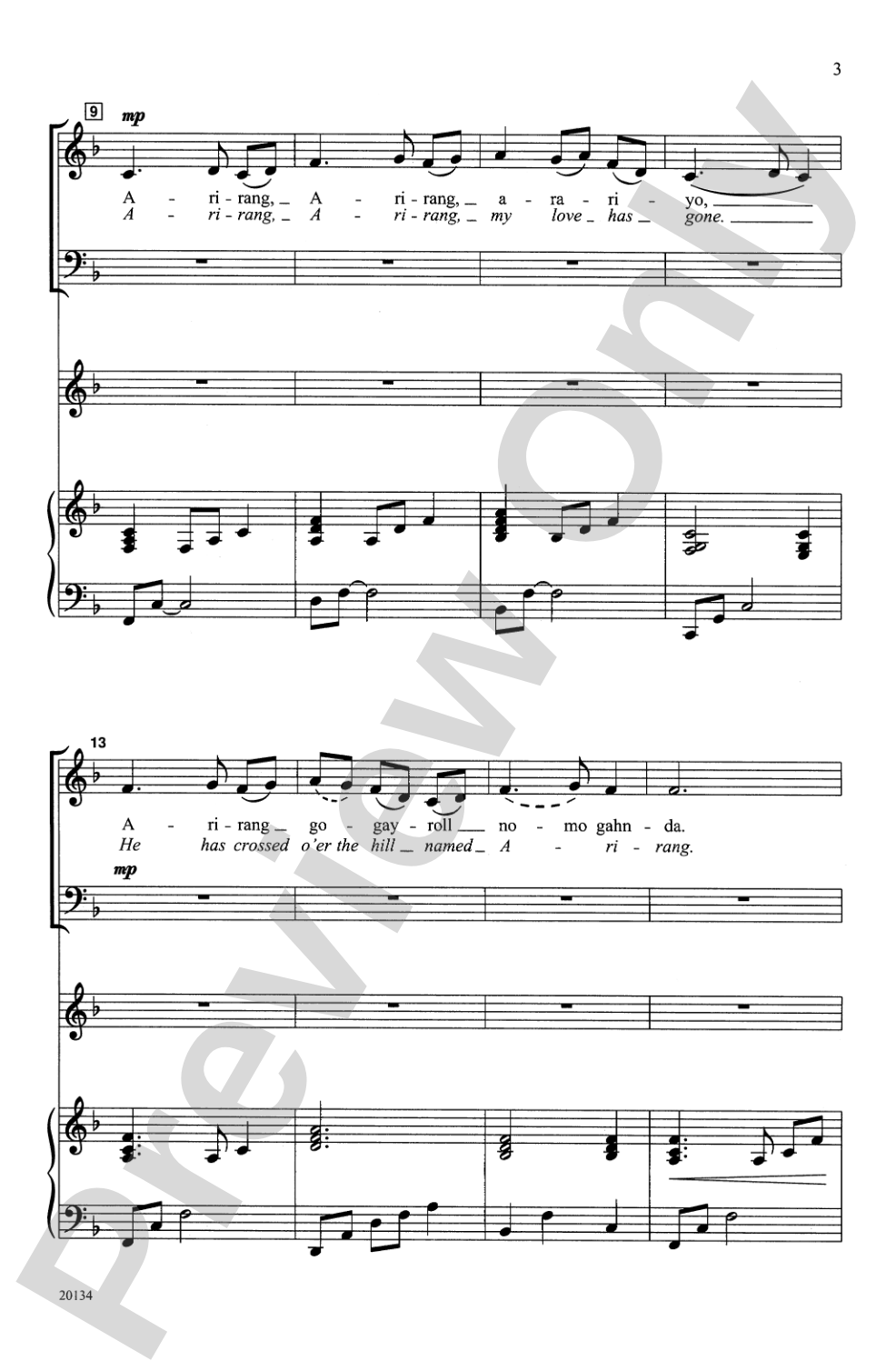

Arirang (Korean Folk Song): 3-Part Mixed Choral Octavo
Arr. Jonathan Lim and Sonja Poorman
Item: 00-PO-0006512
$2.05
Minimum order quantity: 10 copies
Please note: Under U.S. copyright law, you must purchase the exact number of copies needed for your ensemble. Printing, duplicating or sharing additional copies is strictly prohibited.
Pickup currently not available
Related Items
Arirang (Korean Folk Song): SATB Choral Octavo |
$2.25
|
View | |
Arirang (Korean Folk Song): SSA Choral Octavo |
$2.25
|
View | |
Arirang (Korean Folk Song): SATB Choral Octavo |
$2.25
|
View | |
Arirang (Korean Folk Song): 3-Part Mixed Choral Octavo |
$2.05
|
View | |
Arirang (Korean Folk Song): SSA Choral Octavo |
$2.25
|
View |
Description
The music of Asia needs to be a part of your cross-cultural musical experiences, and this Korean folk song is an excellent choice. The melody is one of the most popular of all Asian folk songs and for good reason: it's beautiful. Sonja Poorman's arrangement includes an easy, flowing piano part and an optional flute. The first verse may be sung in Korean (pronunciation guide included).


Discover MakeMusic Cloud: thousands of interactive titles your students can play along with today.
Sample Audio
1
Audio File
--:--
0:00
0:00
Sample Video
No sample videos found.
Additional Details
Series:
Alfred Archive Edition: Alfred Choral Designs
Publisher:
Alfred Music
Page Count:
12
SKU:
00-PO-0006512
Instrumentation:
Opt. Flute
More about this title
Why we love this
This arrangement opens the door to genuine cross-cultural programming without requiring your singers to learn complex harmonies or unfamiliar vocal techniques. The optional flute and Korean-language option give you flexibility to shape the piece to your ensemble's needs, while the accessible three-part voicing ensures every section stays engaged.
What to expect
Arirang carries the contemplative warmth of a folk melody that has survived centuries of telling. The arrangement preserves the song's essential simplicity while adding harmonic support that feels natural rather than ornamental, creating space for the text (whether in English or Korean) to resonate.
Who it's for
Choirs at the middle school through early high school level who are ready to explore repertoire beyond the Western canon. This works equally well for general mixed choirs, treble or lower voice ensembles, and singers encountering Asian folk music for the first time.
How to get the most out of it
- Teach the Korean text by rote before introducing the notation. Use the provided pronunciation guide to model clear vowels and natural phrasing, then have singers echo back in small groups before full ensemble work.
- Let the flute doubling emerge gradually. Begin rehearsals without it, establish the vocal line securely, then add the flute part so it enhances rather than overshadows the singers' blend.
- Shape the melody with gentle dynamic swells that follow the natural arc of the phrase rather than sudden shifts. This folk song's beauty relies on smooth, sustained singing.
How to use it
Pair this with other world music selections to create a meaningful thematic concert, or place it as a bridge between more formal Western art music to demonstrate the choral traditions that exist across cultures. The modest technical demands and strong melodic identity also make it a reliable choice for festival programming.
Skills your students will build
- Singing text in a non-English language with accurate pronunciation and sustained tone
- Listening to and balancing three independent harmonic lines in close range
- Interpreting folk song aesthetics (simplicity, phrase-based phrasing, resonant vowels)