
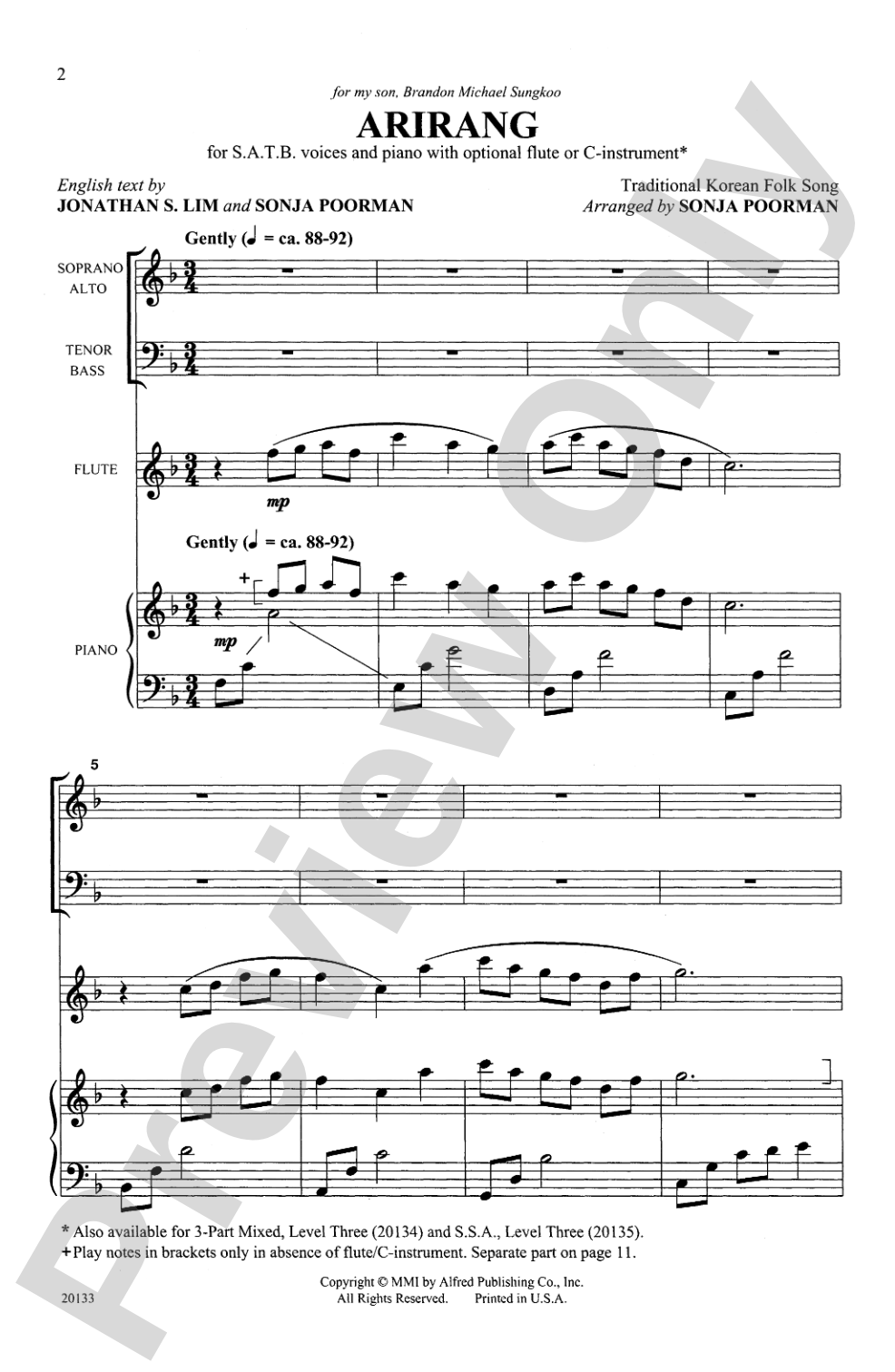

Arirang (Korean Folk Song): SATB Choral Octavo
Arr. Jonathan Lim and Sonja Poorman
Item: 00-PO-0002182
$2.25
Minimum order quantity: 20 copies
Pickup currently not available
Related Items
Arirang (Korean Folk Song): 3-Part Mixed Choral Octavo |
$2.05
|
View | |
Arirang (Korean Folk Song): SSA Choral Octavo |
$2.25
|
View | |
Arirang (Korean Folk Song): SATB Choral Octavo |
$2.25
|
View | |
Arirang (Korean Folk Song): 3-Part Mixed Choral Octavo |
$2.05
|
View | |
Arirang (Korean Folk Song): SSA Choral Octavo |
$2.25
|
View |
Description
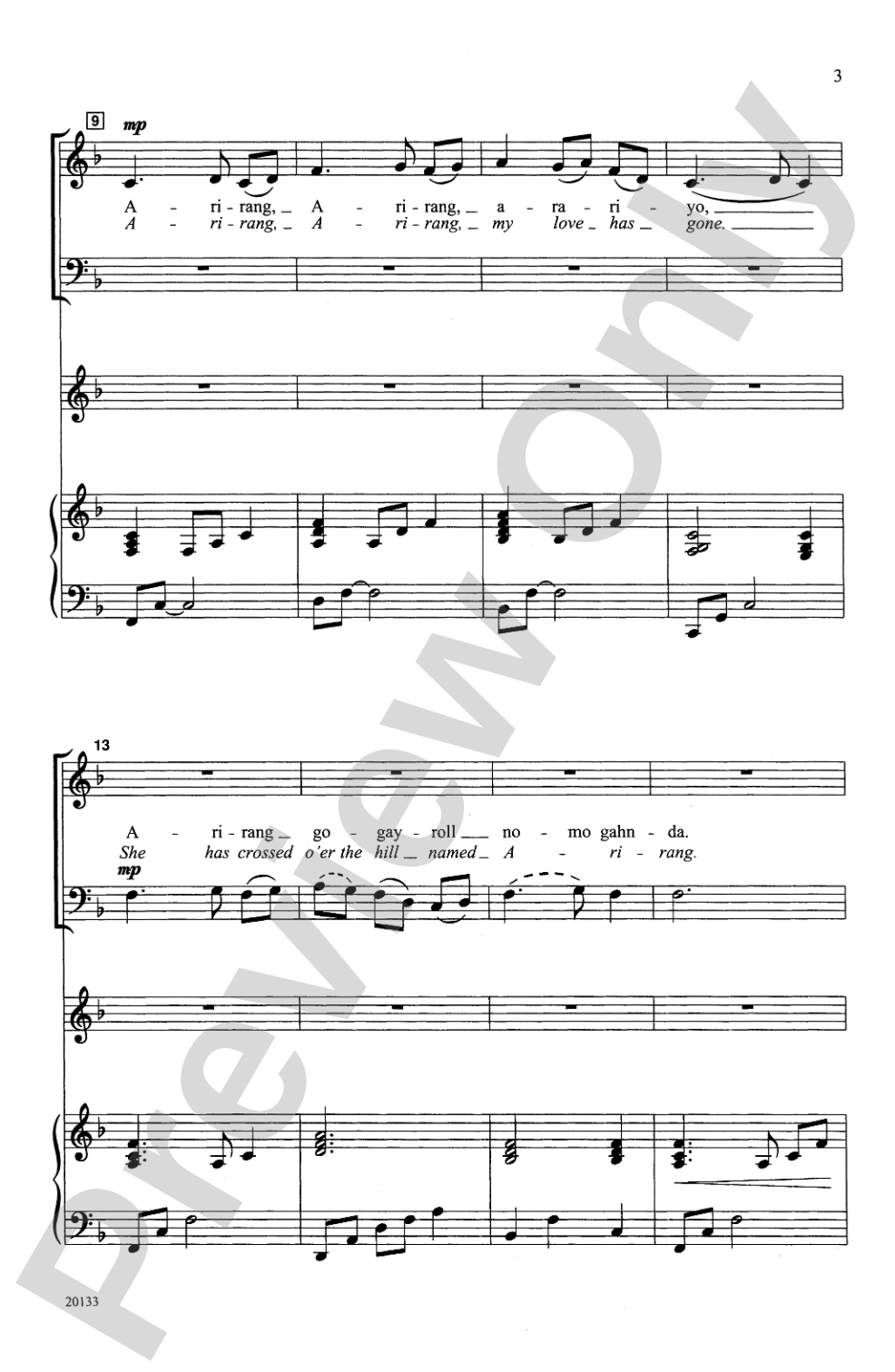
The music of Asia needs to be a part of your cross-cultural musical experiences, and this Korean folk song is an excellent choice. The melody is one of the most popular of all Asian folk songs and for good reason: it's beautiful. Sonja Poorman's arrangement includes an easy, flowing piano part and an optional flute. The first verse may be sung in Korean (pronunciation guide included).


Arirang (Korean Folk Song): SATB Choral Octavo isn't in MakeMusic Cloud just yet...but it could be. Let us know you'd like to see it, and you'll help shape what comes next. In the meantime, start a free trial and dive into thousands of interactive titles your students can play along with today.
Request This Title
Tell us you want it.
Start Your Free Trial
Explore everything that's ready to play right now.
Sample Audio
1
Audio File
--:--
0:00
0:00
Sample Video
No sample videos found.
Additional Details
Series:
Alfred Archive Edition: Alfred Choral Designs
Publisher:
Alfred Music
Page Count:
12
SKU:
00-PO-0002182
Instrumentation:
Opt. Flute
More about this title
Why we love this
This arrangement respects the integrity of one of Asia's most beloved melodies while making it genuinely singable for high school and community choirs. The optional flute part and flowing piano accompaniment open performance possibilities without creating dependence on soloists, and the inclusion of Korean text with pronunciation guidance signals serious engagement with cultural authenticity rather than superficial tokenism.
What to expect
Arirang carries quiet dignity and reflection; the melody unfolds with the simplicity of a song passed down through generations, yet Lim and Poorman's arrangement adds subtle harmonic richness that deepens without overshadowing the tune. Singing it feels like joining a centuries-old tradition while standing firmly in the present moment.
Who it's for
High school, college, and community choirs seeking meaningful engagement with global musical traditions. This octavo works equally well for concert programming, festival participation, or classroom exploration of non-Western folk materials.
How to get the most out of it
- Spend rehearsal time on the Korean pronunciation guide before tackling the melody in that language; accurate vowels and consonants matter more than perfect accent, and singers gain confidence when they understand what they're singing.
- Keep the piano part conversational and light; this arrangement thrives on transparency, not grandeur, so avoid over-pedaling or heavy bass emphasis.
- If using the optional flute, balance it as a gentle obbligato that complements rather than dominates the choir, especially during the first verse where Korean text is featured.
- Shape the melody with rubato and breathing that follows the text's natural phrasing rather than locking into metronomic time; Korean folk songs breathe differently than Western hymns.
How to use it
Program this as a centerpiece for a cross-cultural concert theme, pair it with other Asian or world music selections to build programming depth, or use it as a gateway piece when introducing your choir to non-English repertoire. Its modest length and accessibility make it ideal for festivals and competitions that welcome multicultural selections.
Skills your students will build
- Reading and pronouncing non-English text with cultural awareness
- Balancing harmonic independence within SATB voicing while supporting a central melody
- Responding to rubato and flexible phrasing in non-metered contexts
- Collaborating with instrumental soloists (flute) in an integrated choral-instrumental texture