
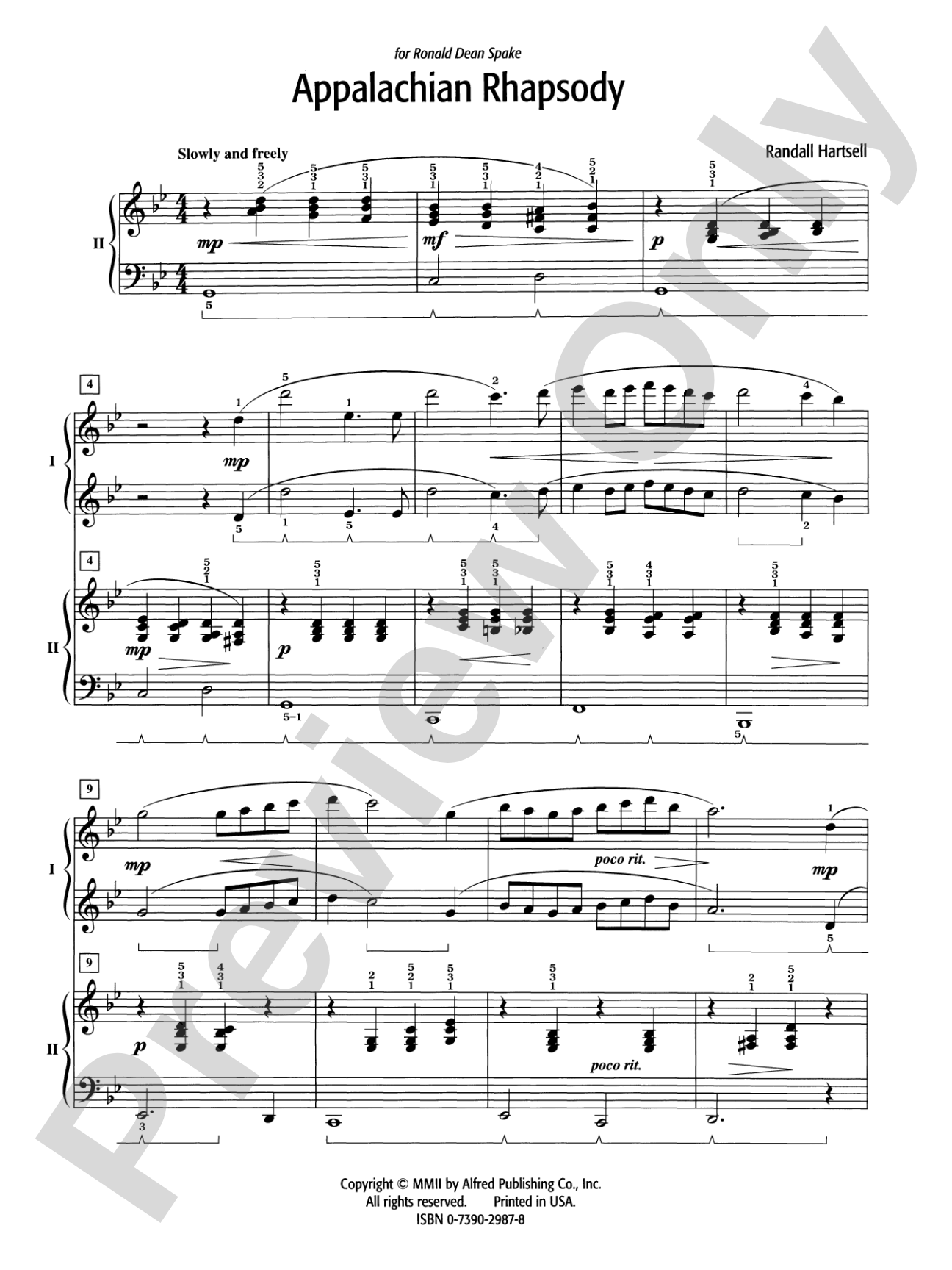

Appalachian Rhapsody - Piano Duo (2 Pianos, 4 Hands): Piano Duets & Four Hands
By Randall Hartsell
Level: Intermediate
Item: 00-PB-0000790

$3.95
Pickup currently not available
Related Items
Appalachian Rhapsody: Piano Duo (2 Pianos, 4 Hands) Sheet (2 copies included) |
$3.95
|
View |
Description
Travel to the beauty and serenity of Appalachia through the music of this piece for two pianos, four hands. Written in G minor, the second piano begins with a lush chord progression in the introduction. The first piano carries the expressive melody in the A section. In the B section, the second piano has the melody while first piano supplies the rich harmonies. The return of the A section is similar to its first presentation. The tempo, marked "slowly and freely," allows both performers time to shape the phrases and mold the music into a moving performance. A Federation Festivals 2024-2028 selection.


Don't just read it, hear it, play along with it, and watch your students grow with it. In MakeMusic Cloud, Appalachian Rhapsody - Piano Duo (2 Pianos, 4 Hands): Piano Duets & Four Hands comes alive with professional accompaniment, adjustable tempo, and built-in practice tools that turn solo practice into real progress.
Open in the Player
Jump straight in and assign it today.
Start Your Free Trial
Open this title and explore the full library in minutes.
Sample Audio
No sample audio found.
Sample Video
No sample videos found.
Additional Details
Publisher:
Alfred Music
Page Count:
8
SKU:
00-PB-0000790
More about this title
About the Composer: Randall Hartsell

Randall Hartsell grew up in North Carolina with an unusual start: his family didn't own a piano, so he walked to his aunt and uncle's house after school each day for his first year of lessons, practicing with focused intention in their living room. When his parents finally brought a piano home, he was already hooked. During high school, he began composing pieces inspired by his English literature assignments and wrote accompaniments and original works for the school choir's radio broadcasts. This early habit of writing music alongside his education shaped his entire career.
After studying at East Carolina University (where composition came only in his senior year), Hartsell returned to teaching in a small town and resumed composing with renewed purpose. A formative meeting with publisher Lynn Freeman Olson in the early 1980s led to his first Alfred publication, the three-book series "Something Special" (1990), which launched decades of prolific output. He has since published more than 60 collections and solos. Based in Charlotte, North Carolina, he continues to work as a teacher, composer, accompanist, clinician, adjudicator, and church musician.
Why we love this
Hartsell's gift for melody shines in this piece, giving both pianists genuinely expressive lines that reward musical shaping rather than technical display. The balanced two-piano writing ensures neither performer sits idle; the give-and-take between primo and secondo feels conversational and engaging. As a Federation Festivals selection, it carries the dual payoff of meeting competition requirements while offering real musical substance.
What to expect
The piece evokes the quiet beauty of Appalachian landscapes: contemplative, unhurried, and rich with harmonic color. G minor gives it a naturally lyrical, introspective quality; the shifting melodies between the two pianos create an intimate conversation that feels both personal and broadly expressive.
Who it's for
This duo works well for two pianists at the intermediate level who want substantial music that doesn't demand virtuosic technique. It suits students preparing for festival competition or concert recitals, and teachers often use it with advanced students seeking rewarding collaborative repertoire.
How to get the most out of it
- Establish the harmonic foundation together during the introduction. The second piano's chord progression sets the emotional tone, so pianist two should voice those chords with a warm, singing quality rather than treating them as mere accompaniment.
- Let the "slowly and freely" tempo marking breathe. Resist the urge to push forward; the expressive melody in the A section needs space for natural phrasing and rubato that both performers shape together.
- Plan your balance during the B section. When the melody migrates to the second piano, the first piano's rich harmonies should support without overwhelming; think of it as a gentle harmonic cushion rather than a bed of sound.
How to use it
Program this as a centerpiece for a recital that features collaborative chamber work, or include it on a festival competition list where the quality of musicianship matters more than technical display. Its reflective character pairs well with shorter, contrasting works; the eight-page length makes it ideal for building a diverse program without overwhelming the audience with extended serious works.
Skills your students will build
- Collaborative listening and rhythmic independence between two pianists
- Shaping lyrical melody with rubato at a moderate tempo
- Voicing harmony to support and enhance a melodic line in the other pianist's part
- Interpreting tempo markings that indicate expressive flexibility rather than strict metronomic precision
- Reading and balancing two distinct pianistic roles (melodic versus harmonic) within a single piece