
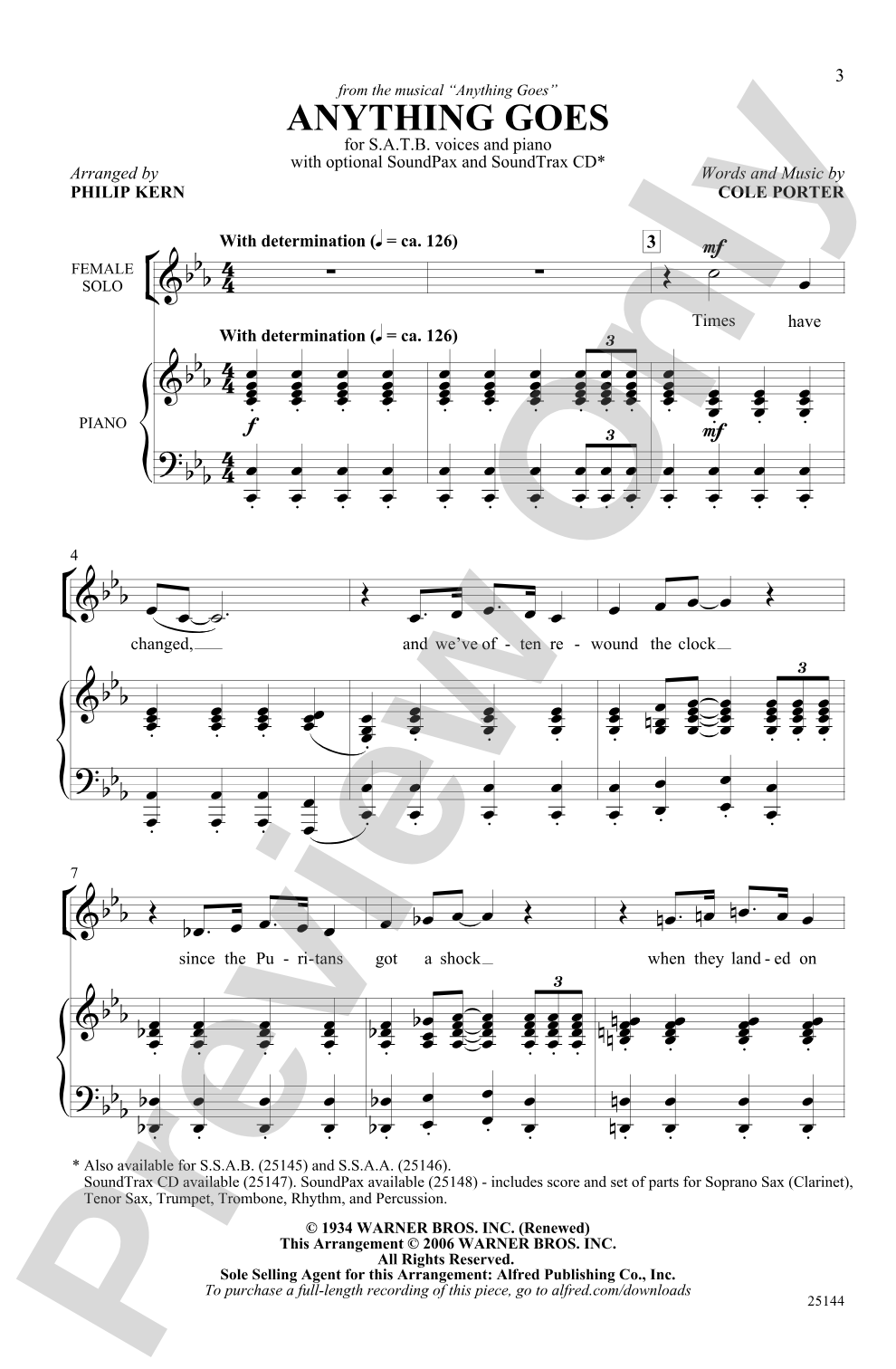
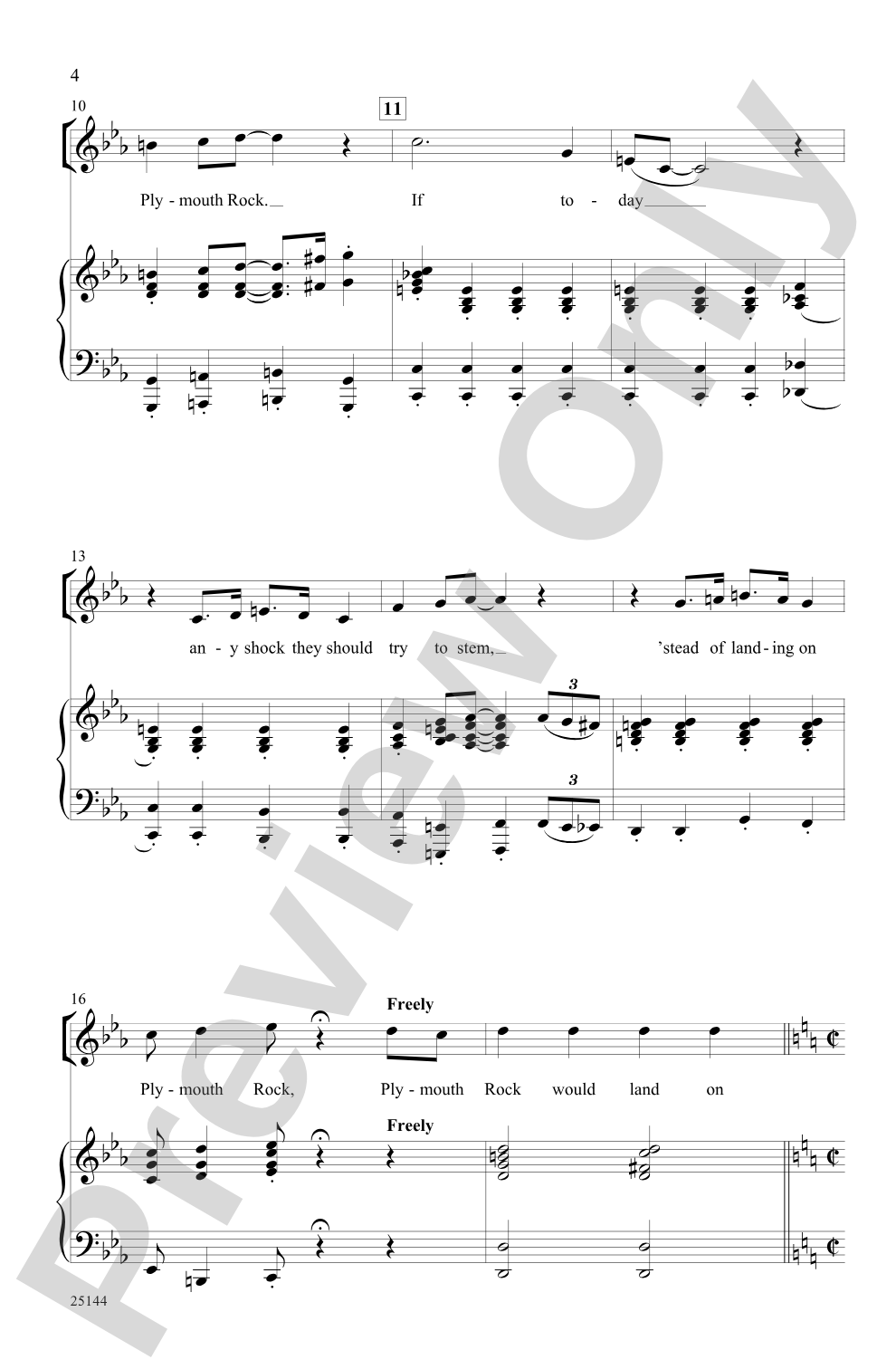
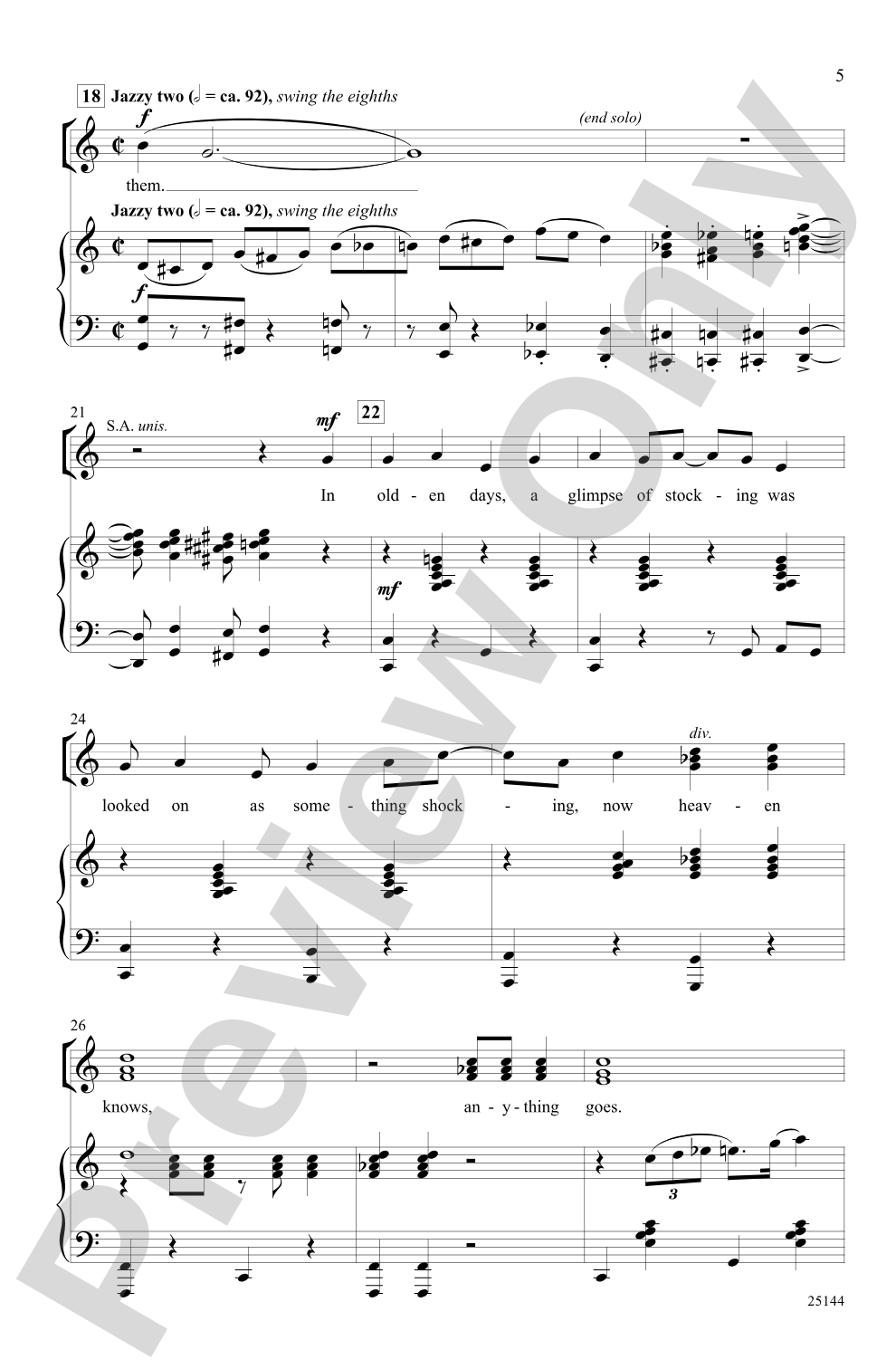

Anything Goes (from the musical Anything Goes): SATB Choral Octavo
Words and music by Cole Porter / arr. Philip Kern
Item: 00-PO-0002241
$2.25
Minimum order quantity: 20 copies
One moment…
Related Items
Anything Goes (from the musical Anything Goes): SSAA Choral Octavo |
$1.95
|
View | |
Anything Goes (from the musical Anything Goes): Choral SoundPax |
$35.00
|
View | |
Anything Goes (from the musical Anything Goes): SATB Choral Octavo |
$2.25
|
View | |
Anything Goes (from the musical Anything Goes): SSAB Choral Octavo |
$1.95
|
View | |
Anything Goes (from the musical Anything Goes): SSAA Choral Octavo |
$1.95
|
View | |
Anything Goes (from the musical Anything Goes): Choral Octavo SoundTrax CD |
$27.99
|
View | |
Anything Goes (from the musical Anything Goes): Choral SoundPax |
$35.00
|
View |
Description
From Cole Porter's landmark 1934 musical, Anything Goes, comes this rousing showstopper, brilliantly arranged by Philip Kern. Features an opening female solo, outstanding choral scoring, and a classic Porter-style piano accompaniment.


Anything Goes (from the musical Anything Goes): SATB Choral Octavo isn't in MakeMusic Cloud just yet...but it could be. Let us know you'd like to see it, and you'll help shape what comes next. In the meantime, start a free trial and dive into thousands of interactive titles your students can play along with today.
Request This Title
Tell us you want it.
Start Your Free Trial
Explore everything that's ready to play right now.
Sample Audio
1
Audio File
--:--
0:00
0:00
Sample Video
No sample videos found.
Additional Details
Series:
Alfred Pop Choral Series
Publisher:
Alfred Music
Page Count:
16
SKU:
00-PO-0002241
More about this title
About the Composer: Cole Porter
Cole Porter (1891-1964) was an American composer and lyricist who revolutionized musical theater through his sophisticated harmonies, witty lyrics, and unforgettable melodies. His works, including Kiss Me, Kate; Can-Can; and Anything Goes, remain standards of the Broadway repertoire and continue to define the sound of the American musical. Porter's influence on choral arrangers and popular music is immeasurable; his harmonic language and rhythmic sophistication appear throughout modern arrangements and compositions.
As a composer-lyricist, Porter controlled both music and text, creating songs of remarkable elegance and intelligence. His work with choral ensembles demonstrates that popular song and serious musicianship are not mutually exclusive. For music educators, Porter's catalog offers accessible entry points into jazz harmony, syncopation, and the craft of memorable melodic writing.
Why we love this
Philip Kern's arrangement captures the infectious energy and sophistication of Porter's original while serving the specific needs of a choral ensemble. The solo opening creates a natural performance spotlight, and the choral writing balances accessibility with genuine harmonic interest, making this an arrangement that satisfies both singers and audiences.
What to expect
Stepping into a 1930s Broadway theater with sass, sophistication, and pure theatrical joy. The melody soars with confidence, the harmonies shimmer with jazz-age elegance, and the rhythms pulse with the energy of a song born to make audiences smile and move.
Who it's for
Any SATB choir seeking accessible yet stylish Broadway material that delivers audience appeal without sacrificing musical substance. This works equally well for high school show choirs, community theater ensembles, college choral groups, or concert choirs looking to program something beyond classical and contemporary art music.
How to get the most out of it
- Treat the opening solo as a confident musical statement, not merely an introduction. The soloist sets the tone for the whole piece, so choose someone secure in style and comfortable with rhythmic freedom.
- Lock the rhythmic precision in the chorus sections; Porter's syncopation demands clean attacks and releases, especially on the jazz-inflected figures that give this piece its character.
- Balance the piano accompaniment carefully. Porter's harmonic sophistication comes through the keyboard, so ensure it's neither buried nor dominating.
- Emphasize the text's comedic and spirited quality. This is a showstopper, not a ballad; the singing should convey joy and theatrical flair.
How to use it
Program this as a second-half opener or finale to balance a concert heavy on classical or liturgical music. It pairs naturally with other Porter standards or other mid-century musical theater selections, or stands alone as an audience favorite that reminds listeners why Broadway music has enduring appeal.
Skills your students will build
- Singing with swing and syncopation, especially in jazz-influenced rhythmic figures
- Ensemble balance and blend in four-part SATB voicing with sophisticated harmonies
- Stylistic awareness of Broadway music and 1930s song idioms
- Confidence in approaching solo sections and featured moments
- Interpretation of text for theatrical effect and comedic timing