
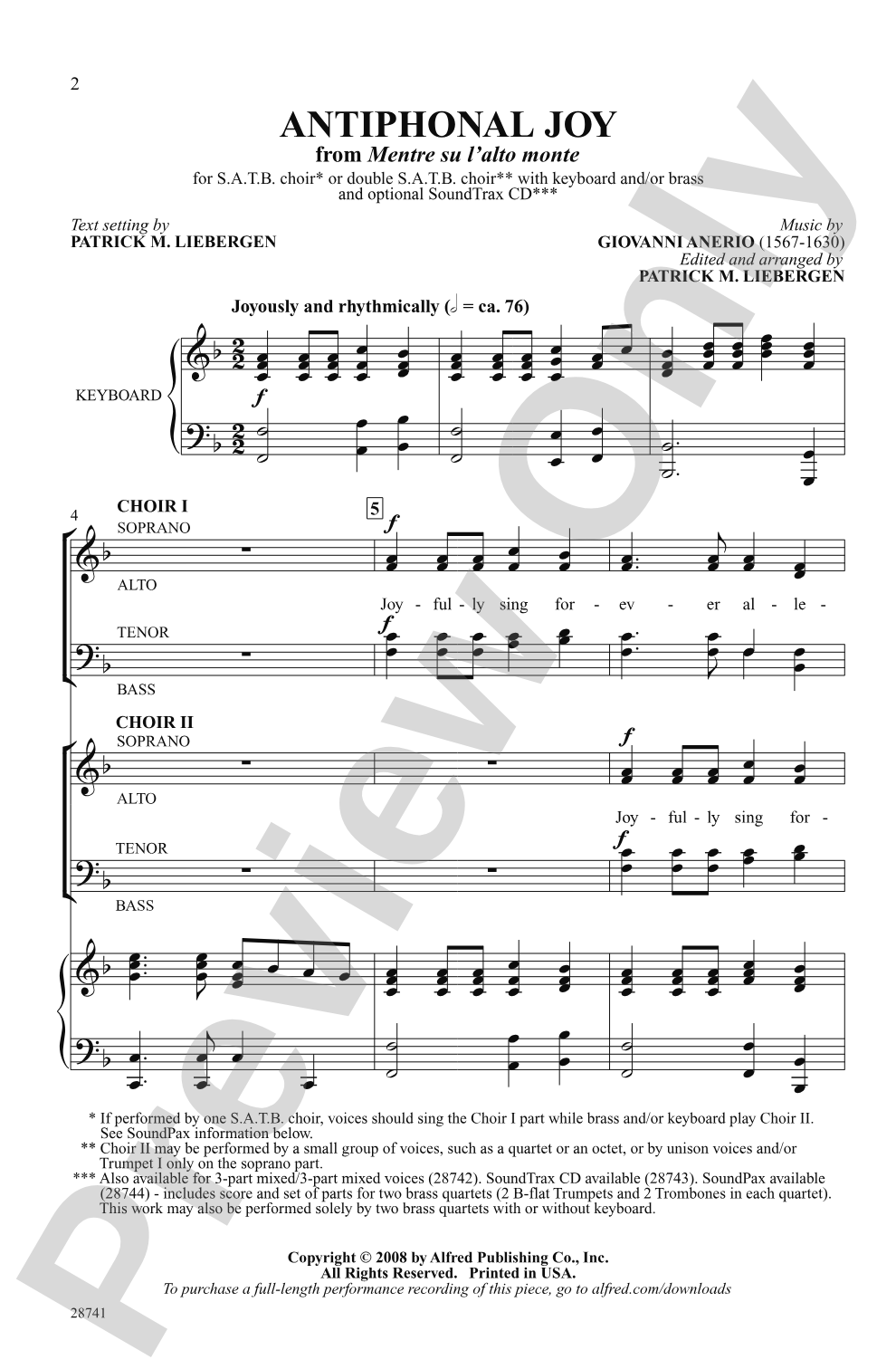
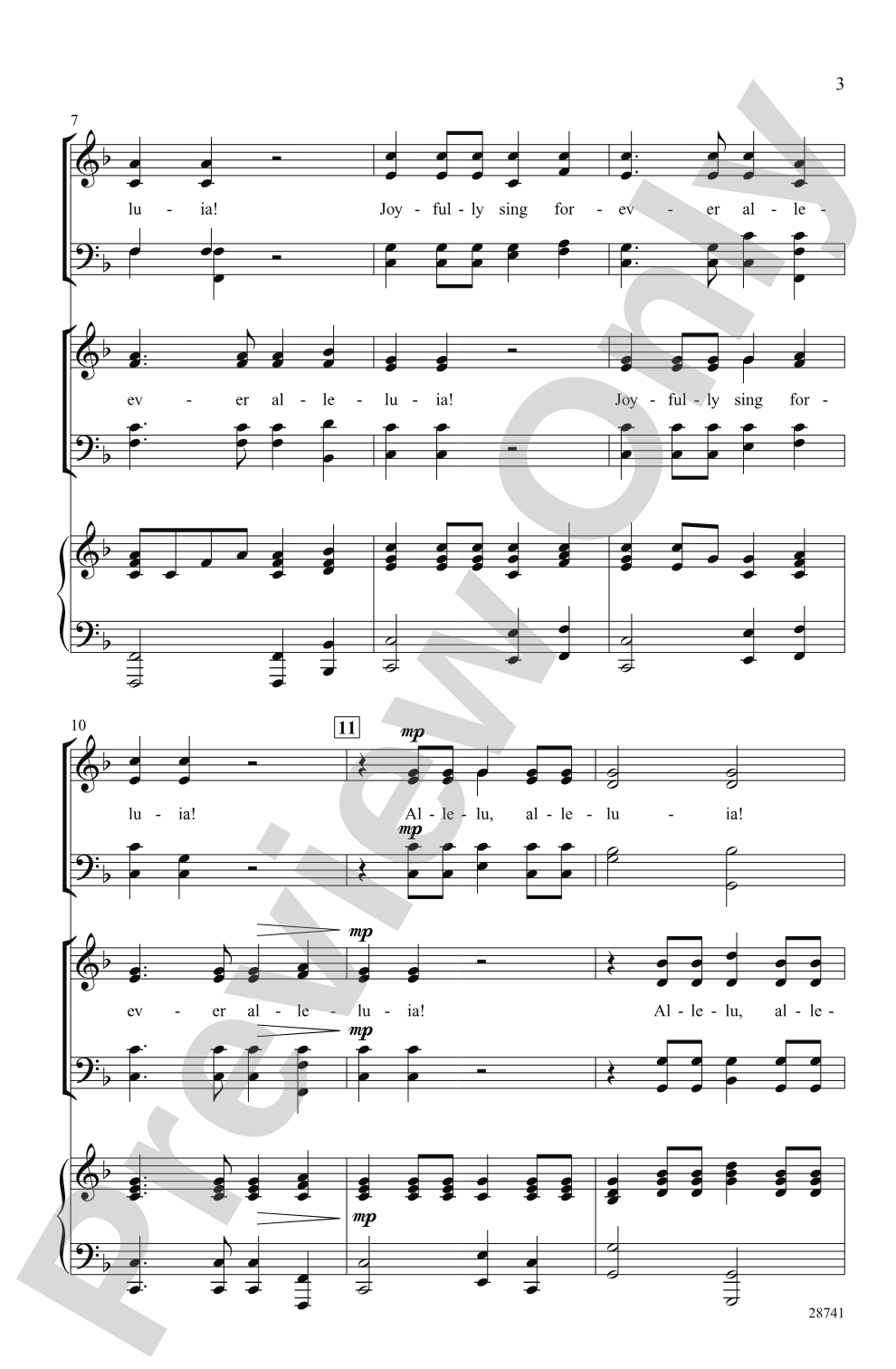

Antiphonal Joy (from Mentre su l'alto monte): SATB Choral Octavo
From Mentre su l'alto monte
Music by Giovanni Anerio / ed. and arr., with English text, by Patrick M. Liebergen
Item: 00-PO-0000557

$1.75
Minimum order quantity: 20 copies
Pickup currently not available
Related Items
Antiphonal Joy: SoundTrax Digital Audio Download |
$24.95
|
View | |
Antiphonal Joy (from Mentre su l'alto monte): 3-Part Mixed Choral Octavo |
$1.75
|
View | |
Antiphonal Joy (from Mentre su l'alto monte): Choral SoundPax |
$25.00
|
View | |
Antiphonal Joy: SATB Choral Octavo |
$1.75
|
View | |
Antiphonal Joy: 3-Part Mixed Choral Octavo |
$1.75
|
View | |
Antiphonal Joy: Choral Octavo SoundTrax CD |
$24.95
|
View | |
Antiphonal Joy: Choral SoundPax |
$25.00
|
View |
Description
A fine antiphonal masterwork for today's mixed choirs. May be performed by one choir with any of the following performing the antiphonal part: a second choir, a small group of voices, a brass quartet, or solo trumpet. A powerful, yet not-too-difficult oratorio chorus.


Don't just read it, hear it, play along with it, and watch your students grow with it. In MakeMusic Cloud, Antiphonal Joy (from Mentre su l'alto monte): SATB Choral Octavo comes alive with professional accompaniment, adjustable tempo, and built-in practice tools that turn solo practice into real progress.
Open in the Player
Jump straight in and assign it today.
Start Your Free Trial
Open this title and explore the full library in minutes.
Sample Audio
1
Audio File
--:--
0:00
0:00
Sample Video
No sample videos found.
Additional Details
Series:
Alfred Choral Designs
Publisher:
Alfred Music
Page Count:
8
SKU:
00-PO-0000557
More about this title
About the Composer: Giovanni Anerio
Giovanni Anerio (1567-1621) was an Italian composer active during the late Renaissance and early Baroque periods. He worked primarily in Rome, where he held positions in the papal chapel and contributed significantly to the development of both sacred and secular vocal music during a pivotal moment in musical history.
Anerio's compositional output reflects the transition from Renaissance polyphony to early Baroque style. His works demonstrate sophisticated handling of text-setting and contrapuntal technique, making his music valuable for choirs seeking to understand how composers of this era balanced expressive clarity with structural integrity.
Why we love this
This arrangement gives your ensemble access to a genuine Renaissance-Baroque masterwork without requiring period-performance expertise or excessive rehearsal time. The flexibility of the antiphonal part (choir, small group, brass quartet, or solo trumpet) lets you shape the work to your specific resources and concert context, making it genuinely practical for mixed choirs at intermediate-to-advanced levels.
What to expect
Antiphonal Joy captures the luminous textures of the Renaissance-Baroque crossroads, where polyphonic clarity meets expressive depth. The call-and-response architecture creates a sense of dialogue and architectural grandeur, drawing the listener into a musical conversation that feels both intimate and celebratory.
Who it's for
Intermediate-to-advanced mixed choirs ready for Baroque repertoire that balances accessibility with genuine musical substance. Directors seeking a secular oratorio-style work that showcases ensemble capability and offers flexible performance options will find this a strong addition to their library.
How to get the most out of it
- Decide on your antiphonal answer group early in rehearsals. Whether you use a small vocal ensemble, brass quartet, or solo trumpet, let that decision shape how the full choir hears and projects their opening phrases.
- Balance the textural contrast by bringing clarity and presence to the main choir's lines without overwhelming the harmonic foundation; the antiphonal responses should cut through distinctly.
- Attend to the phrasing across the full eight-page span. Renaissance-Baroque works benefit from subtle shape and breath, particularly in longer choral statements.
- Use the recorded accompaniment to anchor harmonic security during rehearsal, then practice removing it gradually so the choir develops independence and confidence in ensemble blend.
How to use it
Program this as a concert centerpiece that demonstrates your choir's technical security and interpretive maturity. It pairs naturally with other secular Baroque works or Renaissance motets, or stands powerfully alongside contemporary compositions that engage with Renaissance-era harmonic language.
Skills your students will build
- Antiphonal singing (responding to a separate ensemble while maintaining ensemble cohesion)
- Renaissance-Baroque text setting and phrase architecture
- Harmonic independence (singing sustained lines while other voices move)
- Flexibility in adapting performance to different instrumental or vocal answer groups
- Dynamic control and textural contrast in polyphonic writing