
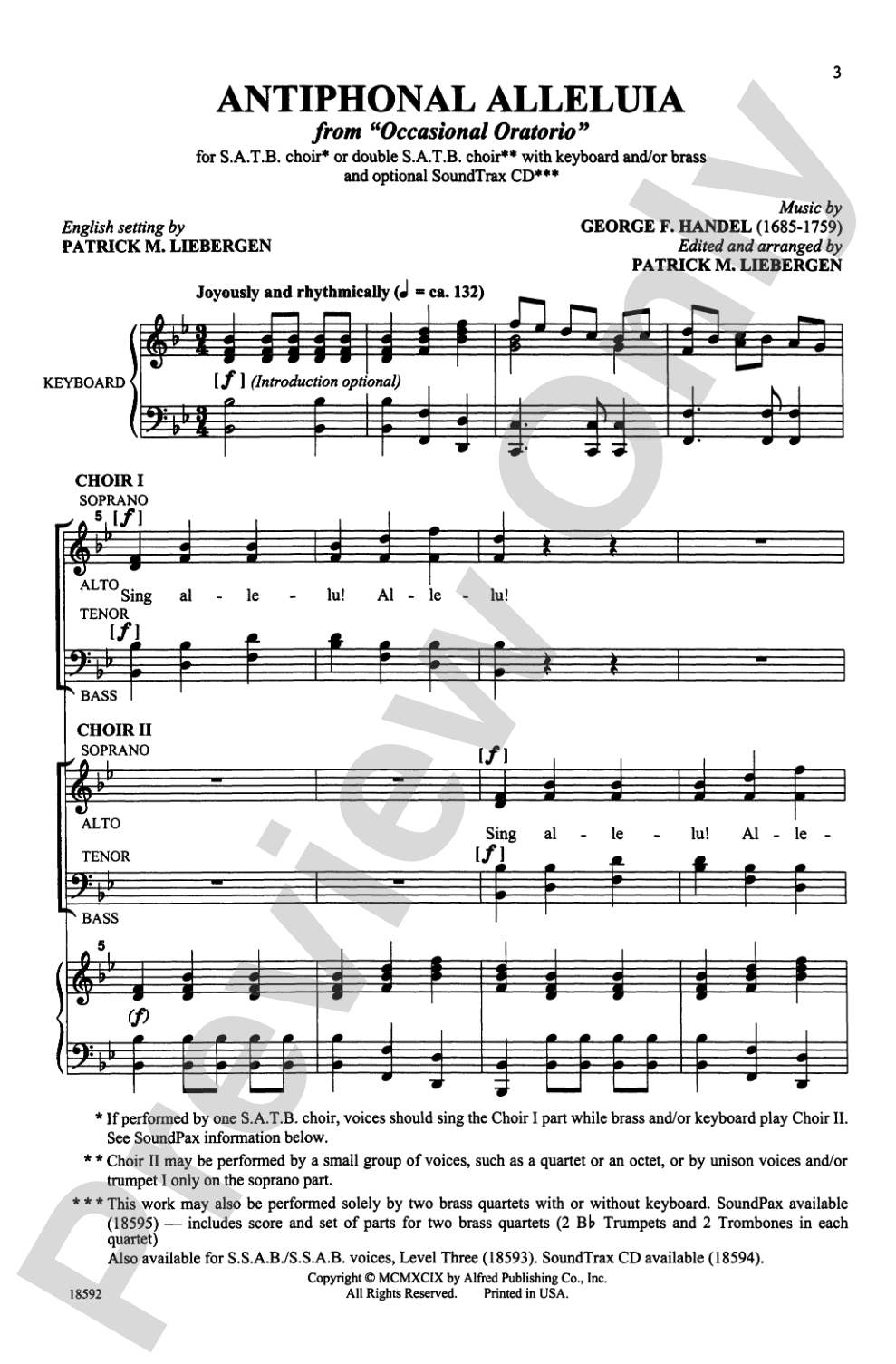

Antiphonal Alleluia: SATB Choral Octavo
Music by George Frideric Handel / arr. Patrick M. Liebergen
Item: 00-PO-0002134
$2.25
Minimum order quantity: 20 copies
Pickup currently not available
Description
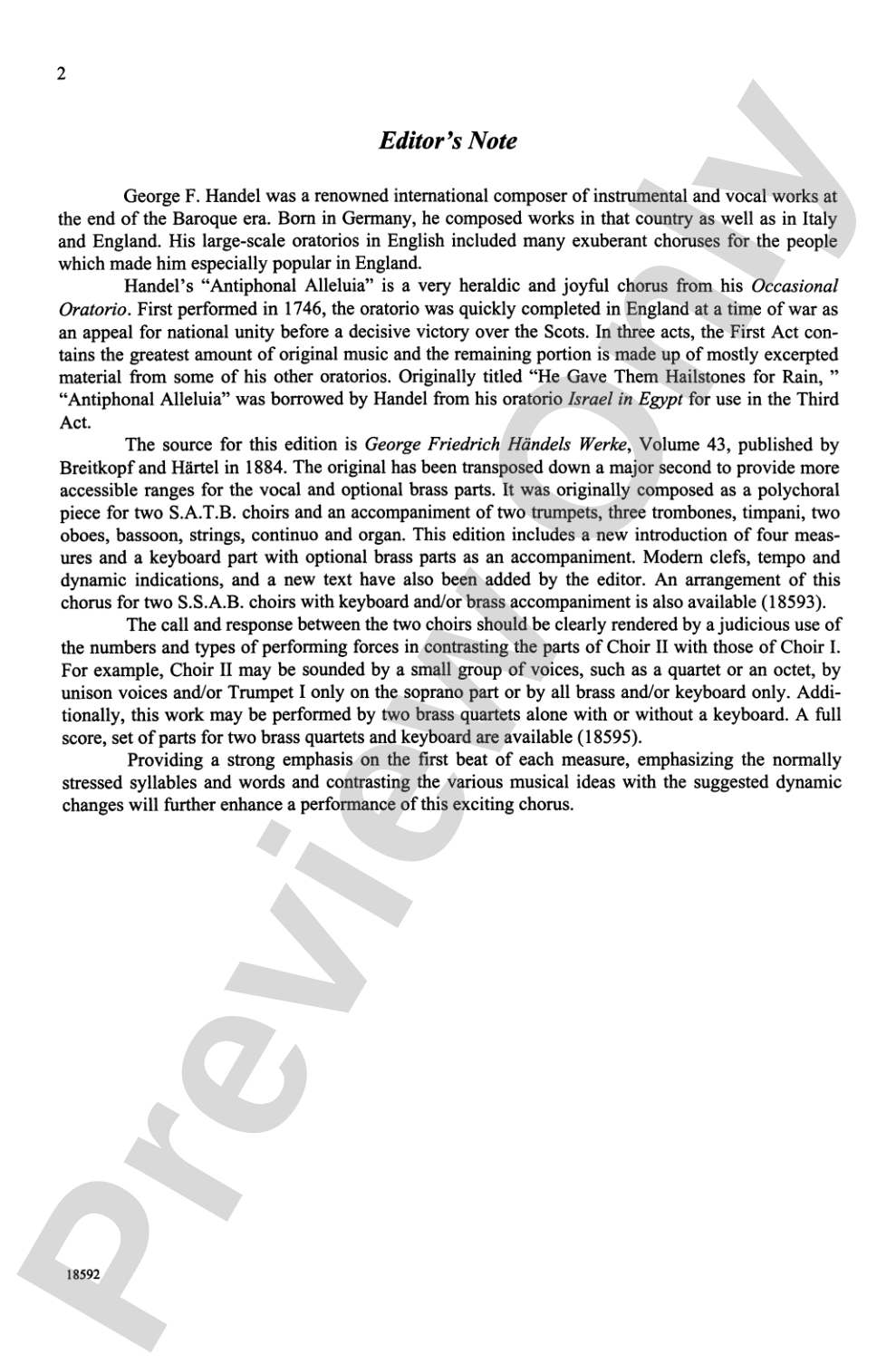
A fine antiphonal masterwork for today's mixed choirs. May be performed by one choir with any of the following performing the antiphonal choir part: a second choir, a small group of voices, brass or solo trumpet. A powerful, yet not-too-difficult work by Handel.


Antiphonal Alleluia: SATB Choral Octavo isn't in MakeMusic Cloud just yet...but it could be. Let us know you'd like to see it, and you'll help shape what comes next. In the meantime, start a free trial and dive into thousands of interactive titles your students can play along with today.
Request This Title
Tell us you want it.
Start Your Free Trial
Explore everything that's ready to play right now.
Sample Audio
1
Audio File
--:--
0:00
0:00
Sample Video
No sample videos found.
Additional Details
Series:
Alfred Archive Edition: Alfred Choral Designs
Publisher:
Alfred Music
Page Count:
12
SKU:
00-PO-0002134
More about this title
About the Composer: George Frideric Handel
George Frideric Handel (1685–1759) was a German-born composer who spent much of his career in England, where he became a central figure in Baroque music. His compositional output spanned opera, oratorio, instrumental music, and sacred works, and he had an gift for writing vocal lines that were both singable and dramatically powerful. Handel's influence on choral writing remains substantial; his understanding of how voices move together and how to balance polyphony with clarity shaped the choral tradition that followed.
Why we love this
Patrick M. Liebergen's arrangement captures the antiphonal drama that Handel understood so well, giving modern choirs a work that's genuinely rewarding to perform without requiring advanced vocal technique. The flexibility in instrumentation for the antiphonal section means you can build the piece to match your ensemble's strengths, whether that's a second choir, a small vocal ensemble, or brass. This is sophisticated music that never feels intimidating.
What to expect
The piece radiates joy and affirmation, with the antiphonal structure creating a sense of call and response that feels both intimate and ceremonial. Handel's harmonic language is warm and accessible, never cold or academic, and the alternating sections build cumulative momentum toward a satisfying conclusion.
Who it's for
This octavo works for mixed choirs at the intermediate to advanced level who want to explore Baroque polyphony without committing to a full-scale oratorio excerpt. It's especially valuable for directors with access to either a second choir or a small solo ensemble, or those with brass players who can take on the antiphonal role.
How to get the most out of it
- Shape the antiphonal exchanges to highlight the dialogue between the two choirs or groups; resist the urge to sing both sections at the same dynamic level. The architectural point of the piece comes from the contrast between them.
- If using instrumental reinforcement for the antiphonal part, balance the voices carefully so they remain the primary voice; the instruments should enhance, not overwhelm.
- Lock the cadential moments between both choirs or groups during rehearsal to ensure clean alignment at structural arrival points.
- The recorded accompaniment is a useful reference for establishing the harmonic foundation, particularly helpful if you're dividing your choir rather than bringing in a second ensemble.
How to use it
This works beautifully as a concert closer or as a bridge between secular and sacred programming, since it carries spiritual weight without requiring a liturgical context. It pairs well with other Baroque choral works or can anchor a program exploring antiphonal writing across different eras.
Skills your students will build
- Singing baroque ornamentation and phrasing
- Balanced voice leading in four-part harmony
- Ensemble coordination between two distinct choral or vocal groups
- Dynamic contrast and architectural phrasing at the phrase and section level
- Flexibility in adapting vocal lines for instrumental doubling or replacement