
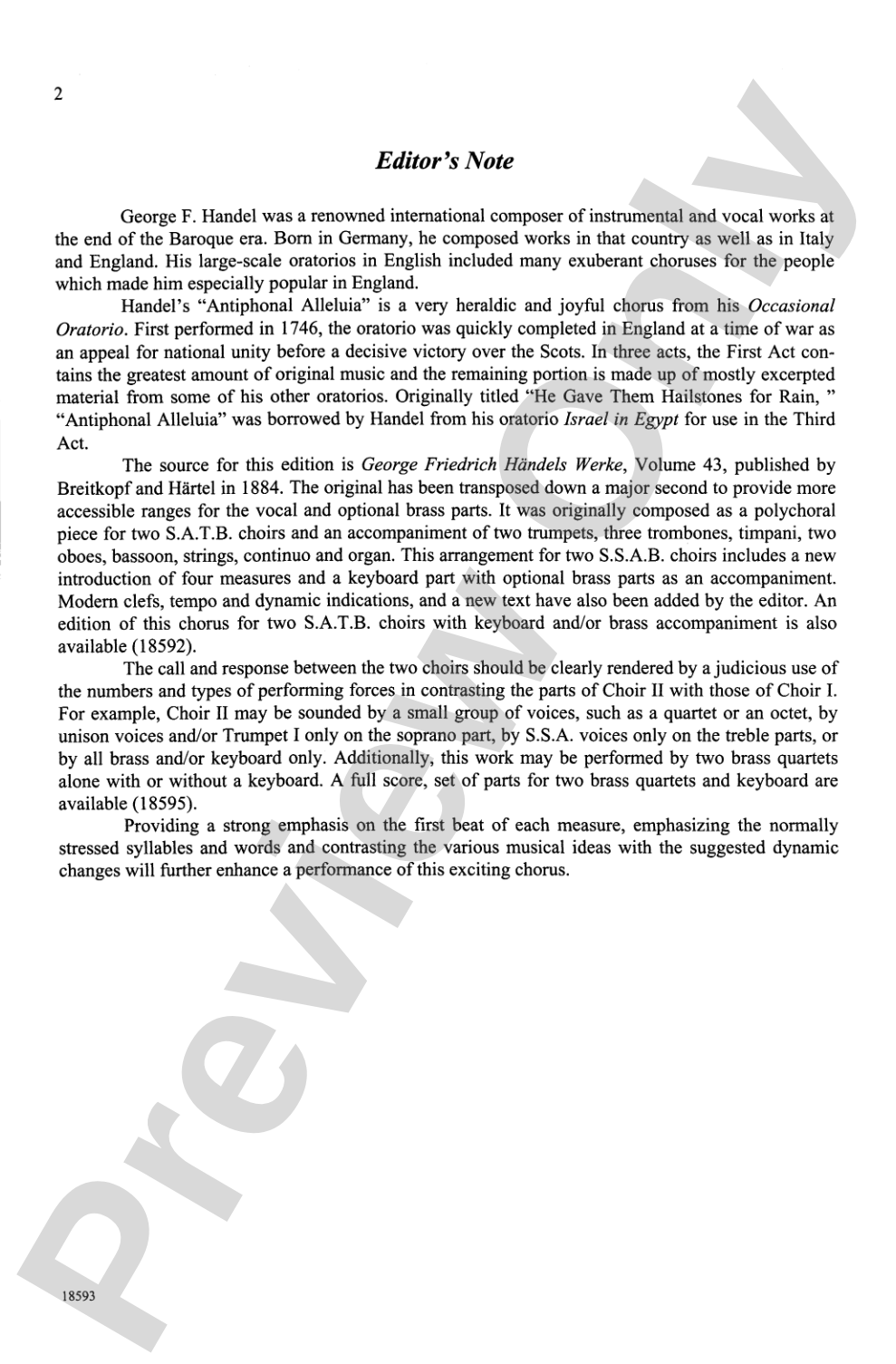
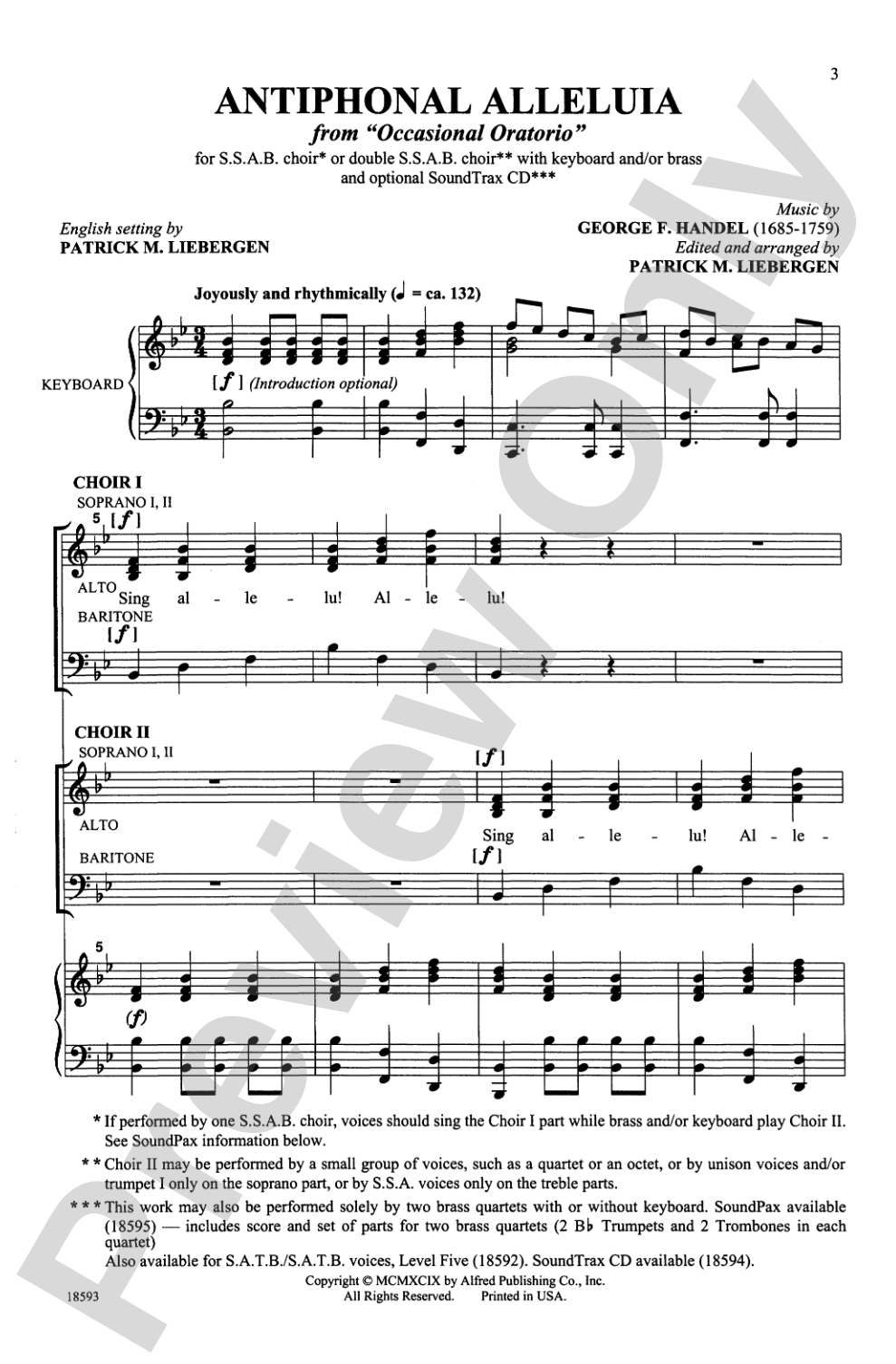

Antiphonal Alleluia: SSAB Choral Octavo
Music by George Frideric Handel / arr. Patrick M. Liebergen
Item: 00-PO-0004062
$2.25
Minimum order quantity: 20 copies
Pickup currently not available
Description
A fine antiphonal masterwork for today's mixed choirs. May be performed by one choir with any of the following performing the antiphonal choir part: a second choir, a small group of voices, brass or solo trumpet. A powerful, yet not-too-difficult work by Handel.


Antiphonal Alleluia: SSAB Choral Octavo isn't in MakeMusic Cloud just yet...but it could be. Let us know you'd like to see it, and you'll help shape what comes next. In the meantime, start a free trial and dive into thousands of interactive titles your students can play along with today.
Request This Title
Tell us you want it.
Start Your Free Trial
Explore everything that's ready to play right now.
Sample Audio
1
Audio File
--:--
0:00
0:00
Sample Video
No sample videos found.
Additional Details
Series:
Alfred Archive Edition: Alfred Choral Designs
Publisher:
Alfred Music
Page Count:
12
SKU:
00-PO-0004062
More about this title
About the Composer: George Frideric Handel
George Frideric Handel (1685–1759) was a German-born composer who spent most of his career in England, where he became a dominant force in Baroque music. He wrote across every major genre: opera, oratorio, concerti grossi, and sacred and secular vocal works. His music combines Italian melodic richness with German contrapuntal craft, creating works of remarkable architectural clarity and emotional directness.
Handel's choral writing remains central to the repertoire because it balances accessibility with sophistication. His melodies are memorable and singable, yet his harmonic language and structural designs reward careful study. For choral directors, Handel offers works that challenge singers without demanding virtuosic display, making his music ideal for building ensemble musicianship across mixed voices.
Why we love this
This arrangement gives choirs a genuine Baroque masterwork without the difficulties that often come with period music. Patrick Liebergen's adaptation for mixed voices preserves Handel's architectural brilliance while the antiphonal design creates dramatic momentum and engages singers through question-and-answer dialogue. The flexibility to use a second choir, a small chamber group, or even brass for the alternating sections means you can shape this work to fit your ensemble's strengths and available resources.
What to expect
Handel's Alleluia radiates baroque grandeur built on elegant, singable lines. The antiphonal structure creates conversation and energy; the main choir states ideas while a responding voice echoes, answers, or amplifies them. It feels architectural and inevitable, with harmonic surprises that reveal themselves through careful listening rather than shocking the ear.
Who it's for
Mixed choirs at intermediate to advanced levels who want to program a work with both structural sophistication and rehearsal-friendly vocalization. This octavo works equally well for church choirs seeking liturgical repertoire and concert choirs looking to expand beyond contemporary works. The scoring flexibility makes it valuable for programs where instrumental resources vary from year to year.
How to get the most out of it
- Establish clear articulation and attack across both choirs before layering dynamics. The antiphonal effect depends on hearing each section as a unified gesture, not scattered entries.
- Use the recorded accompaniment to lock tempo and intonation, especially during the alternating sections where ensemble cohesion becomes audible.
- Balance the main choir and antiphonal choir so they feel like partners in dialogue rather than soloist and background. This may mean positioning the antiphonal group prominently, whether they're singers, instrumentalists, or a mixed ensemble.
- Shape the text underlay with intention. 'Alleluia' carries theological weight; articulate it with both rhythmic precision and spiritual intention.
How to use it
Program this as a centerpiece for a concert exploring Baroque choral writing, or use it as a bridge between liturgical and secular contexts since it combines the grandeur of sacred music with the craftsmanship of secular vocal art. Its moderate length (12 pages) makes it an excellent second or third work in a mixed program, where it provides contrast without demanding an entire concert around it.
Skills your students will build
- Antiphonal singing and ensemble positioning
- Baroque phrasing and articulation
- Blend and balance across separated voice sections
- Reading SSAB voicing and navigating the score during alternating sections
- Text expression in Latin sacred language