
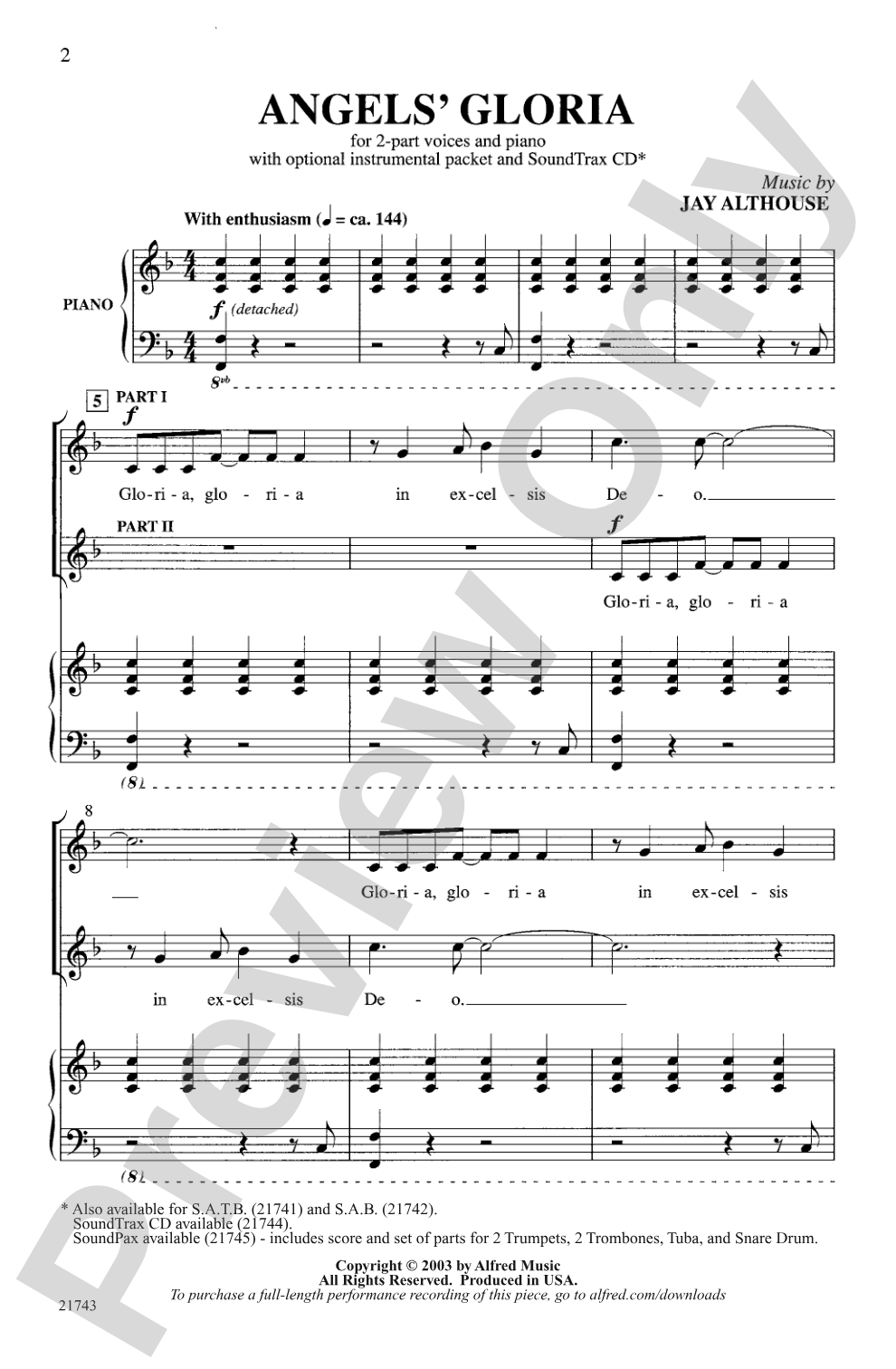

Angels' Gloria: 2-Part Choral Octavo
Music by Jay Althouse
Item: 00-PO-0007633
$2.05
Minimum order quantity: 20 copies
Pickup currently not available
Description
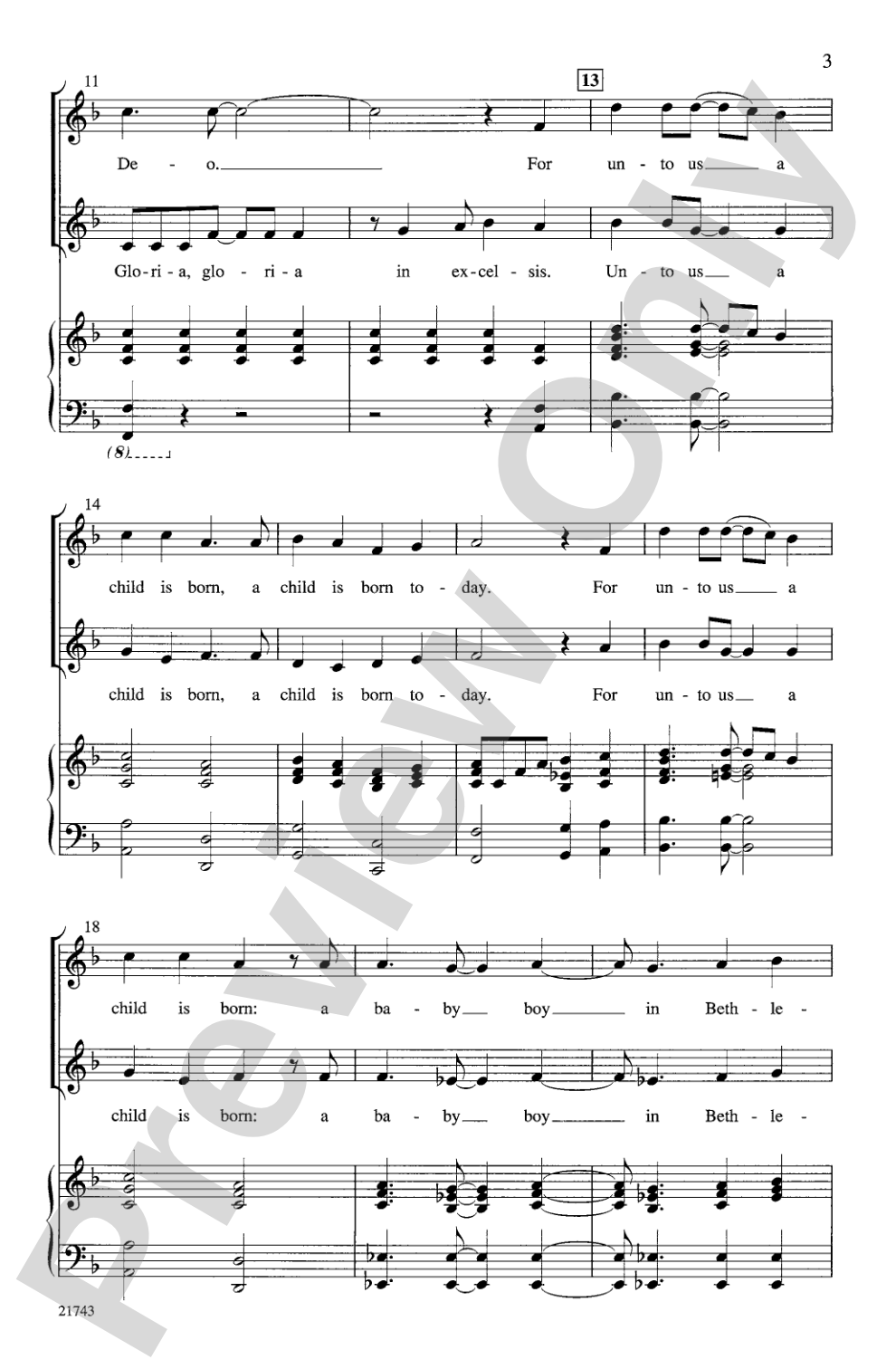
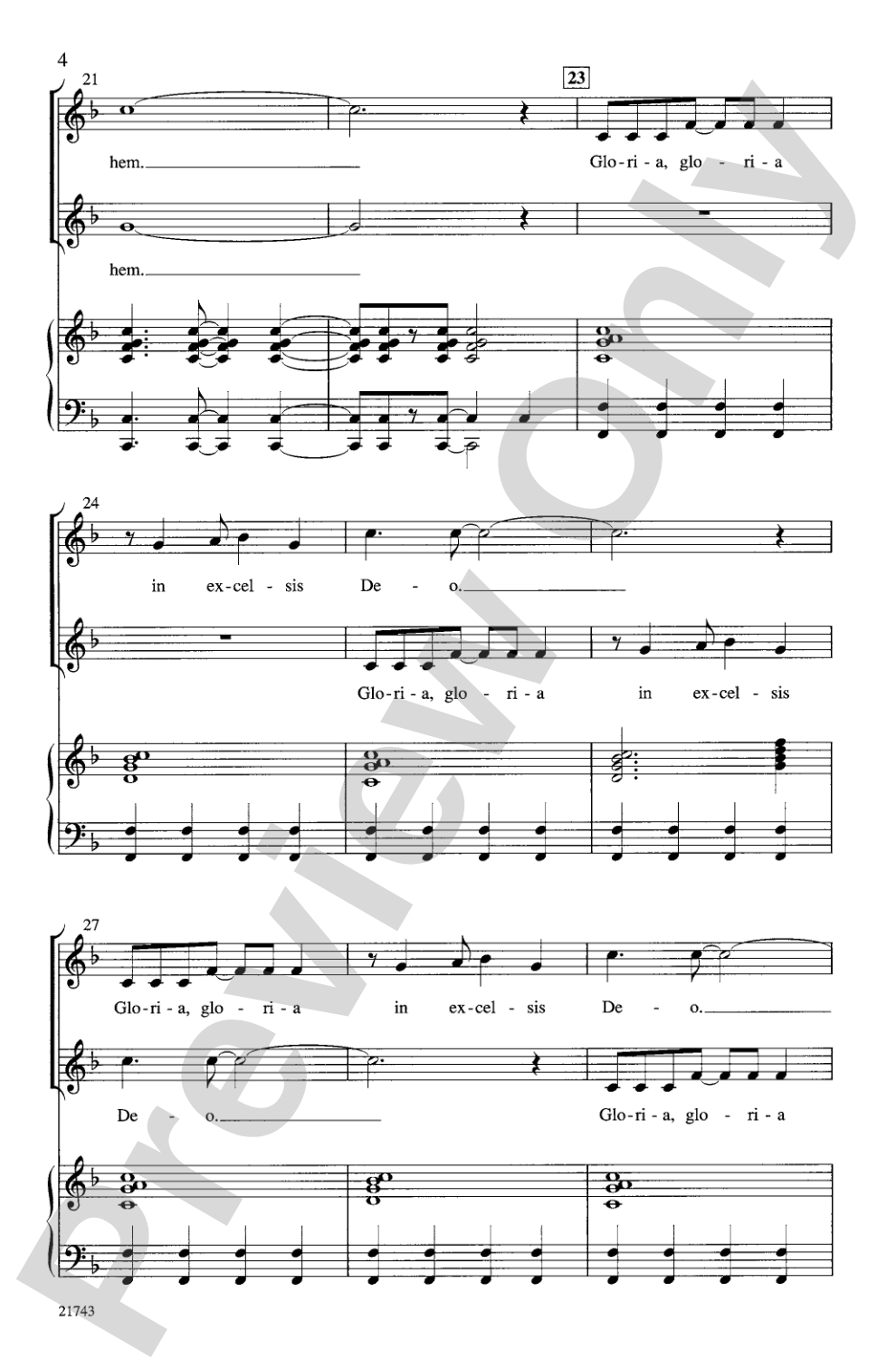
A strong seasonal work by favorite composer, Jay Althouse. This driving choral opens with an original "Gloria" melody echoed throughout the choir, followed by a contemporary setting of the traditional Angels We Have Heard On High, and then skillfully intertwines the two into a majestic and spirited concert piece for choirs of all ages. The optional SoundPax features parts for brass and percussion, or use the optional SoundTrax CD for a stunning effect.


Angels' Gloria: 2-Part Choral Octavo isn't in MakeMusic Cloud just yet...but it could be. Let us know you'd like to see it, and you'll help shape what comes next. In the meantime, start a free trial and dive into thousands of interactive titles your students can play along with today.
Request This Title
Tell us you want it.
Start Your Free Trial
Explore everything that's ready to play right now.
Sample Audio
1
Audio File
--:--
0:00
0:00
Sample Video
No sample videos found.
Additional Details
Series:
Alfred Choral Designs
Publisher:
Alfred Music
Page Count:
12
SKU:
00-PO-0007633
More about this title
About the Composer: Jay Althouse

Jay Althouse holds degrees in Music Education and Music from Indiana University of Pennsylvania, where he was recognized as a Distinguished Alumnus. He spent eight years in educational music publishing as a rights and licenses administrator and served on the Executive Board of the Music Publishers Association of America. His catalog encompasses more than 800 choral works performed regularly across the English-speaking world, and he maintains membership in ASCAP with multiple Special Awards for his compositions.
Beyond composition, Althouse has collaborated with his wife Sally K. Albrecht on children's musicals and co-authored influential resources including The Complete Choral Warm-up Book and Accent on Composers. He compiled and edited vocal solo collections and authored classroom materials on music literacy and composer study. The couple's collaborative choral work I Hear America Singing was performed by the San Francisco Girls and Boys Choirs at President Barack Obama's 2009 inauguration. Althouse has served on the board of the North Carolina Master Chorale and currently advises the National Board of the Folk Art Society of America.
Why we love this
Althouse brings a composer's sophisticated understanding of choral writing to what could be a standard holiday arrangement. He trusts his singers with a genuine original melody (the Gloria) that anchors the piece, then builds elegantly toward the familiar carol without ever letting familiarity undermine the composition's ambition. The interweaving of both themes creates satisfying musical architecture that audiences hear as inevitable rather than contrived.
What to expect
The piece radiates confident joy and spirited celebration. Opening with the original Gloria melody creates a moment of reverent stillness before the arrangement gathers momentum, building to a brightly orchestrated finale that feels earned rather than imposed. There's an underlying warmth throughout, rooted in the familiar carol but energized by contemporary harmonic choices and the driving rhythmic pulse Althouse establishes from the start.
Who it's for
This octavo works beautifully for community choirs, school choirs from middle through high school, and church music programs seeking substantial seasonal repertoire with genuine musical content. The 2-part voicing is accessible, but Althouse's compositional craft means singers and listeners both engage with a piece that respects their musical intelligence.
How to get the most out of it
- Shape the opening Gloria melody with clear phrase direction; this original tune should feel like a distinct musical statement before the arrangement unfolds, not a prelude to the real piece.
- Balance the two melodic ideas carefully during the intertwining section. Neither the Gloria nor Angels We Have Heard On High should disappear; think of them as equal voices in conversation rather than theme and accompaniment.
- If using the optional brass and percussion parts (SoundPax), rehearse with them early enough that singers understand the rhythmic energy those instruments bring. The independence of the parts rewards thorough preparation.
How to use it
Program this as the centerpiece of a winter concert, especially one that mixes sacred and secular repertoire. Its length (12 pages) and significant musical content make it suitable as a complete concert statement rather than a lighter filler piece. The optional instrumental enhancements allow you to adjust the piece's scale depending on available resources and concert context.
Skills your students will build
- Sustaining independent melodic lines while hearing other parts simultaneously
- Balancing familiar material (Angels We Have Heard On High) with original compositional ideas
- Ensemble precision in rhythmically driven arrangements with optional instrumental accompaniment
- Phrasing in contemporary harmonic contexts (not folk-based chord progressions)