

Angels All Around: 2-Part Choral Octavo
Words and music by Mark Burrows
Item: 00-PO-0007815

$2.50
Minimum order quantity: 20 copies
Pickup currently not available
Description
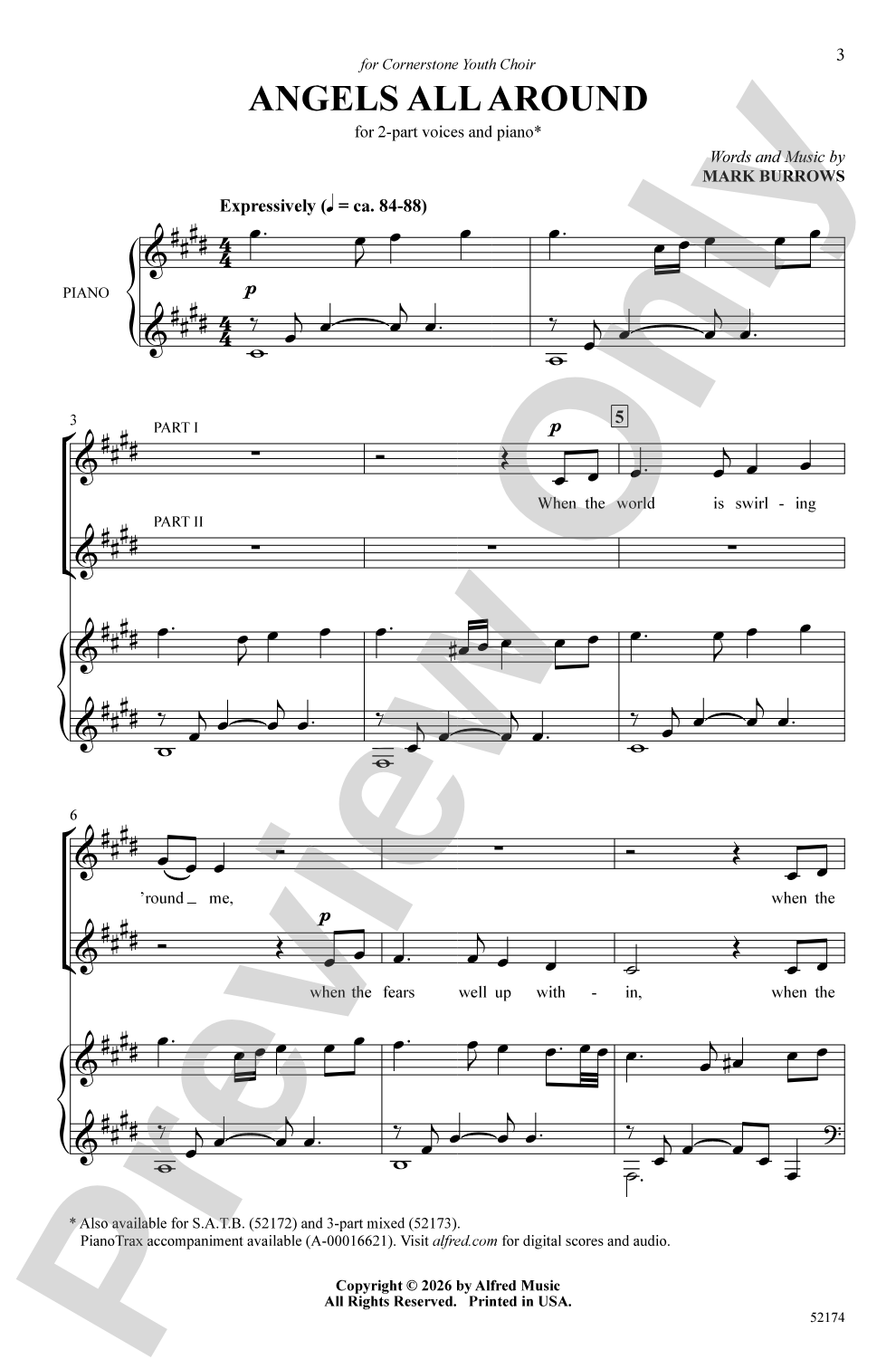
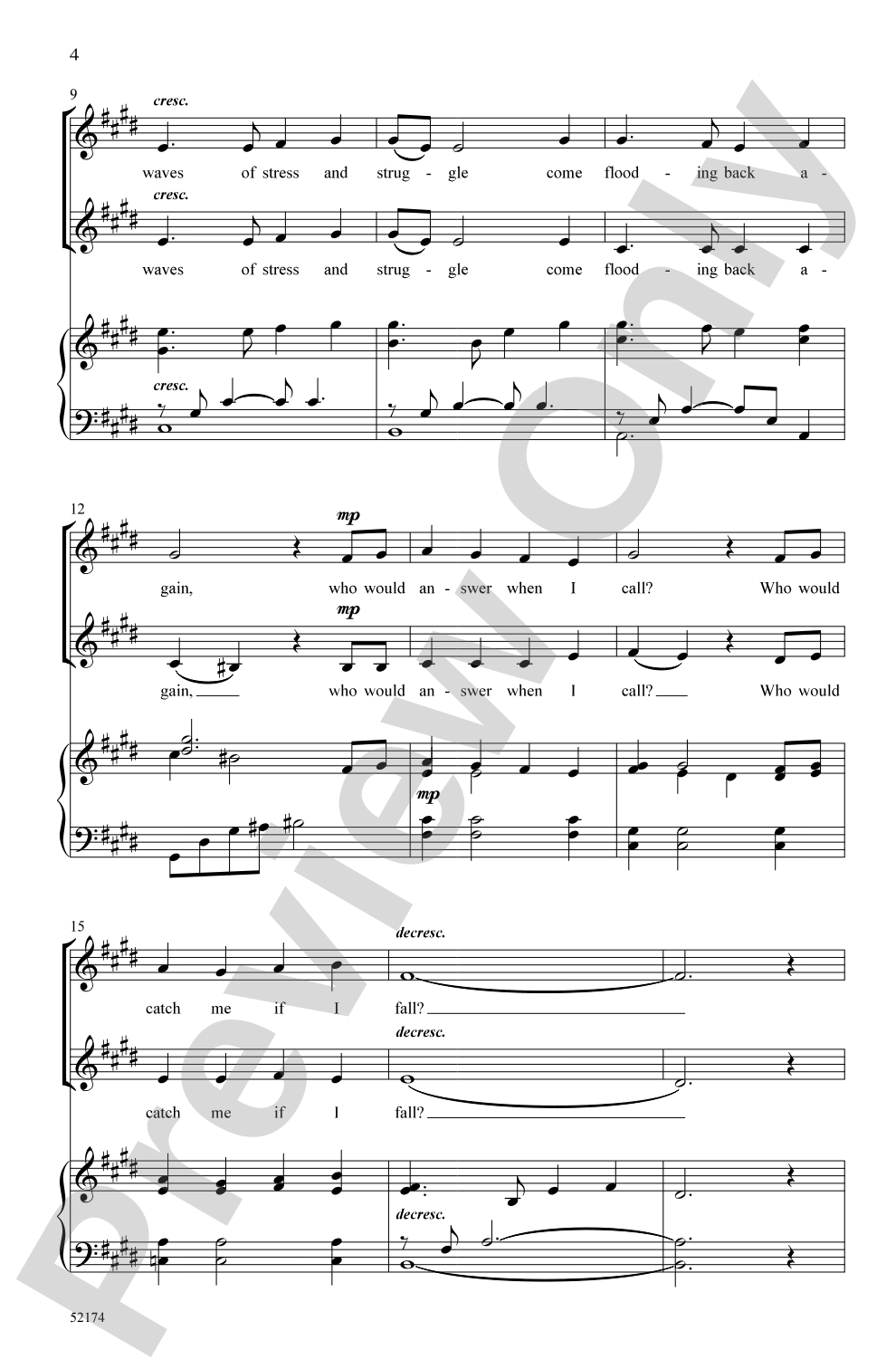
Take comfort in this radiant original that serves as a steadfast anchor against "waves of stress and struggle." Lyrical lines emerge over a delicate piano introduction and gradually unfold into a luminous chorus that feels like a warm, harmonic embrace. Logical voice leading, conservative ranges, and intuitive expressive phrasing make this beautiful song accessible for younger groups, yet nuanced enough to resonate with experienced ensembles.


Don't just read it, hear it, play along with it, and watch your students grow with it. In MakeMusic Cloud, Angels All Around: 2-Part Choral Octavo comes alive with professional accompaniment, adjustable tempo, and built-in practice tools that turn solo practice into real progress.
Open in the Player
Jump straight in and assign it today.
Start Your Free Trial
Open this title and explore the full library in minutes.
Sample Audio
1
Audio File
--:--
0:00
0:00
Sample Video
Additional Details
Series:
Alfred Choral Designs
Publisher:
Alfred Music
Page Count:
12
SKU:
00-PO-0007815
More about this title
About the Composer: Mark Burrows

Mark Burrows composes for ensembles across the full spectrum of choral music, from children's choirs to adult groups to intergenerational festival gatherings. His works appear regularly on state and festival lists, and he fields multiple commissions annually from organizations nationwide. He holds degrees in music education from Southern Methodist University and in conducting from Texas Christian University, and serves as Director of Children's Ministries at FUMC in Fort Worth, Texas.
Burrows brings both compositional craft and deep understanding of how singers learn and grow. His music is published by major houses and consistently finds its way into the repertoire of groups seeking pieces that are both accessible and musically substantial. He lives in Fort Worth with his wife, Nina, and their two daughters.
Why we love this
Burrows writes with real empathy for younger ensembles without condescending to them. The piece balances immediate accessibility with genuine harmonic and expressive depth, so your singers never feel like they're performing a simplified version of something "real." It's the kind of original that works beautifully in concert and can hold its own in a festival setting.
What to expect
The piece opens with quiet assurance, then gradually expands into something warm and enveloping. There's a quality of gentle affirmation throughout, as if the music itself is offering reassurance without being sentimental.
Who it's for
Younger and developing choirs will find this piece both encouraging and rewarding to learn, thanks to its conservative ranges and logical voice leading. Experienced ensembles will appreciate the sophistication in the harmonic language and emotional depth, making it equally valuable for more advanced groups.
How to get the most out of it
- Shape the piano introduction as its own musical statement rather than mere accompaniment. It sets the emotional landscape for everything that follows, so invest rehearsal time in getting the coloring and phrasing right.
- Pay attention to where the lyrical lines transition into the chorus. These moments hinge on breath placement and phrase continuity, not just hitting the notes cleanly.
- Let the harmony unfold gradually. Resist the urge to push volume early; the luminosity of the piece emerges through balance and clarity, not force.
- Treat the two-part writing as an opportunity to blend voices across the parts rather than keeping them separate. The piece rewards integrated, unified sound.
How to use it
This works wonderfully as a centerpiece for a concert focused on comfort, hope, or spiritual warmth. It can also anchor a festival program where you want a piece that demonstrates your singers' musicality and emotional maturity without technical pyrotechnics.
Skills your students will build
- Singing in two independent parts while maintaining phrase continuity across both lines
- Interpreting expressive phrasing cues and dynamic shaping in an original work
- Blending voices to create unified harmonic color
- Following a lyrical melodic line over a more complex piano accompaniment
- Understanding and performing musical balance between voices and accompaniment