
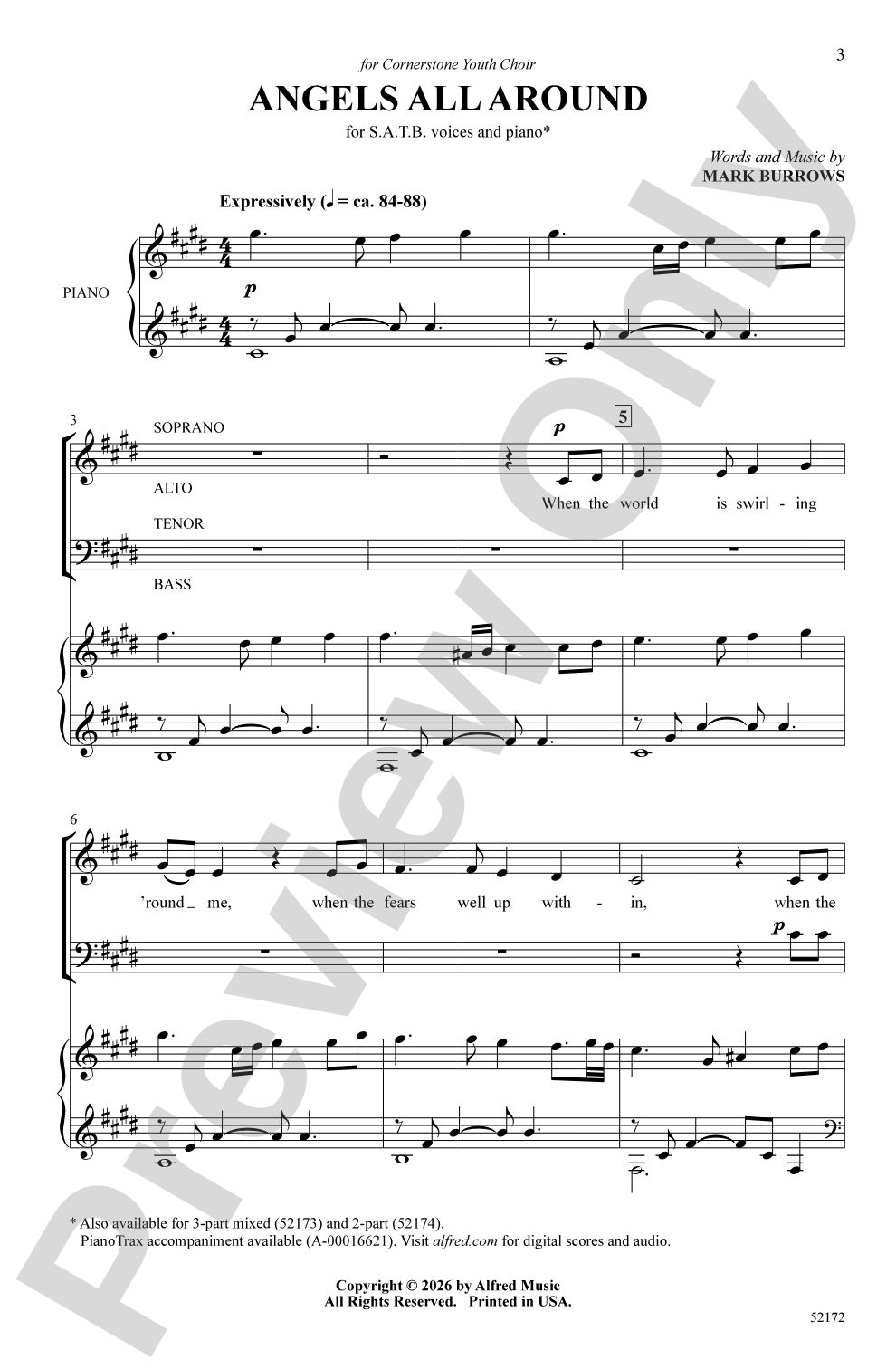
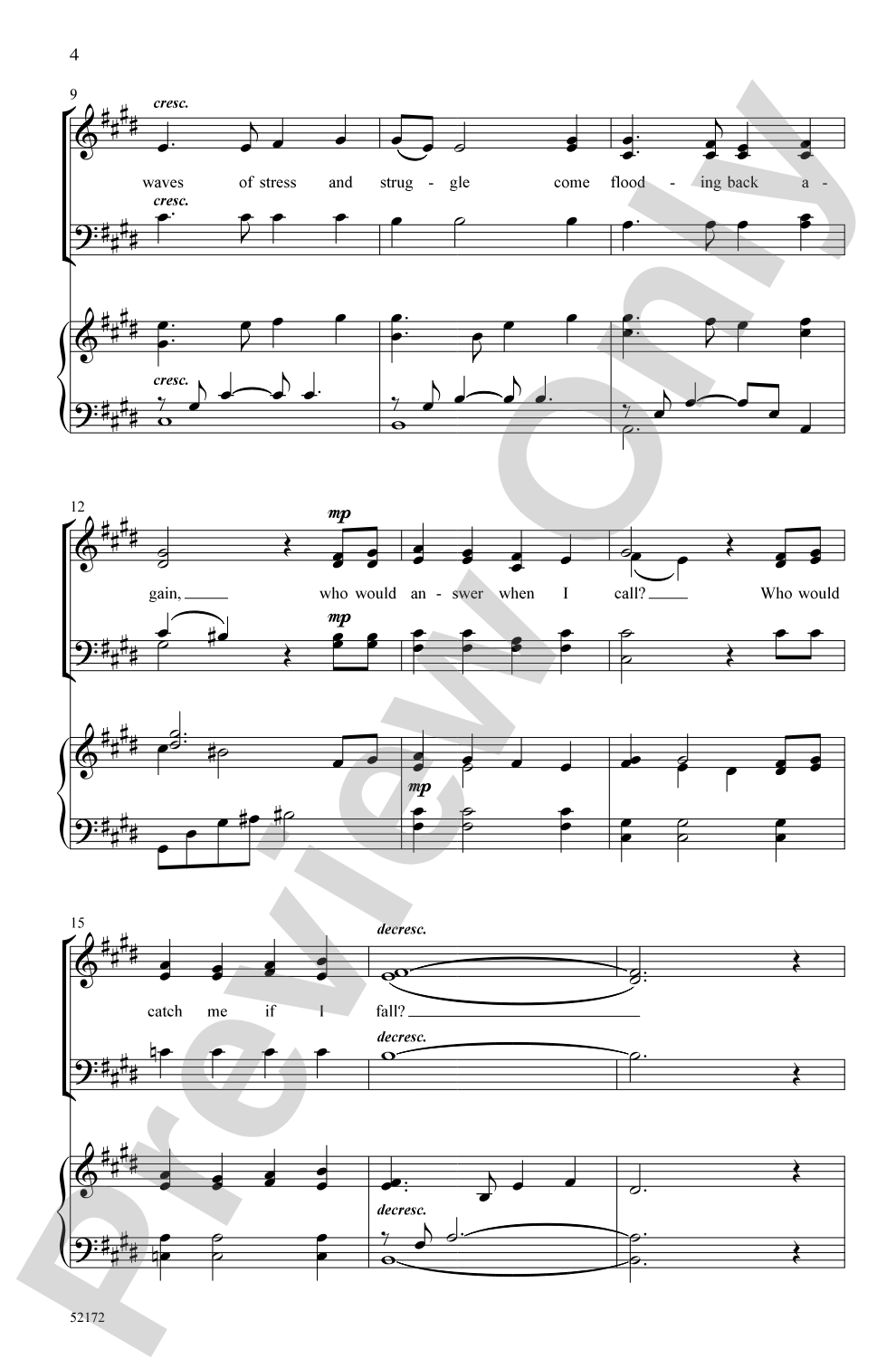

Angels All Around: SATB Choral Octavo
Words and music by Mark Burrows
Item: 00-PO-0007813

$2.50
Minimum order quantity: 20 copies
Pickup currently not available
Description
Take comfort in this radiant original that serves as a steadfast anchor against "waves of stress and struggle." Lyrical lines emerge over a delicate piano introduction and gradually unfold into a luminous chorus that feels like a warm, harmonic embrace. Logical voice leading, conservative ranges, and intuitive expressive phrasing make this beautiful song accessible for younger groups, yet nuanced enough to resonate with experienced ensembles.


Don't just read it, hear it, play along with it, and watch your students grow with it. In MakeMusic Cloud, Angels All Around: SATB Choral Octavo comes alive with professional accompaniment, adjustable tempo, and built-in practice tools that turn solo practice into real progress.
Open in the Player
Jump straight in and assign it today.
Start Your Free Trial
Open this title and explore the full library in minutes.
Sample Audio
1
Audio File
--:--
0:00
0:00
Sample Video
Additional Details
Series:
Alfred Choral Designs
Publisher:
Alfred Music
Page Count:
12
SKU:
00-PO-0007813
More about this title
About the Composer: Mark Burrows

Mark Burrows composes for choirs across the full spectrum of skill levels and ages, from children's ensembles to adult groups to intergenerational festival choirs. His work appears regularly on state and festival lists, and he receives multiple commissions annually from schools and community organizations. He holds degrees in music education from Southern Methodist University and in conducting from Texas Christian University.
Based in Fort Worth, Texas, Burrows serves as Director of Children's Ministries at FUMC, where he brings his deep understanding of how to write music that challenges singers while respecting their capabilities. His compositions are published by major houses and reflect his dual expertise as both an educator and an accomplished conductor.
Why we love this
Burrows writes with genuine understanding of what younger singers need: clean voice leading that sits well in the voice, ranges that don't exclude anyone, and text painting that feels organic rather than forced. The piece manages genuine emotional depth without melodrama, making it equally valuable for concert programming and festival competition. Directors consistently find that their singers connect with the text and want to return to it.
What to expect
The opening unfolds like a gentle conversation, intimate and reflective. As voices enter over the delicate piano, there is a sense of gradual illumination, as though light is slowly filling a quiet space, building toward a moment of warmth and collective embrace that feels grounded and genuine rather than sentimental.
Who it's for
This octavo works well for middle school choirs ready for four-part writing, high school choirs seeking meaningful concert repertoire, and adult community or church choirs. The accessible ranges and logical voice leading make it approachable for groups with limited rehearsal time, while the harmonic sophistication and expressive depth appeal to singers and directors who value artistic substance.
How to get the most out of it
- Allow the piano introduction to establish the gentle, introspective mood before voices enter; this spacious opening sets the emotional landscape for the entire piece.
- Shape the lyrical lines with natural breath points that follow the text phrasing rather than phrase length alone, which will make the melody feel conversational.
- Balance the harmony so inner voices support without overwhelming the soprano line; think of SAT as a pillow beneath the melody rather than equal voices.
- Build toward the luminous chorus gradually, resisting the urge to jump to full volume; the effect relies on contrast between the delicate opening and the warmer, fuller texture that follows.
How to use it
Program this as a centerpiece for a concert themed around comfort, resilience, or inner strength, where it can anchor the emotional arc. It also serves beautifully as a transition piece between more energetic works, giving both singers and audience a moment to breathe and reflect. For festival competition, it stands out because it prioritizes musicality and text connection over technical display.
Skills your students will build
- Four-part SATB voice leading with independence across all four parts
- Phrasing that follows text and natural breathing rather than musical phrase length alone
- Harmonic awareness through transparent inner-voice writing
- Dynamic control and layered expression as texture builds from solo voices to full ensemble
- Text interpretation and emotional communication in contemporary choral language