
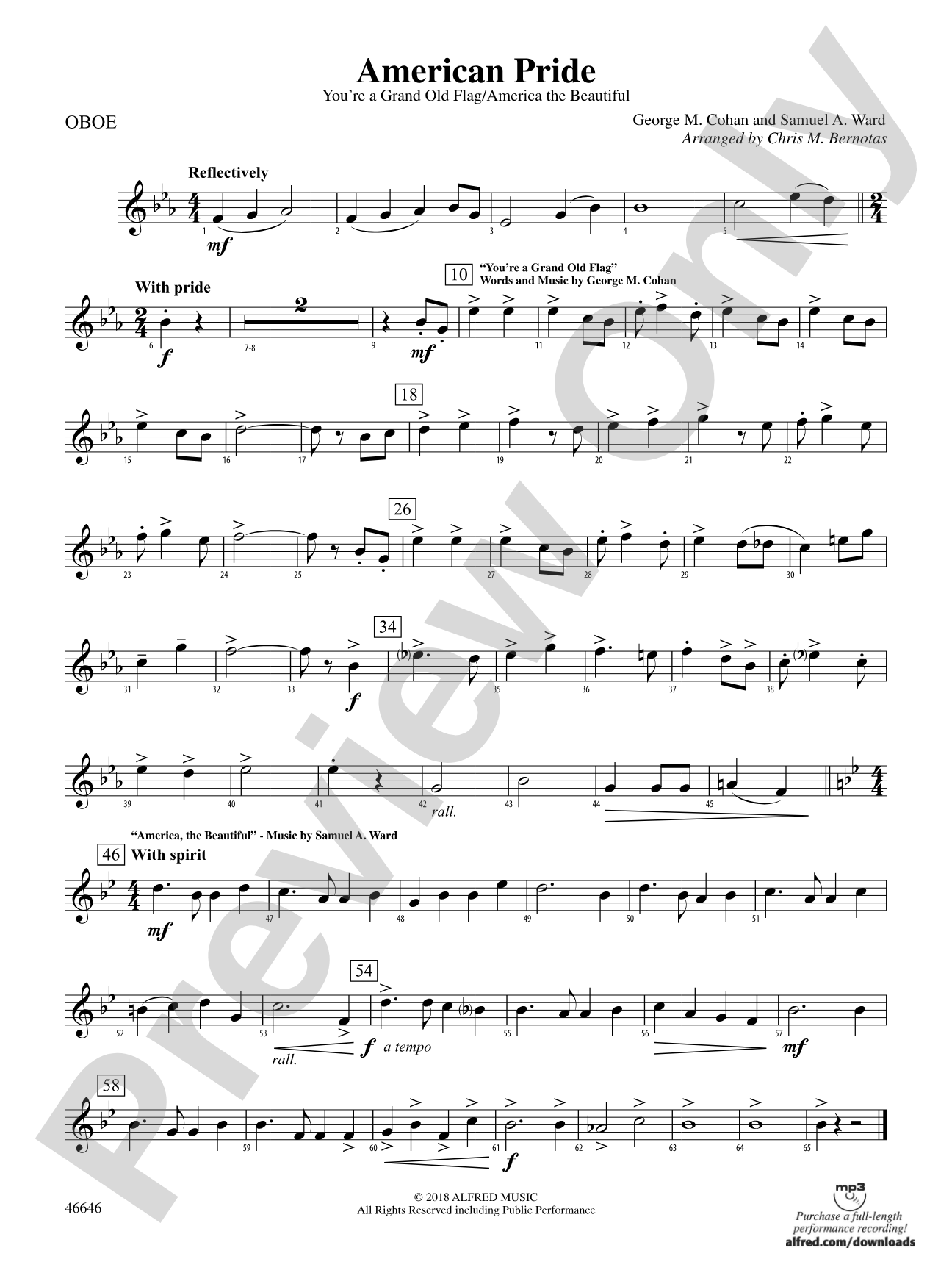

American Pride: Oboe
You're a Grand Old Flag / America the Beautiful
By George M. Cohan and Samuel A. Ward / arr. Chris M. Bernotas
Grade: 1.5 (Easy)
Item: 00-PC-0018076_O1
$3.00
Pickup currently not available
Description
This exciting and fun arrangement of two well-known patriotic songs is perfect for any occasion showing pride and appreciation for our country's freedoms. "You're a Grand Old Flag" and "America the Beautiful" will fill your students' and audiences' hearts with American pride. Great for a combined band concert grand finale. You can even invite the audience to sing along! Correlates with Sound Innovations for Concert Band Book 2, level 2.


Don't just read it, hear it, play along with it, and watch your students grow with it. In MakeMusic Cloud, American Pride: Oboe comes alive with professional accompaniment, adjustable tempo, and built-in practice tools that turn solo practice into real progress.
Open in the Player
Jump straight in and assign it today.
Start Your Free Trial
Open this title and explore the full library in minutes.
Sample Audio
1
Audio File
--:--
0:00
0:00
Sample Video
Additional Details
Series:
Sound Innovations for Concert Band
Publisher:
Alfred Music
Page Count:
138
SKU:
00-PC-0018076_O1
More about this title
About the Composer: George M. Cohan
George M. Cohan (1878-1942) was an American composer, lyricist, actor, and playwright who became one of the most influential figures in early American musical theater. His patriotic songs, particularly "You're a Grand Old Flag" (1906), became enduring anthems that defined American popular music in the early 20th century. Cohan's gift for memorable melodies and straightforward emotional expression made his work accessible to performers and audiences alike, cementing his legacy as a foundational voice in American music.
For music educators, Cohan's compositions offer students immediate connection to American musical heritage. His melodies are singable, his rhythms are clear, and his patriotic intent is unmistakable. Teaching arrangements of his work introduces students to a composer whose music shaped American identity and remains relevant across generations.
Why we love this
Bernotas has created an arrangement that respects the original melodies while giving your band genuine performance substance at Grade 1.5. The combination of two iconic patriotic songs in a single package means you get concert impact with minimal rehearsal time, and the explicit permission to invite audience singing transforms a performance into a shared community moment. This works equally well as a concert finale or a standalone patriotic program.
What to expect
Confident and unfussy. These melodies arrive without apology, with straightforward harmonies that let the tunes do their work. There is genuine warmth in the voicing and a buoyant quality that makes students want to play with purpose. The emotional tone is celebratory rather than solemn, inviting.
Who it's for
This arrangement is designed for concert bands at the Grade 1.5 level who want to program patriotic music without sacrificing musicality. It works equally well for young bands building foundational repertoire and for experienced groups seeking a reliable closer. Directors looking for a piece that energizes both students and audiences will find immediate success here.
How to get the most out of it
- Balance the melodic line across sections so the familiar tunes shine through clearly. Students will hear these songs everywhere; make yours distinctive through clean phrasing rather than thick scoring.
- Lock the rhythmic foundation early by establishing the pulse and articulation in your rhythm section. The Grade 1.5 level depends on solid foundational players setting the tempo.
- If you plan to invite audience singing, rehearse your band's part without the sung melody first, then layer in audience participation during dress rehearsal. This prevents your ensemble from rushing or dragging when the sung voices enter.
- Reserve expressive nuance for the second time through each tune. The first pass should be crisp and clear; the return can breathe a little more and allow for dynamic shaping.
How to use it
Program this as your concert finale to send audiences out uplifted and engaged. The option to include audience singing makes it a natural centerpiece for any patriotic occasion (4th of July concert, Veterans Day ceremony, or school assembly). It also serves well as the closing number for a mixed-repertoire concert, offering a moment of accessibility and unity after a longer program.
Skills your students will build
- Playing lyrical melodic lines with consistent tone quality
- Maintaining steady tempo with rhythmic confidence in Grade 1.5 material
- Balancing individual part lines within an ensemble texture
- Responding to conductor cues for dynamic shaping and phrase definition
- Performing familiar melodic material with musical intention rather than mechanical accuracy