Amazing Grace Cover Image

Amazing Grace: String Orchestra, Full Score

$4.00 USD
Sale price  $4.00 USD Regular price 
Skip to product information
Amazing Grace Cover Image

Amazing Grace: String Orchestra, Full Score

By Traditional, arr. Edmund J. Siennicki

Grade: 2

Item: 36-10255052

$4.00
Shipped

One moment…

Description
Edmund J. Siennicki is a master of composition and arranging for young musicians. This arrangement is intended to present AMAZING GRACE to a second-year string orchestra in a stately, melodic way without becoming "sluggish." Everyone has the melody at one time or another, and two-part counterpoint lends itself well to the spirit of the music.

Amazing Grace: String Orchestra, Full Score isn't in MakeMusic Cloud just yet...but it could be. Let us know you'd like to see it, and you'll help shape what comes next. In the meantime, start a free trial and dive into thousands of interactive titles your students can play along with today.

Sample Pages

No sample pages found.

Sample Audio
No sample audio found.
Sample Video
Additional Details
Series: LudwigMasters Developing Strings
Publisher: Keiser Productions, Inc.
ISBN10: 1-63-361369-0
ISBN13: 978-1-63-361369-0
UPC: 659859106373
SKU: 36-10255052
Instrumentation: String Orchestra (rehearsal piano included)

More about this title

About the Arranger: Edmund J. Siennicki
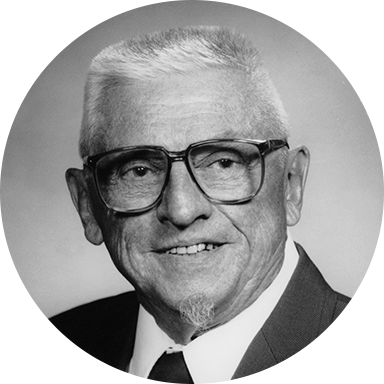
Edmund J. Siennicki

Edmund J. Siennicki grew up in Cleveland, Ohio, where a formative conversation with pianist Ignacy Jan Paderewski at age 12 shaped his musical direction for decades to come. He earned his Bachelor's degree from Kent State University, where he composed Fight on for KSU, a piece still performed at the university's football games, and later received the Distinguished Alumnus Award from the School of Music in 1994.

Siennicki studied composition with Herbert Elwell and electronic music with Sergio Barroso while earning his MA from Teachers College, Columbia University, and consulted with Vincent Persichetti throughout his development as a composer. His career combined teaching in Cleveland's junior high schools with faculty positions at Michigan and Kent State University. His catalog includes approximately 200 published works, many of which have won recognition in National School Orchestra composition contests. He served as composer in residence at the MacDowell Colony twice and has received consistent special awards from ASCAP for the past two decades. Siennicki continues to compose and visit schools to lead clinics.

Why we love this

Siennicki writes for young orchestras with a conductor's ear for what actually sounds good in rehearsal. This arrangement keeps the melody distributed throughout the section, building ownership and engagement for second-year players while the two-part counterpoint adds musical substance without overcomplicating the texture. The stately pacing preserves the hymn's dignity while maintaining the forward momentum that keeps students energized.

What to expect

Gentle and stately without dragging. The melody unfolds with warm familiarity while the two-part writing creates subtle harmonic depth beneath the surface. There's a sense of purpose and dignity in the phrasing, rooted in the hymn's spiritual foundation but animated by the dialogue between parts.

Who it's for

Second-year string orchestras ready to play beyond unison arrangements but still building ensemble blend and part independence. Directors looking for a reverent, accessible arrangement of a universally known hymn that gives every section a chance to carry the melody.

How to get the most out of it

  • Shape the phrases through dynamic swells rather than dramatic contrasts; let the counterpoint create textural interest instead of relying on volume changes.
  • Balance the melody voices with the accompaniment parts by having seconds listen for the firsts' line in rehearsal, then focusing on how their voicing supports it.
  • Anchor the pulse with the cello section, which often carries foundational harmonic movement in counterpoint writing.
  • Work the transitions between melody assignments slowly in sectionals so violins can hear when they trade the tune to violas or cellos.

How to use it

Program this as a meaningful moment in a concert, particularly alongside other arrangements of hymns or spirituals where it can anchor a thematic program. It also serves well as a processional piece or tribute in special ceremonies where its respectful character and accessibility across ability levels make it inclusive.

Skills your students will build

  • Voice independence and listening to parts other than their own
  • Phrasing and musical shaping at moderate tempos
  • Reading and playing secondary melodic lines
  • Harmonic awareness through two-part counterpoint
  • Dynamic control and tone matching within ensemble textures

You May Also Like