Amazing Grace Cover Image

Amazing Grace: String Orchestra, Score and Parts

$30.00 USD
Sale price  $30.00 USD Regular price 
Skip to product information
Amazing Grace Cover Image

Amazing Grace: String Orchestra, Score and Parts

By Traditional, arr. Edmund J. Siennicki

Grade: 2

Item: 36-10250052

$30.00
Shipped

One moment…

Description
Edmund J. Siennicki is a master of composition and arranging for young musicians. This arrangement is intended to present AMAZING GRACE to a second-year string orchestra in a stately, melodic way without becoming "sluggish." Everyone has the melody at one time or another, and two-part counterpoint lends itself well to the spirit of the music.

Amazing Grace: String Orchestra, Score and Parts isn't in MakeMusic Cloud just yet...but it could be. Let us know you'd like to see it, and you'll help shape what comes next. In the meantime, start a free trial and dive into thousands of interactive titles your students can play along with today.

Sample Pages

No sample pages found.

Sample Audio
No sample audio found.
Sample Video
Additional Details
Series: LudwigMasters Developing Strings
Publisher: Keiser Productions, Inc.
ISBN10: 1-63-361368-2
ISBN13: 978-1-63-361368-3
UPC: 659859105864
SKU: 36-10250052
Instrumentation: String Orchestra (rehearsal piano included)

More about this title

About the Arranger: Edmund J. Siennicki
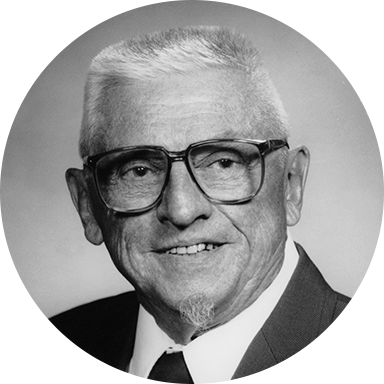
Edmund J. Siennicki

Edmund J. Siennicki's formative encounter with the legendary pianist Ignacy Jan Paderewski at age 12 set the trajectory for a lifetime devoted to music. Born in Cleveland in 1920, he earned his Bachelor's degree from Kent State University, where his fight song for the institution remains performed at football games to this day. He later studied composition with Herbert Elwell and electronic music with Sergio Barroso while completing his MA at Teachers College, Columbia University, and consulted with the distinguished theorist Vincent Persichetti.

Siennicki's career spanned performance (bassoon and piano), teaching (primarily in Cleveland junior high schools and later at Michigan and Kent State University), and prolific composition. His works have won recognition in National School Orchestra composition contests, and he served as composer in residence at the MacDowell Colony twice. With approximately 200 published compositions to his name and decades of ASCAP special awards, he has maintained an active compositional practice while conducting clinics and visiting schools.

Why we love this

Siennicki demonstrates rare restraint here, respecting the hymn's inherent dignity while giving second-year orchestras genuine musical substance. The shared melodic responsibility ensures every section experiences the tune, and the two-part counterpoint adds harmonic richness without overwhelming young players still building foundational skills. A piece this straightforward in texture becomes memorable precisely because nothing overshadows the essential beauty of the melody.

What to expect

Stately and assured, this rendition honors the hymn's reverent character while maintaining forward momentum. The melody sings with the kind of openness that feels natural to string tone, and the gentle layering of parts creates warmth without sentimentality. It's the sound of young musicians discovering that simplicity and beauty are not opposites.

Who it's for

This arrangement belongs in any string orchestra program working at Grade 2 level, whether you're building a fall concert or seeking repertoire that bridges technique and musicianship. It works equally well for second-year orchestras in school settings and advanced elementary string programs. The piece gives every student a clear melodic role without requiring extensive vibrato, complex bowing, or virtuosic passage work.

How to get the most out of it

  • Balance the melody between sections as it passes. Young players sometimes rush to finish their phrase; work with each section to understand where the tune goes next so the handoff feels seamless rather than abrupt.
  • Avoid dragging the tempo. Siennicki's instruction against "sluggishness" is a real concern at this level; a metronome marking around quarter note equals 92-100 bpm keeps the piece moving with dignity.
  • Let the counterpoint breathe. When lower voices enter with their supporting line, they should not dominate. Remind players that accompaniment means underneath, not equal volume.
  • Use the rehearsal piano to establish the harmonic foundation during early rehearsals, then gradually reduce dependency as the string parts solidify.

How to use it

Program this for occasions that invite reflective repertoire—holiday concerts, memorial services, or as an opening piece that establishes a thoughtful tone before more energetic works follow. It also functions beautifully as a standalone offering when your ensemble needs a brief, substantive piece that showcases ensemble balance and melodic clarity without technical showiness.

Skills your students will build

  • Sustained singing tone across phrase boundaries
  • Melodic awareness and passing the tune cleanly between sections
  • Reading and executing two-part harmony textures
  • Balance between melody and counterpoint
  • Playing with consistent intonation at moderate tempos

You May Also Like