
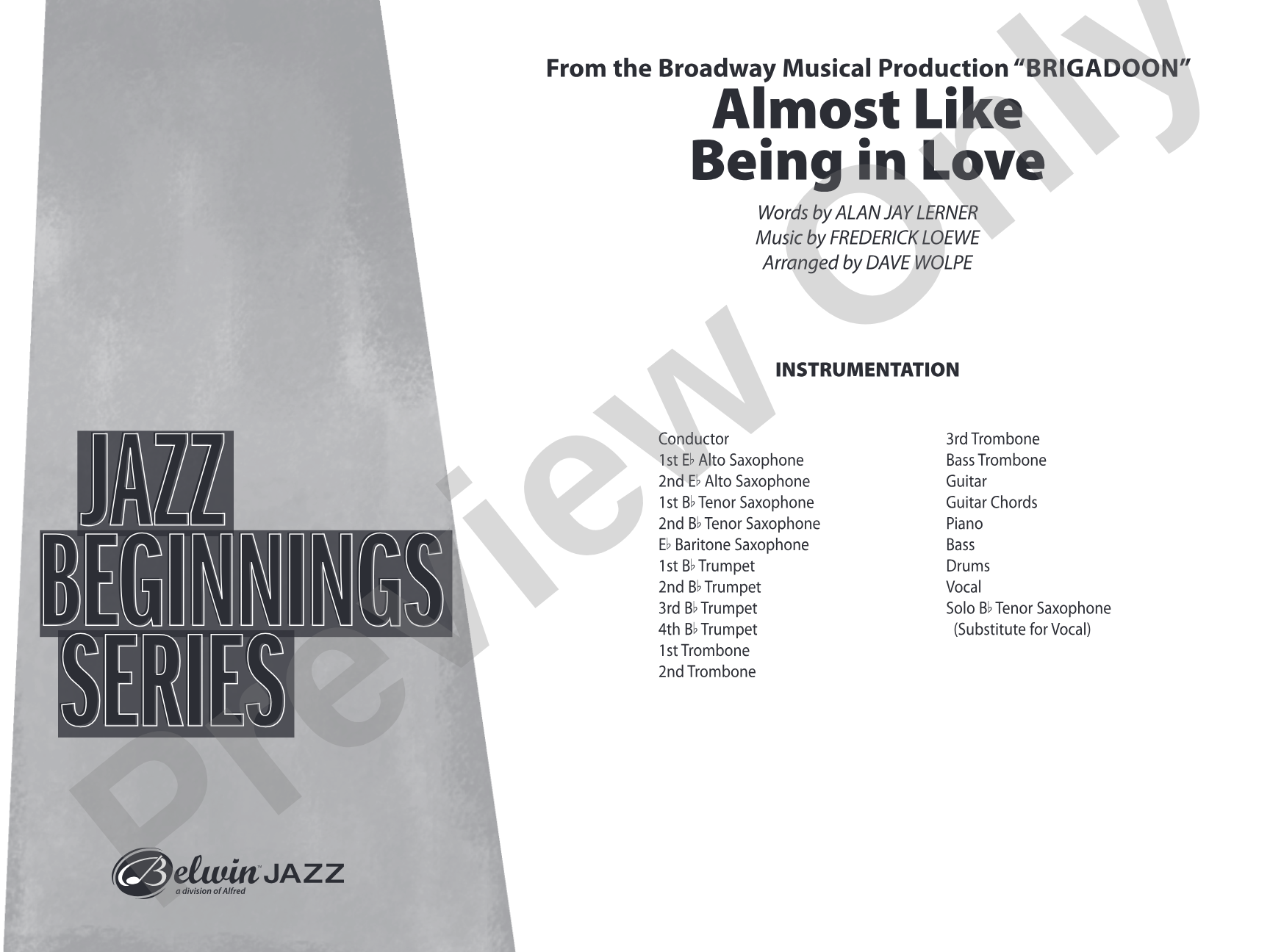

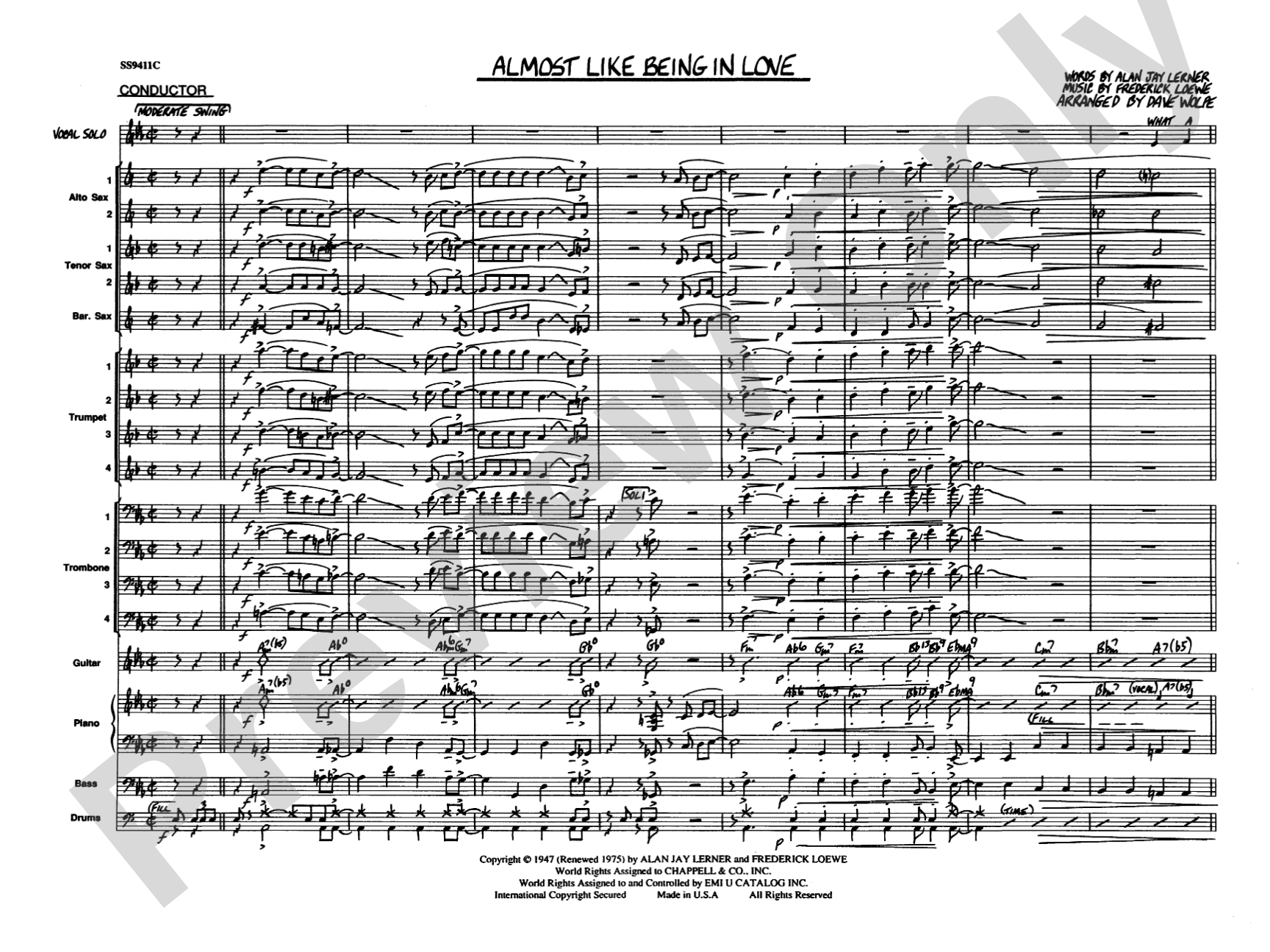
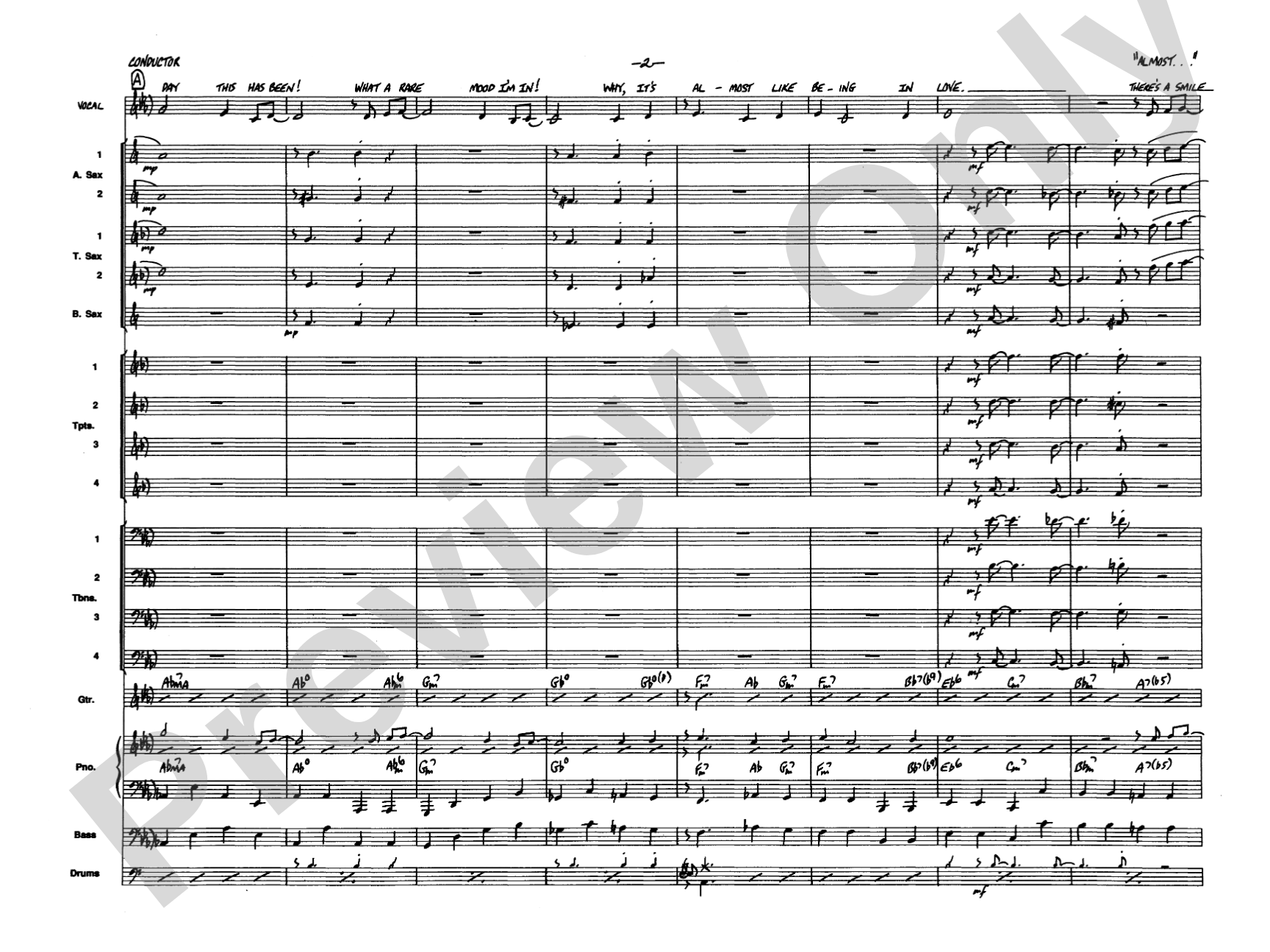
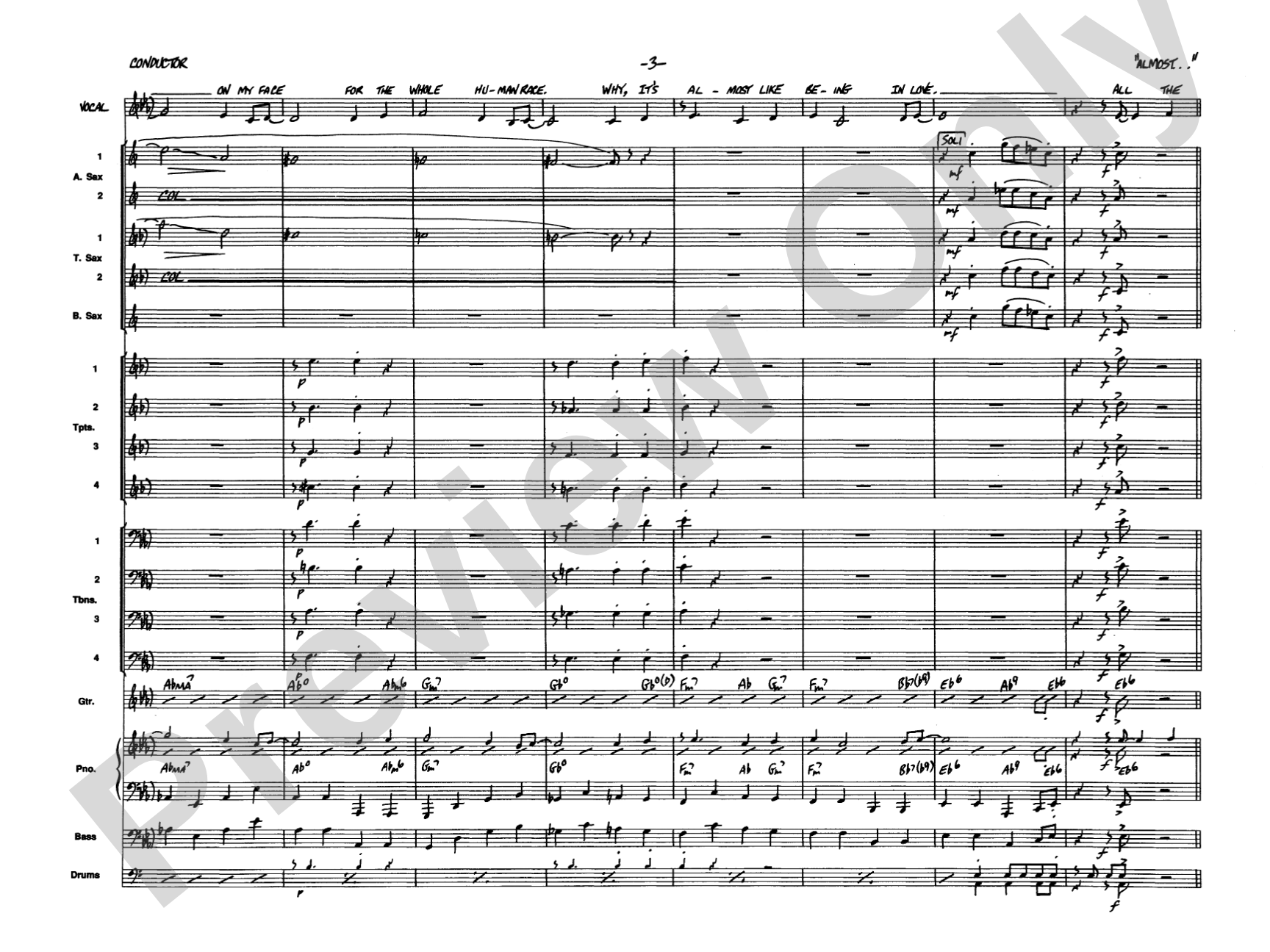
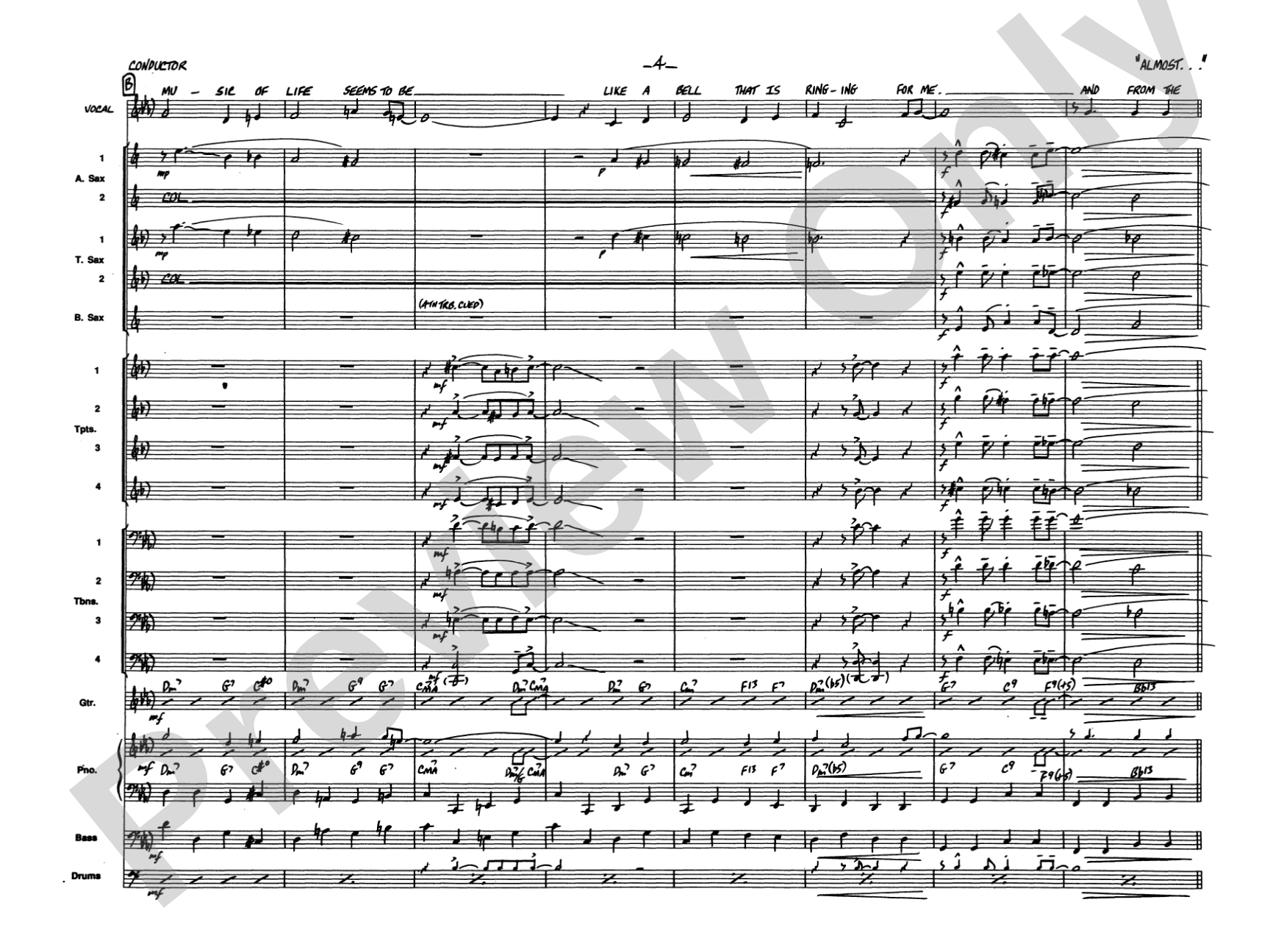
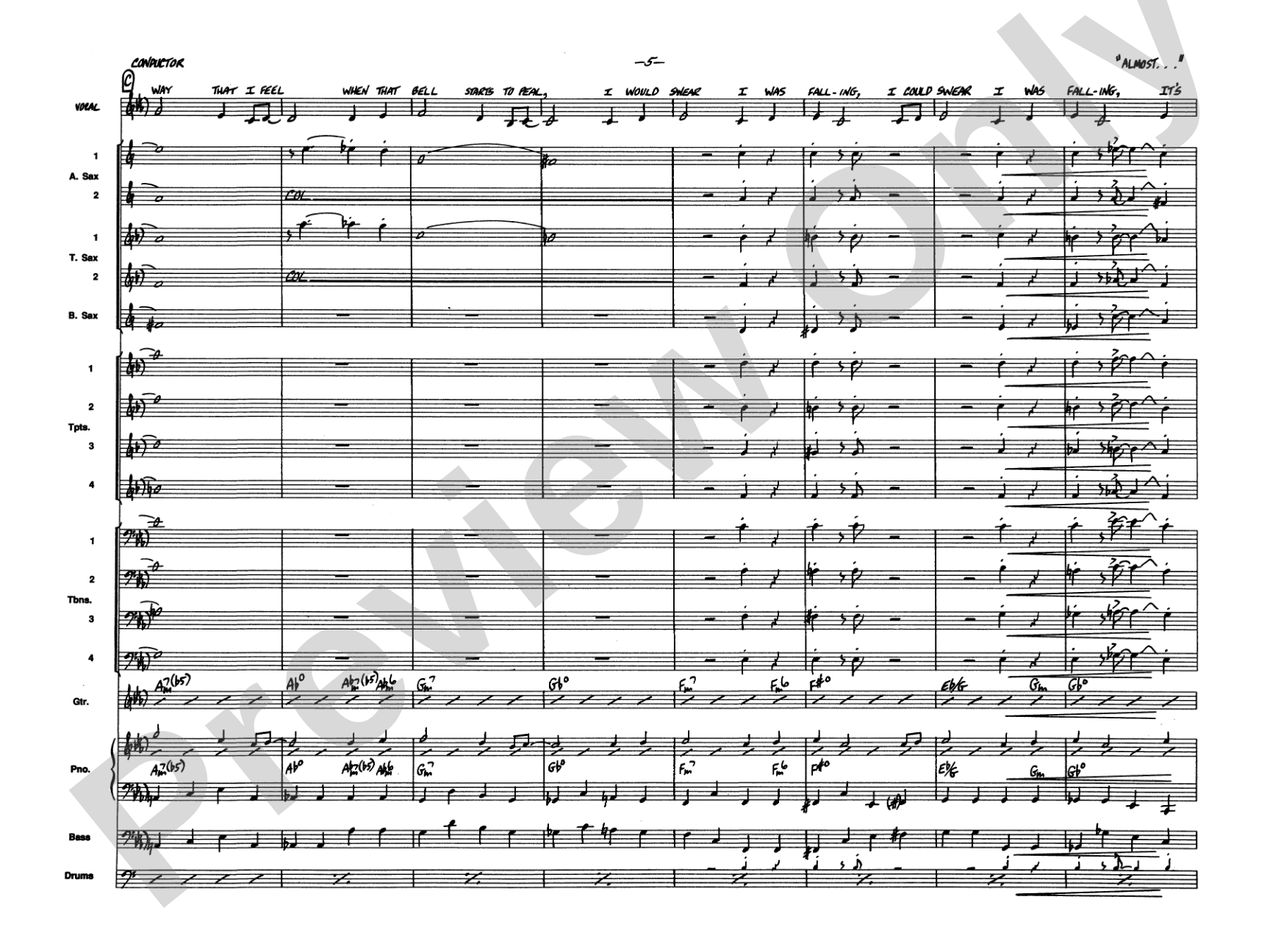
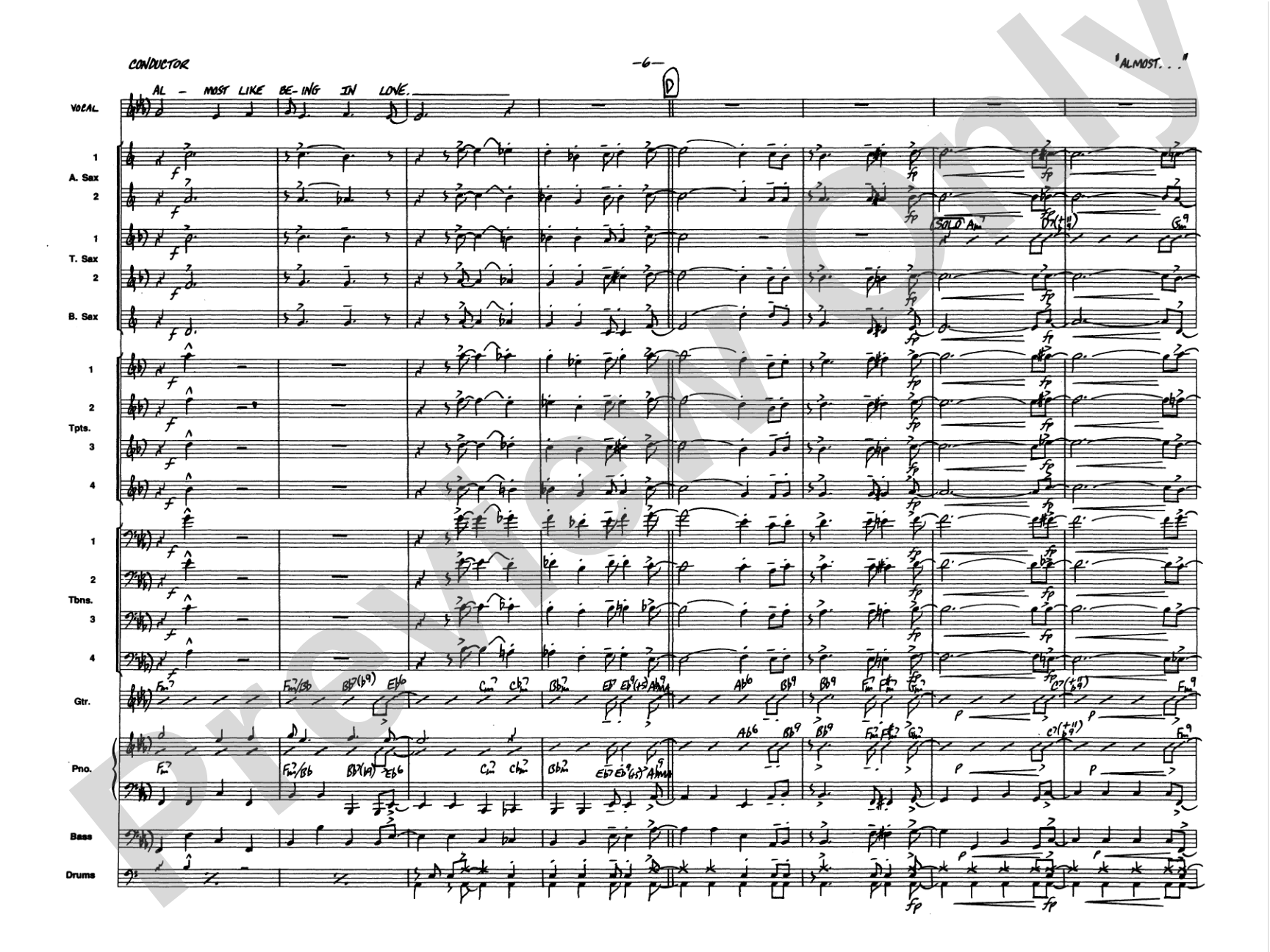
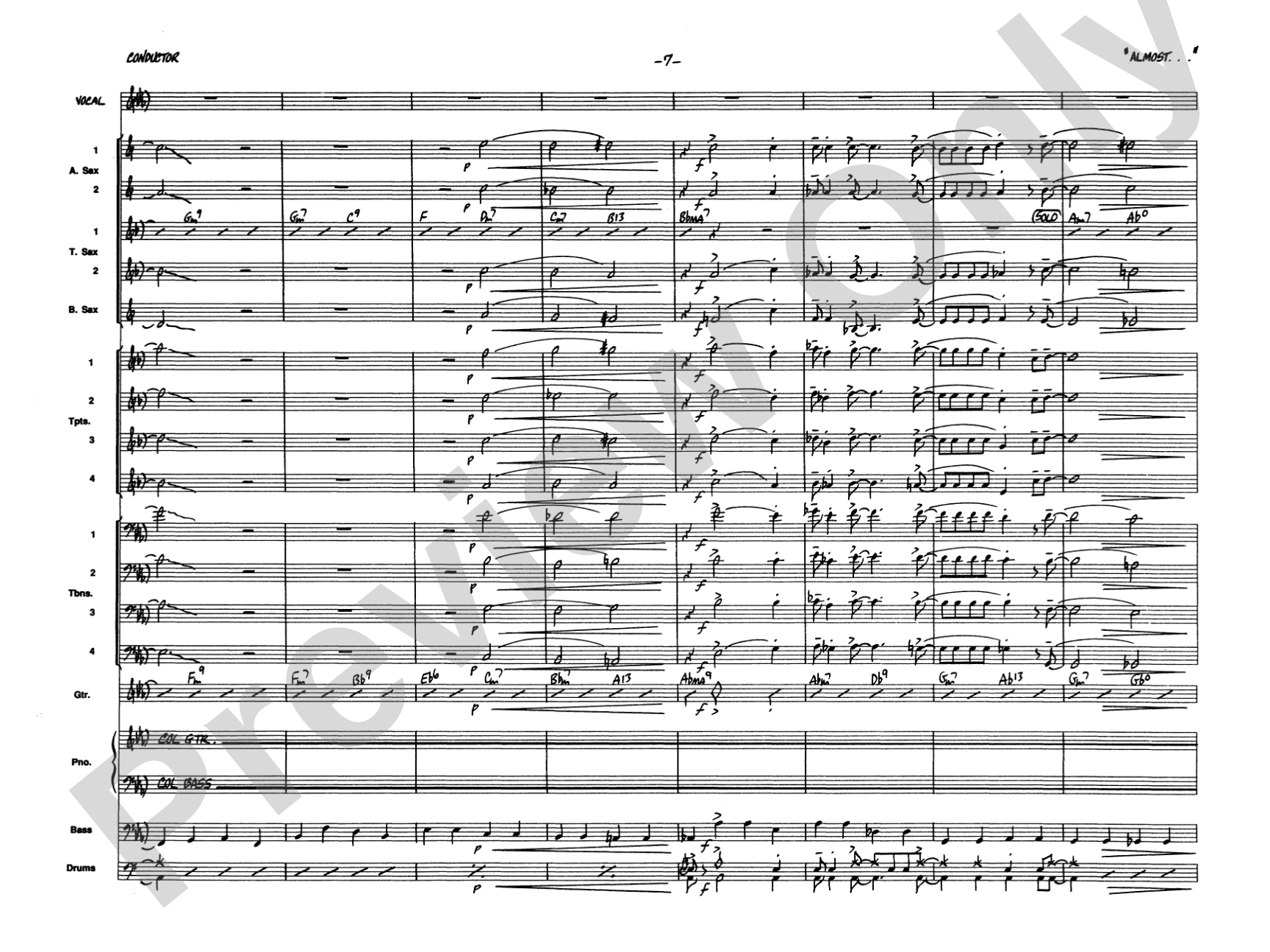
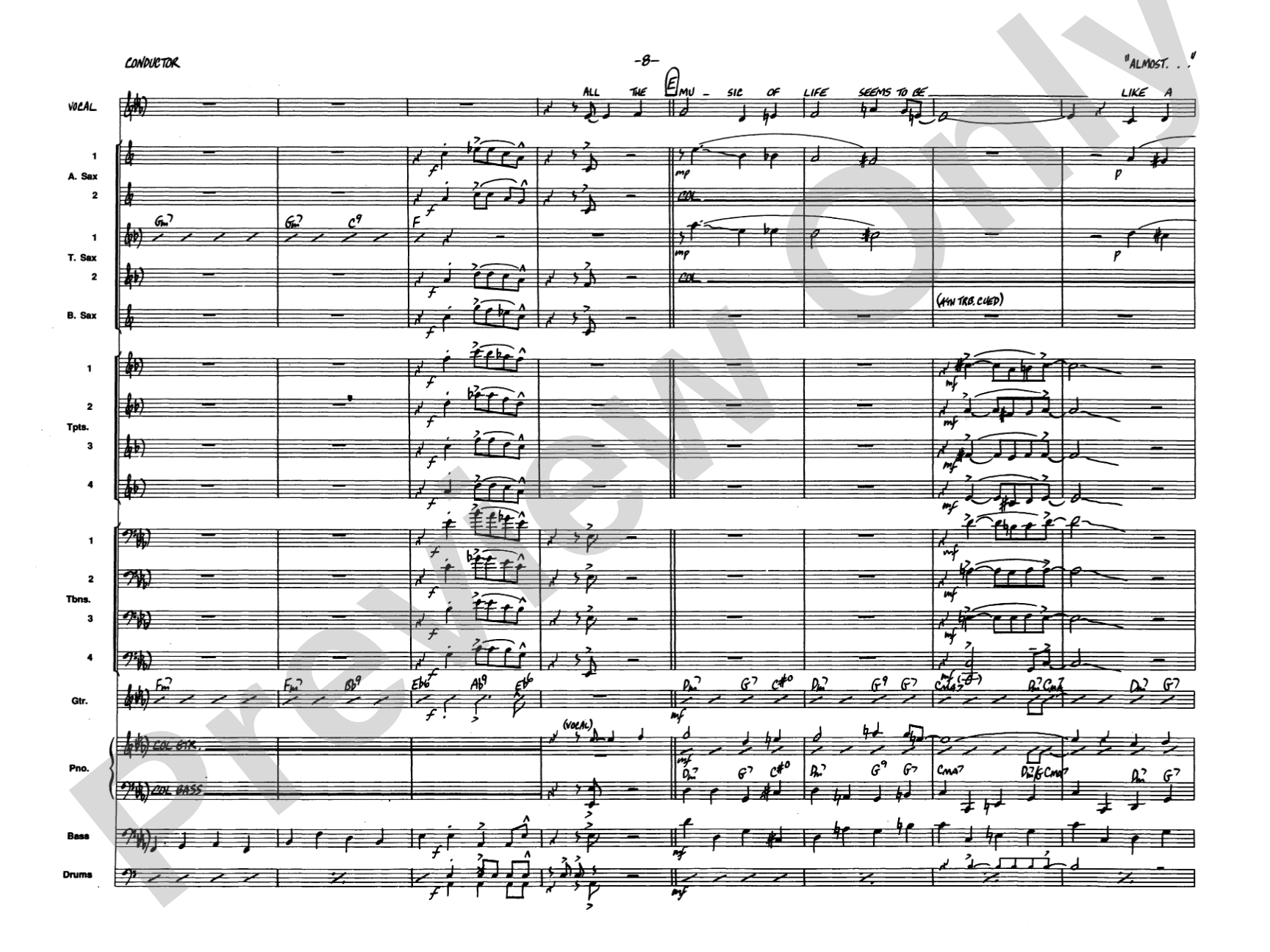
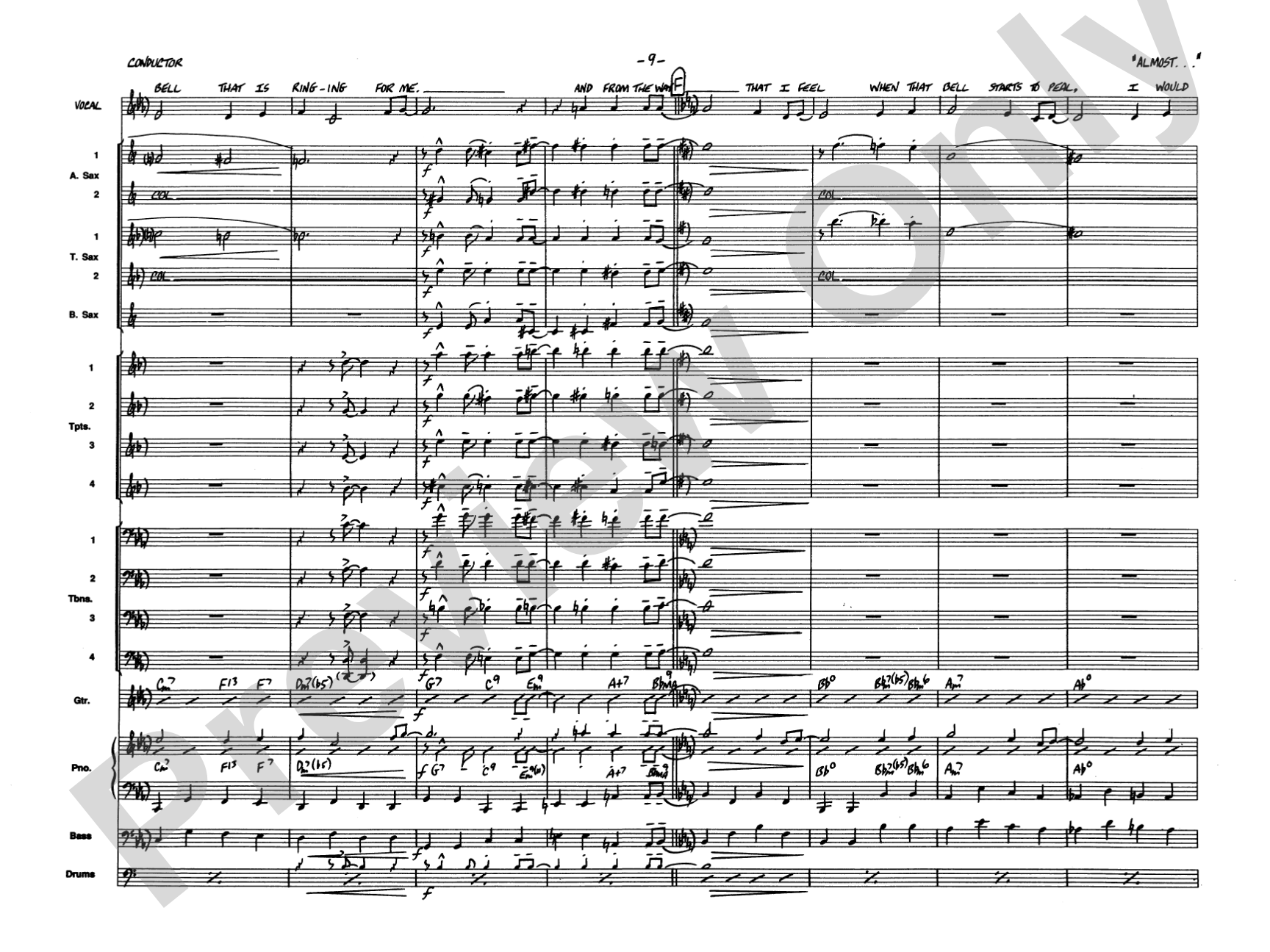
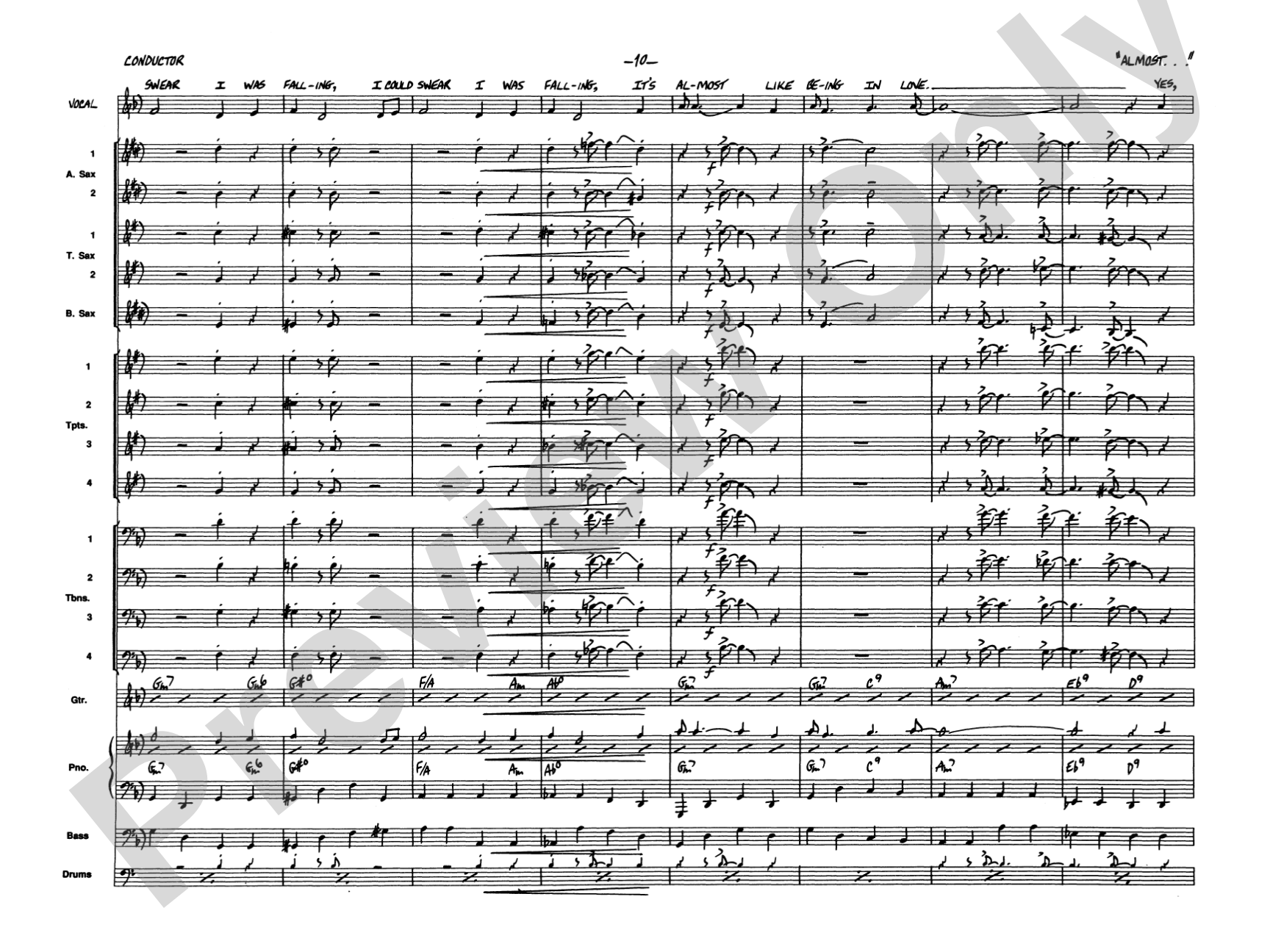
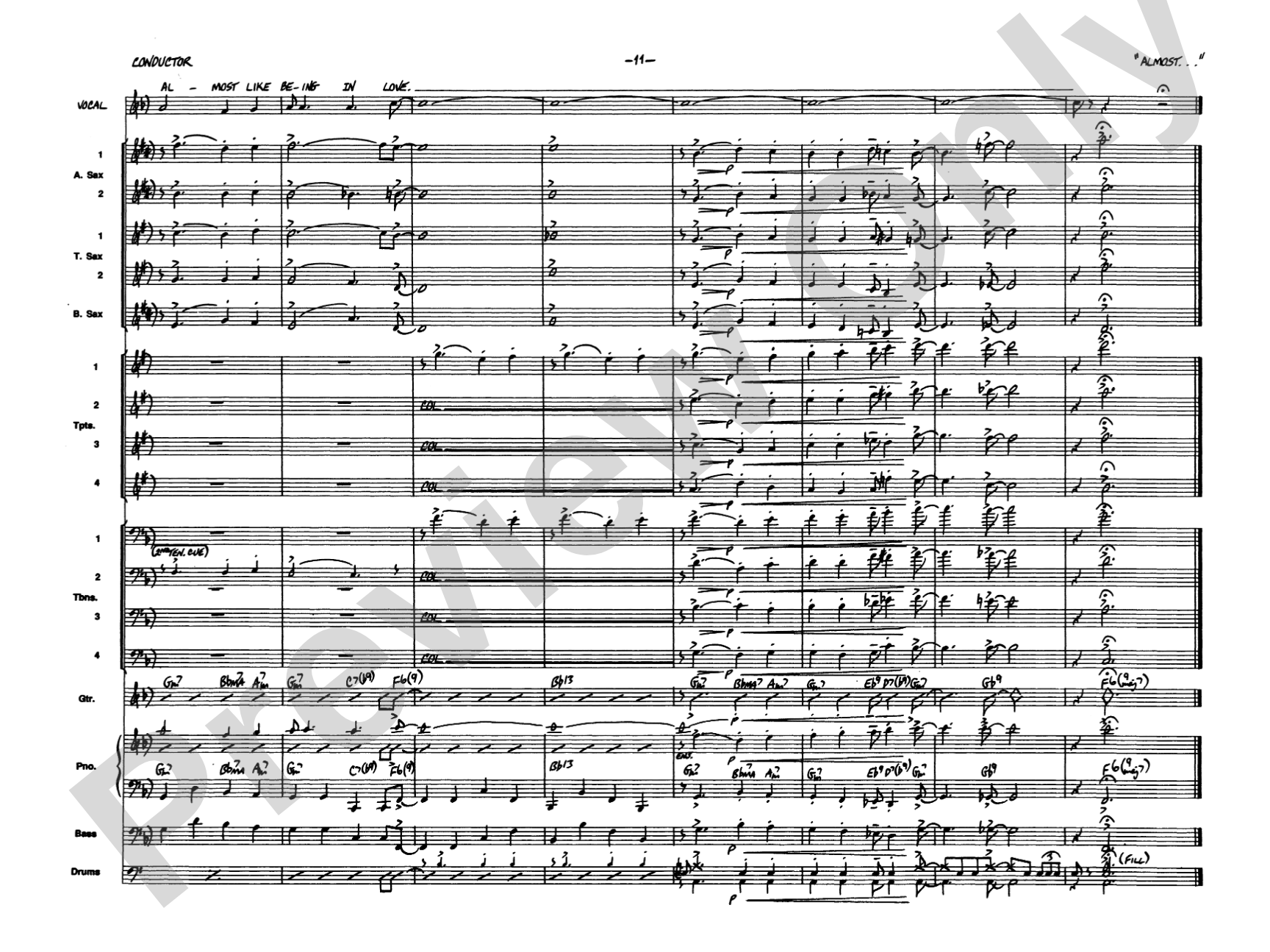




Almost Like Being in Love: Vocal Solo with Jazz Ensemble Conductor Score & Parts
By Frederick Loewe / arr. Dave Wolpe
Grade: 3 (Medium)
Item: 00-PK-0002642
$50.00
One moment…
Description
Feature your singer in this standard, one of the favorites of all vocalists. You'll like the Wolpe inflections with careful backgrounds written to help the singer, not overpower her. It's just plain good writing!


Almost Like Being in Love: Vocal Solo with Jazz Ensemble Conductor Score & Parts isn't in MakeMusic Cloud just yet...but it could be. Let us know you'd like to see it, and you'll help shape what comes next. In the meantime, start a free trial and dive into thousands of interactive titles your students can play along with today.
Request This Title
Tell us you want it.
Start Your Free Trial
Explore everything that's ready to play right now.
Sample Audio
No sample audio found.
Sample Video
No sample videos found.
Additional Details
Series:
Jazz Vocal Series
Publisher:
Alfred Music
Page Count:
92
SKU:
00-PK-0002642
More about this title
About the Composer: Frederick Loewe
Frederick Loewe (1901-1988) composed some of the most enduring Broadway scores of the twentieth century, collaborating with lyricist Alan Jay Lerner on musicals that became cultural touchstones. His melodies are instantly singable yet harmonically sophisticated, built on a deep understanding of the human voice and its capacity to tell a story. Loewe's gift for writing music that feels both intimate and grand has made his songs standard repertoire for vocalists across genres, from classical singers to jazz interpreters.
Why we love this
Wolpe's arrangement respects the song's Broadway DNA while giving it genuine jazz credentials, with ensemble writing that enhances rather than competes with your vocalist. The medium difficulty level makes this accessible for developing singers who have solid fundamentals, yet the chart doesn't condescend. It's a showstopper that feels sophisticated without requiring virtuosic chops.
What to expect
Romantic and slightly wistful, with the bittersweet quality of remembering something wonderful that may not last. The orchestration wraps around the melody like a warm memory, intimate even when the ensemble swells.
Who it's for
Directors looking to feature a vocalist with strong tone and secure intonation who can handle the emotional arc of a standard without overplaying it. This works equally well for a singer with classical training who's exploring jazz vocabulary or a jazz-trained vocalist wanting to honor the song's Broadway roots.
How to get the most out of it
- Let the vocalist breathe with the ensemble during instrumental passages; this isn't a feature where the band sits back passively. Wolpe's backgrounds have real conversation happening.
- Balance is everything here. In rehearsal, run several passes with the vocalist singing at performance volume and the ensemble at various dynamic levels to find the sweet spot where both are heard clearly.
- The song's warmth comes from rubato and phrasing choices, not from pushing tempo. Work with your vocalist on where they naturally want to stretch or pull time, then lock the ensemble to support those choices.
- Mark any unison figures between voice and ensemble clearly in the parts. These moments anchor the chart and need precision.
How to use it
Open a second set or spring concert with this, letting it establish an elegant, lyrical mood. It pairs beautifully with other Broadway standards or with contemporary vocal jazz, and it's substantial enough to stand as a solo feature without needing a companion piece.
Skills your students will build
- Balancing vocal line with jazz ensemble accompaniment
- Phrasing and interpretation of a standard melody
- Responding to and supporting a featured vocalist as a section
- Reading and executing jazz ensemble voicings in full score context