
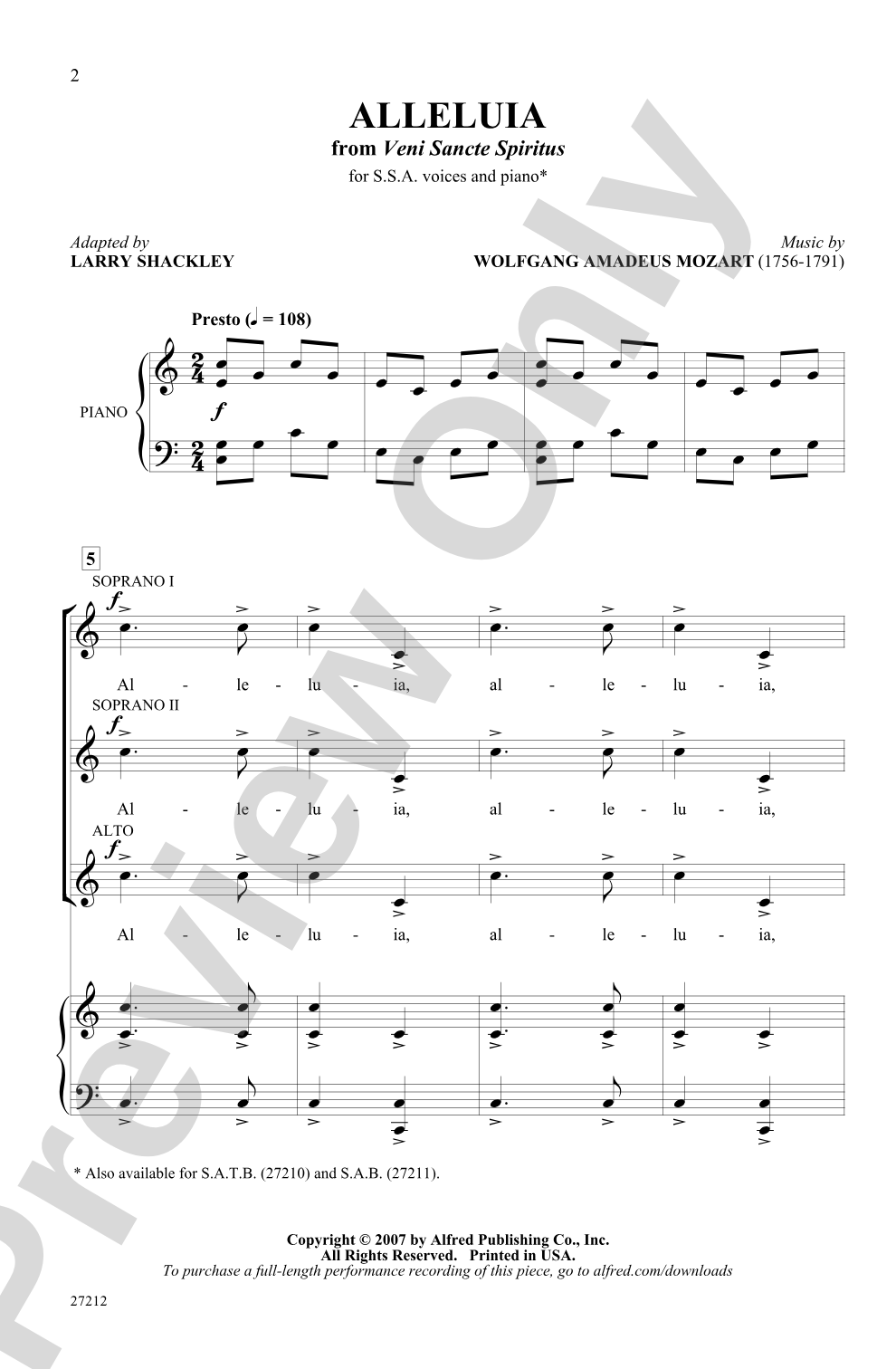

Alleluia (from Veni Sancte Spiritus): SSA Choral Octavo
From Veni Sancte Spiritus
By Wolfgang Amadeus Mozart / adapted by Larry Shackley
Item: 00-PO-0000325
$1.95
Minimum order quantity: 20 copies
Pickup currently not available
Description
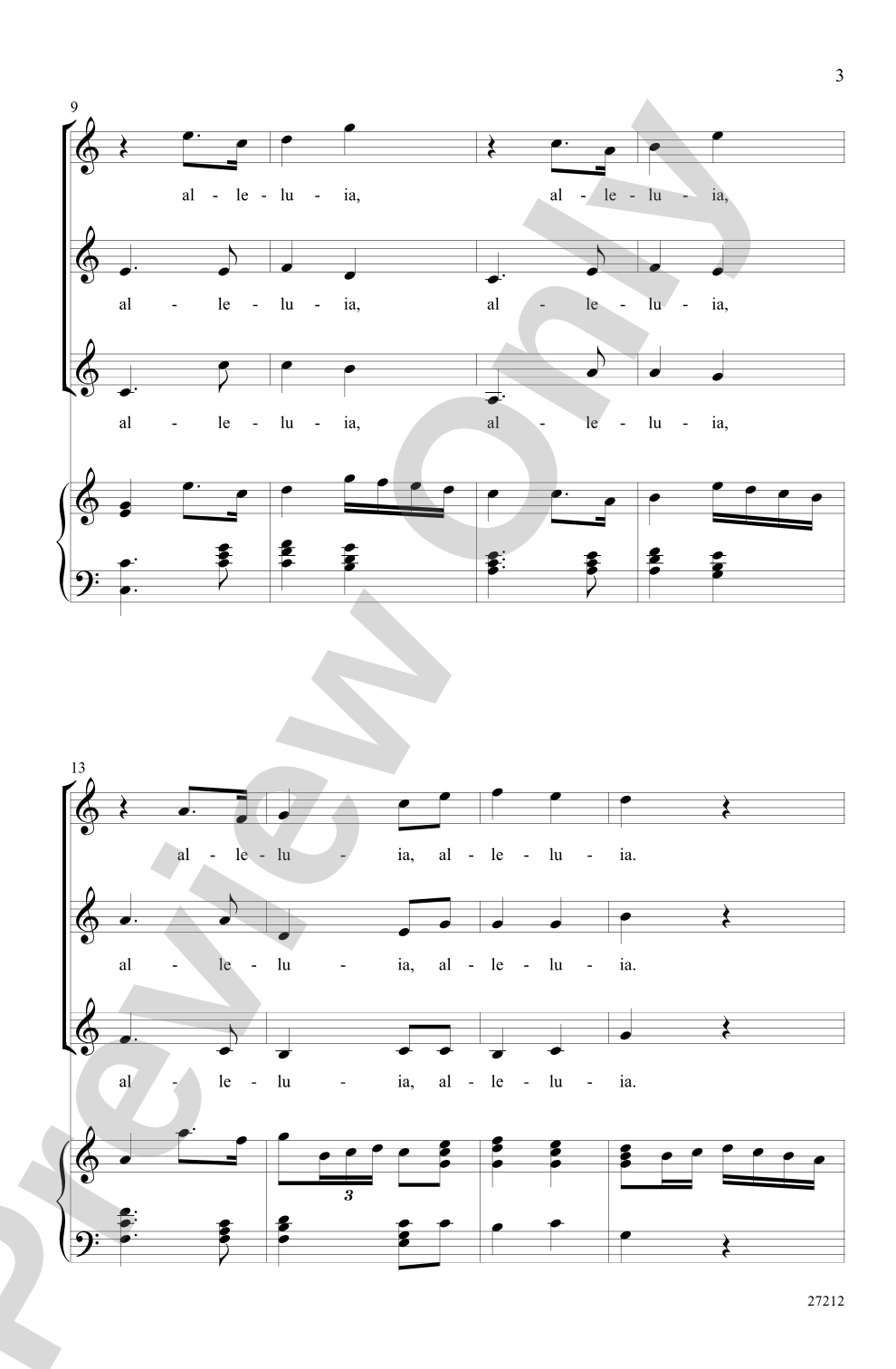
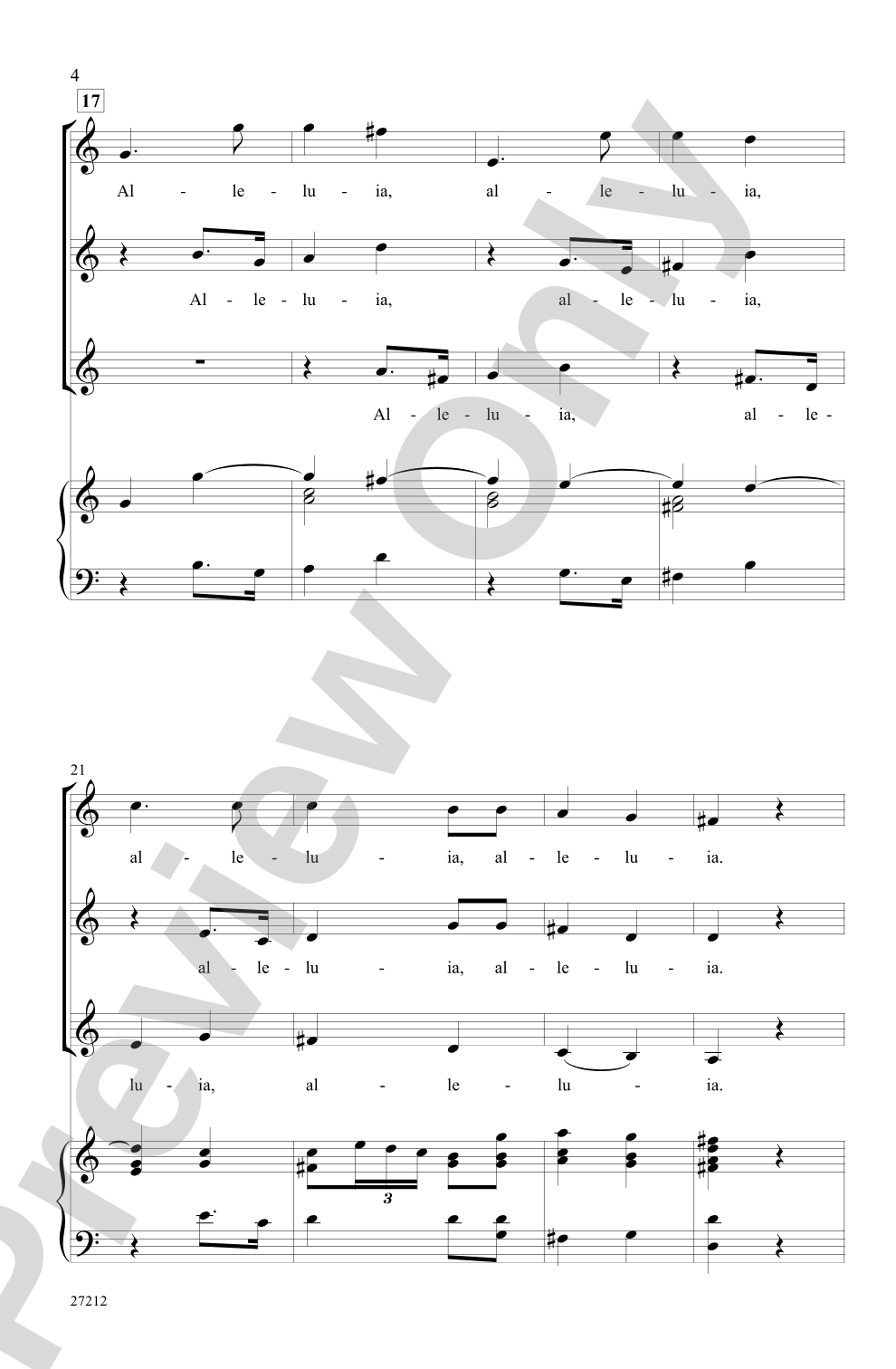
Four brief vocal duets highlight this joyful work from the motet Veni Sancte Spiritus, written by Wolfgang Amadeus Mozart when he was only 12 years old. Classical sonorities resonate through the varying textures of this newly adapted masterwork, and the piano and choral parts are impressive, yet manageable for concert and festival choirs.


Alleluia (from Veni Sancte Spiritus): SSA Choral Octavo isn't in MakeMusic Cloud just yet...but it could be. Let us know you'd like to see it, and you'll help shape what comes next. In the meantime, start a free trial and dive into thousands of interactive titles your students can play along with today.
Request This Title
Tell us you want it.
Start Your Free Trial
Explore everything that's ready to play right now.
Sample Audio
1
Audio File
--:--
0:00
0:00
Sample Video
No sample videos found.
Additional Details
Series:
Alfred Choral Designs
Publisher:
Alfred Music
Page Count:
16
SKU:
00-PO-0000325
More about this title
About the Composer: Wolfgang Amadeus Mozart
Wolfgang Amadeus Mozart (1756-1791) composed with astonishing maturity from earliest childhood. By age 12, when he wrote Veni Sancte Spiritus, he had already mastered the forms and textures of the Classical sacred tradition, producing works of genuine liturgical and artistic merit that rivaled those of composers decades his senior. His sacred music combines elegant part-writing with emotional directness, qualities that made him one of the most prolific and respected composers of masses, motets, and liturgical works throughout his career.
Why we love this
This is Mozart at his most essential: economical, crystalline writing that sounds mature without being thick or overwrought. The SSA texture sits perfectly for developing choirs, and the four duet sections give singers memorable moments to shine individually while staying grounded in Classical proportion and elegance. Repertoire this substantial and musically honest at an accessible level is rare.
What to expect
Luminous and purposeful. The piece unfolds with quiet dignity, each duet bringing a moment of intimacy before the full choir returns to affirm the sacred text. There's a quality of childlike clarity in the writing, yet it never sounds naive or simple, just direct and true.
Who it's for
This octavo suits developing to intermediate SSA choirs seeking substantial repertoire beyond folk arrangements. It works equally well for concert choirs and festival submissions, offering enough musical content to impress adjudicators while remaining within reach of singers still building technique and confidence.
How to get the most out of it
- Shape the duet passages with clear character differentiation; each pair should feel like a distinct musical conversation rather than a mechanical exchange of phrases.
- Balance the piano part carefully so it anchors the harmony without obscuring the vocal lines, especially during the quieter duet sections.
- Use the naturally strong cadence points to breathe as a section, giving the choir a unified pulse without needing a breath mark in every voice at once.
- Approach the Classical sonorities with clean vowel production and precise attacks; the language is spare, so every articulation matters.
How to use it
Feature this as a centerpiece in a sacred music concert, or pair it with other Classical motets for a program exploring the genre across centuries. Its modest length makes it an excellent choice for festivals and competitions, and its spiritual character gives it natural weight in ecumenical or interfaith contexts.
Skills your students will build
- Singing Classical vocal phrasing with attention to line shape and cadential arrival
- Blending SSA textures while maintaining individual line clarity
- Coordinating with piano accompaniment in a Classical harmonic language
- Ensemble duet singing with dynamic conversation between voice pairs