
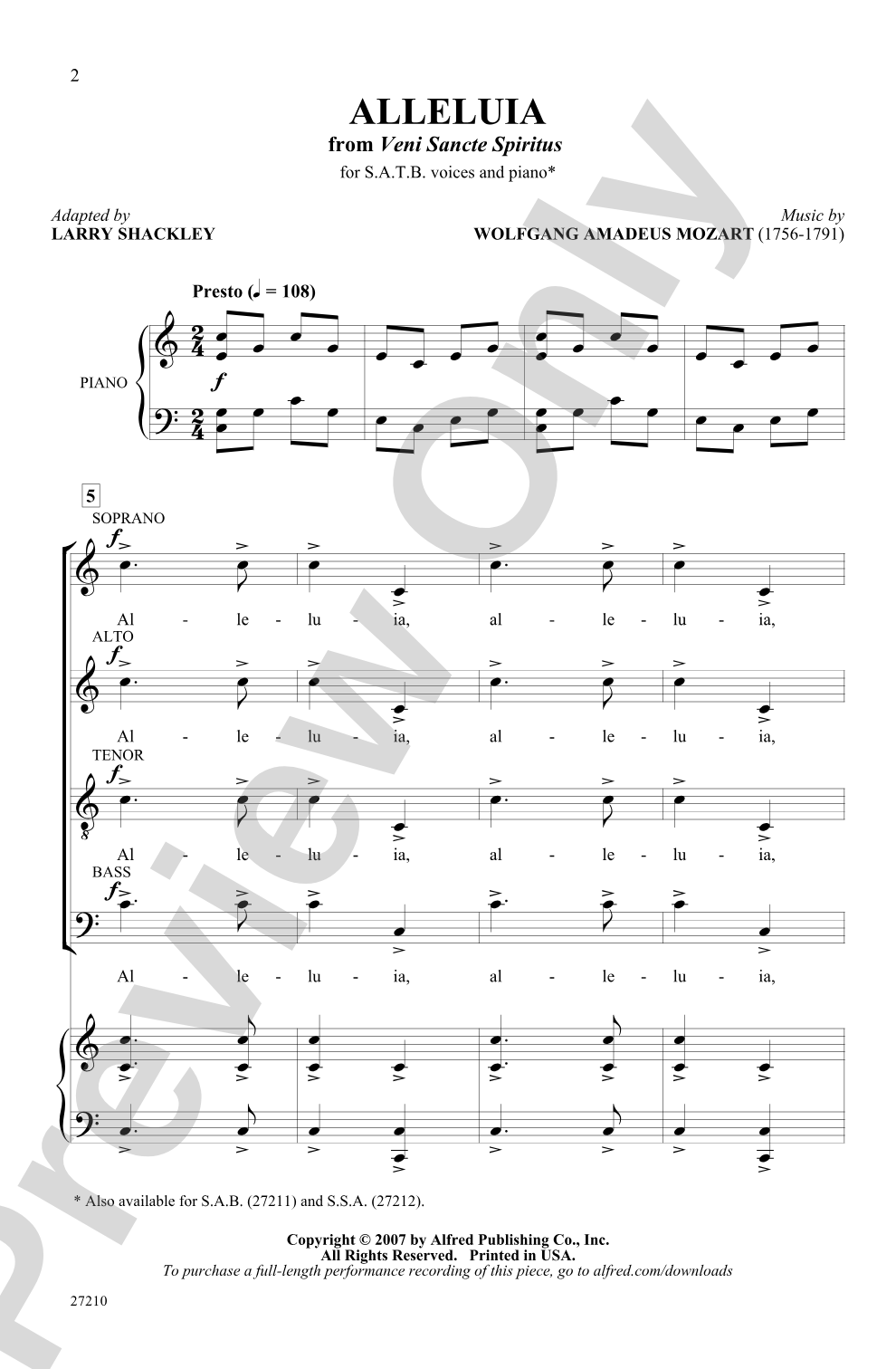
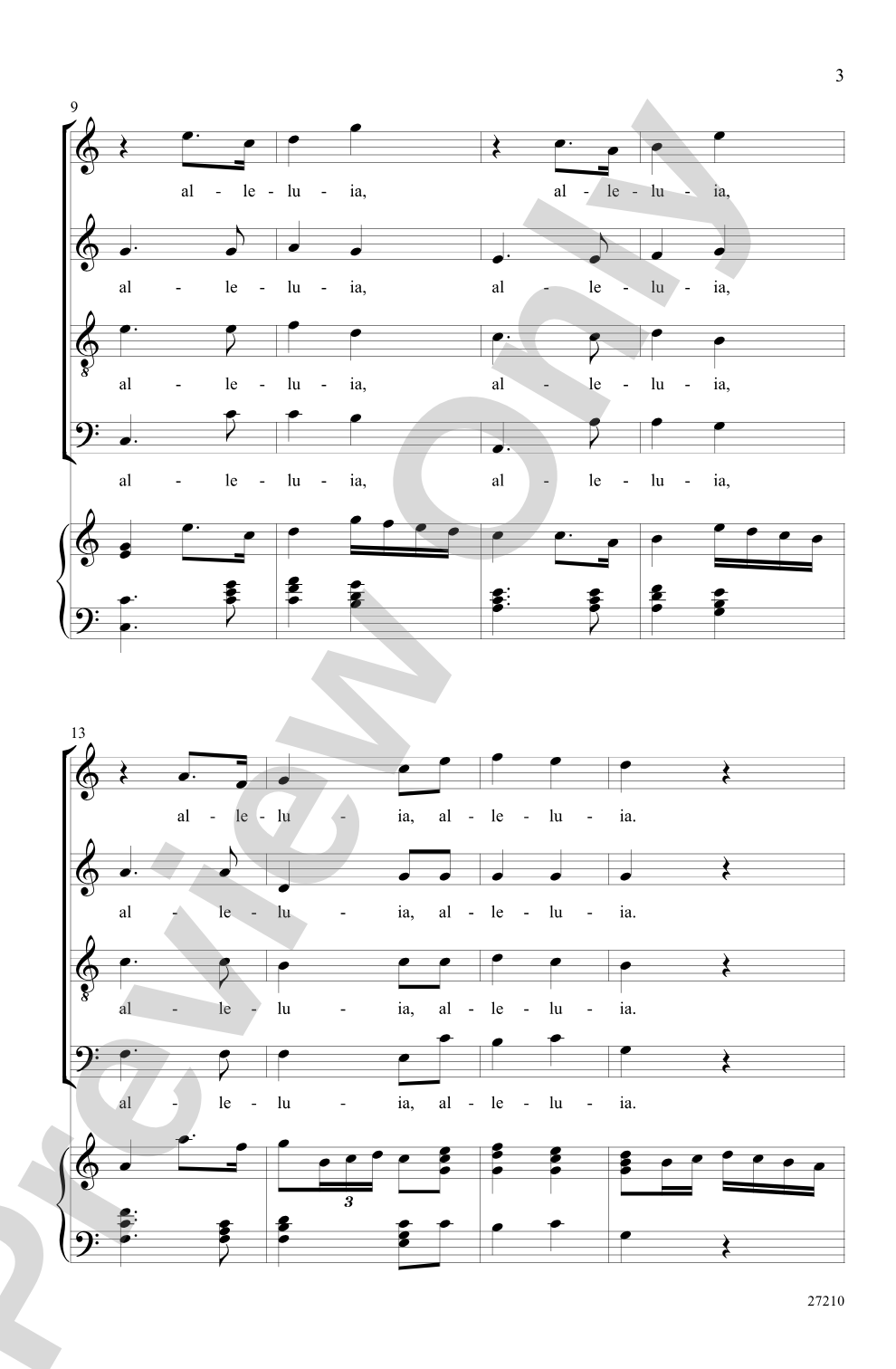
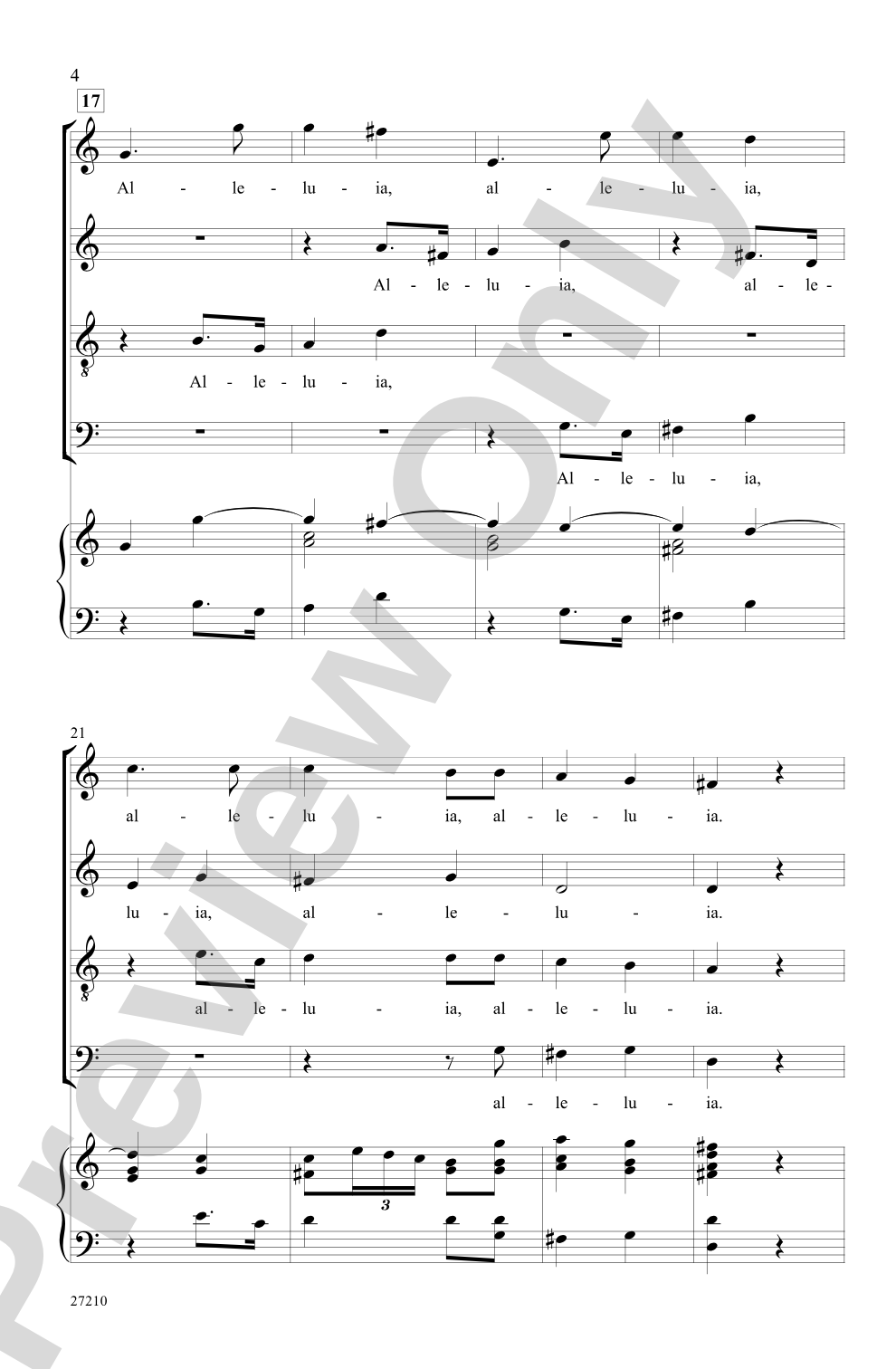

Alleluia (from Veni Sancte Spiritus): SATB Choral Octavo
From Veni Sancte Spiritus
By Wolfgang Amadeus Mozart / adapted by Larry Shackley
Item: 00-PO-0000323
$1.95
Minimum order quantity: 20 copies
Pickup currently not available
Description
Four brief vocal duets highlight this joyful work from the motet Veni Sancte Spiritus, written by Wolfgang Amadeus Mozart when he was only 12 years old. Classical sonorities resonate through the varying textures of this newly adapted masterwork, and the piano and choral parts are impressive, yet manageable for concert and festival choirs.


Alleluia (from Veni Sancte Spiritus): SATB Choral Octavo isn't in MakeMusic Cloud just yet...but it could be. Let us know you'd like to see it, and you'll help shape what comes next. In the meantime, start a free trial and dive into thousands of interactive titles your students can play along with today.
Request This Title
Tell us you want it.
Start Your Free Trial
Explore everything that's ready to play right now.
Sample Audio
1
Audio File
--:--
0:00
0:00
Sample Video
No sample videos found.
Additional Details
Series:
Alfred Choral Designs
Publisher:
Alfred Music
Page Count:
16
SKU:
00-PO-0000323
More about this title
About the Composer: Wolfgang Amadeus Mozart
Wolfgang Amadeus Mozart (1756-1791) was an Austrian composer whose output spanned every major genre of his era. Born in Salzburg, he began composing before age five and by his teens had already produced symphonies, concertos, and sacred works of remarkable sophistication. His sacred music, including motets written during his youth, demonstrates the technical mastery and expressive depth that defined his entire catalog.
Mozart's choral writing balances formal Classical structure with genuine emotional warmth. His motets, composed for liturgical use, showcase his gift for creating memorable melodies and transparent textures that serve both the music and the text. These works remain essential to the choral repertoire because they achieve dignity and joy without technical excess.
Why we love this
This adaptation captures Mozart's gift for elegant simplicity without sacrificing musical substance. The four duet sections create natural variety and give ensemble members moments to breathe, making the piece feel intimate despite its sacred grandeur. At 16 pages with a manageable piano part, it rewards careful preparation with performances that sound polished and confident.
What to expect
The music radiates Classical clarity and spiritual brightness without sentimentality. Duet passages create moments of intimate beauty, while the full SATB sections return with renewed affirmation. Throughout, Mozart's mastery of form and harmony creates a sense of inevitability and grace.
Who it's for
This octavo works well for intermediate to advanced high school choirs and volunteer adult ensembles. Singers need secure vocal technique and the ability to track independent lines, but the piece is short enough to learn thoroughly before a performance.
How to get the most out of it
- Balance the duet sections carefully so they maintain forward momentum rather than becoming detached moments. These passages work best when supported by a secure piano and sung with connected phrasing.
- Shape the fuller SATB passages with attention to the Classical harmonic rhythm. Avoid dragging on longer note values; let the harmony move underneath with gentle support.
- Bring out the text-painting that Mozart employs with "Alleluia." Each phrase benefits from a fresh articulation and clear vowel definition, especially when text repetition builds energy.
- Work the vocal lines independently before combining them. Mozart's counterpoint is transparent but requires each voice to know its own shape and function.
How to use it
Pair this with other sacred works for a festival or concert themed around Classical sacred music. Its modest length makes it an excellent closer for a program or a strong anchor piece within a larger set. Consider programming it where a moment of reflective joy would provide contrast to heavier repertoire.
Skills your students will build
- independent voice leading in duet and full-choir textures
- shaping Classical phrases without over-expression
- balancing blend in close harmonic writing
- maintaining rhythmic precision while honoring lyrical text setting
- reading 16 pages of interconnected vocal and piano parts