
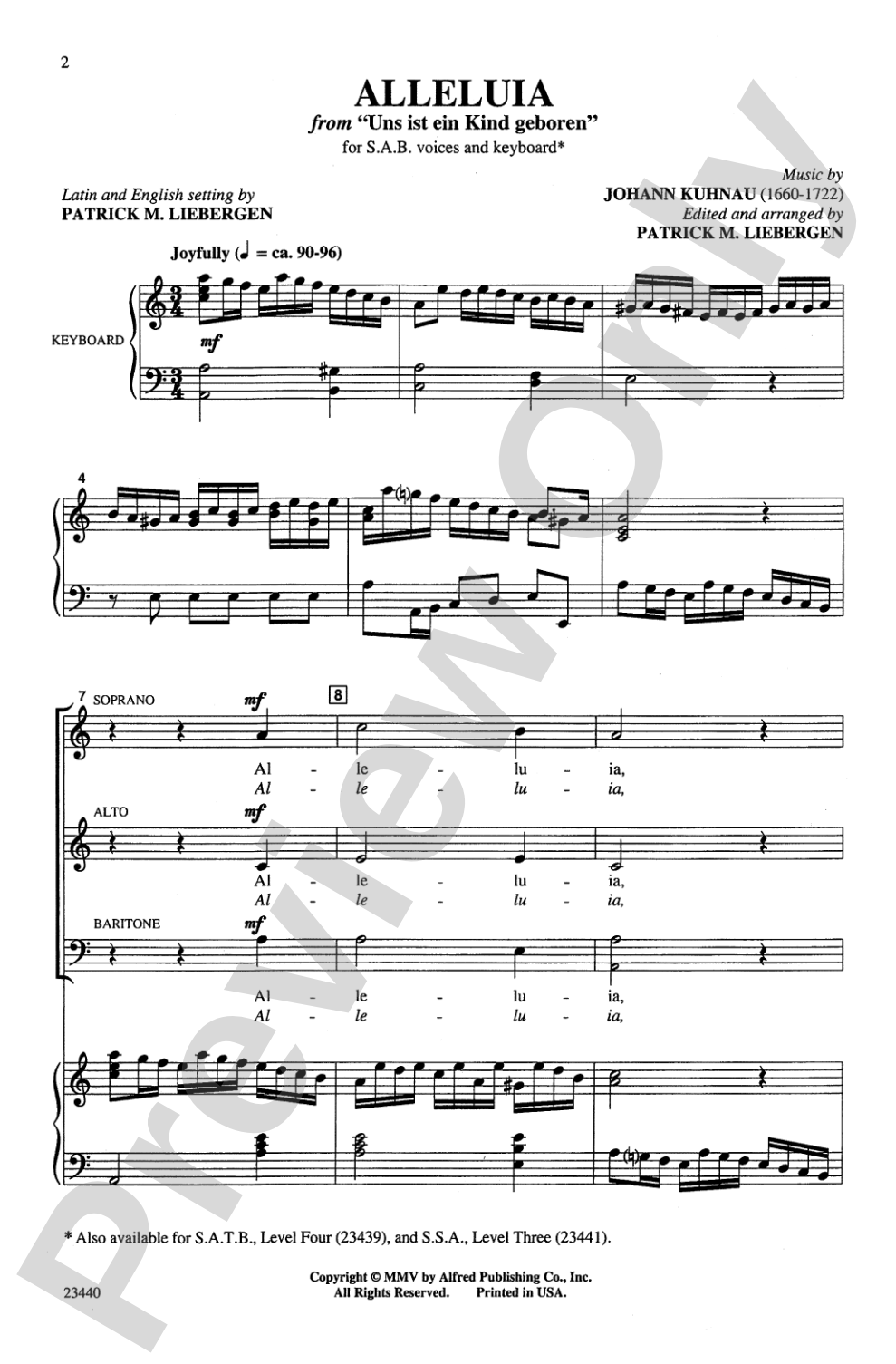

Alleluia (from Uns ist ein Kind geboren): SAB Choral Octavo
Music by Johann Kuhnau / arr. Patrick M. Liebergen
Item: 00-PO-0002223
$2.25
Minimum order quantity: 20 copies
Pickup currently not available
Related Items
Alleluia (from Uns ist ein Kind geboren): SATB Choral Octavo |
$2.25
|
View | |
Alleluia (from Uns ist ein Kind geboren): SSA Choral Octavo |
$2.25
|
View | |
Alleluia (from Uns ist ein Kind geboren): SATB Choral Octavo |
$2.25
|
View | |
Alleluia (from Uns ist ein Kind geboren): SAB Choral Octavo |
$2.25
|
View | |
Alleluia (from Uns ist ein Kind geboren): SSA Choral Octavo |
$2.25
|
View |
Description
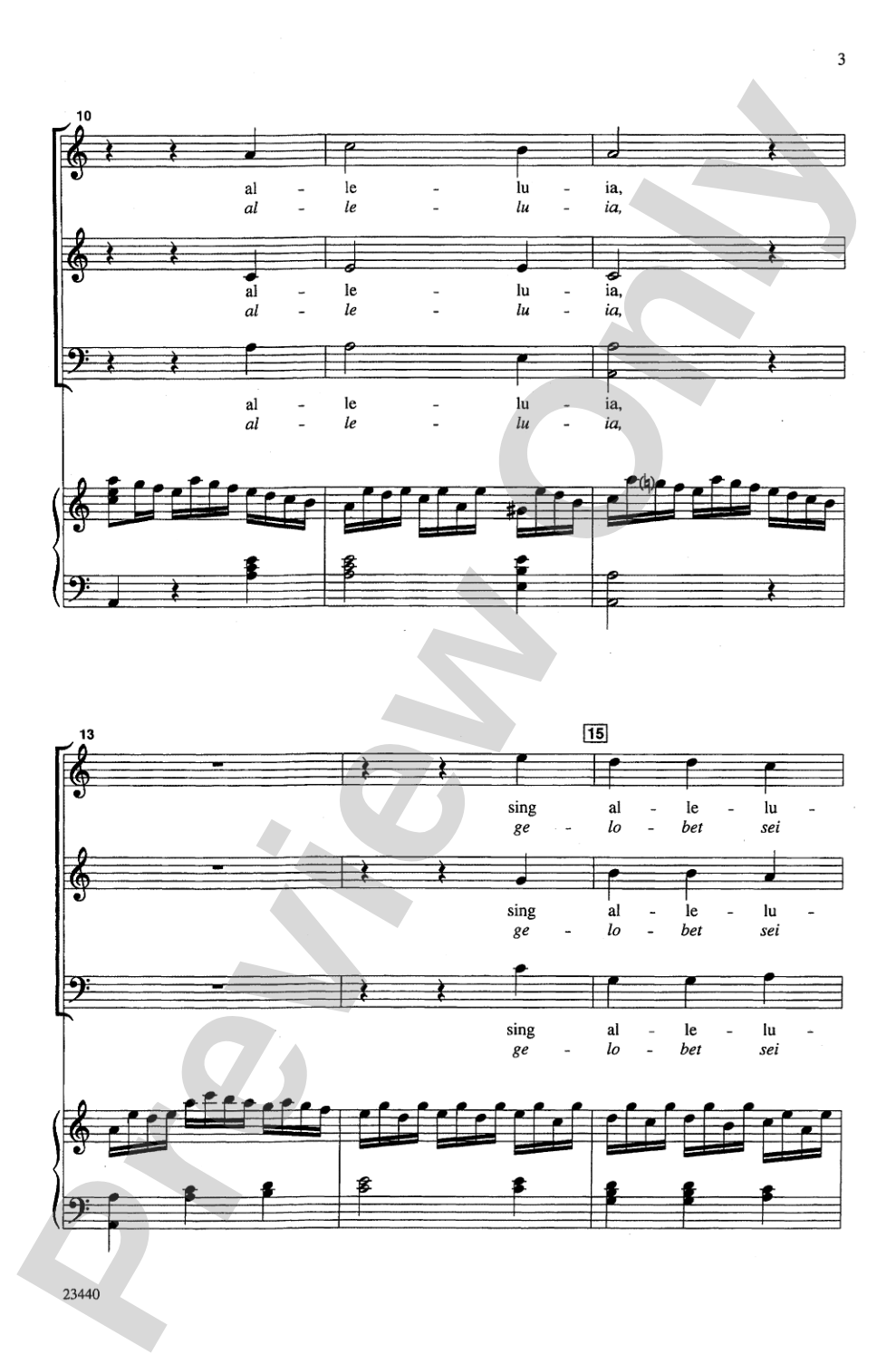
Dr. Patrick Liebergen layers classic choral writing over an intricate piano invention from the Baroque era, creating an excellent opportunity to develop solid intonation, rich tone quality, and expressive ensemble phrasing. Rarely is it this simple to sound so good. Whether sung in English or German, Alleluia is a wonderful teaching piece, and a joyful addition to any program.


Alleluia (from Uns ist ein Kind geboren): SAB Choral Octavo isn't in MakeMusic Cloud just yet...but it could be. Let us know you'd like to see it, and you'll help shape what comes next. In the meantime, start a free trial and dive into thousands of interactive titles your students can play along with today.
Request This Title
Tell us you want it.
Start Your Free Trial
Explore everything that's ready to play right now.
Sample Audio
1
Audio File
--:--
0:00
0:00
Sample Video
No sample videos found.
Additional Details
Series:
Alfred Archive Edition: Alfred Choral Designs
Publisher:
Alfred Music
Page Count:
8
SKU:
00-PO-0002223
More about this title
About the Composer: Johann Kuhnau
Johann Kuhnau (1660-1722) was a German composer and organist whose keyboard works bridged the Renaissance and Baroque periods. As cantor of St. Thomas Church in Leipzig and a prolific composer of sacred music, he shaped the liturgical traditions that would influence Bach's own work in the same position decades later.
Kuhnau's invention and harmonic sophistication made him a respected figure in German musical life, yet his music fell into relative obscurity after his death. Modern arrangements like this one reveal why his writing deserves renewed attention in the choral rehearsal room: his melodic gift and structural clarity translate beautifully across centuries and voicings.
Why we love this
Liebergen's arrangement captures the essence of Baroque compositional brilliance without burdening singers with the technical demands that often accompany sacred counterpoint. The SAB voicing sits naturally, the harmonic movement supports intonation, and the underlying keyboard part provides both structural integrity and genuine musical interest. You get the dignity and sophistication of a masterwork with the accessibility that makes rehearsals rewarding.
What to expect
A moment of crystalline clarity and joy. The piece has the intellectual grace of the Baroque, yet its choral writing feels singable and transparent rather than austere. There's an inevitability to the harmonic progression that makes even technically developing singers feel secure and capable.
Who it's for
Mixed choirs singing in three parts benefit most from this arrangement, whether in a school setting, community ensemble, or festival context. Directors seeking a piece that teaches solid intonation and ensemble blend without requiring advanced technique will find this exceptionally valuable.
How to get the most out of it
- Treat the piano part as a full ensemble participant, not accompaniment. Its baroque invention patterns contain the harmonic logic that will anchor your singers' pitch and phrasing choices.
- Shape each phrase through the text naturally. In English or German, let the word stress and vowel color drive the dynamics rather than imposing interpretive gestures.
- Balance the SAB lines so the alto part reads clearly without forcing; it's the harmonic glue, not a secondary voice. Sit with your altos during early rehearsals to confirm they're hearing their relationship to sopranos and basses.
- Take time with the approach to each cadence. Baroque phrasing asks for slight breath-space and gentle arrival rather than momentum into the final chord.
How to use it
This works beautifully in a sacred or Christmas program, and its eight pages make it substantial enough to stand alone without requiring heavy rehearsal load. Consider pairing it with another Baroque arrangement or a more contemporary work to create programming that shows your choir's range across styles.
Skills your students will build
- Reading SAB voicing and managing individual line integrity within three-part harmony
- Developing accurate intonation through exposure to Baroque harmonic movement
- Shaping expressive phrasing over sustained harmonic motion rather than constant rhythmic change
- Balancing ensemble tone when singing sacred texts in English or German