
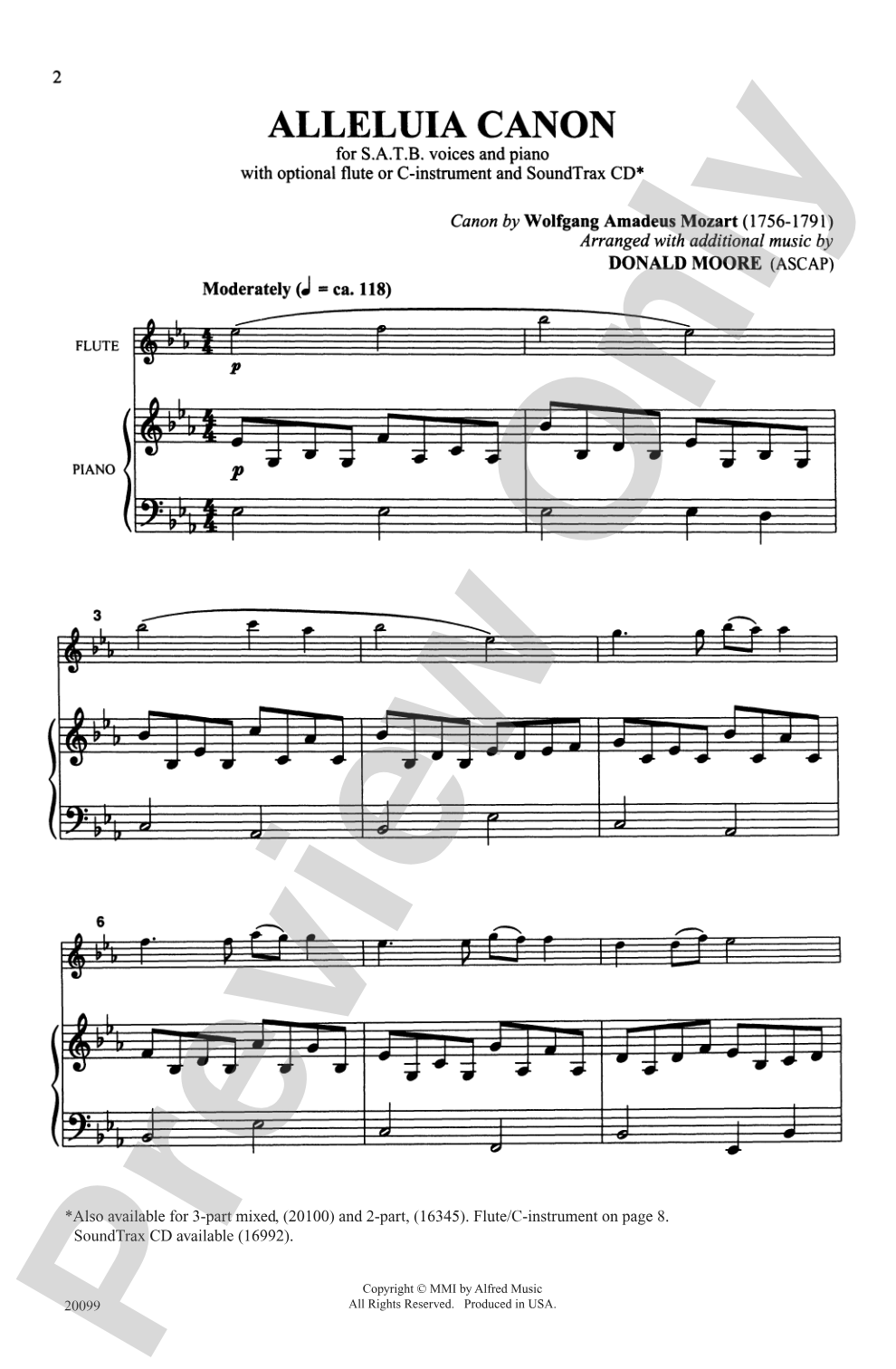
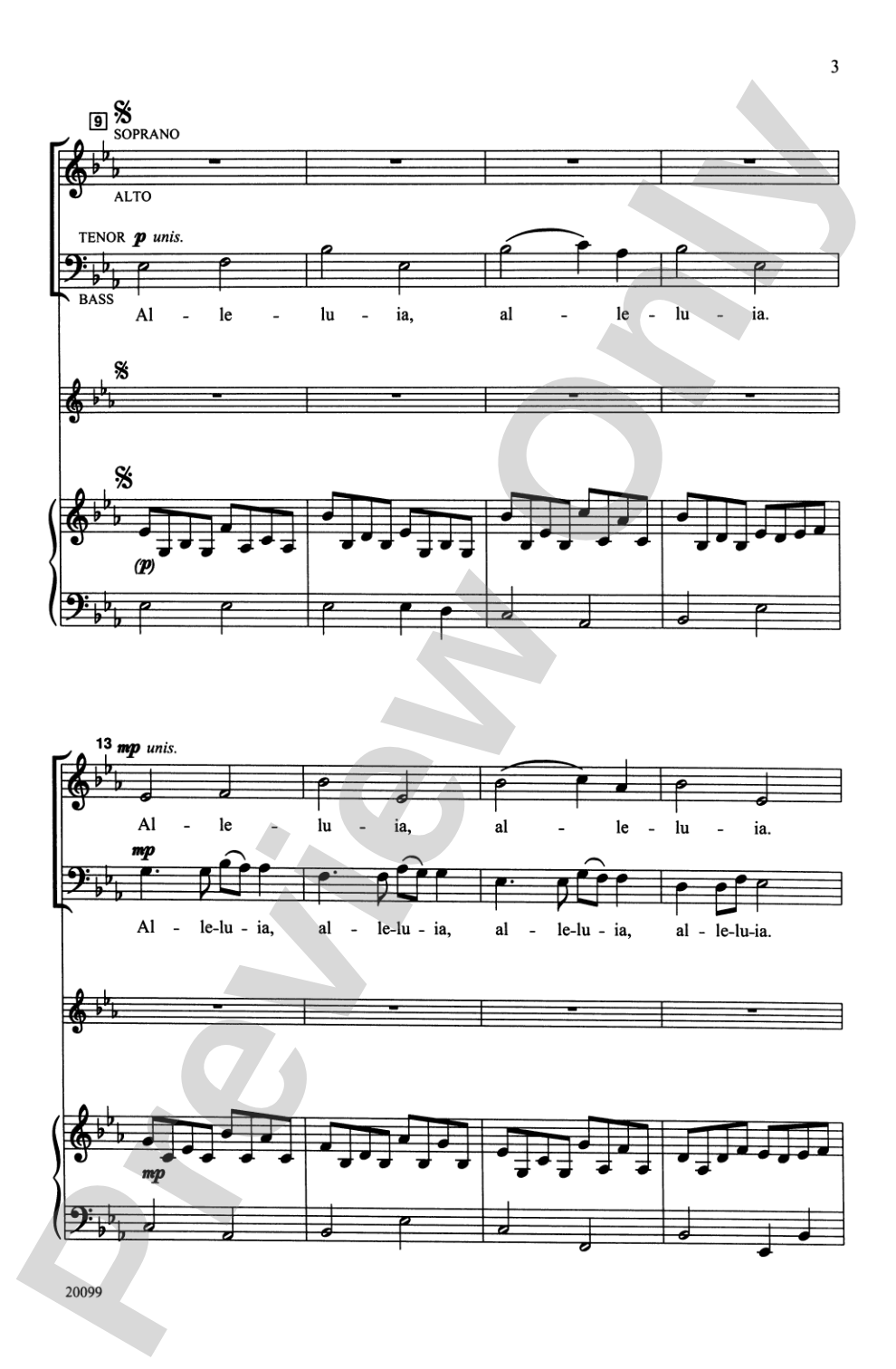

Alleluia Canon: SATB Choral Octavo
Music by Wolfgang Amadeus Mozart / arr. Donald Moore
Item: 00-PO-0004201
$2.25
Minimum order quantity: 20 copies
Pickup currently not available
Related Items
Alleluia Canon: SAB Choral Octavo |
$2.05
|
View | |
Alleluia Canon: 2-Part Choral Octavo |
$2.05
|
View | |
Alleluia Canon: SATB Choral Octavo |
$2.25
|
View | |
Alleluia Canon: SAB Choral Octavo |
$2.05
|
View | |
Alleluia Canon: 2-Part Choral Octavo |
$2.05
|
View | |
Alleluia Canon: Choral Octavo SoundTrax CD |
$27.99
|
View |
Description
New for SATB and SAB! A singable Mozart melody is the basis for this fine 2-part arrangement by Donald Moore. An optional flute (included in the publication) also joins in the canon. The canonic style makes it great for choirs of all ages who want to sing the music of the masters. Text is an "alleluia," suitable for singing year round. This title is available in MakeMusic Cloud.


Alleluia Canon: SATB Choral Octavo isn't in MakeMusic Cloud just yet...but it could be. Let us know you'd like to see it, and you'll help shape what comes next. In the meantime, start a free trial and dive into thousands of interactive titles your students can play along with today.
Request This Title
Tell us you want it.
Start Your Free Trial
Explore everything that's ready to play right now.
Sample Audio
1
Audio File
--:--
0:00
0:00
Sample Video
No sample videos found.
Additional Details
Series:
Alfred Archive Edition: Alfred Choral Designs
Publisher:
Alfred Music
Page Count:
8
SKU:
00-PO-0004201
Instrumentation:
Opt. Flute
More about this title
About the Composer: Wolfgang Amadeus Mozart
Wolfgang Amadeus Mozart (1756-1791) composed across every major genre of his era, from symphonies and concertos to operas and sacred music. His gift for melody was unmatched; even his most structurally complex works sing with natural grace. For choral educators, Mozart represents the gold standard of singable classical writing—his vocal lines sit comfortably in the voice while maintaining genuine musical substance.
Mozart's sacred works range from full masses to smaller liturgical pieces. His ability to write melodies that feel both elegant and instantly memorable made his music ideal for worship settings and concert programming alike. This piece draws from that tradition of accessible classical mastery.
Why we love this
Donald Moore's arrangement respects Mozart's melodic gift while using the canon form to unlock ensemble engagement at multiple levels. Singers feel the architecture of the piece working beneath them, which builds confidence and musicality without requiring advanced sight-reading. The optional flute part adds a gentle reinforcement option without creating a dependency, and the year-round liturgical text means this piece earns its space in a working repertoire.
What to expect
The canonic texture creates a sense of musical conversation, with each voice taking its turn with Mozart's graceful melody. Singing "Alleluia" on this familiar classical line feels both reverent and joyful, blending the simplicity of the text with the sophistication of the form.
Who it's for
This arrangement welcomes singers at any age and experience level who are ready for part singing and want to access Mozart's music without excessive technical demands. It works equally well for developing middle school ensembles, high school choirs seeking shorter concert pieces, and community choirs who value masterwork repertoire.
How to get the most out of it
- Establish a clear pulse before singers enter on their respective canon entries. A light conducting gesture on beat one of each new voice part prevents the ensemble from losing track of where they are in the melodic line.
- Balance the melody across voices as it passes from part to part. The soprano may naturally dominate; consciously bring out the alto and tenor lines so singers hear their role in the overall shape.
- If using the optional flute, let it support rather than lead. The flute works best as a gentle doubling that reinforces confidence without drawing focus away from the voices.
- Rehearse entries in overlapping pairs before putting all parts together. Let sopranos and altos sing their canon, then add tenors and basses. This builds security and helps singers understand how their line interacts with others.
How to use it
This piece fits naturally into any concert celebrating classical composers or sacred music. Its length (8 pages) makes it ideal as a concert opener or closer, and the uplifting text works well when programmed alongside longer major works. The year-round suitability means it can appear in spring concerts, holiday programs, or worship services without feeling seasonal.
Skills your students will build
- Reading and maintaining independent melodic lines within a canon structure
- Listening to and balancing parts that enter at different times
- Coordinating phrase breathing across a four-part texture
- Understanding how a single melody can be recontextualized through arrangement and form
- Building confidence in classical vocal writing with natural tessitura