

Alleluia Canon: 2-Part Choral Octavo
Music by Wolfgang Amadeus Mozart / arr. Donald Moore
Item: 00-PO-0003126

$2.05
Minimum order quantity: 10 copies
Please note: Under U.S. copyright law, you must purchase the exact number of copies needed for your ensemble. Printing, duplicating or sharing additional copies is strictly prohibited.
Pickup currently not available
Description
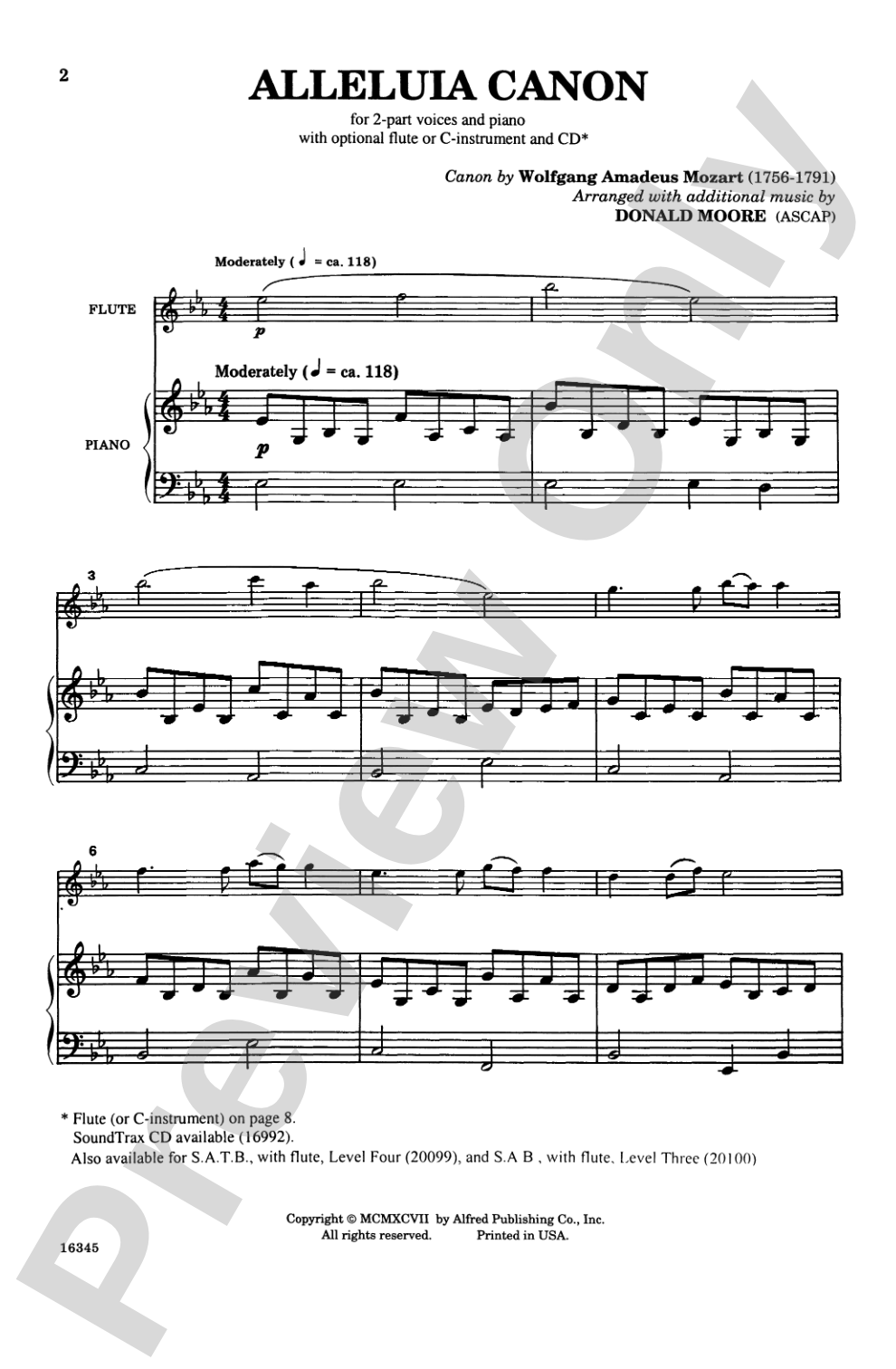
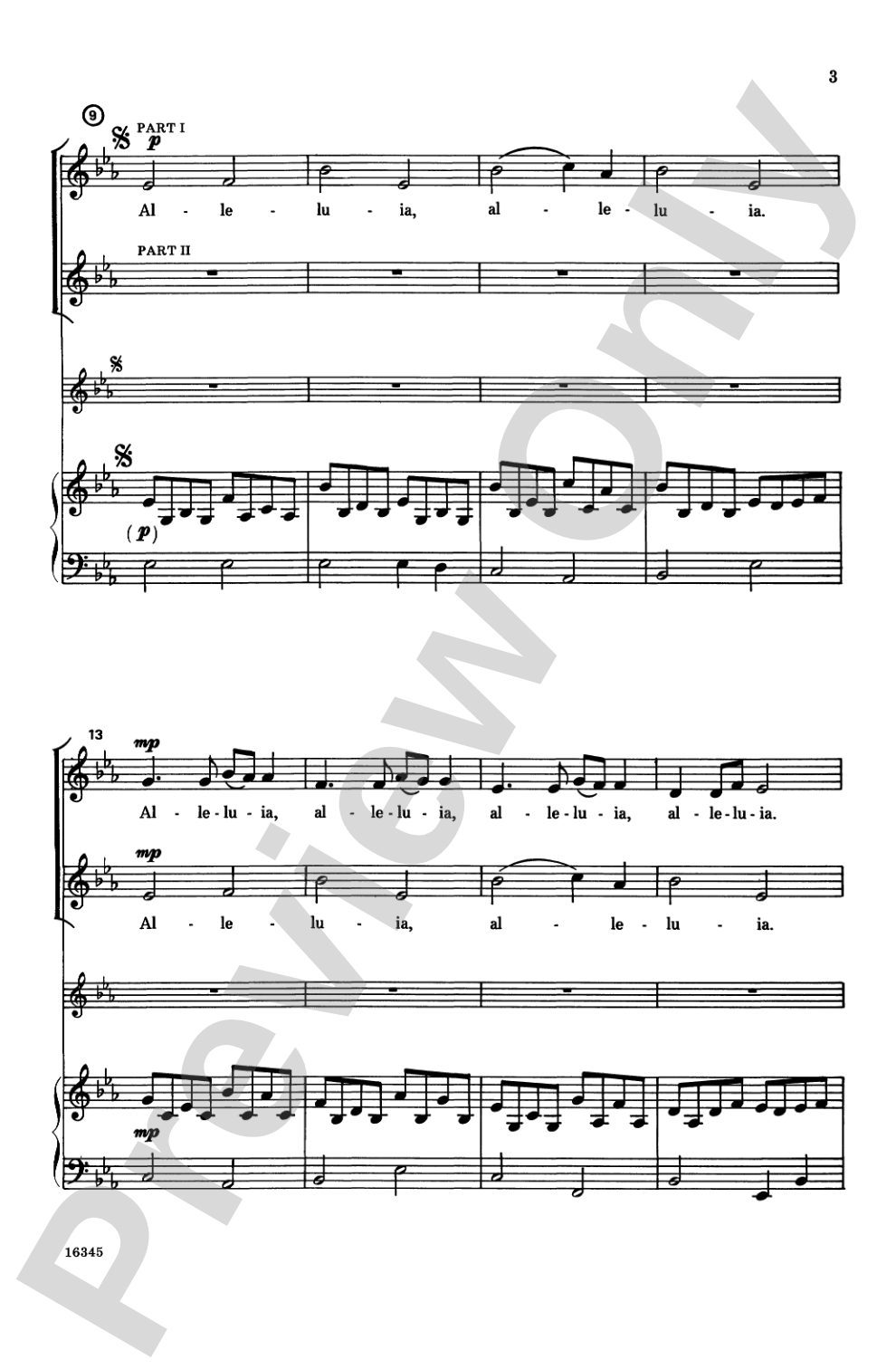
New for SATB and SAB! A singable Mozart melody is the basis for this fine 2-part arrangement by Donald Moore. An optional flute (included in the publication) also joins in the canon. The canonic style makes it great for choirs of all ages who want to sing the music of the masters. Text is an "alleluia," suitable for singing year round.


Don't just read it, hear it, play along with it, and watch your students grow with it. In MakeMusic Cloud, Alleluia Canon: 2-Part Choral Octavo comes alive with professional accompaniment, adjustable tempo, and built-in practice tools that turn solo practice into real progress.
Open in the Player
Jump straight in and assign it today.
Start Your Free Trial
Open this title and explore the full library in minutes.
Sample Audio
1
Audio File
--:--
0:00
0:00
Sample Video
No sample videos found.
Additional Details
Series:
Alfred Choral Designs
Publisher:
Alfred Music
Page Count:
8
SKU:
00-PO-0003126
Instrumentation:
Opt. Flute
More about this title
About the Composer: Wolfgang Amadeus Mozart
Wolfgang Amadeus Mozart (1756-1791) composed across every major genre of his era, from symphonies and concertos to operas and sacred music. His melodies are renowned for their singability and elegance, qualities that make his work ideal for choral arrangements at all levels. Mozart's ability to balance simplicity with sophistication continues to serve as a model for music education, offering students access to genuine masterworks without sacrificing musical substance.
Why we love this
Donald Moore's arrangement captures Mozart's gift for memorable melody while making the canonic form accessible to younger or developing choirs. The optional flute part creates flexibility for different ensemble sizes, and the straightforward 2-part texture allows singers to experience canon as both singers and listeners without the cognitive overload of complex counterpoint.
What to expect
A luminous, hymn-like quality emerges as the voices weave together, creating a sense of gentle motion and balance. The canonic structure lends mathematical elegance to prayer, transforming a simple "alleluia" into a small architectural marvel of repetition and overlap.
Who it's for
This works beautifully for middle school or high school choirs discovering canon, as well as mixed-age community choirs seeking accessible masterwork repertoire. It suits smaller ensembles (8-20 singers) and allows directors to build confidence in part-singing without extensive dividing.
How to get the most out of it
- Establish the melodic shape clearly in the first phrase before the second part enters; this orients listeners to what they'll hear repeated as canon.
- Keep the tempo steady and slightly moderate; canon requires consistent pulse, and rushed tempos blur the overlapping lines.
- If using the optional flute, balance it as an obbligato line rather than a doubling; let it shimmer above or weave through the voices.
- Work the text alignment across parts separately first; singers often rush through syllables when learning overlapping entrances.
How to use it
Program this during a classical music concert segment or a sacred/seasonal concert as a brief, focused piece that stands alone. It also pairs well with other arranged masterworks, creating a suite that demonstrates how composers of the past speak across centuries.
Skills your students will build
- Singing in canon (listening to and maintaining a separate line while hearing another)
- Phrase awareness and legit singing across bar lines
- Part independence without sacrificing blend
- Encountering Mozart's melodic language in an accessible arrangement