

All Ye Who Music Love: 3-Part Mixed, a cappella Choral Octavo
Music by Baldassare Donato / arr. Russell Robinson
Item: 00-PO-0002066
$2.25
Minimum order quantity: 20 copies
Pickup currently not available
Description
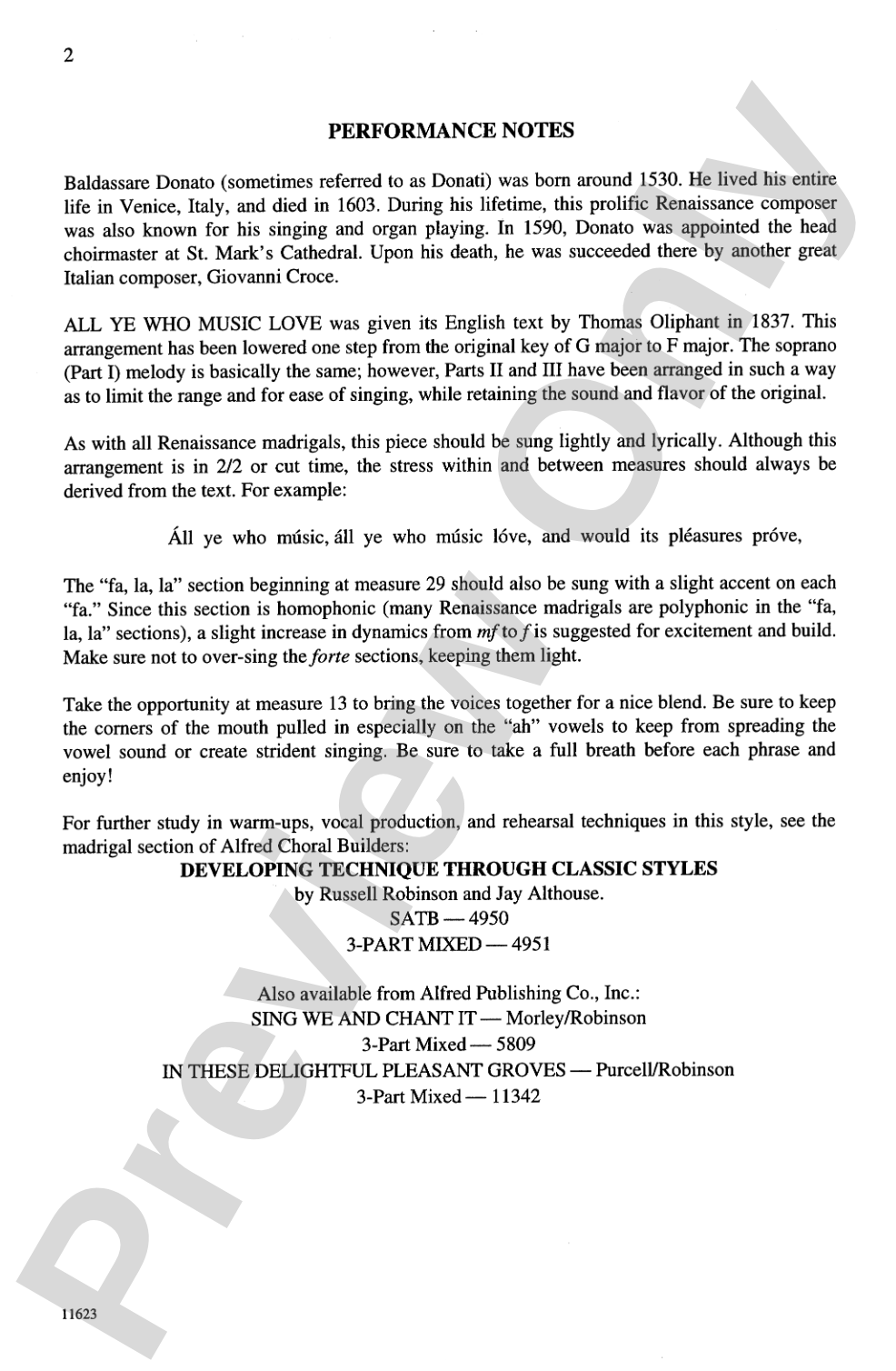
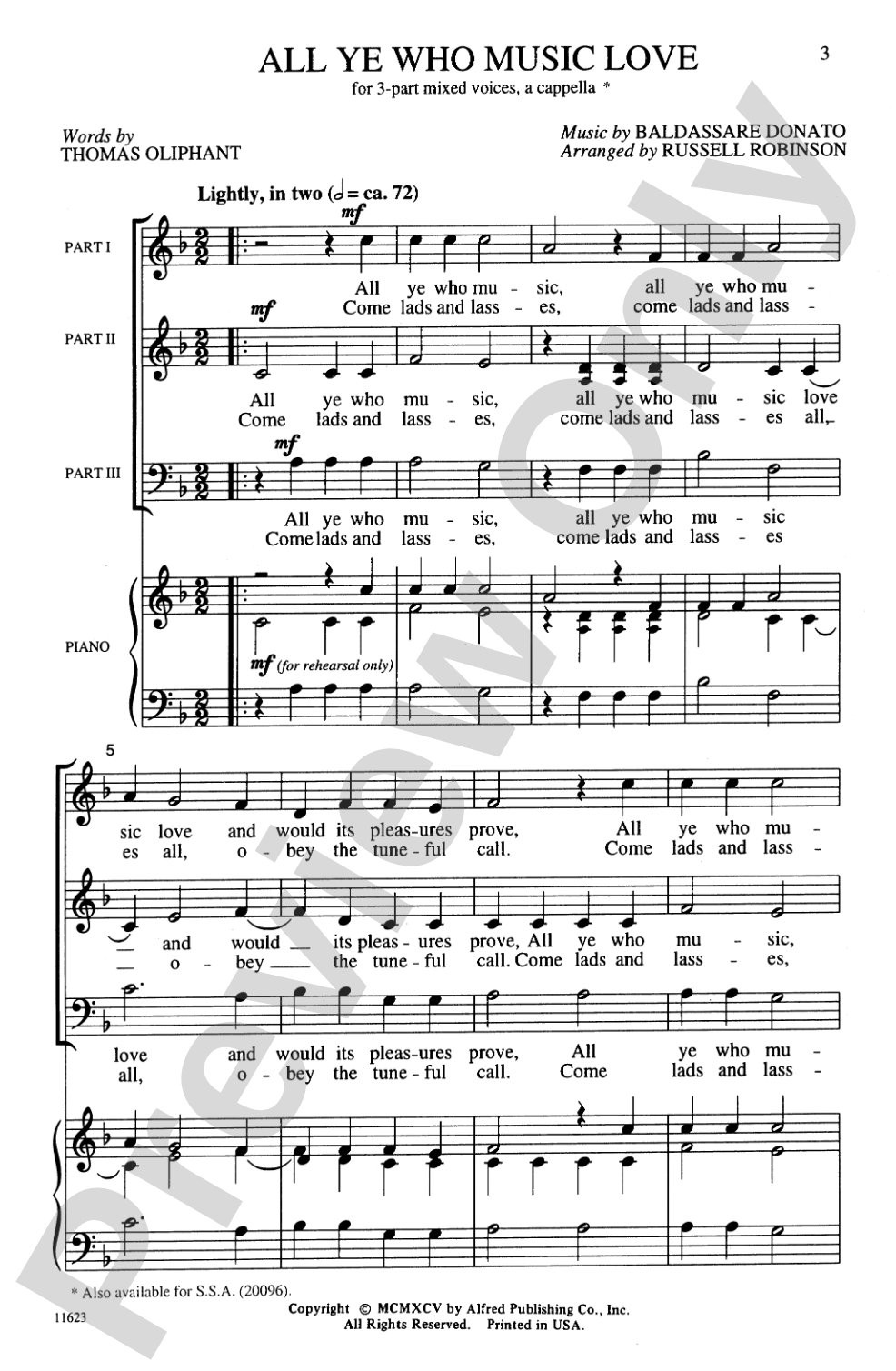
All Ye Who Love Music was given its English text by Thomas Oliphant in 1837. This arrangement has been lowered one step from the original key of G major to F major. The soprano (Part 1) melody is basically the same; however, Parts II and III have been arranged in such a way as to limit the range and for ease of singing, while retaining the sound and flavor of the original. As will all Renaissance madrigals, this piece should be sung lightly and lyrically.


All Ye Who Music Love: 3-Part Mixed, a cappella Choral Octavo isn't in MakeMusic Cloud just yet...but it could be. Let us know you'd like to see it, and you'll help shape what comes next. In the meantime, start a free trial and dive into thousands of interactive titles your students can play along with today.
Request This Title
Tell us you want it.
Start Your Free Trial
Explore everything that's ready to play right now.
Sample Audio
1
Audio File
--:--
0:00
0:00
Sample Video
No sample videos found.
Additional Details
Series:
Alfred Archive Edition: Alfred Choral Designs
Publisher:
Alfred Music
Page Count:
8
SKU:
00-PO-0002066
More about this title
Why we love this
This arrangement strips away unnecessary vocal difficulty without compromising the Renaissance character that makes madrigals compelling to sing and hear. By lowering the key to F major and reshaping the inner parts for accessibility, it opens the piece to mixed choirs that might otherwise hesitate at a madrigal's technical demands. The result is a work that sounds authentically madrigal-like while remaining genuinely singable for your ensemble.
What to expect
Light, transparent, and conversational; the kind of music that feels like a group of singers gathering to celebrate language and melody together. The F major setting sits comfortably across all three parts, creating brightness without strain, and the sparse texture lets text and line shine through without harmonic weight.
Who it's for
Mixed choirs seeking authentic madrigal repertoire that doesn't require soprano singers with extended range or demanding leaps. This arrangement is ideal for high school choirs, community ensembles, and festival preparation where you want period-appropriate literature without lengthy rehearsal time on range negotiation.
How to get the most out of it
- Encourage singers to think of their lines as dance-like rather than operatic; keep the tone light and conversational, letting the text articulation drive the phrase instead of weight.
- Balance the soprano melody gently against the supporting parts; the lower voices should anchor and color without overwhelming.
- Work dynamics through the ensemble first without worrying about blend; once individual line clarity exists, adding gentle dynamic shaping will feel natural.
How to use it
This works particularly well as a palate-cleanser between heavier Romantic or contemporary works, or as a concert opener that sets a playful, historically informed tone. Its eight pages make it an economical addition to a program built around madrigal repertoire or Renaissance secular music.
Skills your students will build
- Light, lyrical tone production across all parts
- Reading three independent lines with clear text articulation
- Understanding Renaissance harmonic language and period style
- Blending three-part SAB voicing with even tone distribution
- A cappella intonation and independence from external pitch reference