
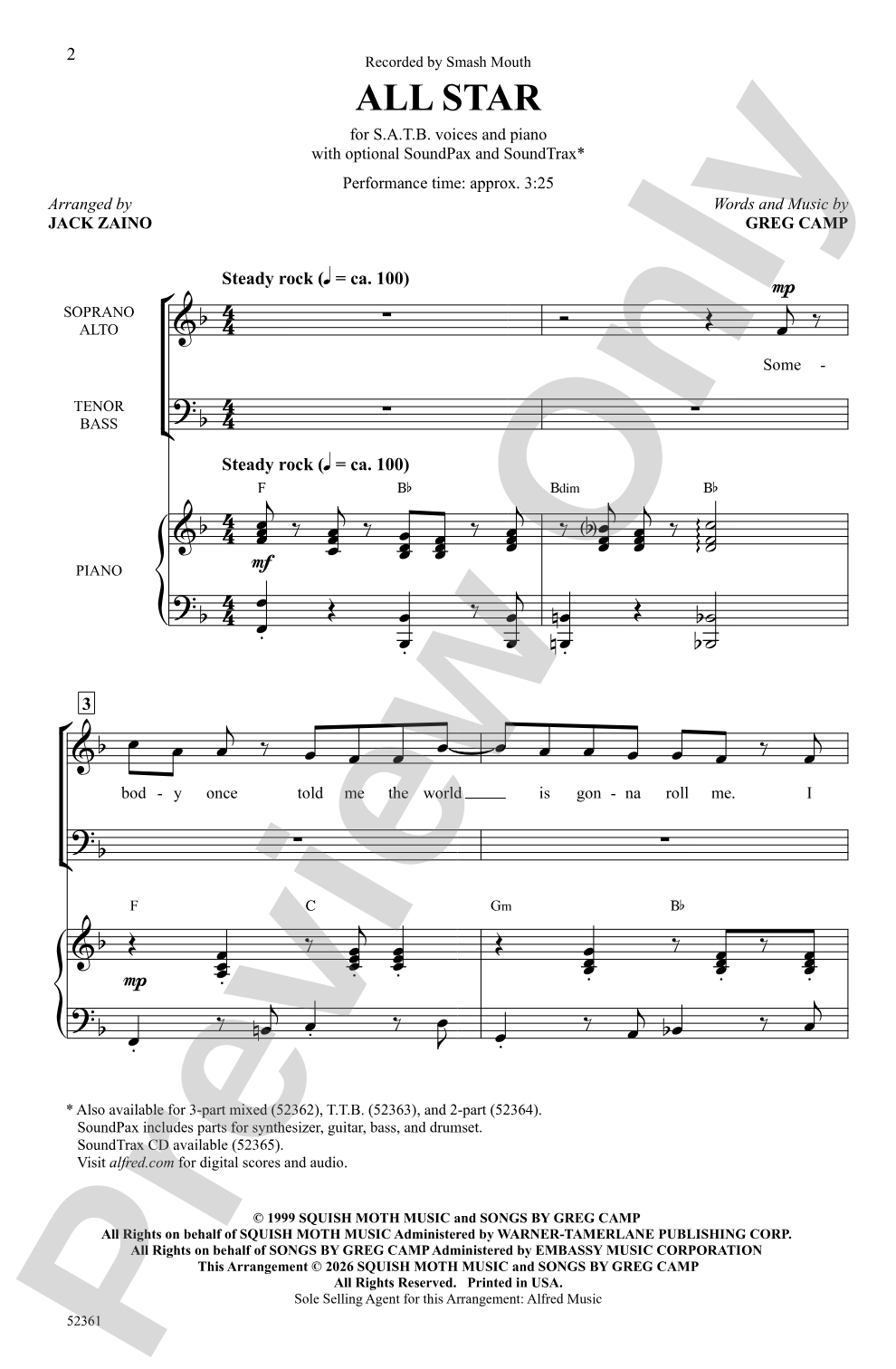

All Star: SATB Choral Octavo
Words and music by Greg Camp / arr. Jack Zaino
Item: 00-PO-0007902
$2.75
Minimum order quantity: 20 copies
One moment…
Related Items
All Star: 3-Part Mixed Choral Octavo |
$2.75
|
View | |
All Star: TTB Choral Octavo |
$2.75
|
View | |
All Star: 2-Part Choral Octavo |
$2.75
|
View | |
All Star: Choral SoundPax Digital Download |
$15.00
|
View | |
All Star: SATB Choral Octavo |
$2.75
|
View | |
All Star: 3-Part Mixed Choral Octavo |
$2.75
|
View | |
All Star: TTB Choral Octavo |
$2.75
|
View | |
All Star: 2-Part Choral Octavo |
$2.75
|
View | |
All Star: Choral Octavo SoundTrax CD |
$29.99
|
View |
Description
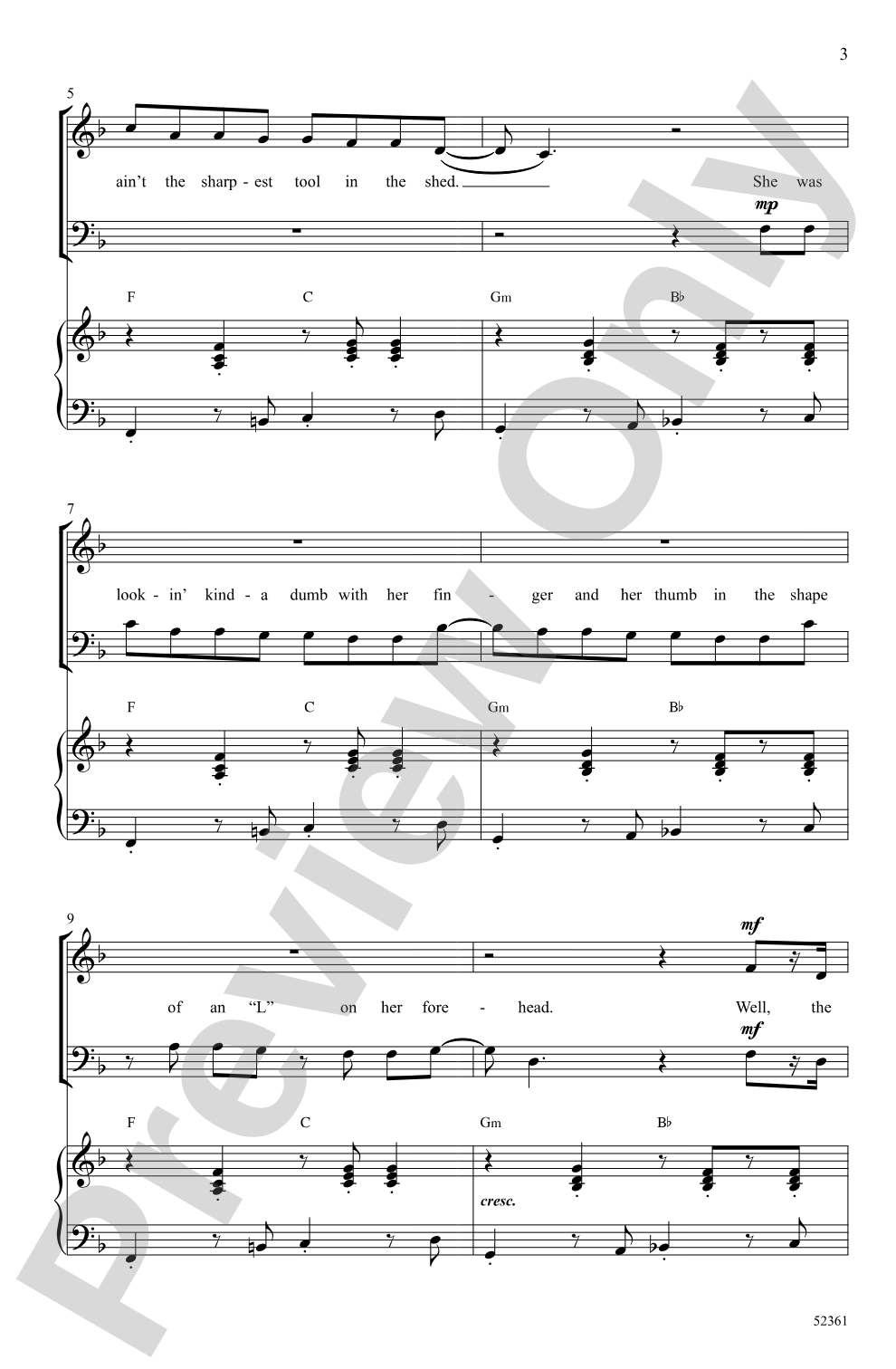
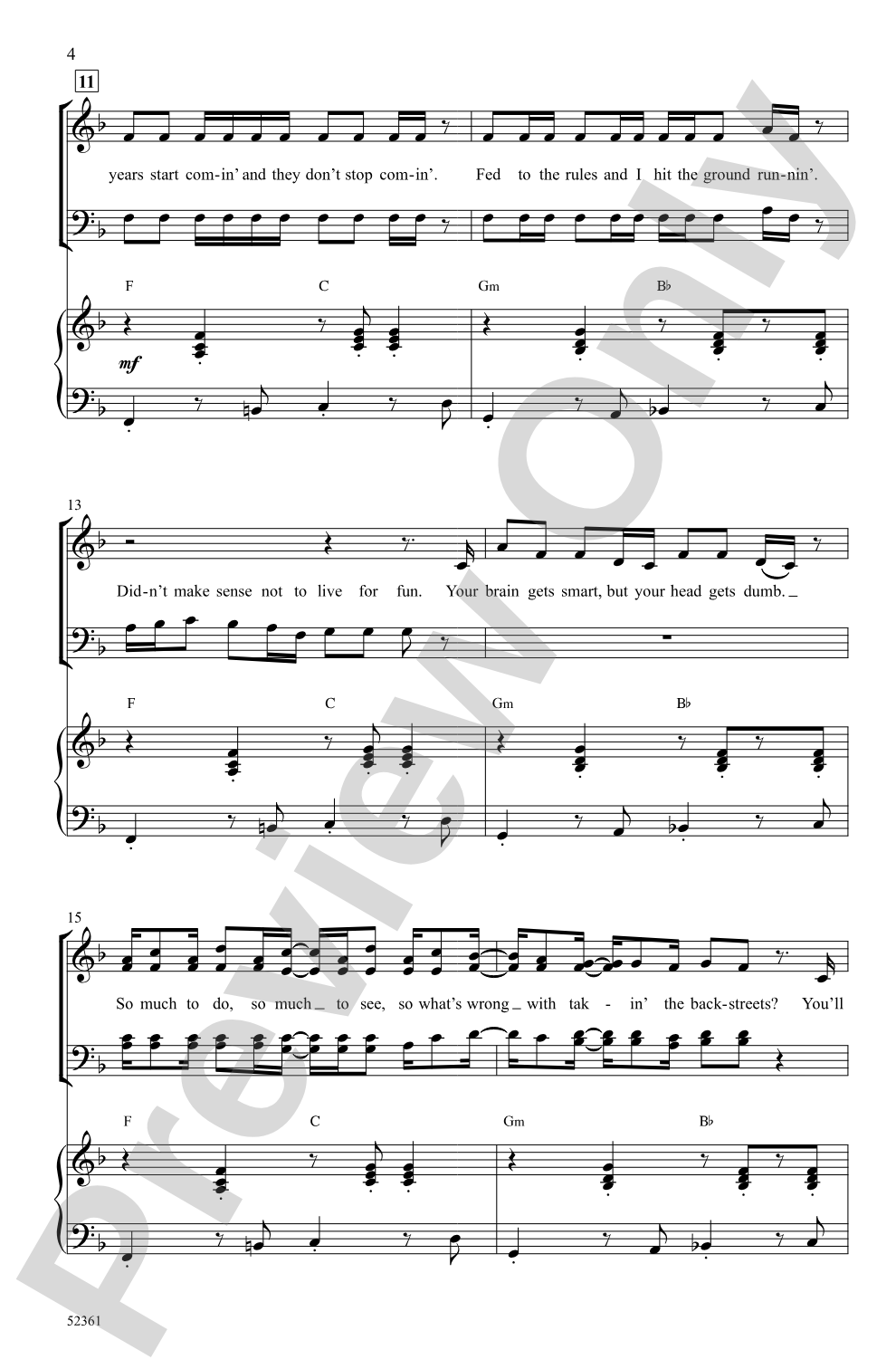
Get ready to shine with this high-energy '90s favorite that encourages self-confidence and individuality. Jack's crowd-pleasing arrangement of the Smash Mouth classic from Shrek stays true to the original and is just plain fun. The rapid-fire text teaches us to be ourselves, ignore the haters, and "break the mold." A steady rock groove and punchy vocals lead into the iconic, stadium-sized hook, and a creative breakdown section includes vocal syllables and optional whistling for a unique pop of personality. "All that glitters is gold!"


All Star: SATB Choral Octavo isn't in MakeMusic Cloud just yet...but it could be. Let us know you'd like to see it, and you'll help shape what comes next. In the meantime, start a free trial and dive into thousands of interactive titles your students can play along with today.
Request This Title
Tell us you want it.
Start Your Free Trial
Explore everything that's ready to play right now.
Sample Audio
1
Audio File
--:--
0:00
0:00
Sample Video
Additional Details
Series:
Alfred Pop Choral Series
Publisher:
Alfred Music
Page Count:
16
SKU:
00-PO-0007902
More about this title
About the Composer: Greg Camp
Greg Camp is the primary songwriter and lead vocalist of Smash Mouth, the rock band that brought "All Star" to global recognition in 1999. The track became a cultural phenomenon through its inclusion in the DreamWorks film Shrek and has since been covered and reinterpreted countless times across genres. Camp's gift for crafting infectious, singable melodies with positive, motivational lyrics has made his work a fixture in pop music education and contemporary choir programming.
Why we love this
Jack Zaino's arrangement captures the infectious energy of the original without sacrificing choral sophistication. The inclusion of optional whistling and vocal syllables in the breakdown section gives your singers permission to play and express themselves, which directly reinforces the song's central message about individuality. This is the kind of piece that energizes an audience and makes your singers actually want to come to rehearsal.
What to expect
Propulsive and celebratory. The steady rock pulse propels the text forward while the harmonic movement keeps things grounded and singable. The breakdown section strips back the arrangement temporarily, creating a moment of playful vulnerability before the full ensemble returns to drive home the hook with stadium-sized confidence.
Who it's for
Directors seeking contemporary pop repertoire that resonates with high school and college singers without condescending to them. This octavo works equally well for pop choirs, show choirs, mixed ensembles in musical theater contexts, and mainstream choral programs looking to broaden their spring concert appeal.
How to get the most out of it
- Lock the rhythm section (soloists and section leaders) into the rock groove before layering full voicing. The steady pulse is what makes this arrangement groove.
- Treat the "break the mold" phrase and rapid-fire text sections as rhythmic conversations between parts rather than unison statements. Let the interlocking of voices create momentum.
- The optional whistling in the breakdown is a genuine musical choice, not decoration. Decide intentionally whether your choir has the musicality and confidence to execute it cleanly, and rehearse it separately if you include it.
- Balance the iconic hook so the soloists cut through without drowning the harmonic support underneath. This is where the stadium-sized energy lives.
How to use it
Program this as a spring or end-of-year finale, where the positive message about self-acceptance and the unironic joy of the original hit land hardest with audiences. It pairs well alongside other contemporary pop or musical theater selections, or as a tonal contrast to more classical programming. The 16-page score and recorded accompaniment support quick turnaround rehearsals if you're building a concert late in the season.
Skills your students will build
- Singing in a contemporary pop style with accurate rhythmic articulation and ensemble cohesion
- Sustaining energy and character through rapid-fire text passages
- Balancing solo lines against harmonic accompaniment in a rock groove context
- Interpreting optional expressive elements (whistling, vocal syllables) as integral musical choices rather than added effects