

Alfred's Group Piano for Adults: Ensemble Music, Book 2: Repertoire for Piano Duet, Two Pianos, and Multiple Pianos: Piano
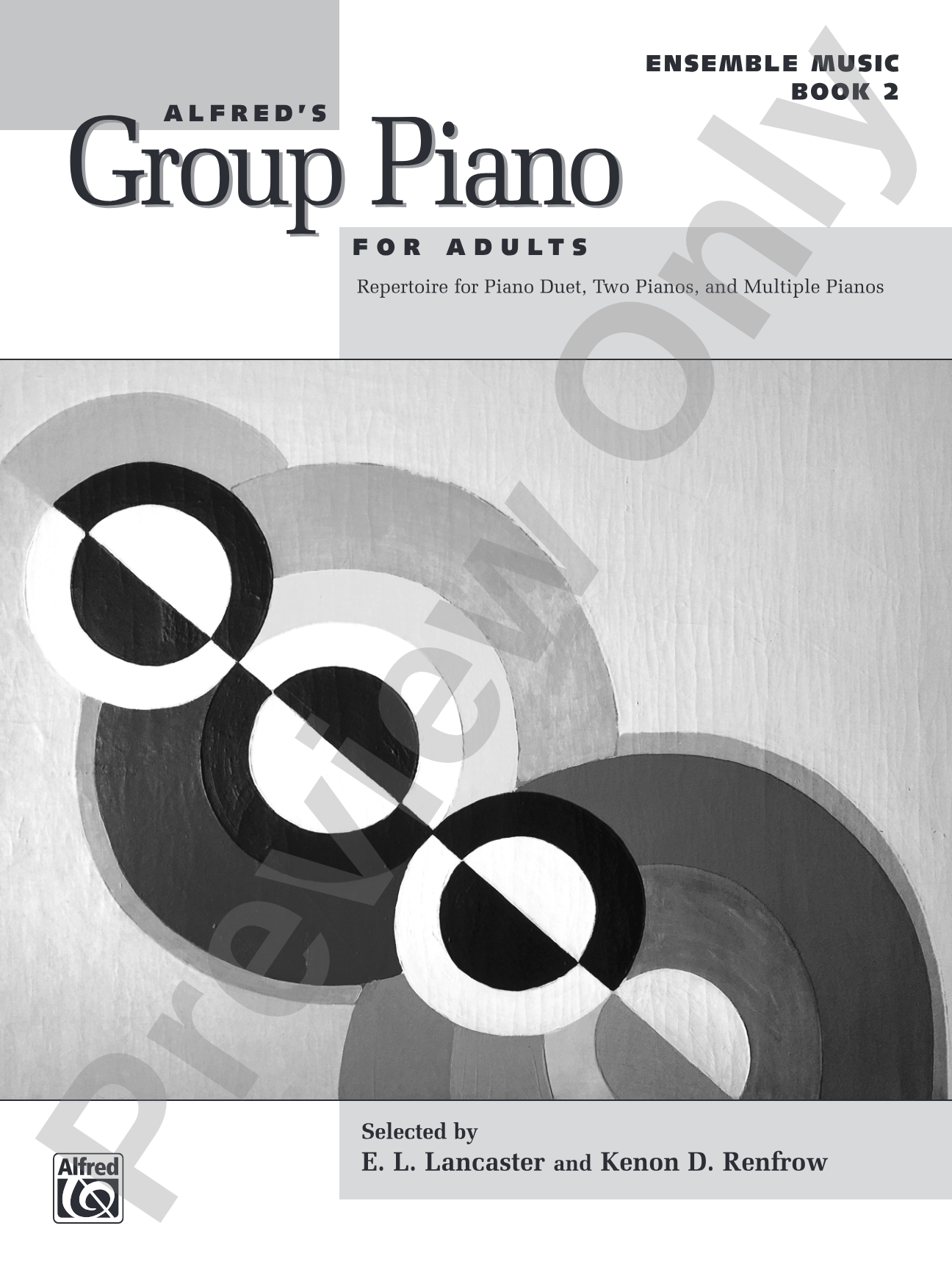
Repertoire for Piano Duet, Two Pianos, and Multiple Pianos
Selected by E. L. Lancaster and Kenon D. Renfrow
Grade: 2
Item: 00-PB-0000974
$10.99
Pickup currently not available
Related Items
Alfred's Group Piano for Adults: Ensemble Music, Book 2: Piano Book |
$10.99
|
View |
Description
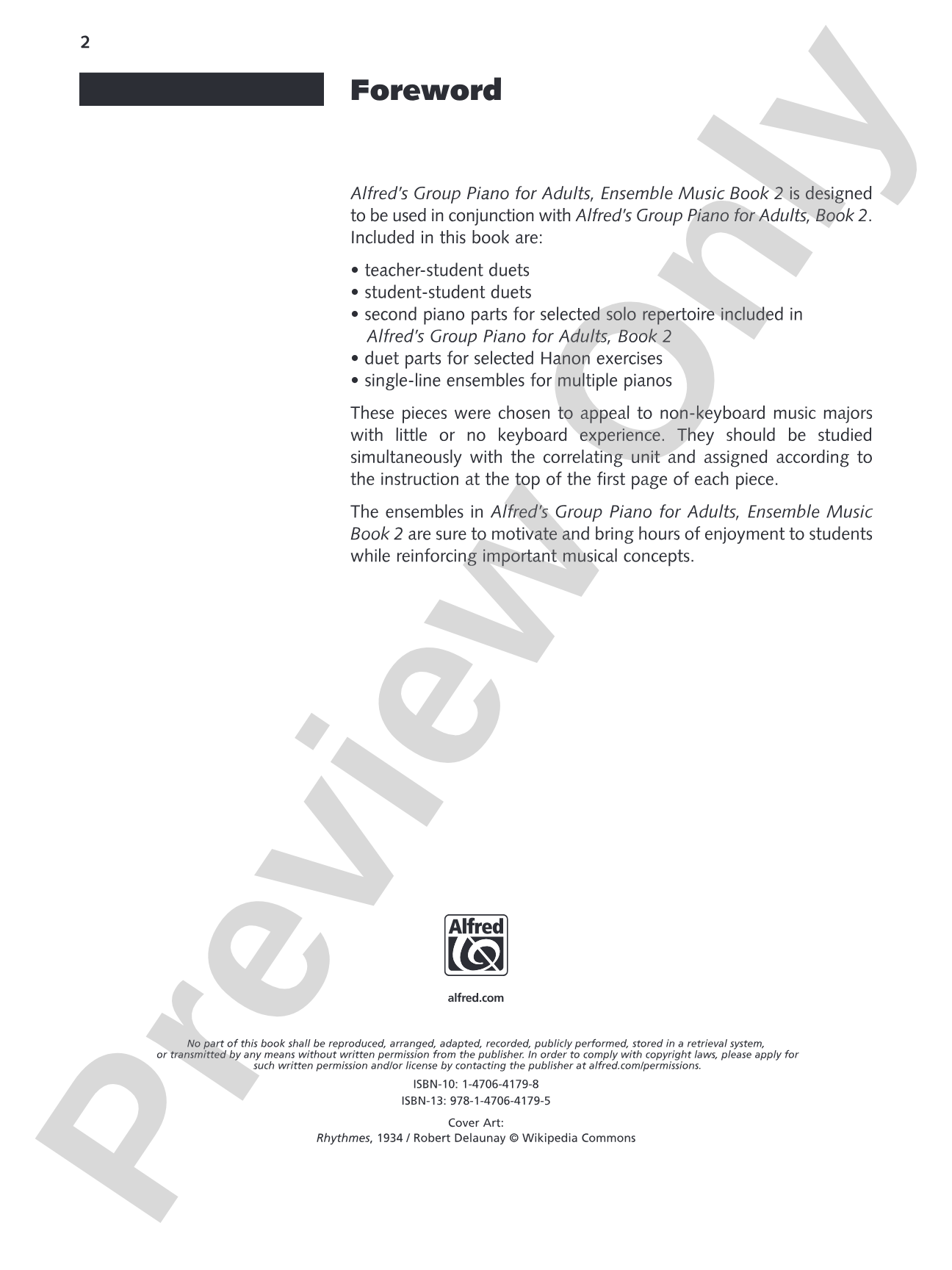
Alfred's Group Piano for Adults, Ensemble Music, Book 2 is designed to be used in conjunction with Alfred's Group Piano for Adults, Book 2. Included in the book is repertoire for piano duet, two pianos, and multiple pianos. The pieces were chosen to appeal to non-keyboard music majors with little or no keyboard experience. The pieces are sure to bring hours of enjoyment while reinforcing important musical concepts.
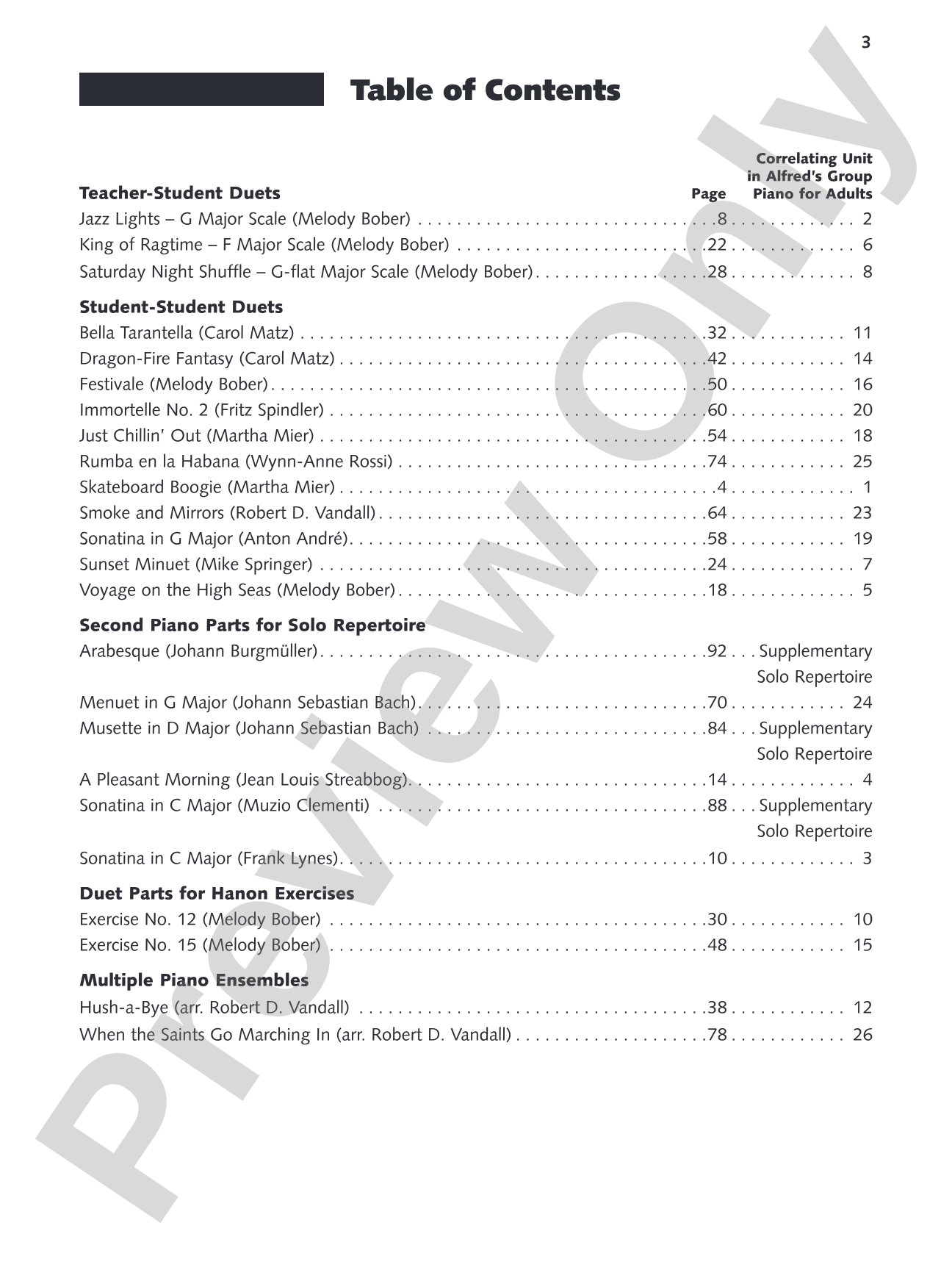
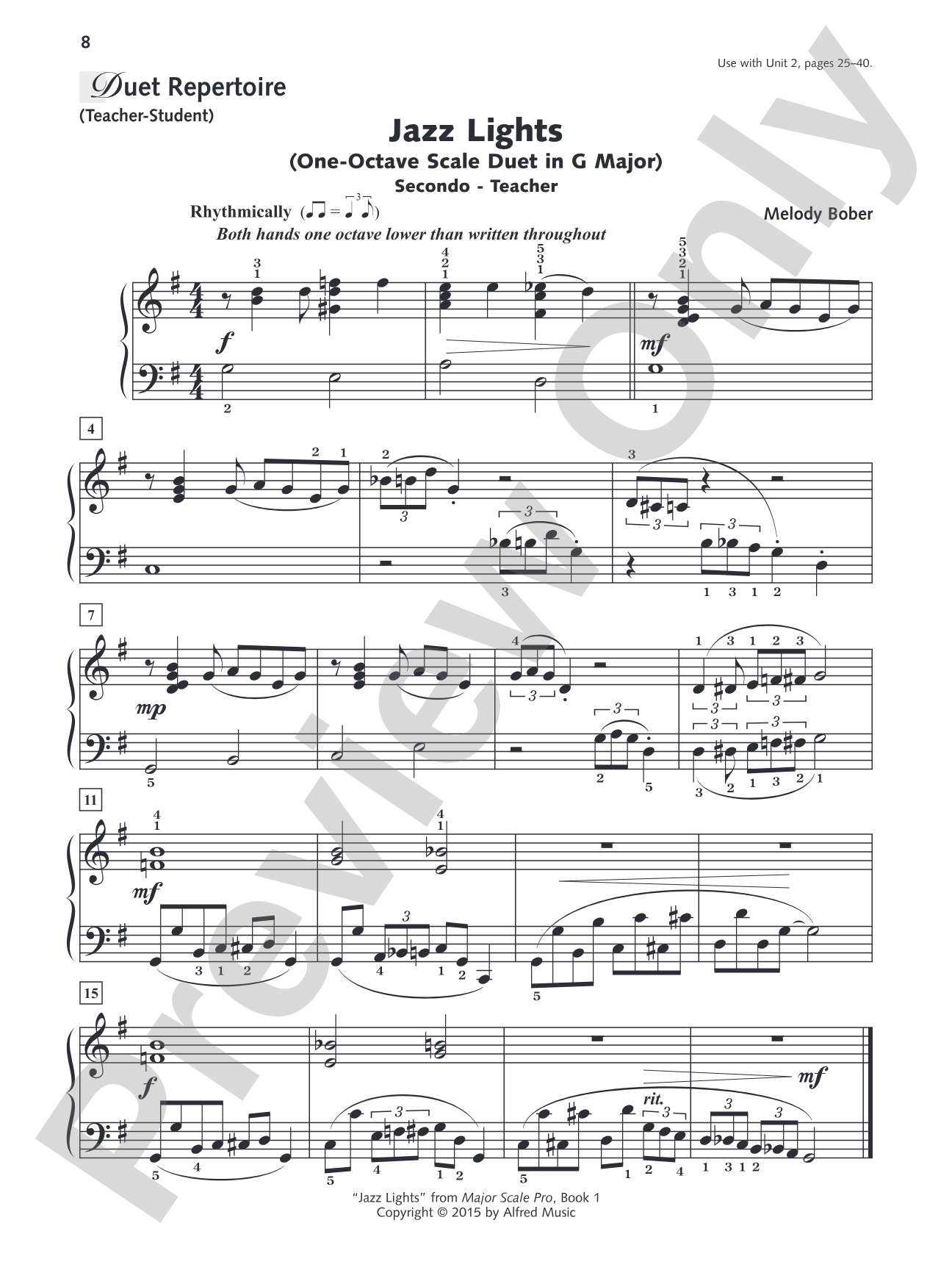
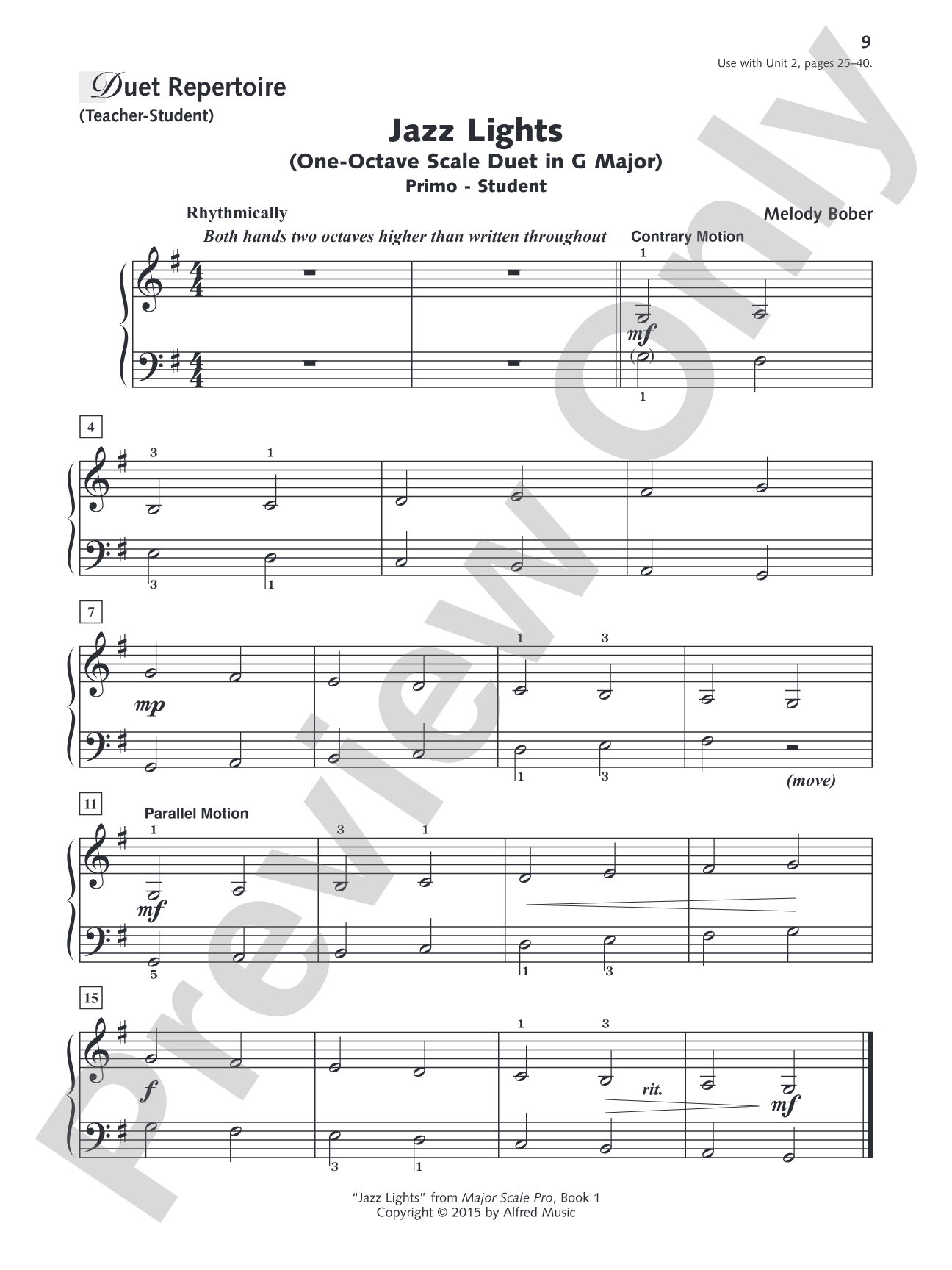
Teacher-Student Duets: Jazz Lights (Melody Bober) * King of Ragtime (Melody Bober) * Saturday Night Shuffle (Melody Bober)
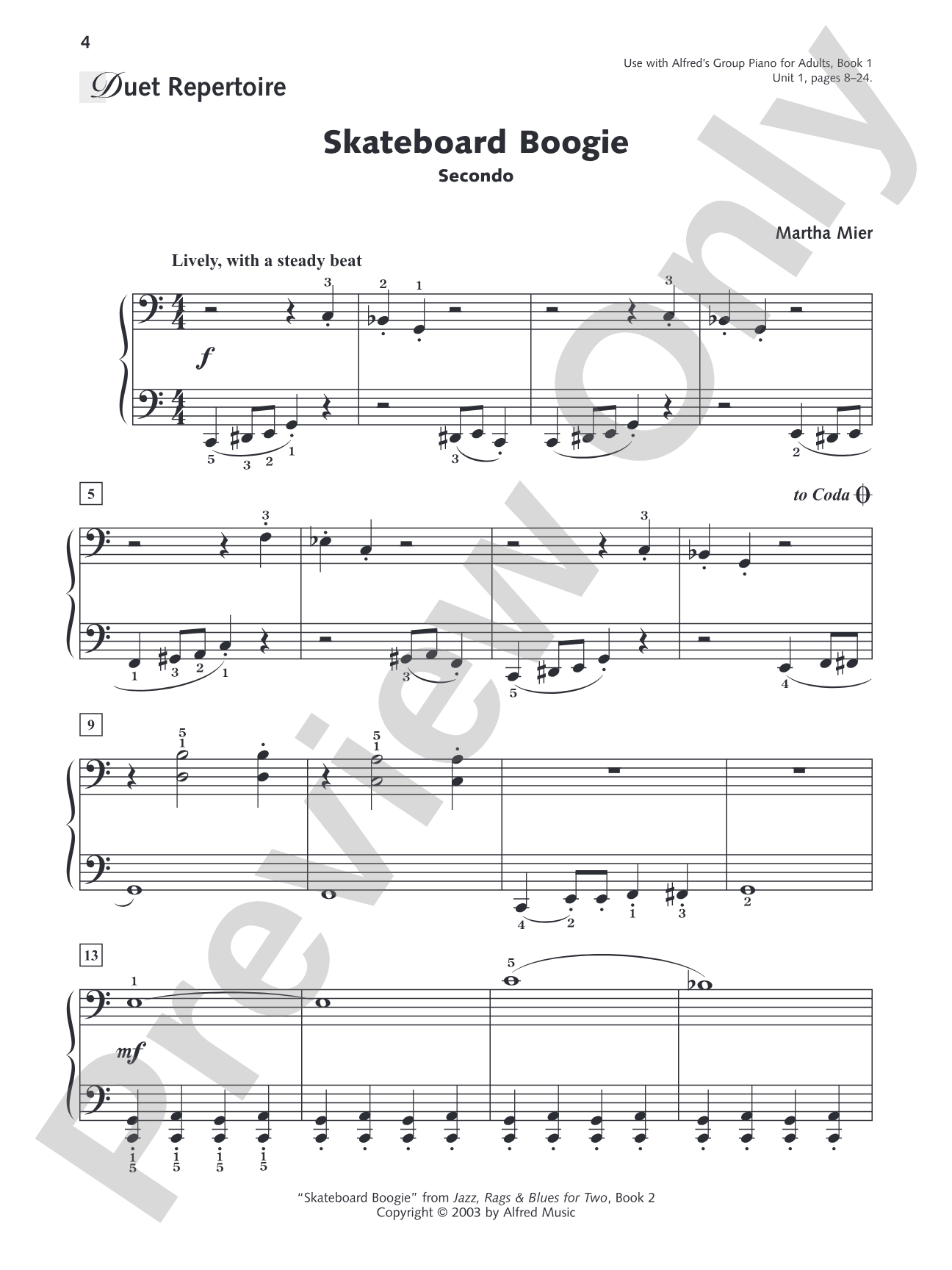
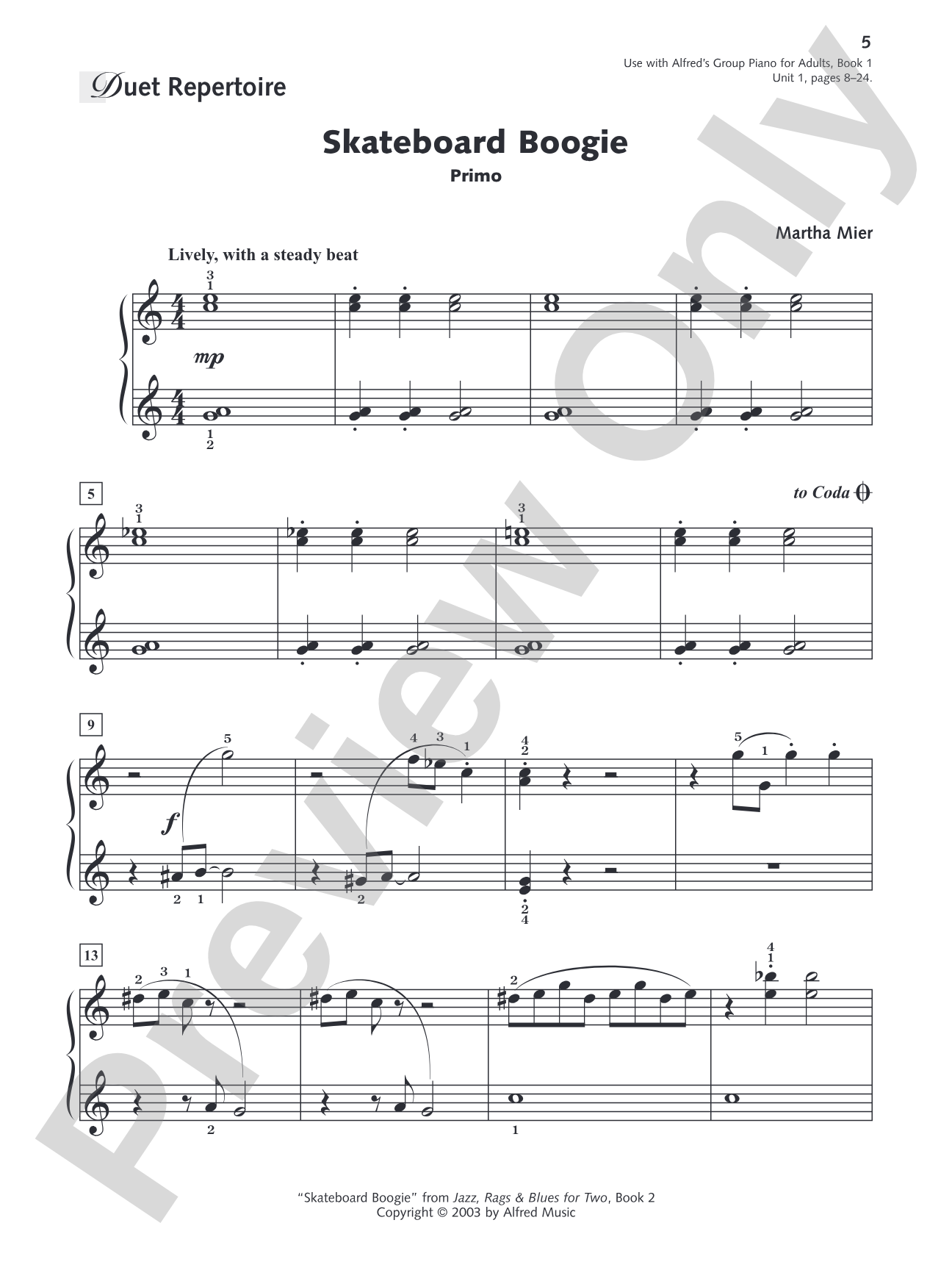
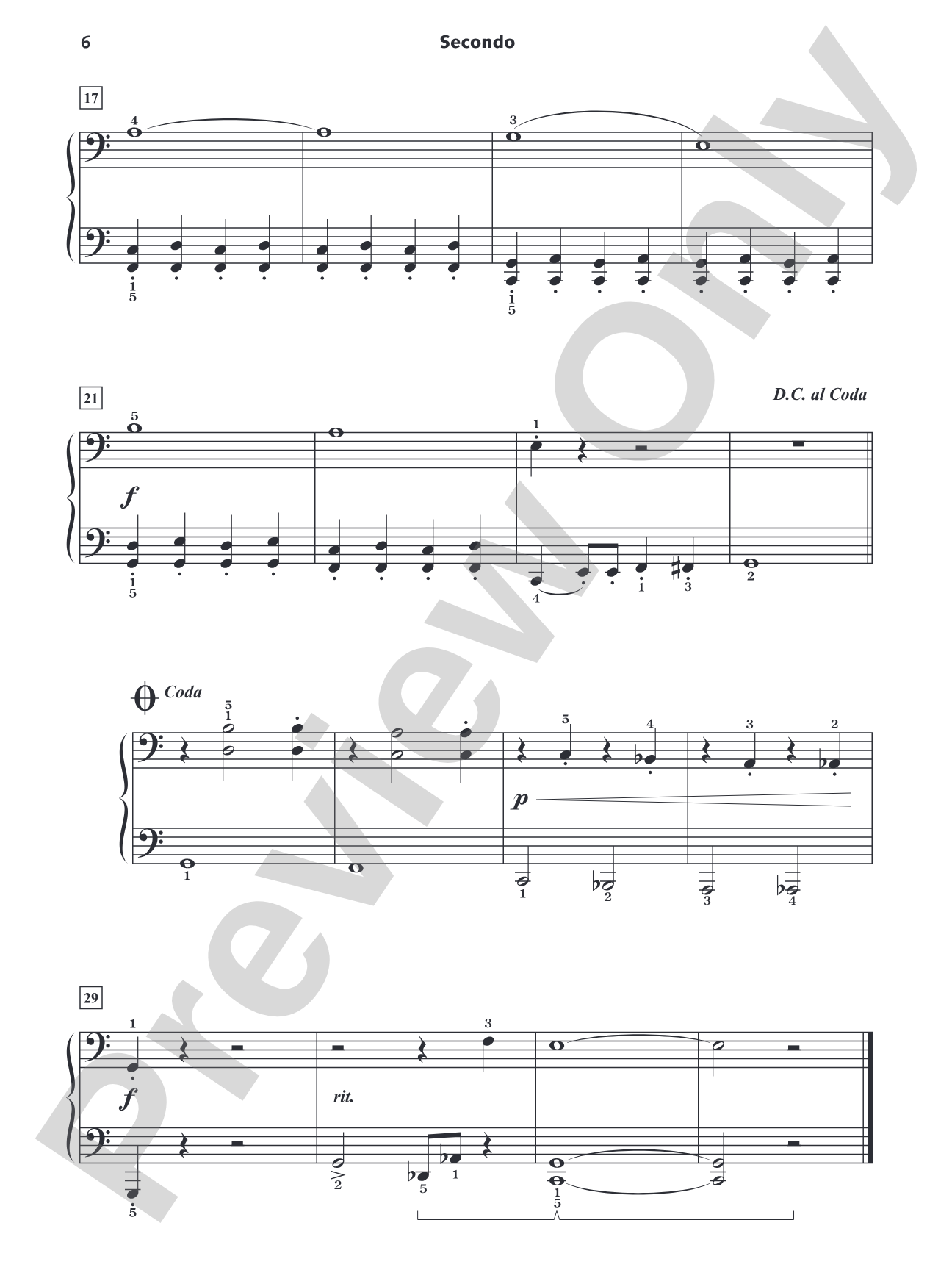
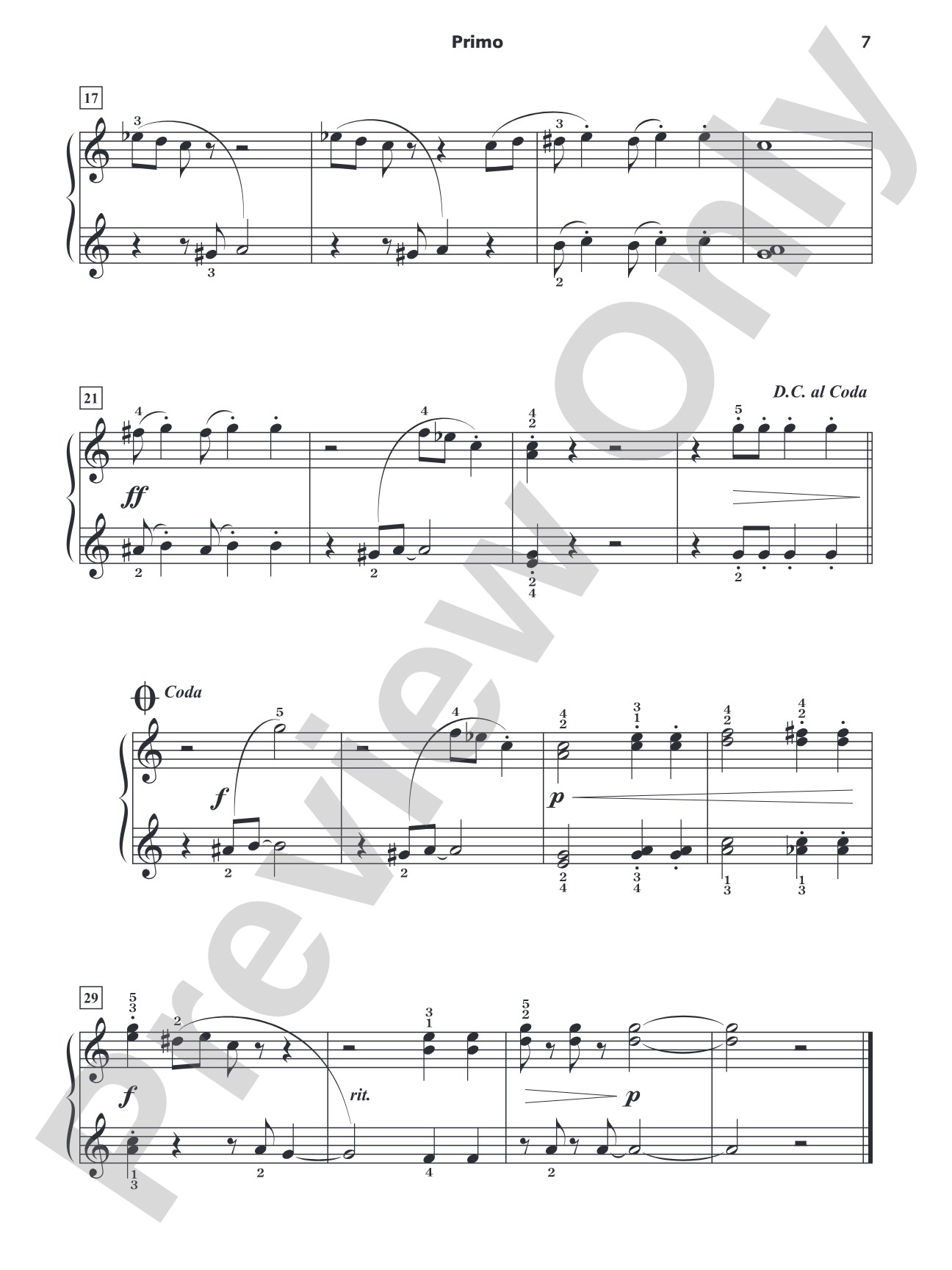
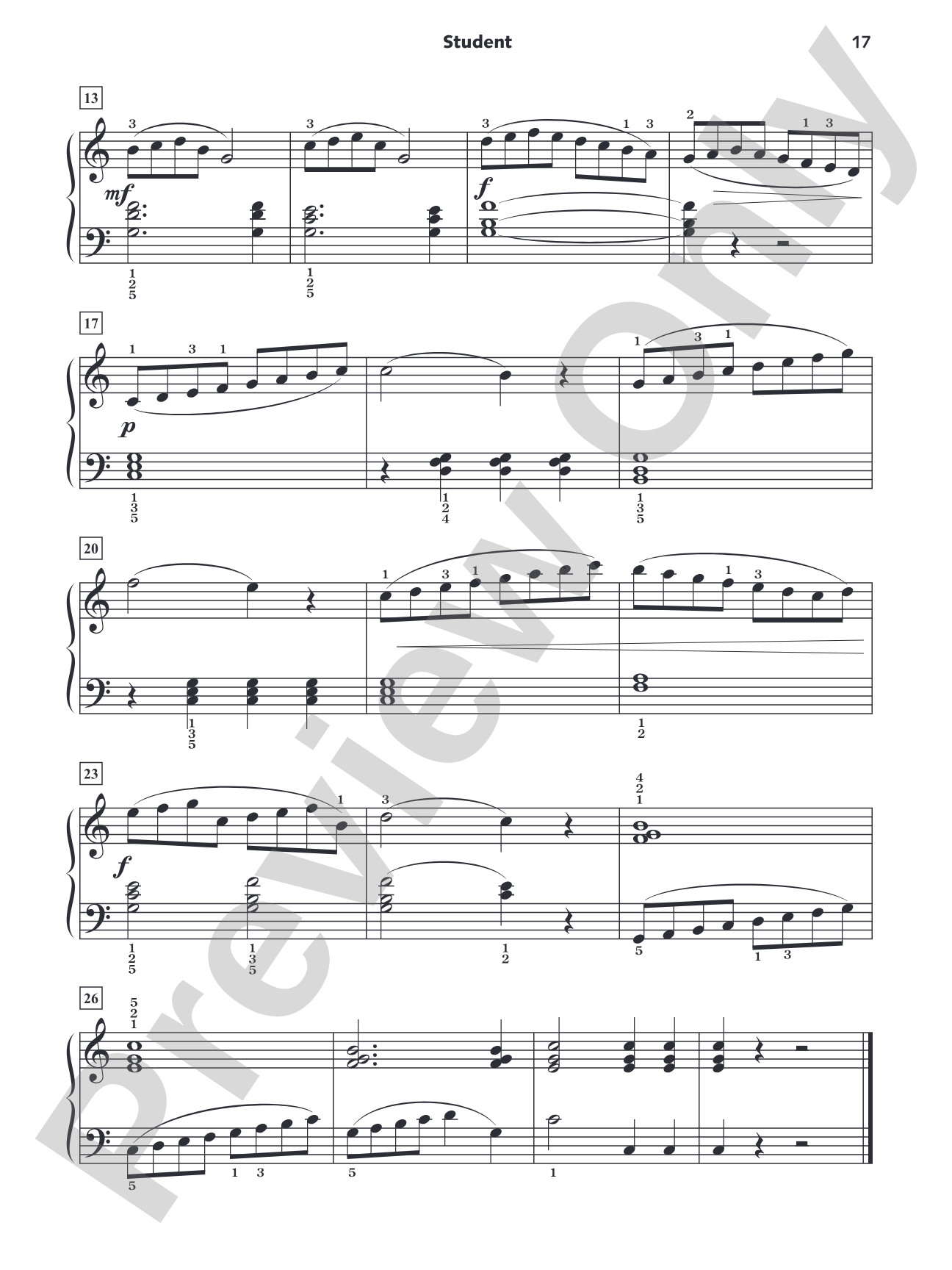
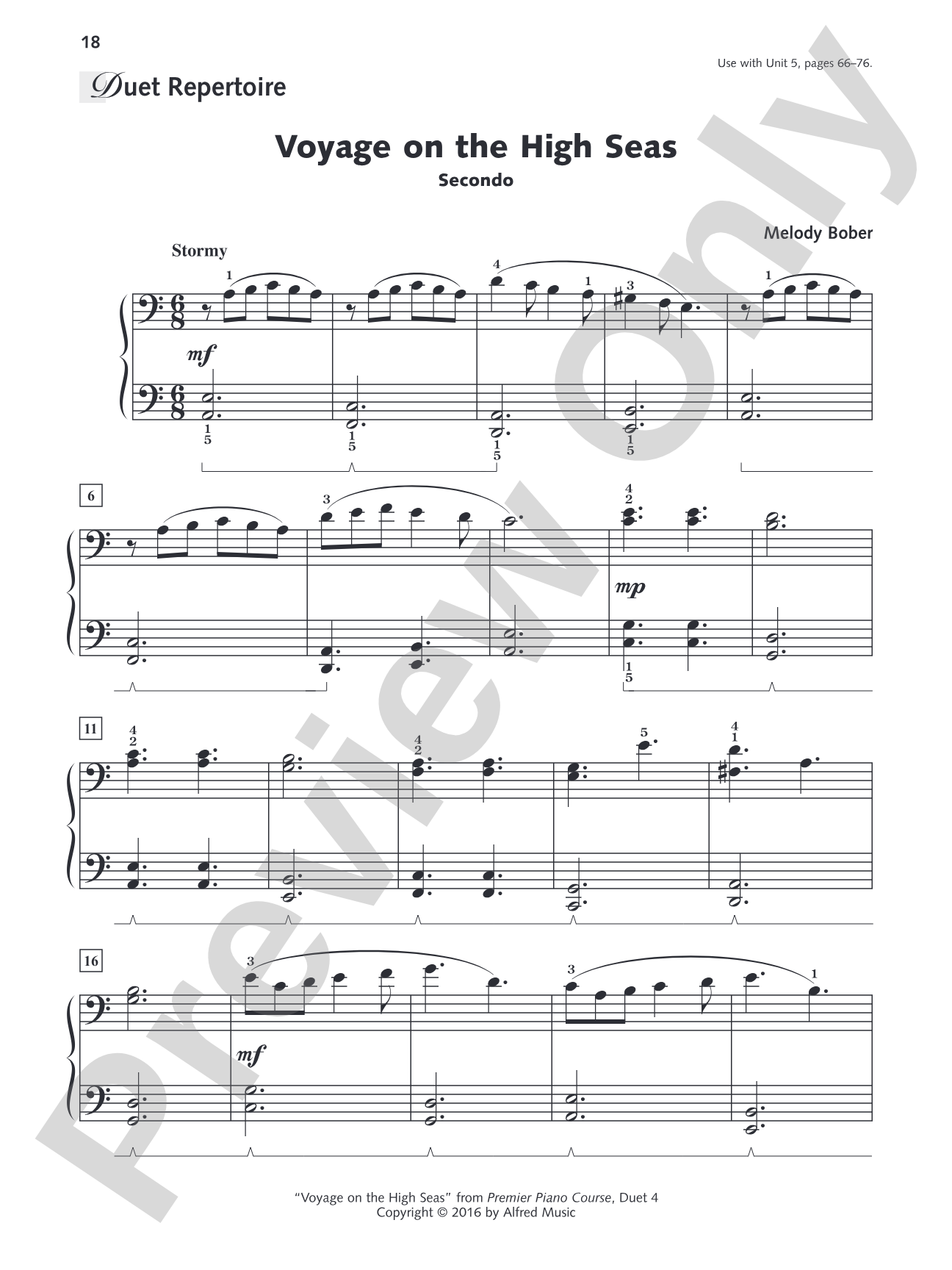
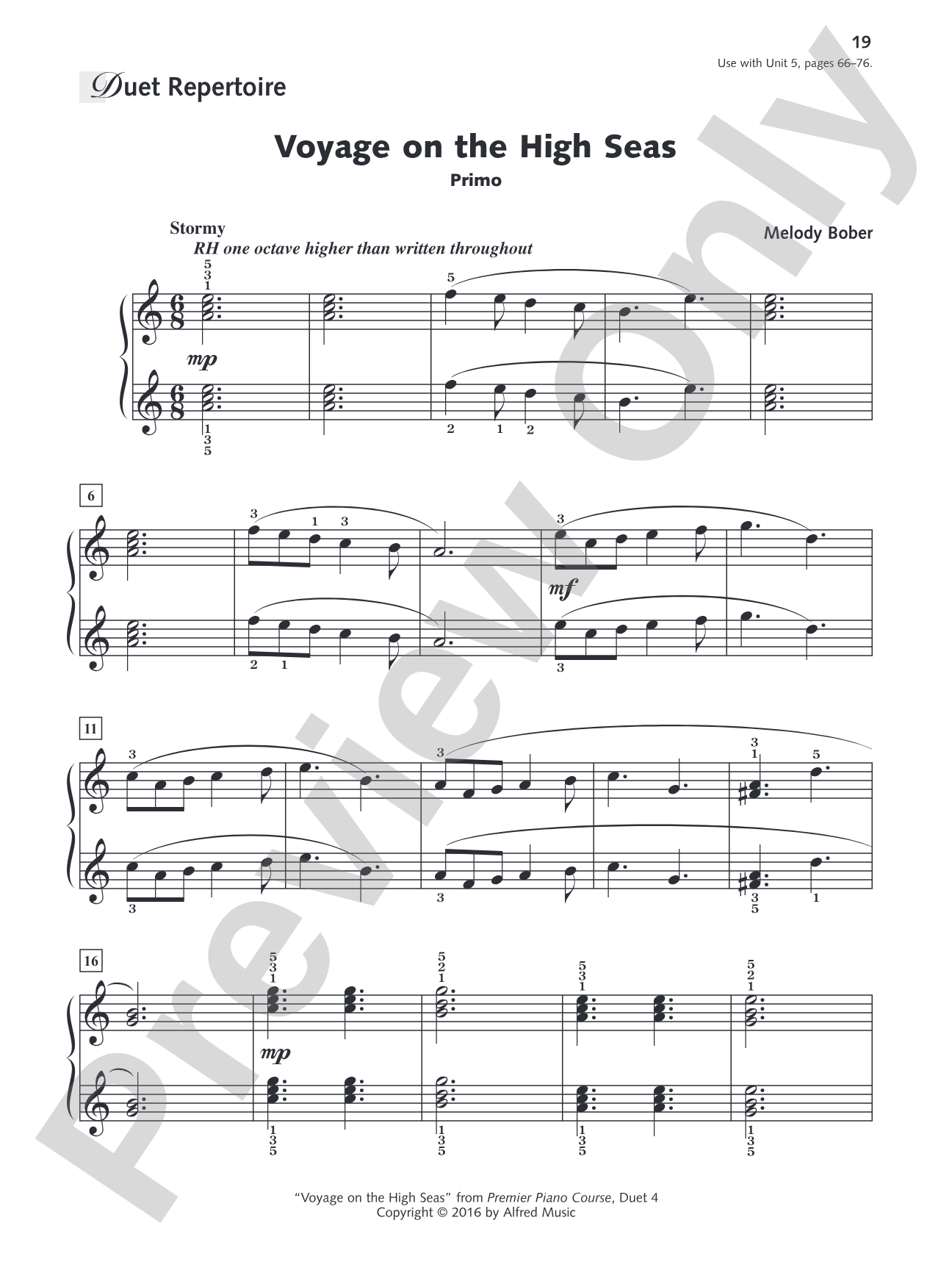
Student-Student Duets: Bella Tarantella (Carol Matz) * Dragon-Fire Fantasy (Carol Matz) * Festivale (Melody Bober) * Immortelle No. 2 (Fritz Spindler) * Just Chillin' Out (Martha Mier) * Rumba en la Habana (Wynn-Anne Rossi) * Skateboard Boogie (Martha Mier) * Smoke and Mirrors (Robert D. Vandall) * Sonatina in G Major (Anton André) * Sunset Minuet (Mike Springer) * Voyage on the High Seas (Melody Bober)
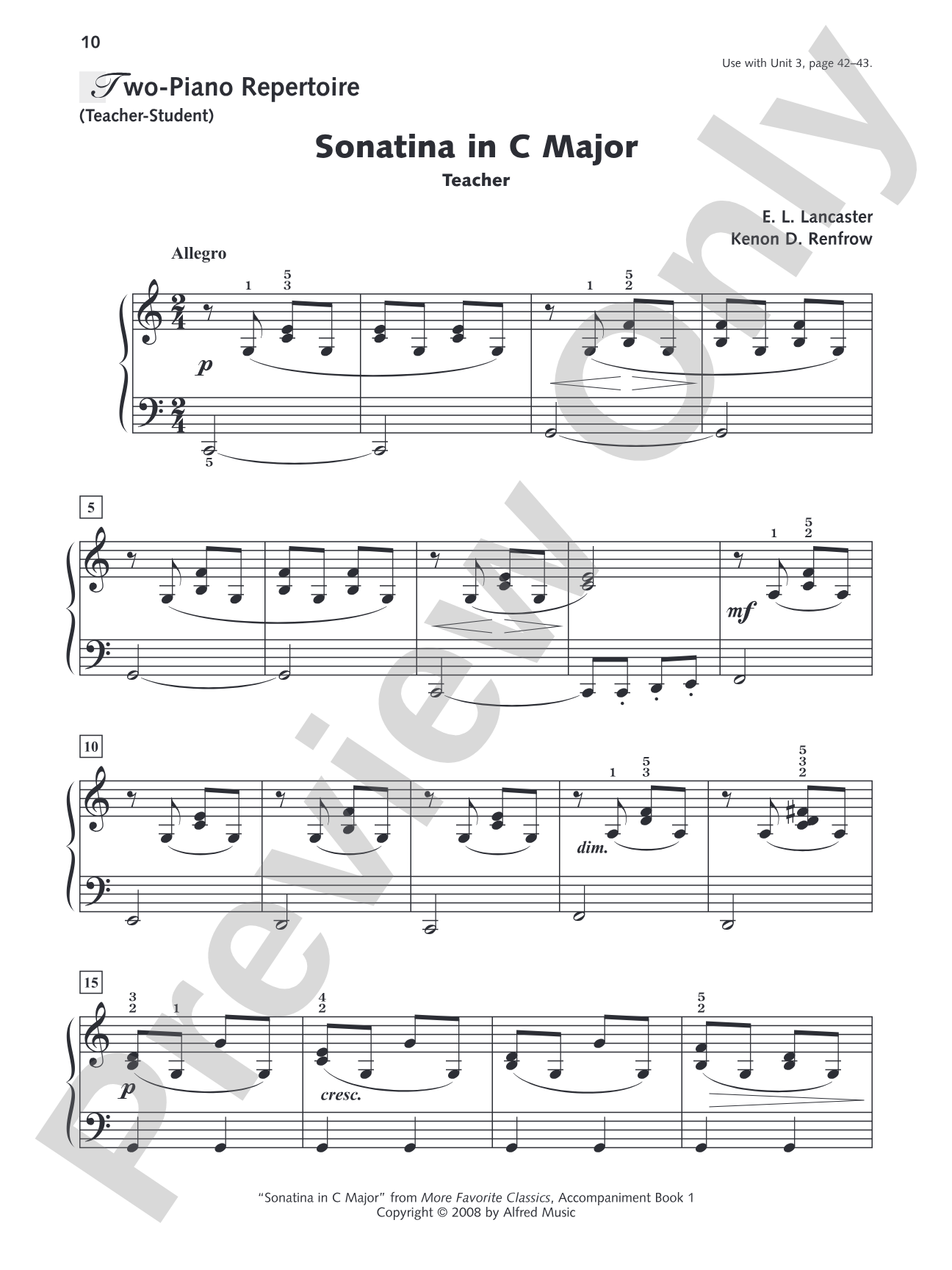
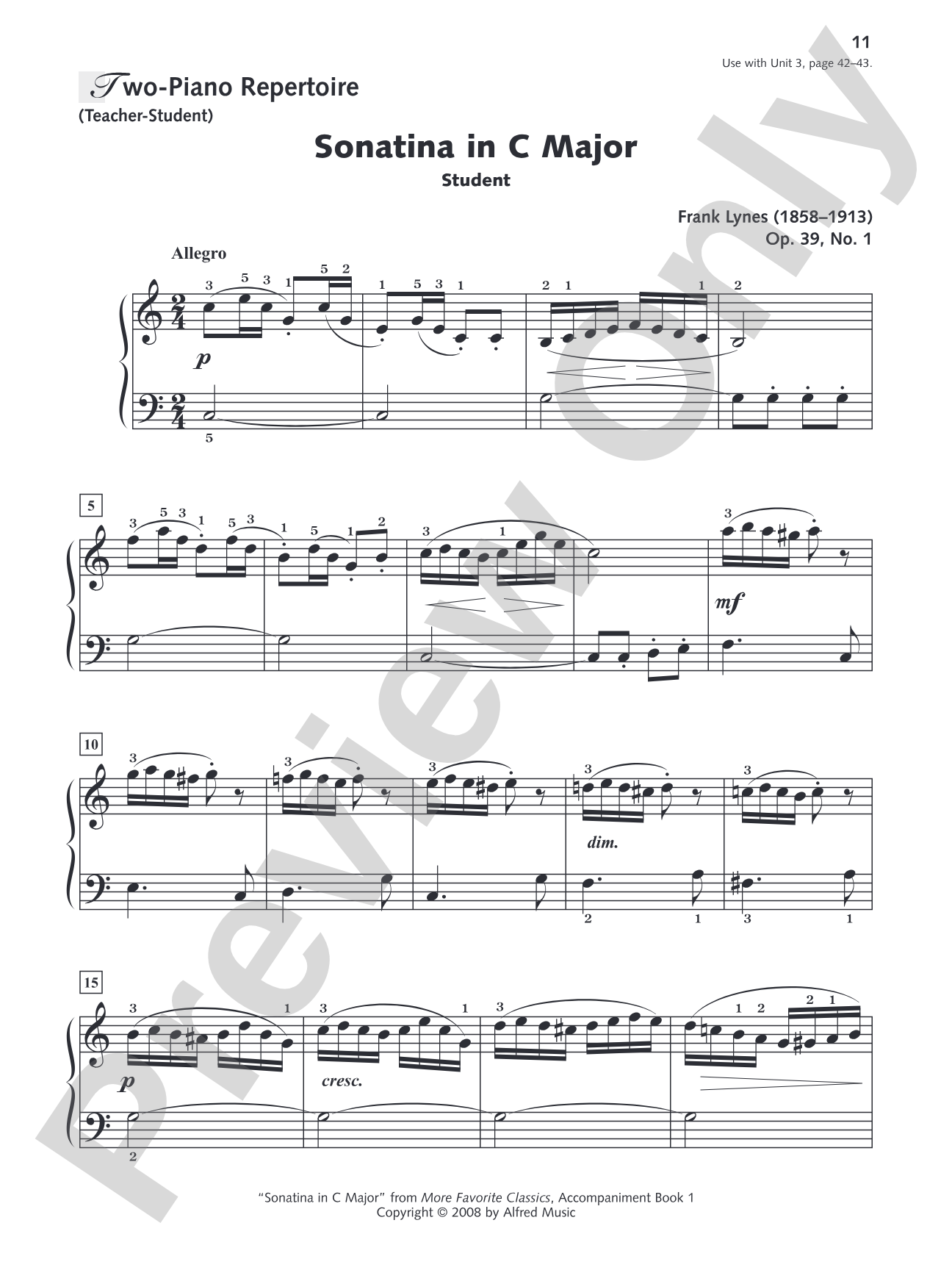
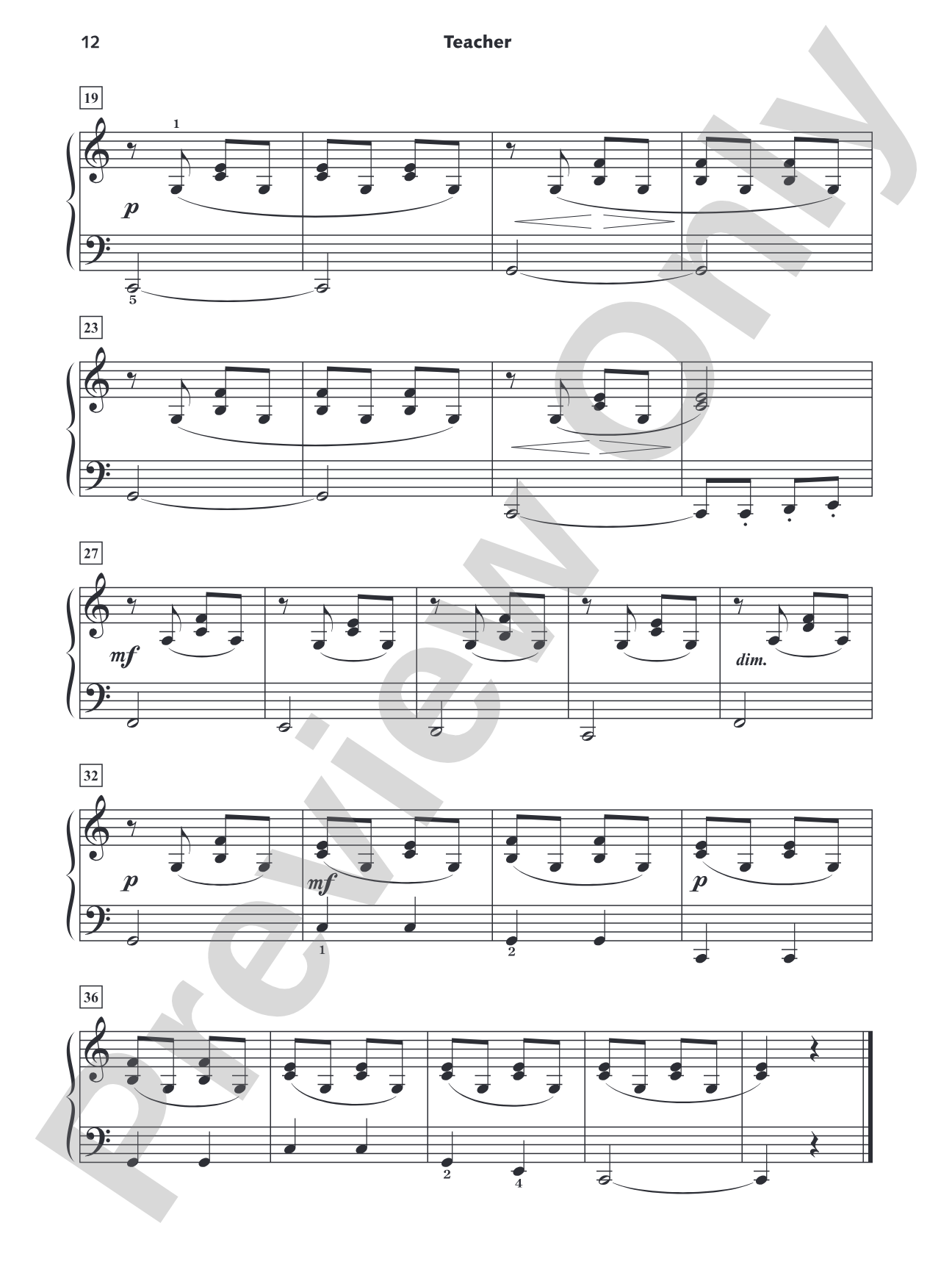
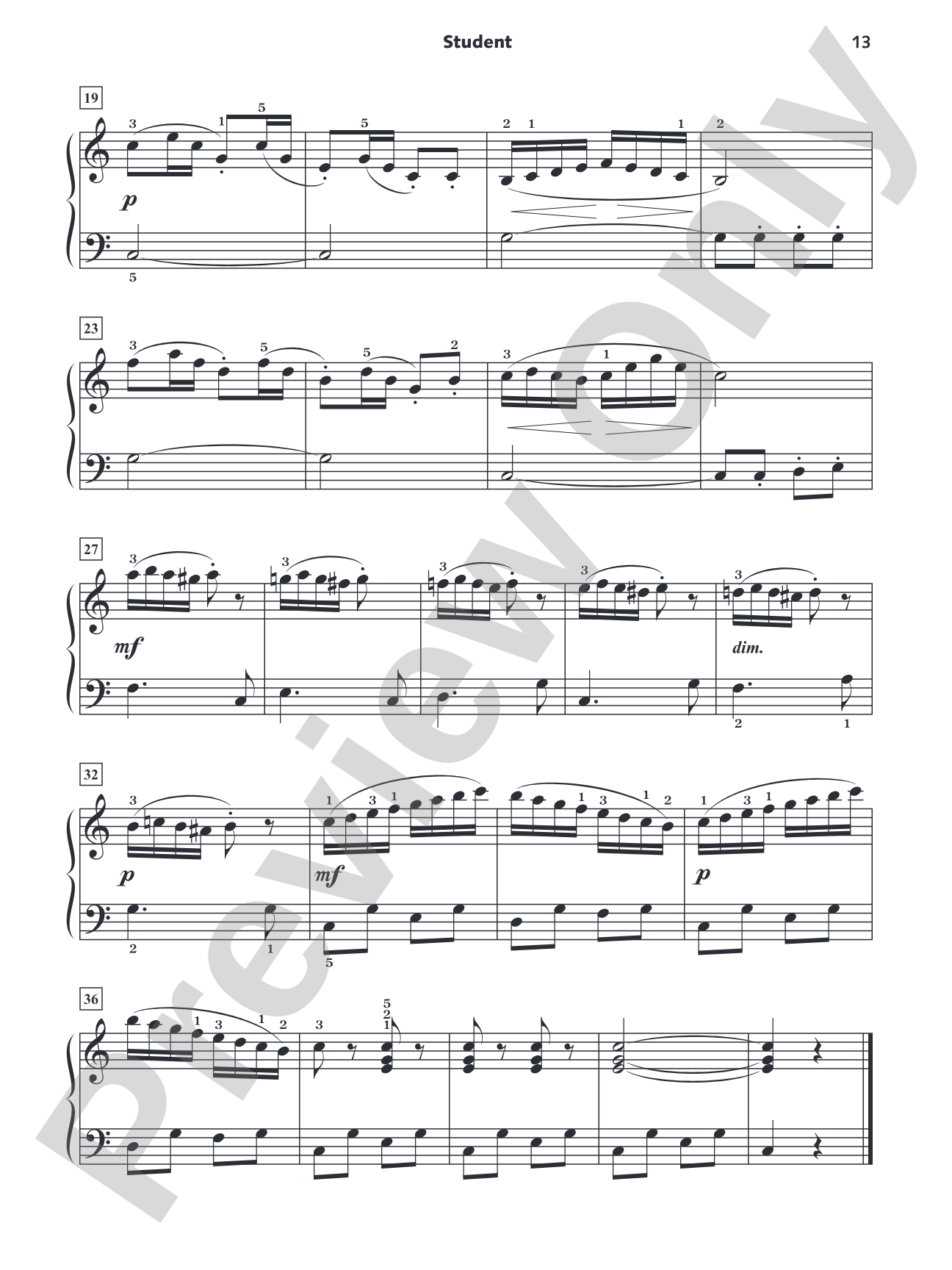
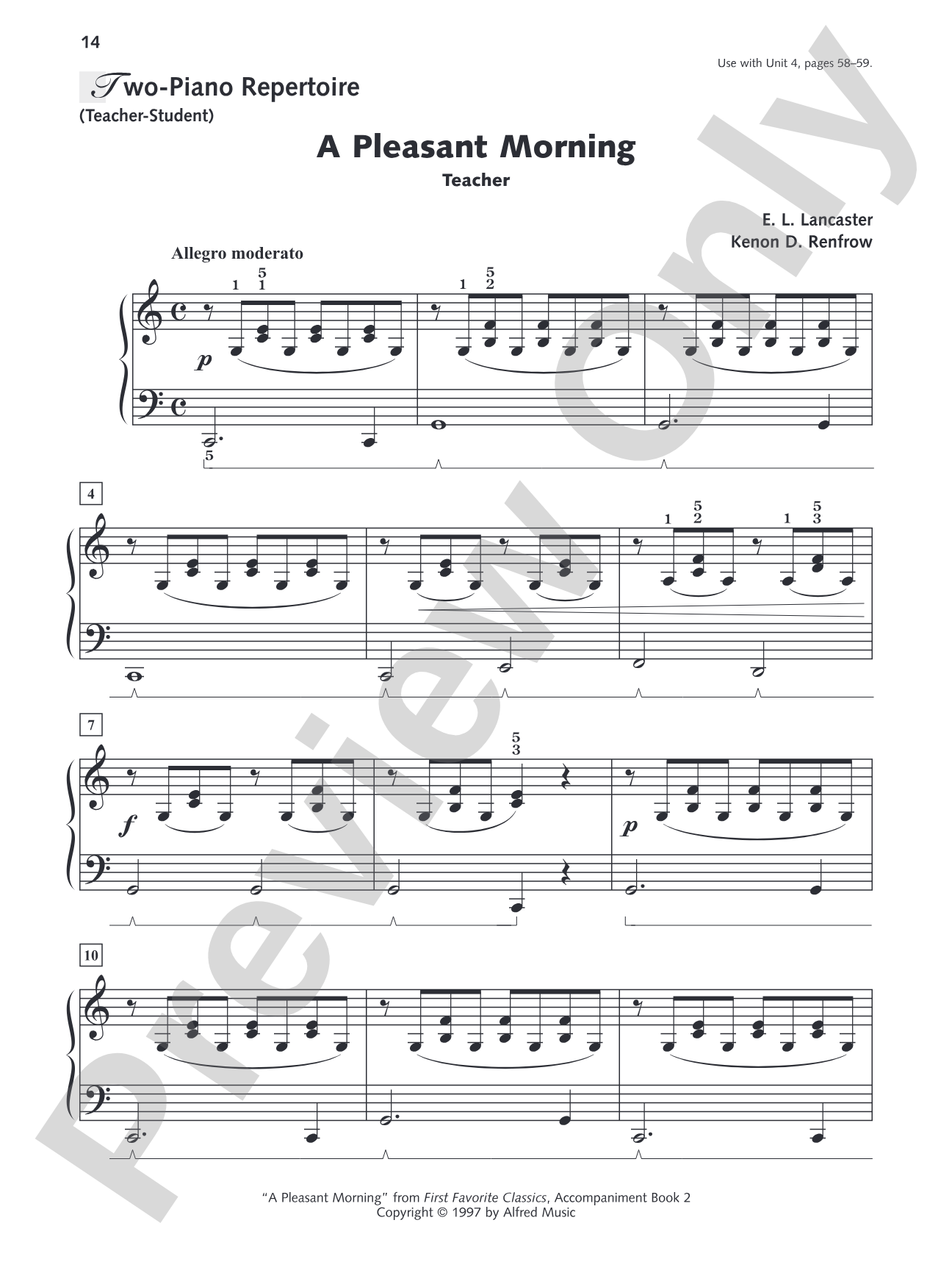
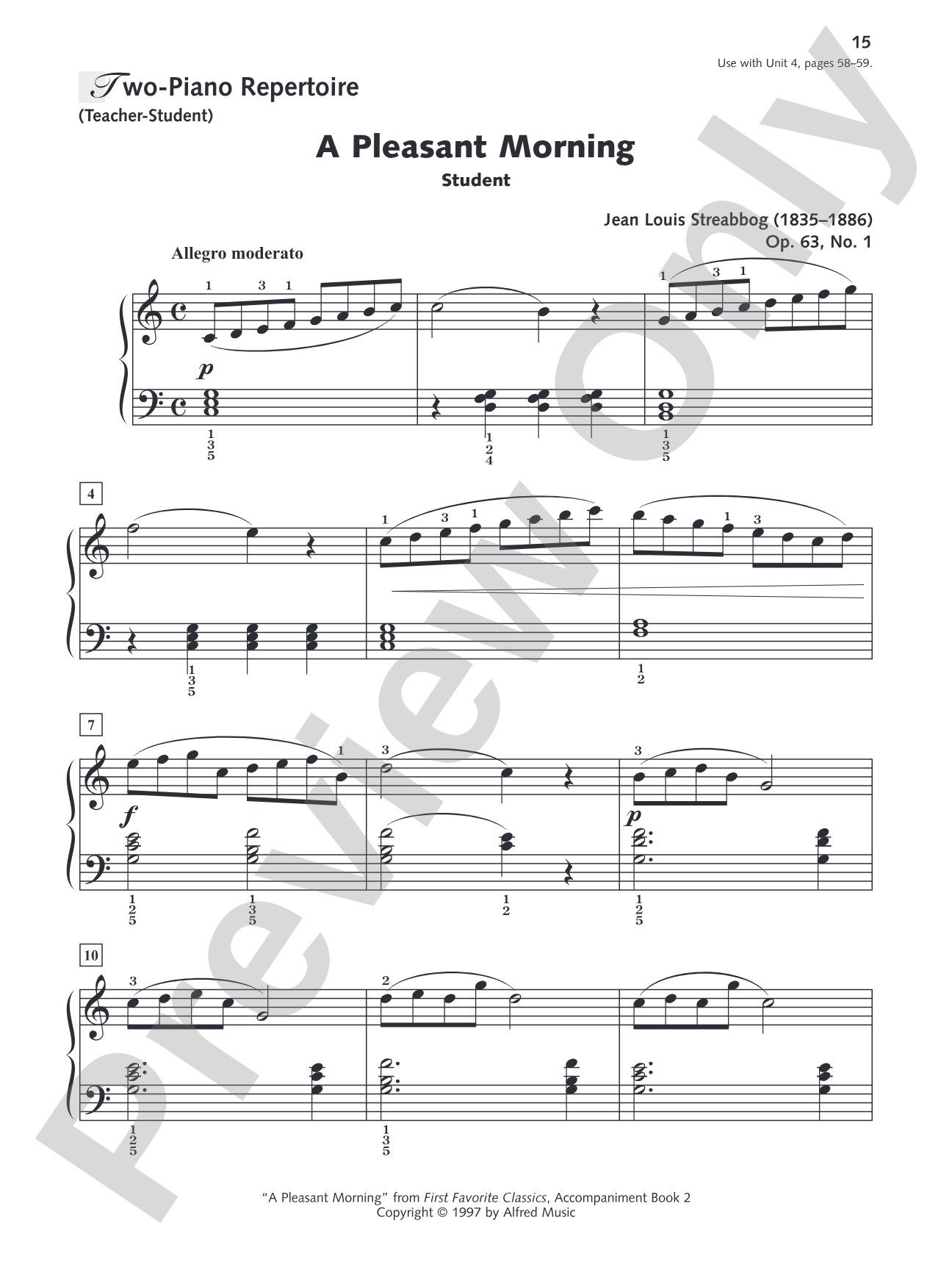
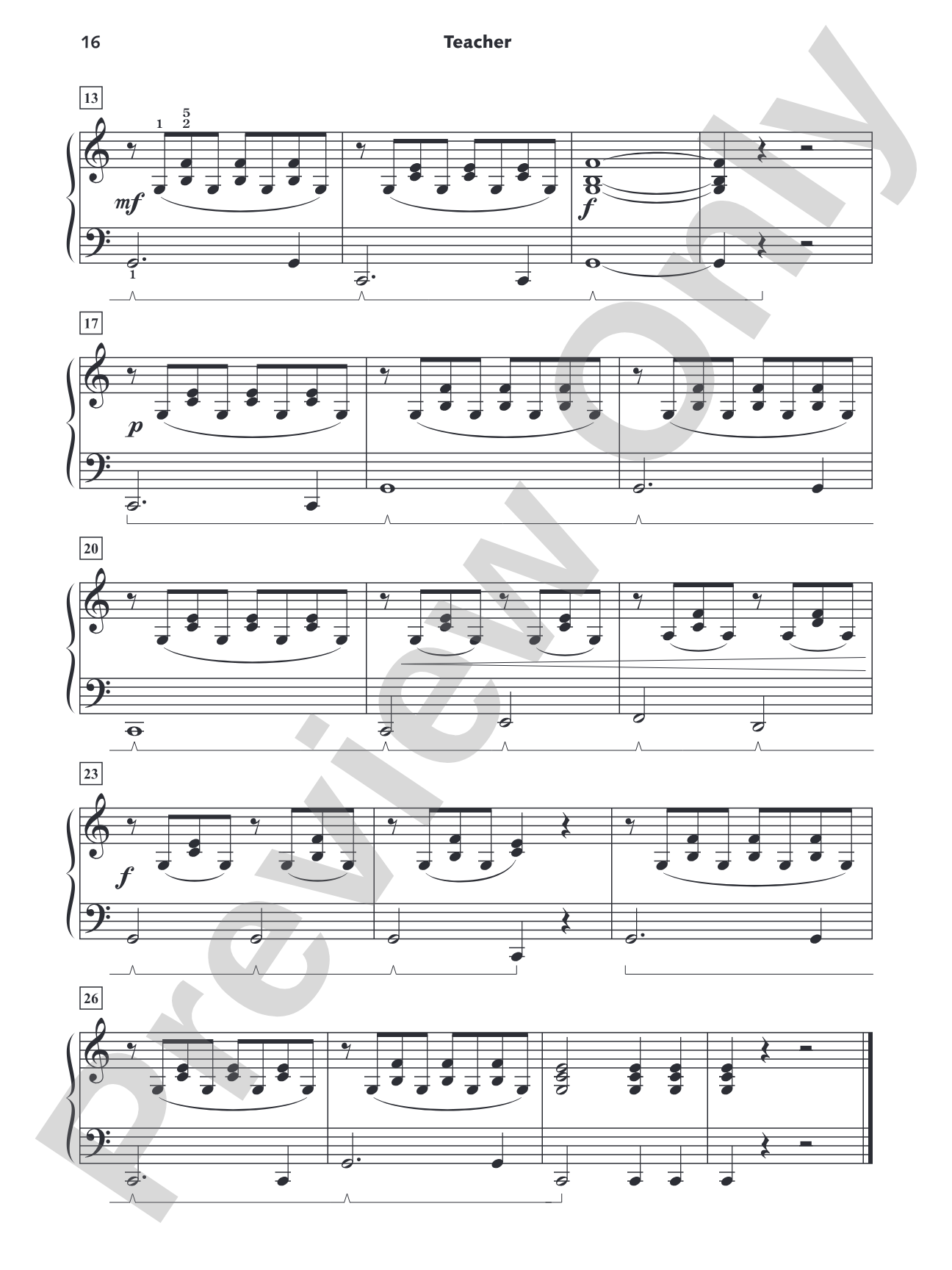
Second Piano Parts for Solo Repertoire: Arabesque (Johann Burgmüller) * Menuet in G Major (Johann Sebastian Bach) * Musette in D Major (Johann Sebastian Bach) * A Pleasant Morning (Jean Louis Streabbog) * Sonatina in C Major (Muzio Clementi) * Sonatina in C Major (Frank Lynes)
Duet Parts for Hanon Exercises: Exercise No. 12 (Melody Bober) * Exercise No. 15 (Melody Bober)
Multiple Piano Ensembles: Hush-a-Bye (arr. Robert D. Vandall) * When the Saints Go Marching In (arr. Robert D. Vandall)


Teacher-Student Duets: Jazz Lights (Melody Bober) * King of Ragtime (Melody Bober) * Saturday Night Shuffle (Melody Bober)
Student-Student Duets: Bella Tarantella (Carol Matz) * Dragon-Fire Fantasy (Carol Matz) * Festivale (Melody Bober) * Immortelle No. 2 (Fritz Spindler) * Just Chillin' Out (Martha Mier) * Rumba en la Habana (Wynn-Anne Rossi) * Skateboard Boogie (Martha Mier) * Smoke and Mirrors (Robert D. Vandall) * Sonatina in G Major (Anton André) * Sunset Minuet (Mike Springer) * Voyage on the High Seas (Melody Bober)
Second Piano Parts for Solo Repertoire: Arabesque (Johann Burgmüller) * Menuet in G Major (Johann Sebastian Bach) * Musette in D Major (Johann Sebastian Bach) * A Pleasant Morning (Jean Louis Streabbog) * Sonatina in C Major (Muzio Clementi) * Sonatina in C Major (Frank Lynes)
Duet Parts for Hanon Exercises: Exercise No. 12 (Melody Bober) * Exercise No. 15 (Melody Bober)
Multiple Piano Ensembles: Hush-a-Bye (arr. Robert D. Vandall) * When the Saints Go Marching In (arr. Robert D. Vandall)
Alfred's Group Piano for Adults: Ensemble Music, Book 2: Repertoire for Piano Duet, Two Pianos, and Multiple Pianos: Piano isn't in MakeMusic Cloud just yet...but it could be. Let us know you'd like to see it, and you'll help shape what comes next. In the meantime, start a free trial and dive into thousands of interactive titles your students can play along with today.
Request This Title
Tell us you want it.
Start Your Free Trial
Explore everything that's ready to play right now.
Sample Audio
No sample audio found.
Sample Video
No sample videos found.
Additional Details
Series:
Alfred's Group Piano for Adults
Publisher:
Alfred Music
Page Count:
96
SKU:
00-PB-0000974
More about this title
About the Creator
Alfred's Group Piano for Adults emerged from a pedagogical philosophy that adult learners deserve repertoire that respects their musical maturity while accommodating their keyboard inexperience. The series was developed to bridge the gap between method books and actual music-making, recognizing that adults come to piano with established listening tastes and musical preferences from other instruments or life experience.
The ensemble supplement draws on a roster of composers and arrangers with deep roots in accessible keyboard writing. Melody Bober brings contemporary sensibility to traditional forms; Carol Matz excels at writing colorful, character-driven duets; and Robert D. Vandall contributes smart orchestral arrangements that translate beautifully to multiple pianos. Each piece was selected not just for technical appropriateness but for the genuine pleasure it delivers to players and listeners alike.
Why we love this
This collection recognizes that adult learners thrive when playing with peers, and the repertoire spans enough styles and difficulty levels that mixed-ability partnerships actually work. The mix of teacher-student and student-student duets means you're not locked into one classroom configuration, and the addition of second piano parts for familiar solo pieces gives you a direct bridge between individual study and collaborative performance.
What to expect
Playing these duets ranges from the playful stride and swagger of ragtime to the elegant restraint of a classical minuet, with Latin rhythms and whimsical character pieces in between. There's a real pleasure in the simplicity of the writing paired with real harmonic and melodic substance, so neither player feels like they're just marking time.
Who it's for
Adult learners in group piano classes who want substantive ensemble repertoire that doesn't require advanced technique yet delivers satisfying musical results. This book works equally well for returning pianists dusting off rusty skills and complete beginners who are learning keyboard for the first time.
How to get the most out of it
- Balance the two parts by experimenting with dynamic relationships during early rehearsals; not every line needs to sit at the same volume level, and bringing out the melody while supporting rather than matching the accompaniment creates clearer textures.
- Take time in the first rehearsal to play through the piece at a deliberate tempo without worrying about the marked tempo; ensemble coordination matters more than speed, and rushing into performance tempo before both players are comfortable is a common pitfall.
- Use the stylistic variety across pieces (ragtime, tarantella, minuet, rumba) as a springboard for discussing how tempo, articulation, and phrasing shift between genres; students often overlook these details when focused purely on mechanics.
- Encourage students to listen actively to their partner's part, not just their own; many adult learners benefit from hearing a recording of the full piece first so they understand where their line fits in the overall texture.
How to use it
Schedule ensemble performances early in the term to give group piano students a public recital goal that's immediate and achievable; even one duet on a departmental recital or class showcase builds confidence and reinforces why collaborative playing matters. Pair these duets strategically with the solo repertoire in Book 2 so students see the connection between individual piece mastery and ensemble participation.
Skills your students will build
- Coordinating tempo and phrasing with another pianist
- Reading two independent parts simultaneously while maintaining ensemble balance
- Transposing simple melodic ideas between hands and voices
- Interpreting stylistic markers in different genres (ragtime, Latin, classical minuet)
- Listening critically to intonation and articulation in a two-voice texture
- Managing pedal technique when sharing acoustic space with another piano