

Alfred's Basic Piano Library: Repertoire Book 3: Piano Book
$7.99 USD
Sale price
$7.99 USD
Regular price
Skip to product information


Alfred's Basic Piano Library: Repertoire Book 3: Piano Book
By Willard A. Palmer, Morton Manus, and Amanda Vick Lethco
Level: 3
Item: 00-6189
$7.99
One moment…
Description
The Repertoire Books contain attractive compositions from the 17th century to the present. The pieces have been organized in progressive order and meet the requirements of many piano festivals, auditions and competitions. The books may also be used as sight reading material or as a supplement to other method books. Titles: Bagatelle (Diabelli) * Blues in D (Palmer/Lethco) * Capriccio Allegro (Gossec) * Courtly Dance (Pleyel) * Distant Bells (Streabbog) * Etude (Gurlitt) * Etude in A Minor (Kohler) * Fanfare (Duncombe) * Folk Song (Bartok) * Follow the Leader (Gurlitt) * Friendly Conversation (Beyer) * Hungarian Folk Dance (Bartok) * In Hot Pursuit (Palmer/Lethco) * Minuet (D Minor & F Major) (L. Mozart) * Minuet in F Major (L. Mozart) * A Momentous Occasion (Palmer/Lethco) * Novelette (Harriet Hardy) * Prelude in G Major (Bach) * Song Without Words (Kohler) * Summer Song (Liadov) * Waltz in A Minor (Dubois) * Waltz in C Major (Diabelli) * The Wild Rider (Schumann).


Discover MakeMusic Cloud: thousands of interactive titles your students can play along with today.
Sample Audio
No sample audio found.
Sample Video
No sample videos found.
Additional Details
More about this title
About the Authors
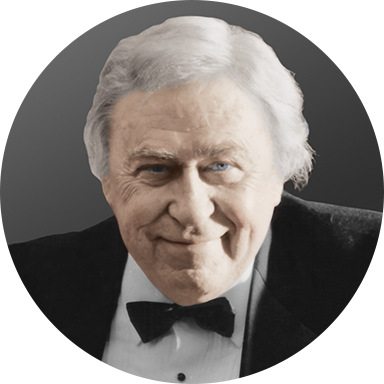
Dr. Willard Palmer stands as a distinguished musician, educator, and scholar whose career spanned multiple instruments and genres. A child prodigy who performed piano on radio at age 13, he built his foundation under the mentorship of Mae Vardeman, whose instruction in proper technique and improvisation shaped his artistic development. His studies took him from Whitworth College and Millsaps College to the Conservatory of Leipzig on a prestigious two-year scholarship, followed by post-graduate work at the University of Houston.
Palmer's prolific output includes 789 published compositions and pedagogical works across accordion, piano, guitar, and organ methods alongside numerous solo pieces and choral arrangements. Many of his publications have been translated into German, Japanese, French, Dutch, and Spanish, extending his influence globally. He earned recognition as a foremost authority on Baroque music ornamentation, work that formed the foundation for the acclaimed Alfred Masterworks publication series and led to his selection as director of the Riemenschneider Bach Institute.
For 18 years, Palmer taught accordion at the University of Houston, establishing the institution's first successful college-level accordion courses. His scholarly contributions were honored with a Doctor of Humanities degree in 1971 and a Doctor of Music degree in 1983. Active in his field through memberships in the American Federation of Musicians, American Accordionists' Association, and American Society of Composers, Authors and Publishers, Palmer served as choir director of Memorial Lutheran Church in Houston throughout much of his career.
Palmer's prolific output includes 789 published compositions and pedagogical works across accordion, piano, guitar, and organ methods alongside numerous solo pieces and choral arrangements. Many of his publications have been translated into German, Japanese, French, Dutch, and Spanish, extending his influence globally. He earned recognition as a foremost authority on Baroque music ornamentation, work that formed the foundation for the acclaimed Alfred Masterworks publication series and led to his selection as director of the Riemenschneider Bach Institute.
For 18 years, Palmer taught accordion at the University of Houston, establishing the institution's first successful college-level accordion courses. His scholarly contributions were honored with a Doctor of Humanities degree in 1971 and a Doctor of Music degree in 1983. Active in his field through memberships in the American Federation of Musicians, American Accordionists' Association, and American Society of Composers, Authors and Publishers, Palmer served as choir director of Memorial Lutheran Church in Houston throughout much of his career.
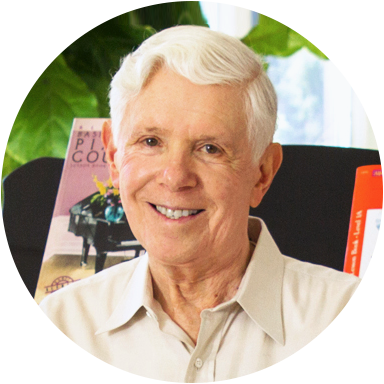
Morton Manus served as president of Alfred Music Publishing Co., Inc. from 1952 to 2016. He joined the company in the late 1940s after earning a business degree from City College of New York. The company itself traces its roots to 1922, when Morty's father Sam founded Manus Music in New York City's Tin Pan Alley; Sam later merged it with Alfred & Company in 1930 to create the Alfred Music brand that remains today.
Recognizing the demand for quality music education materials, Morty transformed Alfred Music during the 1950s. As both a clarinetist and pianist, he championed the development of instructional series for accordion, guitar, piano, and recorder, shifting the company from a sheet music publisher into a music education leader. His vision drove significant growth over the following decades, prompting a relocation of the main office to Los Angeles in 1975 and a move of the distribution center to upstate New York.
Morty's sons continued his legacy by joining the company in the late 1980s and early 1990s. Ron and Steve expanded Alfred Music's reach internationally, opening offices in Australia, Germany, Singapore, and the UK while maintaining focus on world-class instructional and performance materials. In 2005, the company acquired Warner Bros. Publications and gained access to the EMI Catalogue Partnership, establishing a significant long-term relationship with Warner/Chappell Music.
Recognizing the demand for quality music education materials, Morty transformed Alfred Music during the 1950s. As both a clarinetist and pianist, he championed the development of instructional series for accordion, guitar, piano, and recorder, shifting the company from a sheet music publisher into a music education leader. His vision drove significant growth over the following decades, prompting a relocation of the main office to Los Angeles in 1975 and a move of the distribution center to upstate New York.
Morty's sons continued his legacy by joining the company in the late 1980s and early 1990s. Ron and Steve expanded Alfred Music's reach internationally, opening offices in Australia, Germany, Singapore, and the UK while maintaining focus on world-class instructional and performance materials. In 2005, the company acquired Warner Bros. Publications and gained access to the EMI Catalogue Partnership, establishing a significant long-term relationship with Warner/Chappell Music.
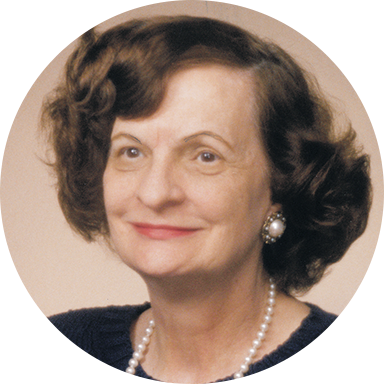
Dr. Amanda Vick Lethco is best known as co-author of Alfred's Basic Piano Library, one of the world's most influential piano methods, developed alongside Dr. Willard Palmer and Morton Manus. She earned degrees from Northwestern University, including both Bachelor of Music degrees and a Master of Music in Piano Performance, and studied with distinguished teachers including James Friskin at Juilliard, Rudolph Ganz at Chicago Musical College, and Douglas Moore at Columbia University.
As Professor Emeritus of Piano Pedagogy at the University of Texas at Austin, Dr. Lethco built an impressive career as a performer, educator, and clinician. She gave recitals across the United States and conducted workshops at colleges and universities nationwide, while also serving as a clinician at numerous national conventions. Her expertise took her internationally, where she led workshops in Europe, Canada, Japan, Hong Kong, Korea, New Zealand, Malaysia, Singapore, Australia, Thailand, and Indonesia. Whitworth College honored her with an honorary Doctor of Humanities degree.
Beyond her work with Alfred's Basic Piano Library, Dr. Lethco collaborated with Dr. Willard Palmer to co-author Creating Music at the Piano. She maintained a private teaching practice in New York City, San Antonio, Austin, and Houston. Her contributions to music education have been recognized through listings in the International Who's Who of Musicians and the World Who's Who of Women.
As Professor Emeritus of Piano Pedagogy at the University of Texas at Austin, Dr. Lethco built an impressive career as a performer, educator, and clinician. She gave recitals across the United States and conducted workshops at colleges and universities nationwide, while also serving as a clinician at numerous national conventions. Her expertise took her internationally, where she led workshops in Europe, Canada, Japan, Hong Kong, Korea, New Zealand, Malaysia, Singapore, Australia, Thailand, and Indonesia. Whitworth College honored her with an honorary Doctor of Humanities degree.
Beyond her work with Alfred's Basic Piano Library, Dr. Lethco collaborated with Dr. Willard Palmer to co-author Creating Music at the Piano. She maintained a private teaching practice in New York City, San Antonio, Austin, and Houston. Her contributions to music education have been recognized through listings in the International Who's Who of Musicians and the World Who's Who of Women.