

Alfred's Basic Piano Library: Lesson Book 4: Piano Book
$9.99 USD
Sale price
$9.99 USD
Regular price
Skip to product information


Alfred's Basic Piano Library: Lesson Book 4: Piano Book
By Willard A. Palmer, Morton Manus, and Amanda Vick Lethco
Level: 4
Item: 00-2110
$9.99
One moment…
Description
This easy step-by-step method emphasizes correct playing habits and note reading through interval recognition. Lesson Book 4 concepts include: tarantellas; eighth note triplets; arpeggiated chords; first and second inversion triads in C; triads in all positions; major scales in parallel motion; two-part writing; seventh chords and inversions of seventh chords; E harmonic minor scale in contrary motion; primary chords in E minor; sixteenth notes; dotted eighth notes; primary chords in B-flat Major and G Minor; repeated-note warm-ups; and harmonic minor scales in parallel motion.
For reinforcement of each principle as it is introduced, supplementary material is carefully coordinated, page for page, at each level of instruction. Coordinating supplemental books for Level 4 include: Classic Themes * Duet * Ear Training * Merry Christmas * Musical Concepts * Recital * Repertoire * Sight Reading * Technic * Theory and Top Hits! Solo, Christmas and Duet books. Songs include: America the Beautiful (Ward) * The Battle Hymn of the Republic (Steffe-Howe) * Black Forest Polka * Blow, Winds, Blow! * Calypso Holiday! * Comedians' Dance (Kabelevsky) * Farewell to Thee (Aloha Oe) * Gypsy Dance * Haunted House * He's Got the Whole World in His Hands * The Hokey-Pokey * The House of the Rising Sun * The Magic Piper * Musette (Bach) * Olympic Procession * Pomp and Circumstance No. 1 (Elgar)* Prelude in A Minor * Space Shuttle Blues * Spinning Wheel * Swingin' Sevenths * Tarentella * Waltz in G Minor * Waves of the Danube (Ivanovici)


For reinforcement of each principle as it is introduced, supplementary material is carefully coordinated, page for page, at each level of instruction. Coordinating supplemental books for Level 4 include: Classic Themes * Duet * Ear Training * Merry Christmas * Musical Concepts * Recital * Repertoire * Sight Reading * Technic * Theory and Top Hits! Solo, Christmas and Duet books. Songs include: America the Beautiful (Ward) * The Battle Hymn of the Republic (Steffe-Howe) * Black Forest Polka * Blow, Winds, Blow! * Calypso Holiday! * Comedians' Dance (Kabelevsky) * Farewell to Thee (Aloha Oe) * Gypsy Dance * Haunted House * He's Got the Whole World in His Hands * The Hokey-Pokey * The House of the Rising Sun * The Magic Piper * Musette (Bach) * Olympic Procession * Pomp and Circumstance No. 1 (Elgar)* Prelude in A Minor * Space Shuttle Blues * Spinning Wheel * Swingin' Sevenths * Tarentella * Waltz in G Minor * Waves of the Danube (Ivanovici)
Alfred's Basic Piano Library: Lesson Book 4: Piano Book isn't in MakeMusic Cloud just yet...but it could be. Let us know you'd like to see it, and you'll help shape what comes next. In the meantime, start a free trial and dive into thousands of interactive titles your students can play along with today.
Request This Title
Tell us you want it.
Start Your Free Trial
Explore everything that's ready to play right now.
Sample Audio
No sample audio found.
Sample Video
No sample videos found.
Additional Details
More about this title
About the Authors
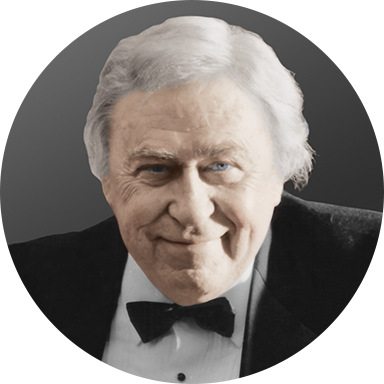
Dr. Willard Palmer stands as an internationally celebrated musician, educator, and scholar who shaped music instruction through prolific composition and innovative teaching methods. A child prodigy who performed piano on radio at age 13, he built his musical foundation on piano and accordion studies under Mae Vardeman, whose mentorship in improvisation and technique proved formative to his career.
Palmer's compositional output encompasses nearly 789 published works spanning accordion methods, piano methods, Hammond Chord Organ instruction, guitar methods, solo pieces, and choral compositions. His publications reached global audiences through translations into German, Japanese, French, Dutch, and Spanish. He earned recognition as a foremost authority on Baroque music ornamentation, which informed the acclaimed Alfred Masterworks series. His scholarly contributions were honored with a Doctor of Humanities degree in 1971 and a Doctor of Music degree in 1983.
Palmer studied at Whitworth College and Millsaps College, where he performed regularly on radio and in campus ensembles. He furthered his training at the Leipzig Conservatory in Germany on a two-year scholarship and completed post-graduate work at the University of Houston, where he joined the faculty. As the first accordion professor to establish successful college-level courses in the instrument, he taught for 18 years. Beyond the classroom, Palmer served as choir director at Memorial Lutheran Church in Houston for many years and held membership in the American Federation of Musicians Local #65, the American Accordionists' Association, and the American Society of Composers, Authors and Publishers. He also directed the Riemenschneider Bach Institute.
Palmer's compositional output encompasses nearly 789 published works spanning accordion methods, piano methods, Hammond Chord Organ instruction, guitar methods, solo pieces, and choral compositions. His publications reached global audiences through translations into German, Japanese, French, Dutch, and Spanish. He earned recognition as a foremost authority on Baroque music ornamentation, which informed the acclaimed Alfred Masterworks series. His scholarly contributions were honored with a Doctor of Humanities degree in 1971 and a Doctor of Music degree in 1983.
Palmer studied at Whitworth College and Millsaps College, where he performed regularly on radio and in campus ensembles. He furthered his training at the Leipzig Conservatory in Germany on a two-year scholarship and completed post-graduate work at the University of Houston, where he joined the faculty. As the first accordion professor to establish successful college-level courses in the instrument, he taught for 18 years. Beyond the classroom, Palmer served as choir director at Memorial Lutheran Church in Houston for many years and held membership in the American Federation of Musicians Local #65, the American Accordionists' Association, and the American Society of Composers, Authors and Publishers. He also directed the Riemenschneider Bach Institute.
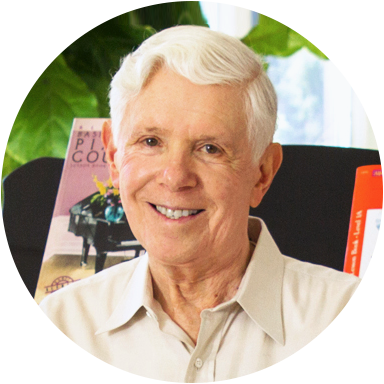
Morton Manus served as president of Alfred Music Publishing Co., Inc. for over six decades, beginning in the early 1950s. He inherited the company from his father Sam Manus, who founded it in 1922 during New York's Tin Pan Alley era. A clarinetist and pianist with a business degree from City College of New York, Morty transformed Alfred Music from a popular sheet music publisher into a comprehensive music education powerhouse.
Under Morty's leadership, Alfred Music developed groundbreaking instructional series starting with accordion books in the 1950s, followed by guitar, piano, and recorder methods that became industry standards. The company's remarkable growth necessitated major expansion, including relocating its headquarters to Los Angeles in 1975 and establishing a distribution center in upstate New York. By the early 2000s, Alfred Music had grown into a global enterprise with international offices across Australia, Germany, Singapore, and the United Kingdom.
Morty's sons Ron and Steve joined the family business in 1988 and 1992 respectively, continuing to advance the company's mission. Together they expanded Alfred's catalog significantly through strategic acquisitions, including Warner Bros. Publications in 2005, which brought important music rights under the Alfred Music umbrella. The company remained committed to creating world-class instructional methods and performance music for musicians of all levels.
Under Morty's leadership, Alfred Music developed groundbreaking instructional series starting with accordion books in the 1950s, followed by guitar, piano, and recorder methods that became industry standards. The company's remarkable growth necessitated major expansion, including relocating its headquarters to Los Angeles in 1975 and establishing a distribution center in upstate New York. By the early 2000s, Alfred Music had grown into a global enterprise with international offices across Australia, Germany, Singapore, and the United Kingdom.
Morty's sons Ron and Steve joined the family business in 1988 and 1992 respectively, continuing to advance the company's mission. Together they expanded Alfred's catalog significantly through strategic acquisitions, including Warner Bros. Publications in 2005, which brought important music rights under the Alfred Music umbrella. The company remained committed to creating world-class instructional methods and performance music for musicians of all levels.
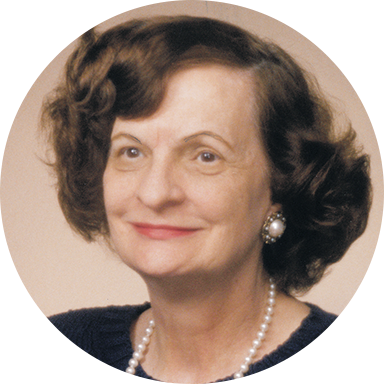
Dr. Amanda Vick Lethco is best known as co-author of Alfred's Basic Piano Library, the internationally acclaimed piano method developed alongside Dr. Willard Palmer and Morton Manus. She served as Professor Emeritus of Piano Pedagogy at the University of Texas at Austin and maintained a private teaching practice across New York City, San Antonio, Austin, and Houston throughout her career.
Her educational credentials include a Bachelor of Music in Piano Performance, a Bachelor of Music Education, and a Master of Music in Piano Performance, all from Northwestern University. She also earned an honorary Doctor of Humanities degree from Whitworth College in Brookhaven, Mississippi. Her studies took her to distinguished institutions including Juilliard under James Friskin, Chicago Musical College with Rudolph Ganz, and Columbia University with Douglas Moore.
Beyond her pedagogical work, Dr. Lethco was an active performer and clinician on the international stage. She presented recitals throughout the United States and conducted workshops and clinics across college campuses, conventions, and countries including Canada, Japan, Korea, Australia, and several Asian nations. She also co-authored Creating Music at the Piano with Dr. Palmer and earned recognition in both the International Who's Who of Musicians and the World Who's Who of Women.
Her educational credentials include a Bachelor of Music in Piano Performance, a Bachelor of Music Education, and a Master of Music in Piano Performance, all from Northwestern University. She also earned an honorary Doctor of Humanities degree from Whitworth College in Brookhaven, Mississippi. Her studies took her to distinguished institutions including Juilliard under James Friskin, Chicago Musical College with Rudolph Ganz, and Columbia University with Douglas Moore.
Beyond her pedagogical work, Dr. Lethco was an active performer and clinician on the international stage. She presented recitals throughout the United States and conducted workshops and clinics across college campuses, conventions, and countries including Canada, Japan, Korea, Australia, and several Asian nations. She also co-authored Creating Music at the Piano with Dr. Palmer and earned recognition in both the International Who's Who of Musicians and the World Who's Who of Women.