

Alfred's Basic Piano Library: Lesson Book 1B: Piano Book
$9.99 USD
Sale price
$9.99 USD
Regular price
Skip to product information


Alfred's Basic Piano Library: Lesson Book 1B: Piano Book
By Willard A. Palmer, Morton Manus, and Amanda Vick Lethco
Level: 1B
Item: 00-2106
$9.99
One moment…
Description
This easy step-by-step method emphasizes correct playing habits and note reading through interval recognition. Lesson Book 1B begins by reviewing the concepts taught in Lesson Book 1A, then introduces new concepts such as incomplete measures, tempo markings, eighth notes and rests, using the damper pedal, half steps and whole steps. It also introduces the major scale through the concept of tetrachords. Songs Include: Brother John * Carol in G Major * The Carousel * The Clown * Concert Time * A Cowboy's Song * The Cuckoo * French Lullaby * Good King Wenceslas * Good Morning to You! * Good Sounds * Grandpa's Clock * The Greatest Show on Earth! * G's in the "BAG" * Hail to Thee, America! * Harp Song * Happy Birthday to You! * Indians * Join the Fun * The Magic Man * Money Can't Buy Everything * Music Box Rock * Oom-Pa-Pa! * Ping Pong * The Planets * The Rainbow * Sonatina * Step Right Up! * Waltz Time * When Our Band Goes Marching By! * When the Saints Go Marching In * The Whirlwind * The Windmill * Yankee Doodle


Alfred's Basic Piano Library: Lesson Book 1B: Piano Book isn't in MakeMusic Cloud just yet...but it could be. Let us know you'd like to see it, and you'll help shape what comes next. In the meantime, start a free trial and dive into thousands of interactive titles your students can play along with today.
Request This Title
Tell us you want it.
Start Your Free Trial
Explore everything that's ready to play right now.
Sample Audio
No sample audio found.
Sample Video
No sample videos found.
Additional Details
More about this title
About the Authors
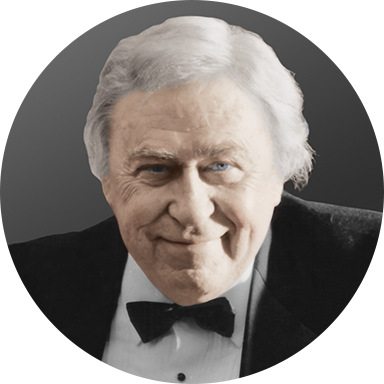
Dr. Willard Palmer stands as an internationally recognized musician, educator, and scholar whose influence spans multiple instruments and musical traditions. Beginning as a child prodigy who performed piano on radio at age 13, he built a career on the solid foundation of studying with Mae Vardeman, whose instruction in proper technique enabled him to become an accomplished improviser. His early musical training in piano and accordion at Whitworth College and Millsaps College led him to pursue advanced studies at the Conservatory of Leipzig on a competitive two-year scholarship.
Throughout his prolific career, Dr. Palmer authored 789 published works across numerous genres and instruments: accordion methods, piano methods, Hammond Chord Organ instruction, guitar methods, solo pieces, and choral compositions. Many of these works have been translated into German, Japanese, French, Dutch, and Spanish, extending his educational reach worldwide. His scholarly expertise in Baroque music ornamentation earned him international recognition and formed the foundation for the acclaimed Alfred Masterworks series. He received both a Doctor of Humanities degree in 1971 and a Doctor of Music degree in 1983 in recognition of his musicological contributions.
As a faculty member at the University of Houston, Dr. Palmer taught the first successful college-level accordion courses for 18 years, establishing accordion as a legitimate academic subject. He served as director of the Riemenschneider Bach Institute and held membership in the American Federation of Musicians (Local #65), the American Accordionists' Association, and the American Society of Composers, Authors and Publishers. Additionally, he served as choir director of Memorial Lutheran Church in Houston for an extended period.
Throughout his prolific career, Dr. Palmer authored 789 published works across numerous genres and instruments: accordion methods, piano methods, Hammond Chord Organ instruction, guitar methods, solo pieces, and choral compositions. Many of these works have been translated into German, Japanese, French, Dutch, and Spanish, extending his educational reach worldwide. His scholarly expertise in Baroque music ornamentation earned him international recognition and formed the foundation for the acclaimed Alfred Masterworks series. He received both a Doctor of Humanities degree in 1971 and a Doctor of Music degree in 1983 in recognition of his musicological contributions.
As a faculty member at the University of Houston, Dr. Palmer taught the first successful college-level accordion courses for 18 years, establishing accordion as a legitimate academic subject. He served as director of the Riemenschneider Bach Institute and held membership in the American Federation of Musicians (Local #65), the American Accordionists' Association, and the American Society of Composers, Authors and Publishers. Additionally, he served as choir director of Memorial Lutheran Church in Houston for an extended period.
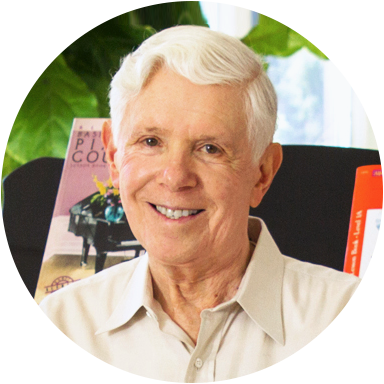
Morton Manus served as president of Alfred Music Publishing Co., Inc. for over six decades, from 1952 to 2016. The company itself traces its roots to 1922, when Morton's father, Sam Manus, established Manus Music in New York City's Tin Pan Alley as a publisher of popular sheet music. In 1930, Sam merged his company with Alfred & Company, founded by Alfred Haase, creating the combined entity Alfred Music that continues today. Morton joined the family business in the late 1940s after earning a business degree from City College of New York and eventually took over leadership from his father.
Under Morton's direction, Alfred Music underwent a fundamental transformation during the 1950s. Recognizing the importance of quality music education resources, he championed the creation of instructional materials that expanded far beyond traditional sheet music. The company developed comprehensive instructional series for accordion, guitar, piano, and recorder, establishing itself as a pioneer in music education publishing. This strategic shift positioned Alfred Music for dramatic growth throughout the following decades.
As the company flourished, Morton's sons Ron and Steve joined the family enterprise in 1988 and 1992 respectively, continuing the legacy of innovation. Together, they expanded Alfred Music's global footprint by opening international offices in Australia, Germany, Singapore, and the UK. A major milestone came in 2005 when Alfred Music acquired Warner Bros. Publications, bringing the EMI Catalogue Partnership and an ongoing relationship with Warner/Chappell Music under its umbrella.
Under Morton's direction, Alfred Music underwent a fundamental transformation during the 1950s. Recognizing the importance of quality music education resources, he championed the creation of instructional materials that expanded far beyond traditional sheet music. The company developed comprehensive instructional series for accordion, guitar, piano, and recorder, establishing itself as a pioneer in music education publishing. This strategic shift positioned Alfred Music for dramatic growth throughout the following decades.
As the company flourished, Morton's sons Ron and Steve joined the family enterprise in 1988 and 1992 respectively, continuing the legacy of innovation. Together, they expanded Alfred Music's global footprint by opening international offices in Australia, Germany, Singapore, and the UK. A major milestone came in 2005 when Alfred Music acquired Warner Bros. Publications, bringing the EMI Catalogue Partnership and an ongoing relationship with Warner/Chappell Music under its umbrella.
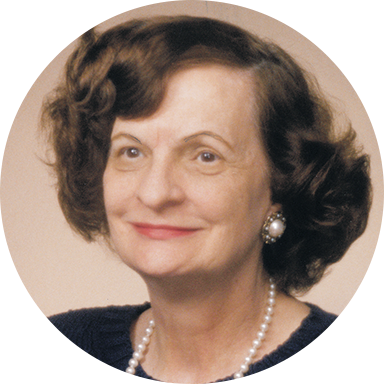
Dr. Amanda Vick Lethco is best known as co-author of Alfred's Basic Piano Library, one of the world's most respected piano methods. Developed alongside Dr. Willard Palmer and Morton Manus, this comprehensive series has shaped piano education globally. A Professor Emeritus of Piano Pedagogy at the University of Texas at Austin, she brought decades of teaching expertise to her collaborative work.
Her formal training came from leading institutions and master teachers. She earned degrees from Northwestern University in piano performance and music education, including a Master of Music in Piano Performance. Additional studies with renowned educators James Friskin at Juilliard, Rudolph Ganz at Chicago Musical College, Douglas Moore at Columbia University, and Ruth Barr in Houston deepened her artistic foundation. Whitworth College in Brookhaven, Mississippi, honored her with a Doctor of Humanities degree.
Beyond her authorship, Dr. Lethco maintained an active presence in music education and performance. She conducted workshops and clinics across the United States and internationally, traveling to Europe, Canada, Japan, Hong Kong, Korea, New Zealand, Malaysia, Singapore, Australia, Thailand, and Indonesia. She performed recitals throughout the country and taught private students in New York City, San Antonio, Austin, and Houston. Her additional co-authored work, Creating Music at the Piano, was developed with Dr. Willard Palmer. Her contributions to music pedagogy are recognized in the International Who's Who of Musicians and the World Who's Who of Women.
Her formal training came from leading institutions and master teachers. She earned degrees from Northwestern University in piano performance and music education, including a Master of Music in Piano Performance. Additional studies with renowned educators James Friskin at Juilliard, Rudolph Ganz at Chicago Musical College, Douglas Moore at Columbia University, and Ruth Barr in Houston deepened her artistic foundation. Whitworth College in Brookhaven, Mississippi, honored her with a Doctor of Humanities degree.
Beyond her authorship, Dr. Lethco maintained an active presence in music education and performance. She conducted workshops and clinics across the United States and internationally, traveling to Europe, Canada, Japan, Hong Kong, Korea, New Zealand, Malaysia, Singapore, Australia, Thailand, and Indonesia. She performed recitals throughout the country and taught private students in New York City, San Antonio, Austin, and Houston. Her additional co-authored work, Creating Music at the Piano, was developed with Dr. Willard Palmer. Her contributions to music pedagogy are recognized in the International Who's Who of Musicians and the World Who's Who of Women.