

Alfred's Basic Piano Library: Lesson Book 1A: Piano Book & CD
$11.99 USD
Sale price
$11.99 USD
Regular price
Skip to product information


Alfred's Basic Piano Library: Lesson Book 1A: Piano Book & CD
By Willard A. Palmer, Morton Manus, and Amanda Vick Lethco
Level: 1A
Item: 00-20656
$11.99
One moment…
Description
This easy step-by-step method emphasizes correct playing habits and note reading through interval recognition. Lesson Book Level 1A begins by teaching basic keyboard topography and fluent recognition of white key names in relation to black keys. It focuses on simple rhythms and prepares students for intervallic reading with entertaining songs that focus on "same," "stepping up" and "stepping down." It then introduces lines and space notes in treble and bass clefs, melodic and harmonic intervals of 2nds, 3rds, 4ths and 5ths, and graduates to reading on the grand staff. It also introduces the flat and sharp signs. This course is most effective when used under the direction of a piano teacher or experienced musician. Songs Include: Balloons * Batter Up! * The Donkey * A Friend Like You * Hand-Bells * A Happy Song * Horse Sense * Totem Pole Song * It's Halloween! * Jingle Bells! * Jolly Old Saint Nicholas * July the Fourth! * Just a Second! * Love Somebody * Merrily We Roll Along O'er the Deep Blue Sea * Mexican Hat Dance * My Clever Pup * My Fifth * My Robot * Old MacDonald * Old Uncle Bill * Play a Fourth * Raindrops * Rain, Rain! * Rockets * Rockin' Tune * Rock Song * Sailing * Sea Divers * See-Saws * Skating * Who's on Third? * Willie and Tillie * Wishing Well * The Zoo


Alfred's Basic Piano Library: Lesson Book 1A: Piano Book & CD isn't in MakeMusic Cloud just yet...but it could be. Let us know you'd like to see it, and you'll help shape what comes next. In the meantime, start a free trial and dive into thousands of interactive titles your students can play along with today.
Request This Title
Tell us you want it.
Start Your Free Trial
Explore everything that's ready to play right now.
Sample Audio
1
Batter Up
--:--
2
It's Halloween
--:--
Batter Up
0:00
0:00
Sample Video
No sample videos found.
Additional Details
More about this title
About the Authors
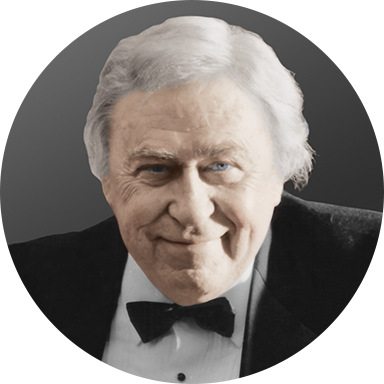
Dr. Willard Palmer stands as an internationally recognized musician, educator, and scholar whose prolific career spanned keyboard instruments and composition. A child prodigy who performed piano on radio at age 13, he studied under Mae Vardeman, whose instruction in proper technique became foundational to his improvisation skills. His early musical training in piano and accordion set the trajectory for decades of creative work.
Palmer's compositional output totaled 789 published works, encompassing accordion and piano methods, guitar instruction, Hammond Chord Organ materials, solo pieces, and choral compositions. His publications reached global audiences through translations into German, Japanese, French, Dutch, and Spanish. Later in his career, Palmer became a leading authority on Baroque music ornamentation, expertise that informed the acclaimed Alfred Masterworks series. He received a Doctor of Humanities degree in 1971 and a Doctor of Music degree in 1983 in recognition of his scholarly achievements.
Throughout his academic career, Palmer taught at the University of Houston for eighteen years, where he developed the institution's first successful college accordion courses. He also served as choir director of Memorial Lutheran Church in Houston for an extended period. A meticulous researcher dedicated to Classical and Baroque music studies, Palmer held membership in the American Federation of Musicians, the American Accordionists' Association, and the American Society of Composers, Authors and Publishers. He additionally directed the Riemenschneider Bach Institute.
Palmer's compositional output totaled 789 published works, encompassing accordion and piano methods, guitar instruction, Hammond Chord Organ materials, solo pieces, and choral compositions. His publications reached global audiences through translations into German, Japanese, French, Dutch, and Spanish. Later in his career, Palmer became a leading authority on Baroque music ornamentation, expertise that informed the acclaimed Alfred Masterworks series. He received a Doctor of Humanities degree in 1971 and a Doctor of Music degree in 1983 in recognition of his scholarly achievements.
Throughout his academic career, Palmer taught at the University of Houston for eighteen years, where he developed the institution's first successful college accordion courses. He also served as choir director of Memorial Lutheran Church in Houston for an extended period. A meticulous researcher dedicated to Classical and Baroque music studies, Palmer held membership in the American Federation of Musicians, the American Accordionists' Association, and the American Society of Composers, Authors and Publishers. He additionally directed the Riemenschneider Bach Institute.
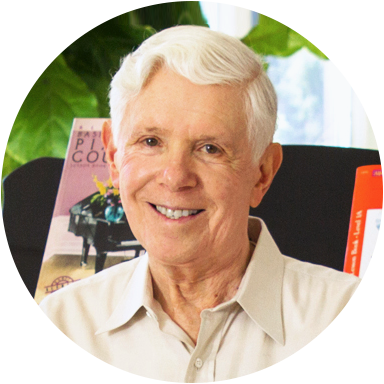
Morton Manus led Alfred Music Publishing Co., Inc. as president for over six decades, from 1952 to 2016. He inherited the company from his father Sam, who founded Manus Music in 1922 during New York's Tin Pan Alley era and later merged it with Alfred & Company to create Alfred Music. A clarinetist and pianist himself, Morton brought a business degree from City College of New York to the role and fundamentally transformed the company's direction.
During the 1950s, Morton reimagined Alfred Music as an educational publisher rather than solely a sheet music retailer. He spearheaded the creation of instructional series for accordion, guitar, piano, and recorder that became industry standards. The company's explosive growth over the following decades necessitated relocating the main office to Los Angeles in 1975, with a distribution center established in upstate New York. By 2005, Alfred Music had acquired Warner Bros. Publications and the EMI Catalogue Partnership, solidifying its position as a global leader.
Morton's sons Ron and Steve continued the family legacy, joining the company in 1988 and 1992 respectively. Together, they expanded Alfred Music's international presence by opening offices in Australia, Germany, Singapore, and the UK while maintaining the company's reputation for developing world-class instructional methods and performance music.
During the 1950s, Morton reimagined Alfred Music as an educational publisher rather than solely a sheet music retailer. He spearheaded the creation of instructional series for accordion, guitar, piano, and recorder that became industry standards. The company's explosive growth over the following decades necessitated relocating the main office to Los Angeles in 1975, with a distribution center established in upstate New York. By 2005, Alfred Music had acquired Warner Bros. Publications and the EMI Catalogue Partnership, solidifying its position as a global leader.
Morton's sons Ron and Steve continued the family legacy, joining the company in 1988 and 1992 respectively. Together, they expanded Alfred Music's international presence by opening offices in Australia, Germany, Singapore, and the UK while maintaining the company's reputation for developing world-class instructional methods and performance music.
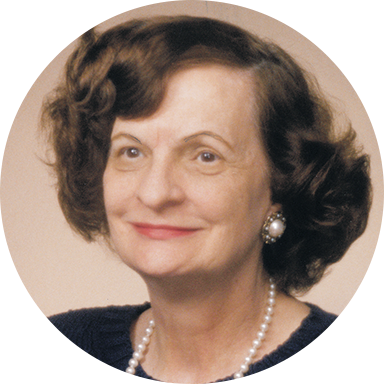
Dr. Amanda Vick Lethco is best known as co-author of Alfred's Basic Piano Library, one of the world's most respected piano methods, which she created alongside Dr. Willard Palmer and Morton Manus. She served as Professor Emeritus of Piano Pedagogy at the University of Texas at Austin and maintained a private teaching practice across New York City, San Antonio, Austin, and Houston throughout her career.
Her educational credentials include degrees from Northwestern University (Bachelor of Music in Piano Performance, Bachelor of Music Education, and Master of Music in Piano Performance) and an honorary Doctor of Humanities from Whitworth College in Brookhaven, Mississippi. Her training encompassed studies with distinguished musicians including James Friskin at Juilliard, Rudolph Ganz at Chicago Musical College, and Douglas Moore at Columbia University.
Beyond her method book work, Dr. Lethco collaborated with Dr. Willard Palmer on Creating Music at the Piano. She was an active recitalist throughout the United States and conducted workshops internationally, reaching audiences in Europe, Canada, Japan, Hong Kong, Korea, New Zealand, Malaysia, Singapore, Australia, Thailand, and Indonesia. Her contributions to music education are recognized in both the International Who's Who of Musicians and the World Who's Who of Women.
Her educational credentials include degrees from Northwestern University (Bachelor of Music in Piano Performance, Bachelor of Music Education, and Master of Music in Piano Performance) and an honorary Doctor of Humanities from Whitworth College in Brookhaven, Mississippi. Her training encompassed studies with distinguished musicians including James Friskin at Juilliard, Rudolph Ganz at Chicago Musical College, and Douglas Moore at Columbia University.
Beyond her method book work, Dr. Lethco collaborated with Dr. Willard Palmer on Creating Music at the Piano. She was an active recitalist throughout the United States and conducted workshops internationally, reaching audiences in Europe, Canada, Japan, Hong Kong, Korea, New Zealand, Malaysia, Singapore, Australia, Thailand, and Indonesia. Her contributions to music education are recognized in both the International Who's Who of Musicians and the World Who's Who of Women.