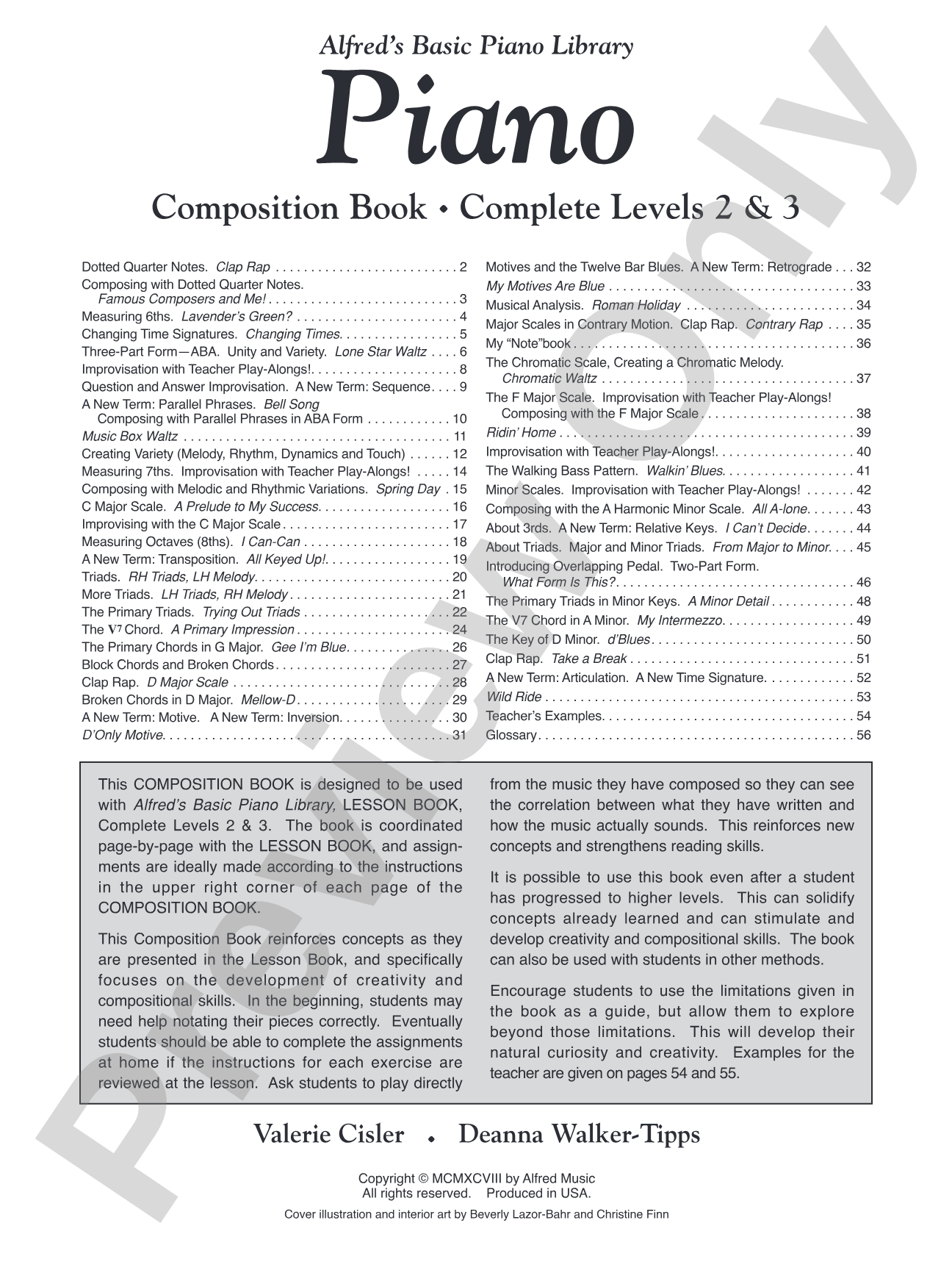
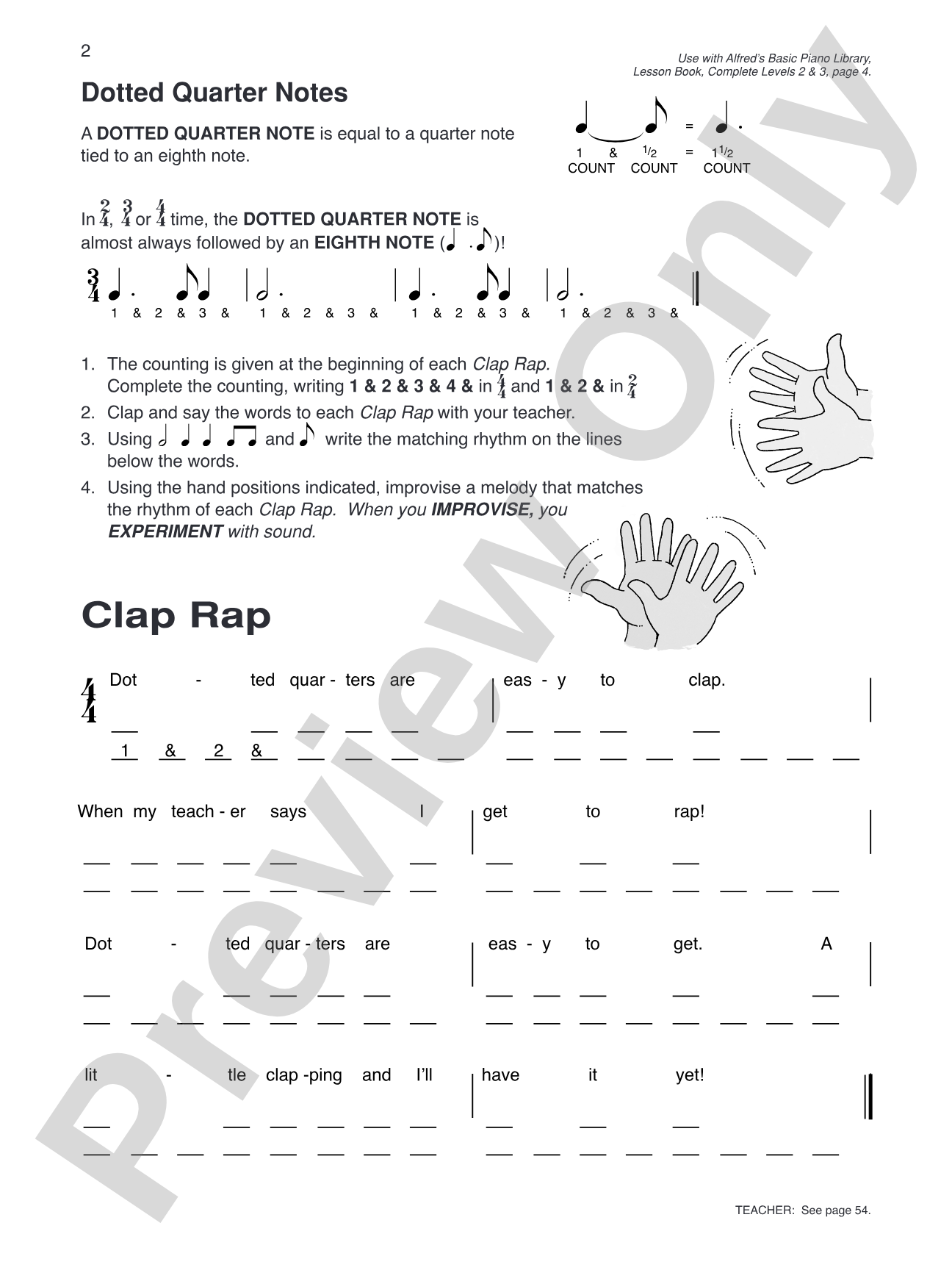
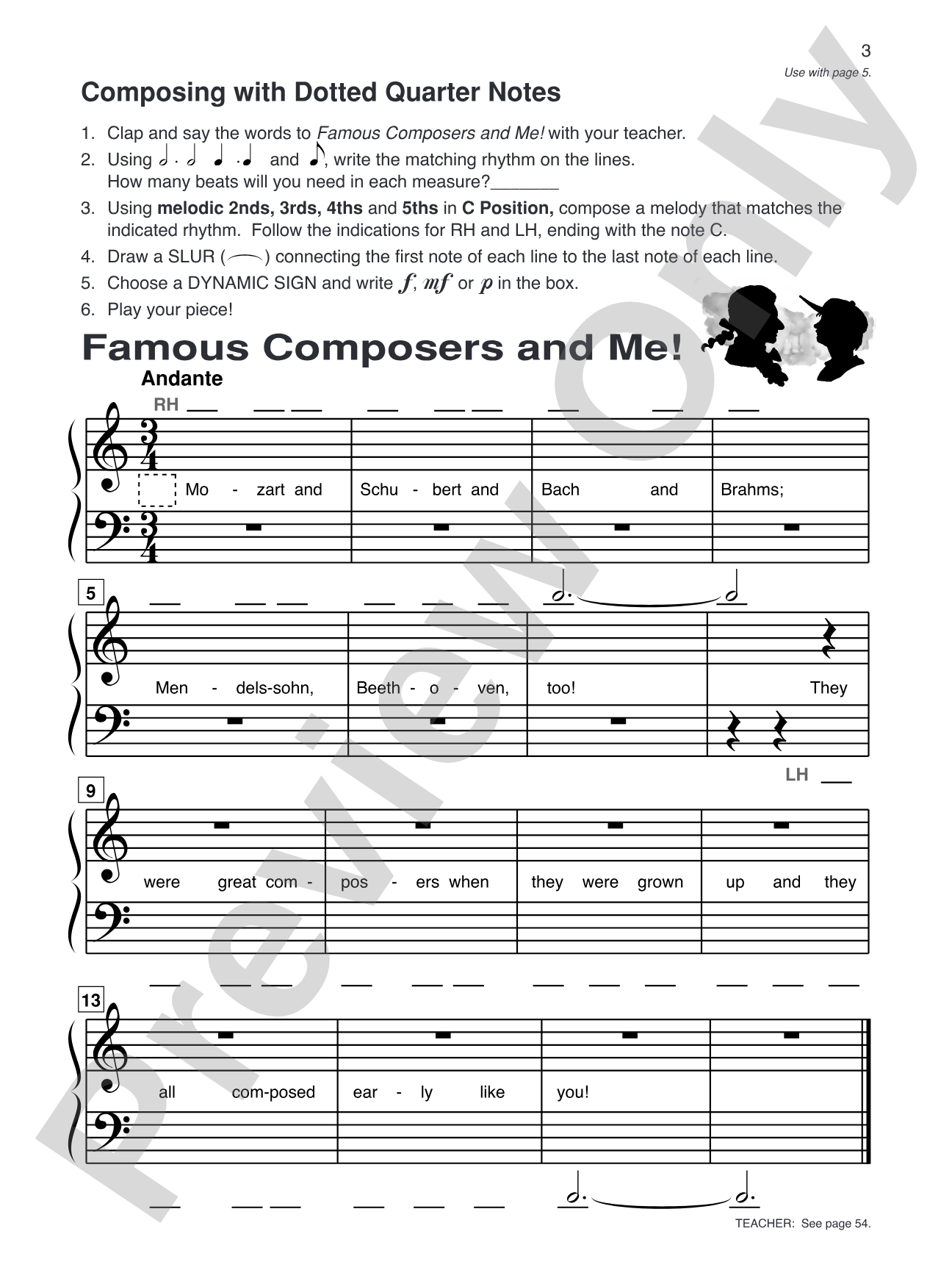
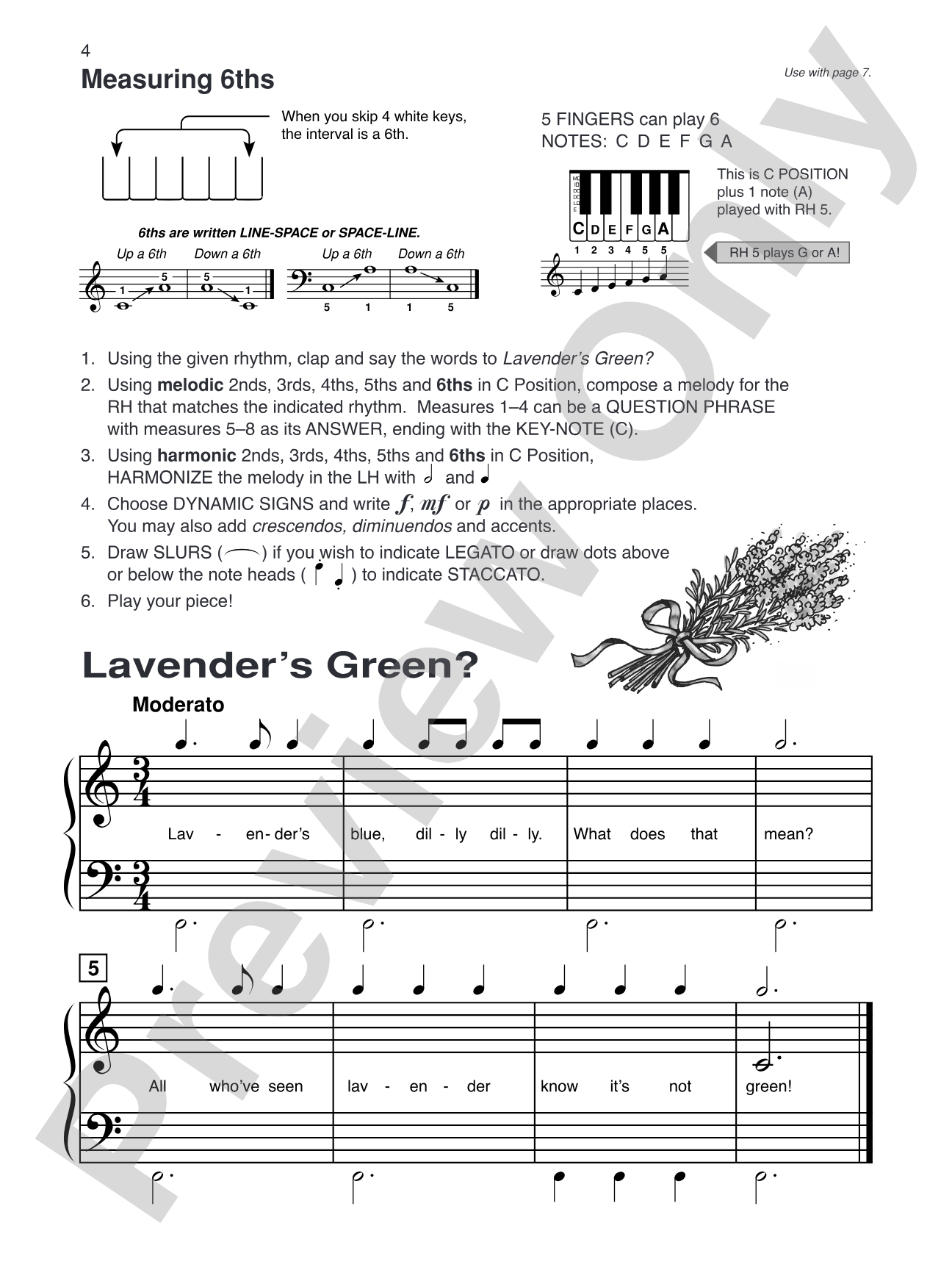
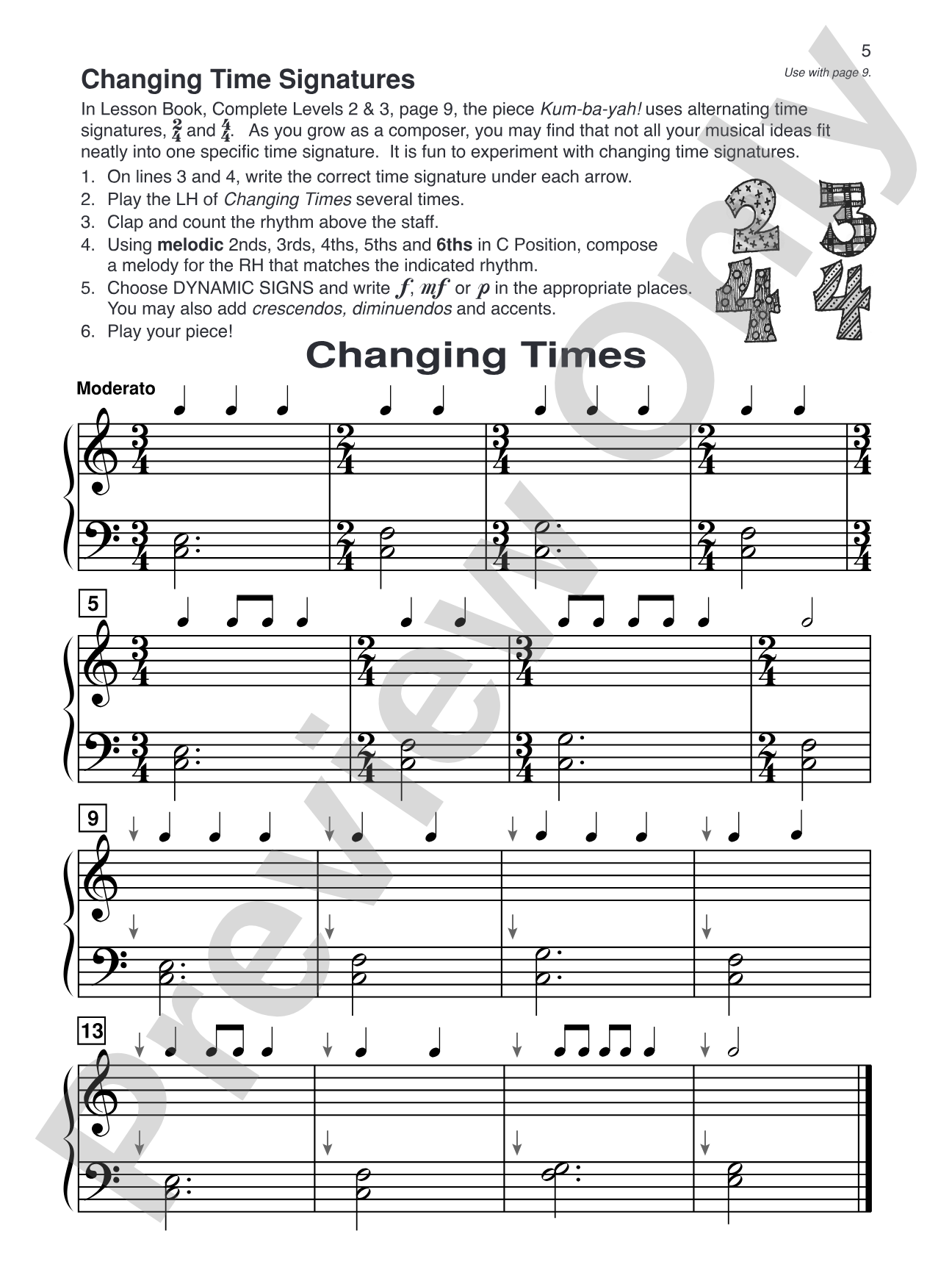
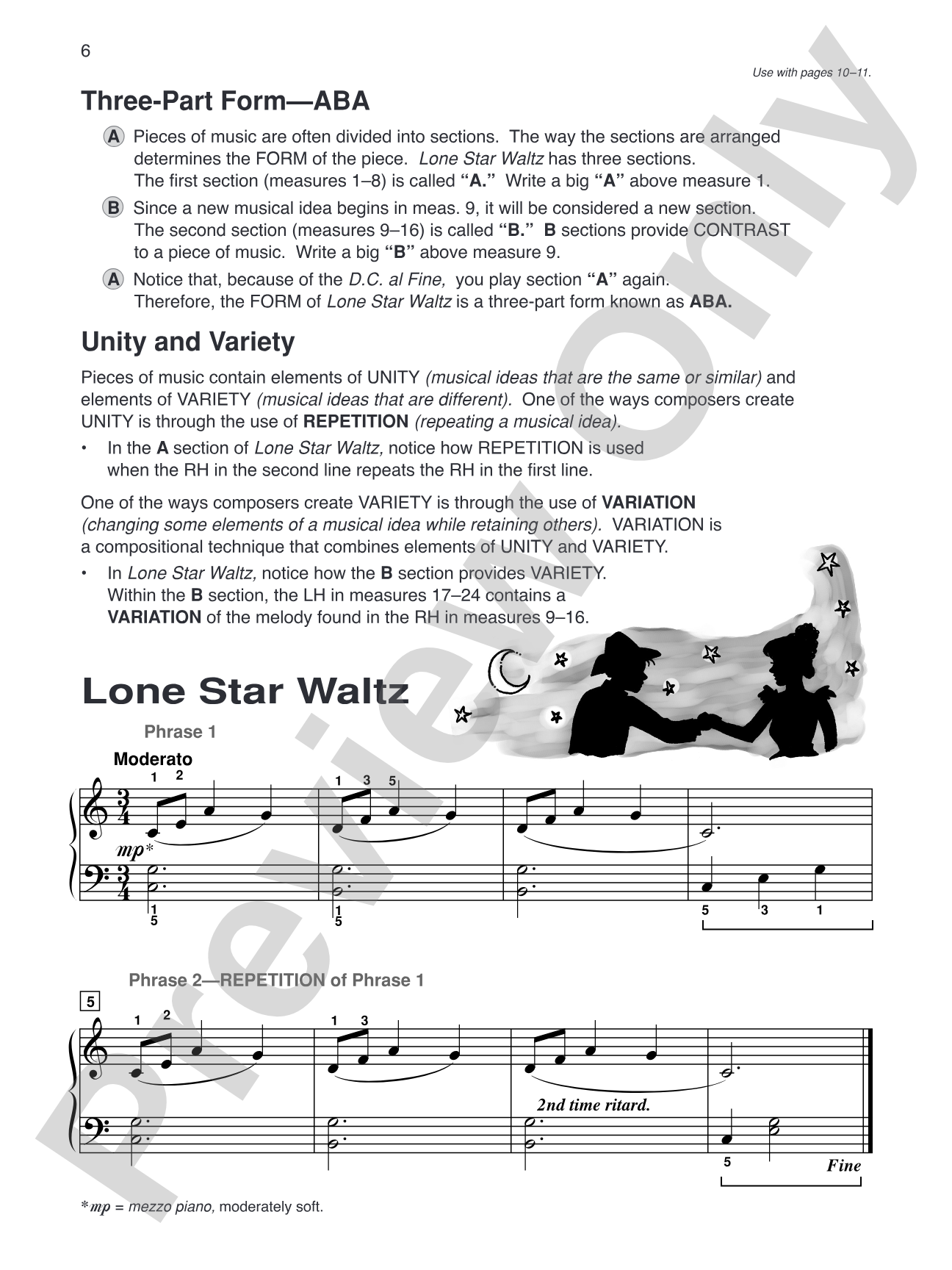
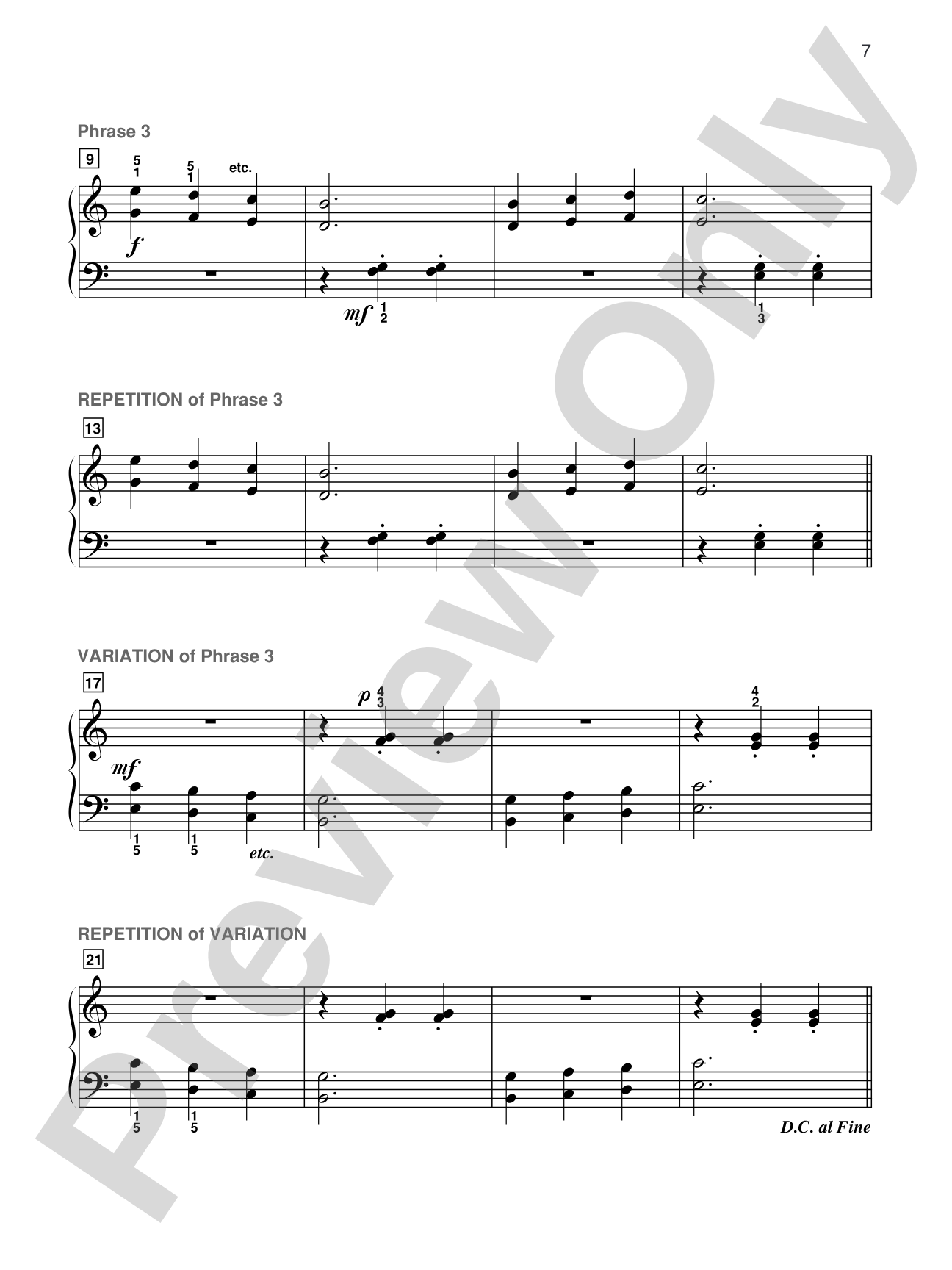
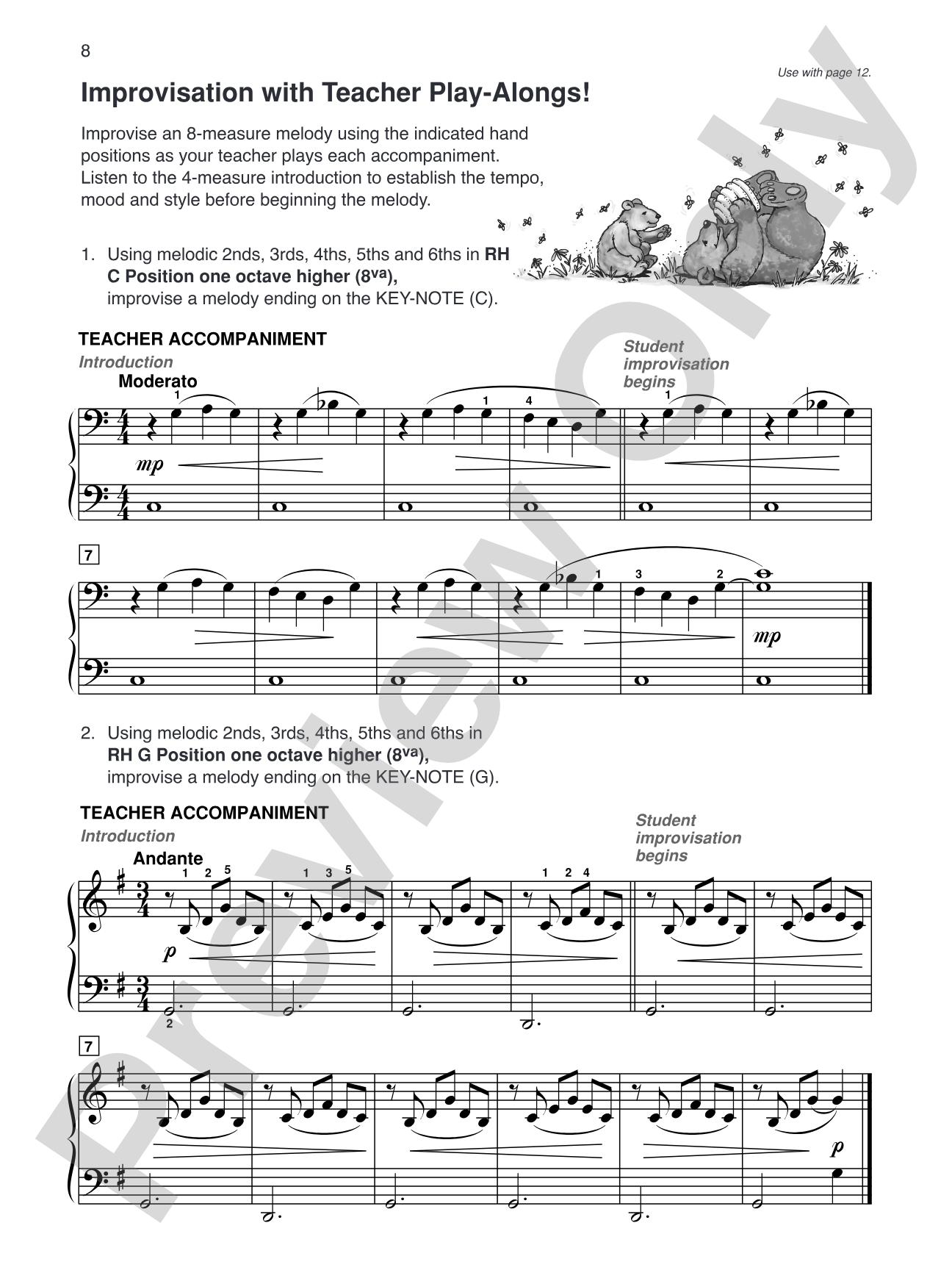
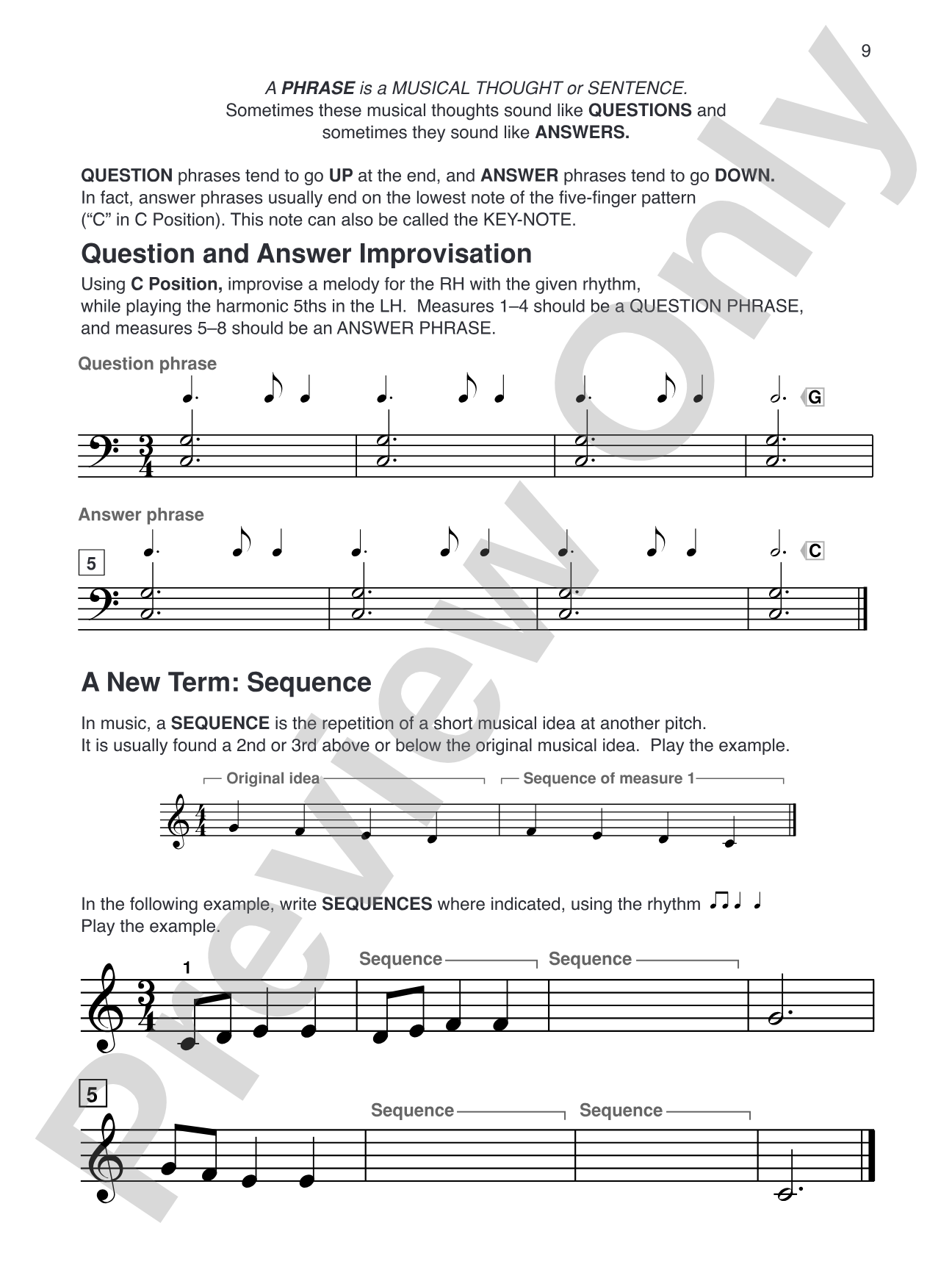
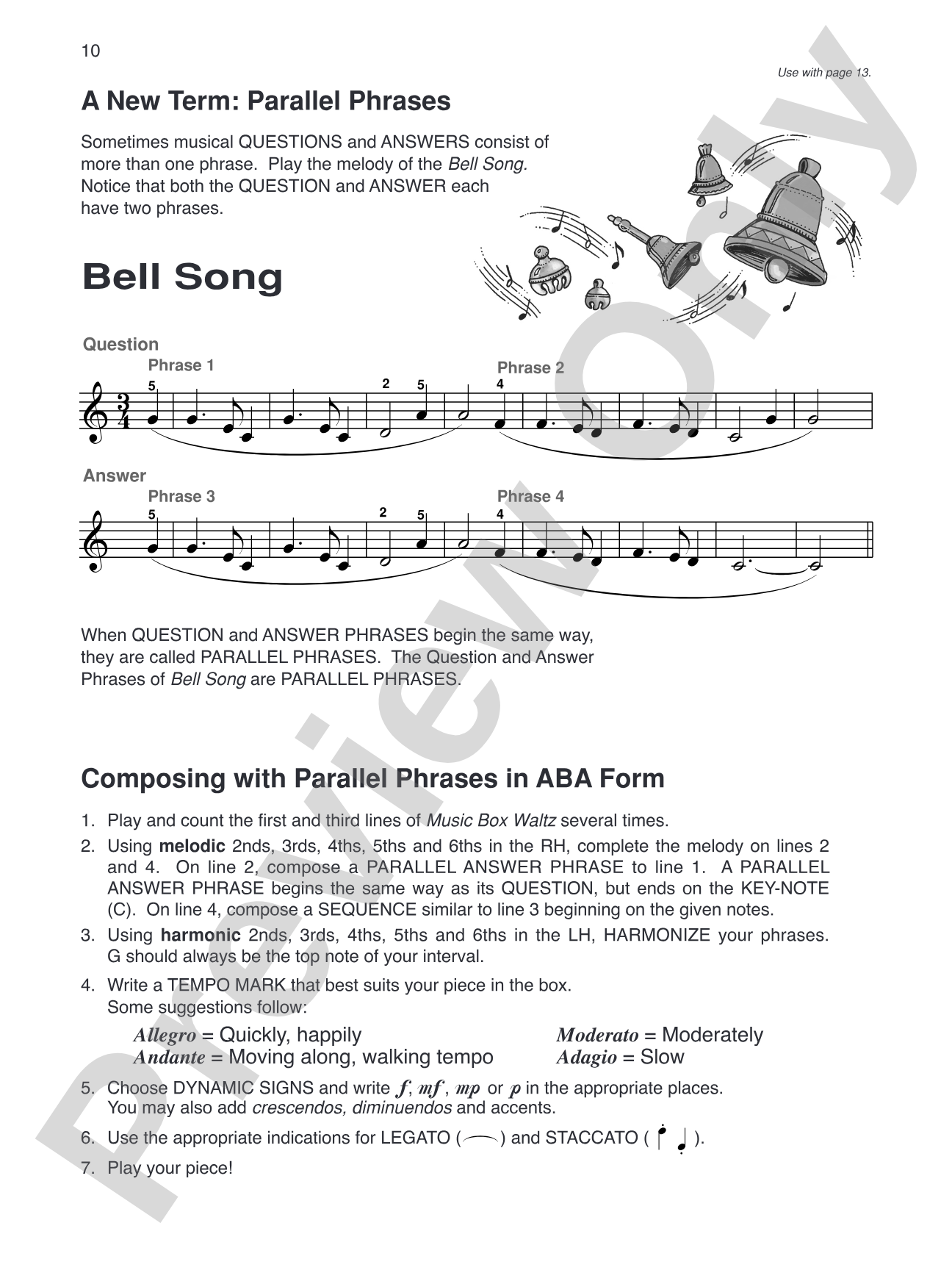
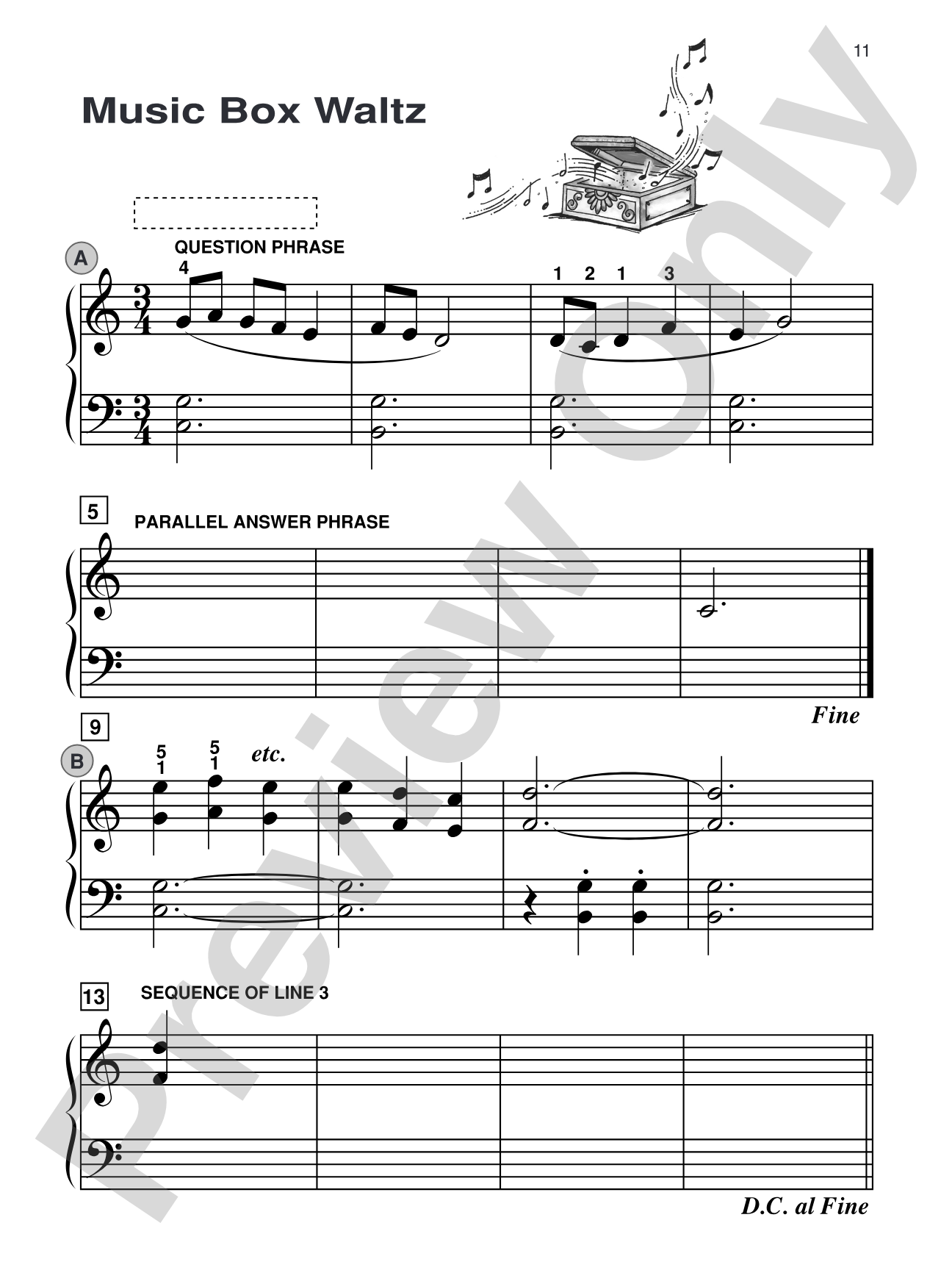
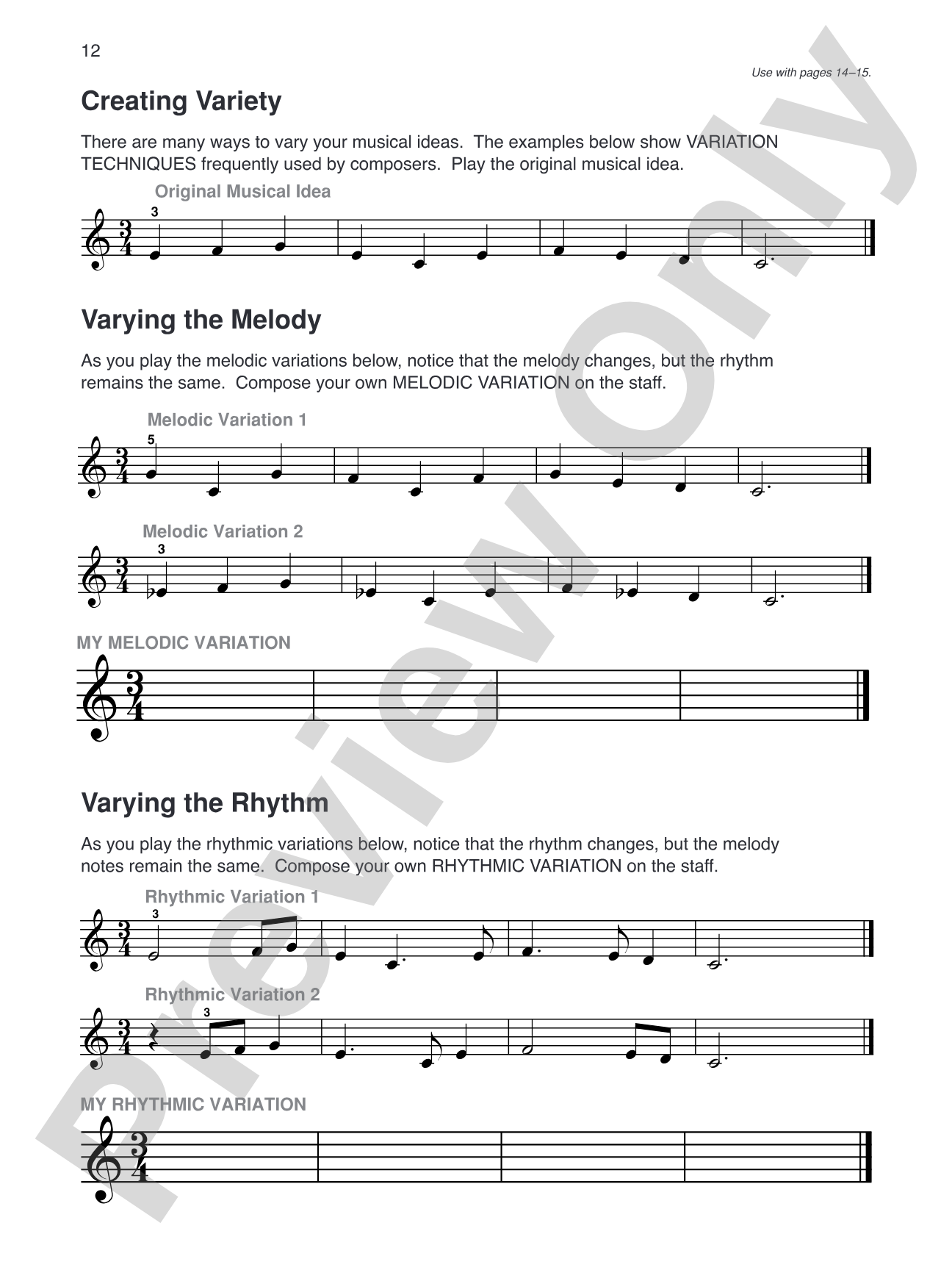
The Composition Book encourages the development of creativity and compositional skills, while reinforcing important musical concepts including music reading and notation. Although these books are correlated page-by-page with the Lesson Books, they can be used with any piano method.
Discover MakeMusic Cloud: thousands of interactive titles your students can play along with today.
Composition books that actually reinforce what students are learning in their method rather than feel like busywork are rare. This one integrates page-by-page with the Lesson Books while standing alone well enough to pair with any method, giving you flexibility without sacrificing coherence. Students spend so much time reading and playing someone else's notes; here they get to own their learning by creating.
What to expect
Empowering and low-stakes. Students move from imitation and guided fill-in-the-blanks toward genuine creative choices, discovering that the rules of music they've been learning aren't restrictions but tools. The experience feels like unlocking something they didn't know was possible.
Who it's for
This book belongs in the hands of any piano student working through the later beginner levels (2 and 3) who needs structured compositional scaffolding. It works equally well for studio teachers following Alfred's sequence and ensemble pianists or class piano settings using other methods.
How to get the most out of it
Treat compositional assignments as mini concerts. Have students play their pieces for the studio each week rather than filing them away, which builds confidence and makes the creative work feel purposeful.
Encourage students to illustrate their compositions or give them titles before they start writing, anchoring the creative work in something concrete and meaningful to them.
Use completed pieces as ear training material. Play a student's composition for another student to identify, then have them write it down. It turns composition into a full musical skill.
How to use it
Weave these assignments into studio progress checks or group lesson reflections. A student who completes a composition in the book becomes the week's featured performer during studio time, turning composition into part of your ensemble culture rather than isolated work.
Skills your students will build
Understanding of phrase structure and musical form
Application of rhythmic patterns learned in the method book
Reinforcement of music notation conventions and symbols
Development of melodic thinking and phrasing
Building confidence in creative decision-making at the piano
You May Also Like
Scan to Complete Your Purchase
Use your phone's camera to scan the code below
You'll log in on your phone and the order will be added to your account