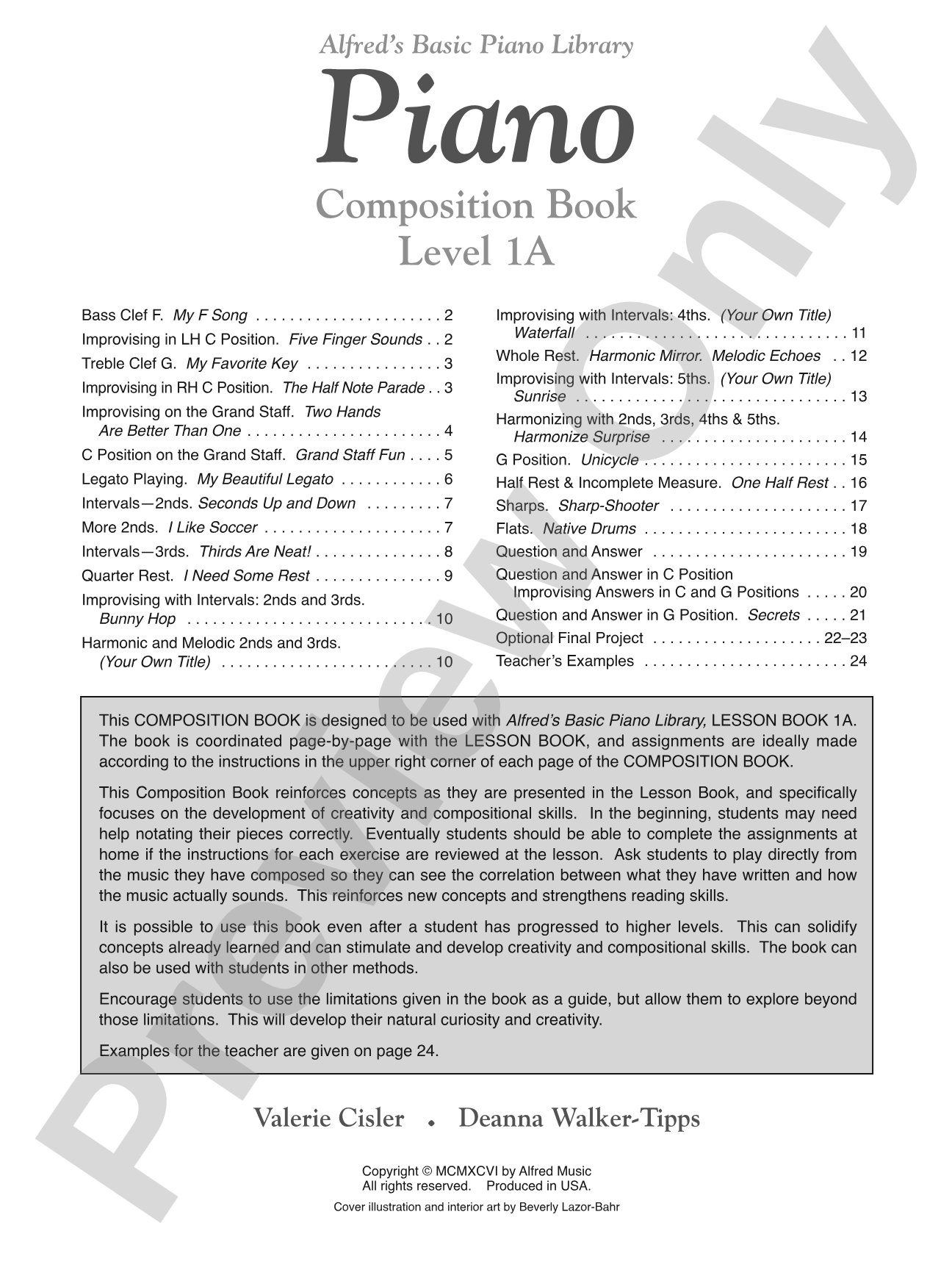
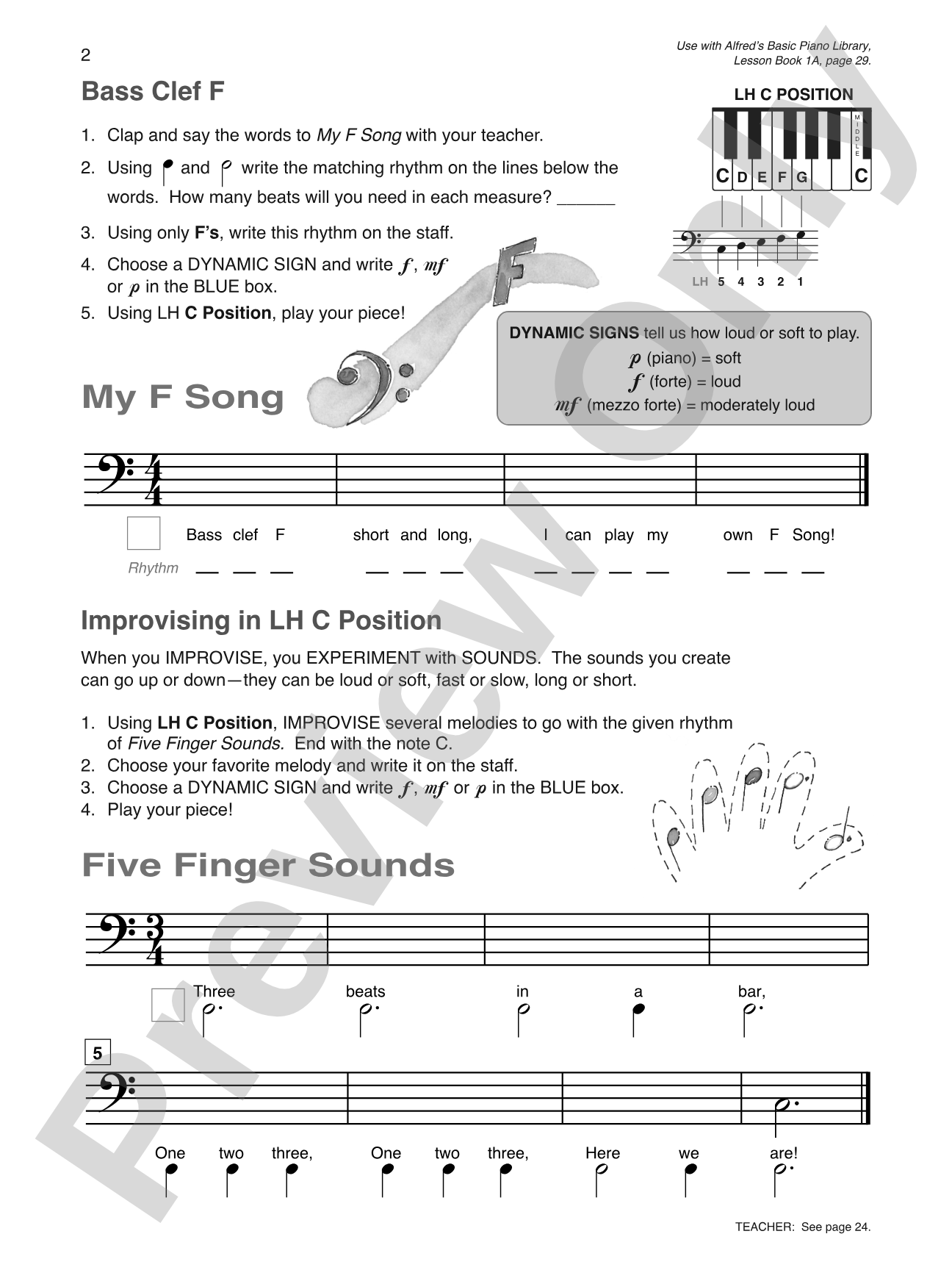
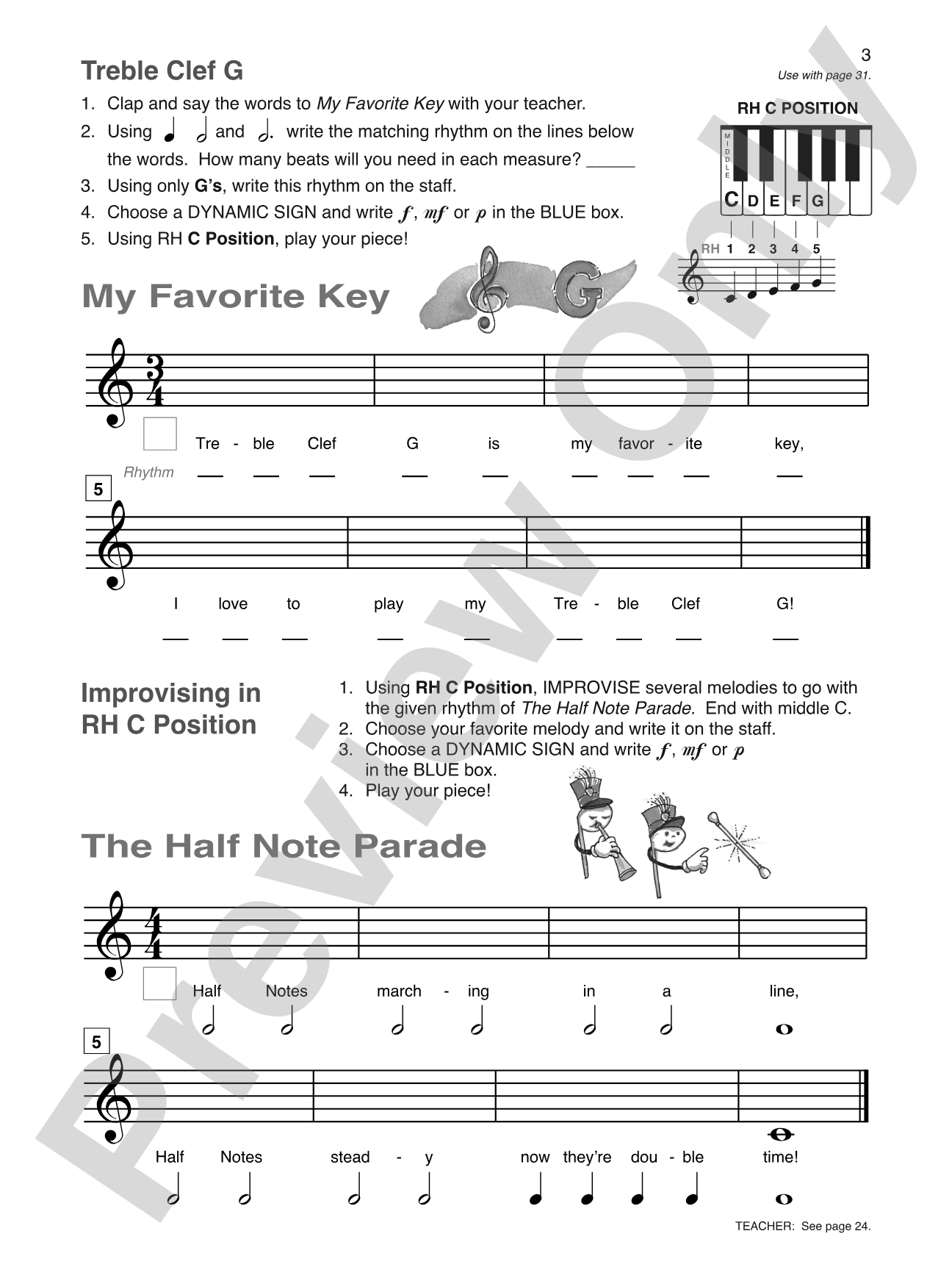
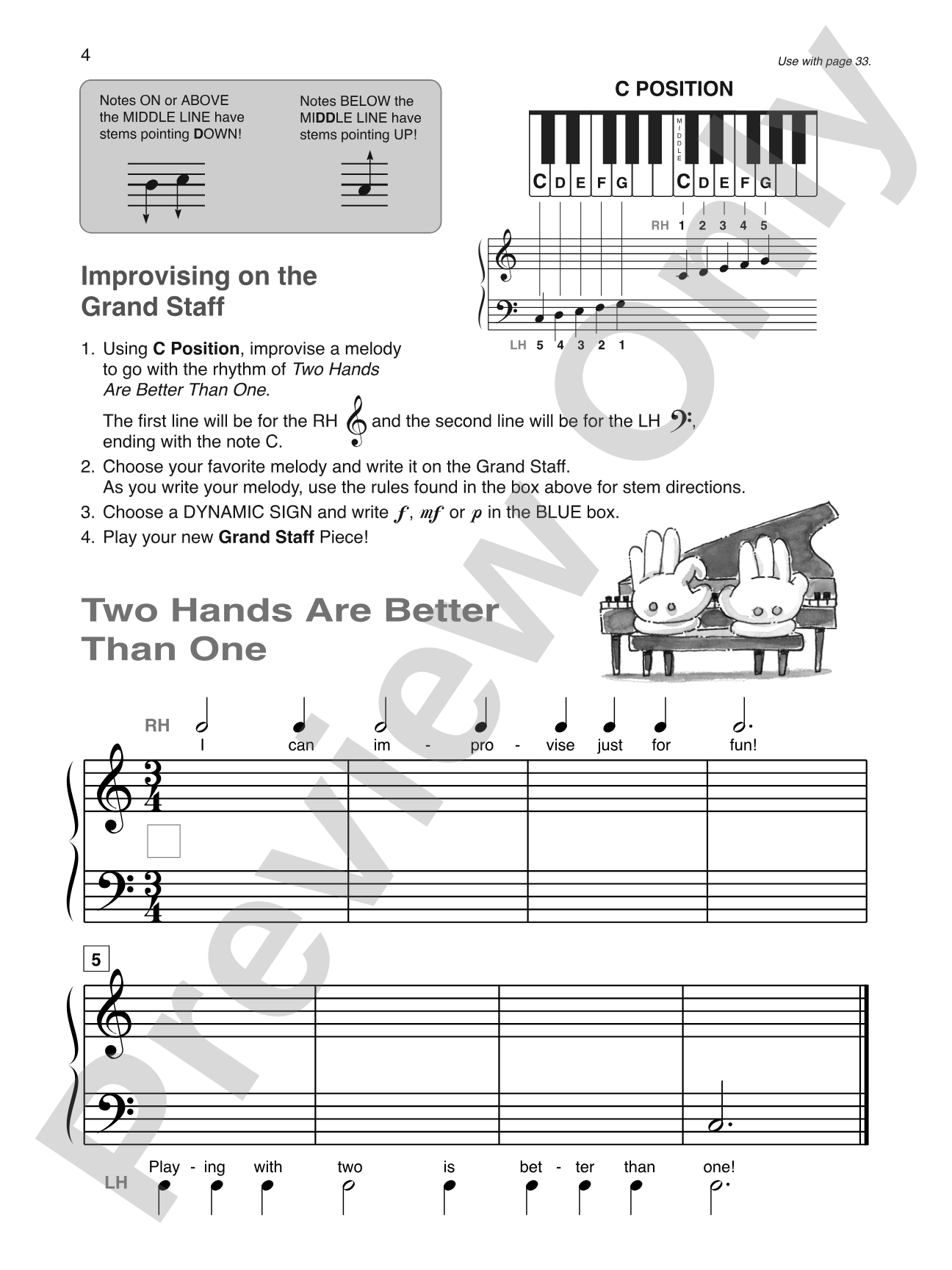
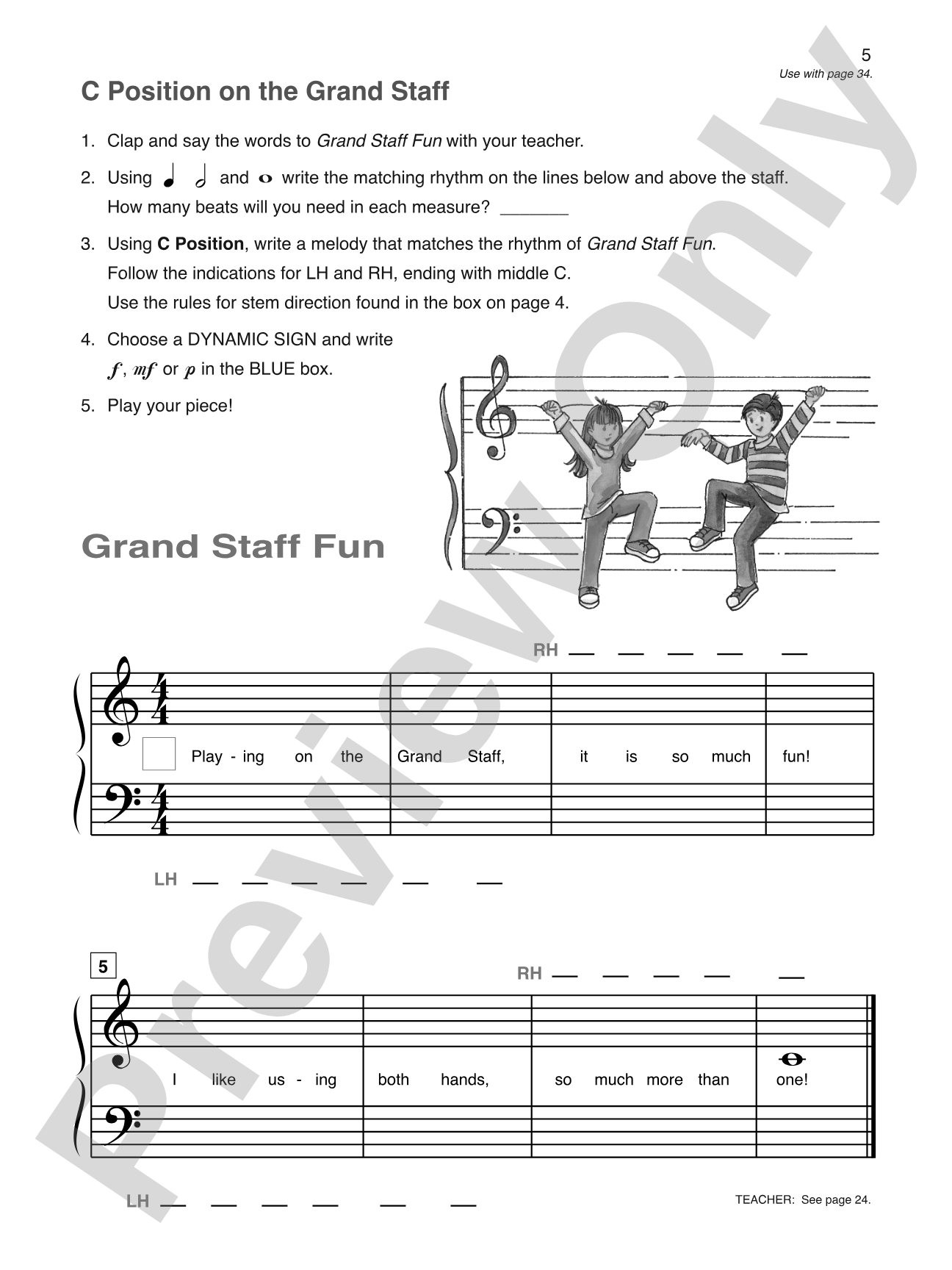
The Composition Book encourages the development of creativity and compositional skills, while reinforcing important musical concepts including music reading and notation. Although these books are correlated page-by-page with the Lesson Books, they can be used with any piano method.
Discover MakeMusic Cloud: thousands of interactive titles your students can play along with today.
Composition work at this level rarely balances creative freedom with genuine pedagogical purpose. Cisler and Walker-Tipps build compositional thinking into every exercise, making creativity feel like a natural extension of what students are already learning rather than an add-on. The page-by-page correlation with Lesson Books means students apply new concepts the moment they master them.
What to expect
Structured yet playful. Every page invites students to make small decisions within a safe frame: finish this melody, compose an answer to this phrase, choose your own notes for this pattern. The result feels like discovery rather than drill.
Who it's for
Beginning piano students (ages 5-8) who benefit from guided compositional practice. Teachers using Alfred's Basic Piano Library will find this an essential companion; those teaching other methods can extract specific exercises that align with their scope and sequence.
How to get the most out of it
Let students hear their own ideas played back aloud. Many young composers freeze when asked to write; hearing even simple melodies builds confidence fast.
Sit beside students as they work rather than checking completed pages later. Real-time conversations about why they chose certain notes deepen their understanding of music's choices.
Celebrate notational accuracy alongside creativity. Students who learn that neat, clear notation matters will develop professional habits early.
How to use it
Assign one or two exercises per week during regular lessons, pairing compositional work with the corresponding Lesson Book material. End-of-semester recitals gain special warmth when students perform pieces they wrote themselves, even simple four-bar melodies.
Skills your students will build
Music notation and staff writing
Melodic phrasing and simple song structure
Understanding rhythm notation and whole/half/quarter note relationships