Alfred's Basic Graded Piano Course, Lesson Book 3 Cover Image

Alfred's Basic Graded Piano Course, Lesson Book 3: Piano Book

$7.99 USD
Sale price  $7.99 USD Regular price 
Skip to product information
Alfred's Basic Graded Piano Course, Lesson Book 3 Cover Image

Alfred's Basic Graded Piano Course, Lesson Book 3: Piano Book

Grade 1

By Willard A. Palmer, Morton Manus, and Amanda Vick Lethco

Item: 00-20183UK

$7.99
Shipped

One moment…

Description
This Alfred's Basic Graded Piano Course was written in response to many requests from teachers for an Alfred course that will enable students to pass the graded exams that are so much a part of the learning experience throughout the world. The Lesson Book introduces sight-reading and technique as well as preparation for the exam pieces. The correlated Theory Book prepares students for the theory exam at the same time. By including some exam pieces from previous practical syllabuses and also a mock theory paper from the theory exam in the correlated theory books, you, as a teacher, can judge perfectly the appropriate time to enter your pupil for the graded exam. This will make passing a formality but, more importantly, give your pupil the confidence to achieve the merits and distinctions that inspire and reward their hard work.

Alfred's Basic Graded Piano Course, Lesson Book 3: Piano Book isn't in MakeMusic Cloud just yet...but it could be. Let us know you'd like to see it, and you'll help shape what comes next. In the meantime, start a free trial and dive into thousands of interactive titles your students can play along with today.

Sample Pages

Sample Audio
No sample audio found.
Sample Video
Additional Details
Series: Alfred's Basic Graded Piano Course
Publisher: Alfred Music
ISBN10: 1-4706-1308-5
ISBN13: 978-1-4706-1308-2
UPC: 9781470613082
SKU: 00-20183UK

More about this title

About the Composer: Willard A. Palmer
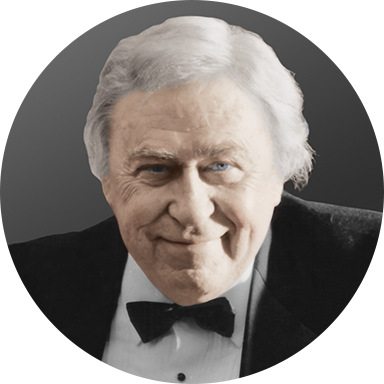
Willard A. Palmer

Dr. Willard A. Palmer stands among the most prolific and influential music educators of the twentieth century, with 789 published compositions spanning accordion, piano, organ, guitar, and choral works. His output has reached audiences across continents, translated into German, Japanese, French, Dutch, and Spanish. Palmer's early training at the Conservatory of Leipzig on scholarship, combined with rigorous study under pianist Mae Vardeman, shaped a teaching philosophy grounded in technical precision and improvisational freedom.

Palmer's scholarly later work on Baroque ornamentation and Classical repertoire earned him international recognition and led to the creation of the Alfred Masterworks series. He served as director of the Riemenschneider Bach Institute and taught accordion at the University of Houston for 18 years, establishing the first college-level courses in the instrument. His dual focus on composition and pedagogy produced resources that have defined piano instruction for generations of students worldwide.

Why we love this

This lesson book integrates exam preparation directly into daily practice without sacrificing musicianship or engagement. Palmer's approach treats graded exams as a natural milestone rather than an external hurdle, building technical and sight-reading skills that align precisely with what examiners expect. By the time a student reaches the assessment, they've been working toward it all along.

What to expect

Structured yet musical. Each lesson balances technical fundamentals with pieces that sound accomplished, giving students real satisfaction as they progress. There's a steady, purposeful feel throughout, with no wasted material; everything builds toward the larger goal of exam readiness while keeping the student's interest alive.

Who it's for

Late elementary pianists preparing for graded exams, whether through ABRSM, RCM, or other international syllabuses. This book works best for students with a teacher guiding them toward formal assessment milestones. It's ideal for learners who benefit from a clear roadmap and frequent checkpoints.

How to get the most out of it

  • Assign pieces from this book as mock exam materials weeks before the actual graded exam; this familiarizes students with the physical and mental demands of performing under pressure while there's still time to refine interpretive choices.
  • Use the sight-reading exercises regularly in warm-up to build quick recognition of intervals and rhythmic patterns; consistent, low-stakes exposure prevents panic when confronted with unseen material during the actual exam.
  • Correlate lesson assignments with the correlated theory book so students understand the harmonic and structural foundations of what they're playing, deepening their ability to execute passages with intention rather than mechanical accuracy.
  • Record practice sessions at key intervals and review them with your student; this develops self-assessment skills and confidence in recognizing their own progress before formal evaluation.

How to use it

Adopt this book as your core curriculum if your studio or school participates in graded exam programs. Sequence lessons to align with your exam entry dates, using the correlated theory book in parallel so students tackle written and practical elements together. The mock exam components let you conduct trial runs under quiet, supportive conditions before the official assessment.

Skills your students will build

  • Sight-reading accuracy and speed across multiple clefs and key signatures
  • Technique isolation and refinement (scales, arpeggios, chord progressions) as prescribed by exam syllabuses
  • Interpretation and expressive control within stylistic boundaries
  • Exam-specific performance habits (memory reliability, handling pressure, accurate rhythm under scrutiny)
  • Understanding of harmonic function and structural analysis at the elementary level

You May Also Like