Alfred's Basic Graded Piano Course, Lesson Book 2 Cover Image

Alfred's Basic Graded Piano Course, Lesson Book 2: Piano Book

$7.99 USD
Sale price  $7.99 USD Regular price 
Skip to product information
Alfred's Basic Graded Piano Course, Lesson Book 2 Cover Image

Alfred's Basic Graded Piano Course, Lesson Book 2: Piano Book

Preparatory

By Willard A. Palmer, Morton Manus, and Amanda Vick Lethco

Item: 00-20182UK

$7.99
Shipped

One moment…

Description
This Alfred's Basic Graded Piano Course was written in response to many requests from teachers for an Alfred course that will enable students to pass the graded exams that are so much a part of the learning experience throughout the world. The Lesson Book introduces sight-reading and technique as well as preparation for the exam pieces. The correlated Theory Book prepares students for the theory exam at the same time. By including some exam pieces from previous practical syllabuses and also a mock theory paper from the theory exam in the correlated theory books, you, as a teacher, can judge perfectly the appropriate time to enter your pupil for the graded exam. This will make passing a formality but, more importantly, give your pupil the confidence to achieve the merits and distinctions that inspire and reward their hard work.

Alfred's Basic Graded Piano Course, Lesson Book 2: Piano Book isn't in MakeMusic Cloud just yet...but it could be. Let us know you'd like to see it, and you'll help shape what comes next. In the meantime, start a free trial and dive into thousands of interactive titles your students can play along with today.

Sample Pages

Sample Audio
No sample audio found.
Sample Video
Additional Details
Series: Alfred's Basic Graded Piano Course
Publisher: Alfred Music
ISBN10: 1-4706-1307-7
ISBN13: 978-1-4706-1307-5
UPC: 9781470613075
SKU: 00-20182UK

More about this title

About the Composer: Willard A. Palmer
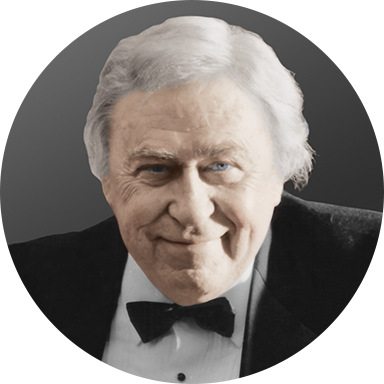
Willard A. Palmer

Willard A. Palmer stands as one of the most prolific and influential music educators of the 20th century, with nearly 800 published compositions spanning piano methods, accordion works, guitar instruction, and choral music. His output was translated across German, Japanese, French, Dutch, and Spanish, reflecting his global reach as both composer and pedagogue. Palmer's early training under Mae Vardeman emphasized the technical foundations and improvisational freedom that would define his teaching philosophy throughout his career.

Palmer's academic credentials were substantial: he earned degrees from Millsaps College and studied at the Conservatory of Leipzig on scholarship before joining the University of Houston faculty, where he established the first successful collegiate accordion program. His later scholarship focused intensively on Baroque music and performance practice, work that earned him recognition as a leading authority on ornamentation and eventually led to the creation of the acclaimed Alfred Masterworks series. The Doctor of Humanities degree (1971) and Doctor of Music degree (1983) honored contributions that extended far beyond method books into serious musicological research.

Why we love this

Palmer and his co-authors engineered this course specifically around graded exam syllabuses, so students encounter authentic exam-style pieces and theory formats from the start rather than scrambling to adjust when exam season arrives. The integration of sight-reading, technique development, and actual exam material into one coherent progression removes the guesswork from preparing students for assessment, which matters enormously when building confidence before high-stakes testing.

What to expect

Working through this book feels purposeful rather than aimless; every lesson builds toward an identifiable exam standard, and students sense that their practice translates directly into readiness. The material maintains musicality while serving pedagogical rigor, so the repertoire doesn't feel like mere exercises.

Who it's for

Piano teachers preparing students for graded exams (ABRSM, RCM, or equivalent syllabuses) will find this course directly aligned with assessment requirements. Students in their early elementary years who benefit from structured, exam-focused progression learn both technique and sight-reading within a framework that builds toward measurable achievement.

How to get the most out of it

  • Coordinate with the correlated Theory Book so students see how the practical and written work reinforce each other; this dual engagement accelerates both reading fluency and theoretical understanding.
  • Reference the included mock theory papers to diagnose which concept areas need reinforcement before entering students for the actual exam.
  • Use the graded exam pieces as benchmarks to gauge when a student is genuinely ready to sit for the next level, rather than pushing by calendar or arbitrary timelines.

How to use it

Anchor your early elementary piano curriculum around this series if your studio or school regularly enters students for graded exams; the sequencing removes the need to supplement with separate exam-prep materials. For teachers balancing multiple students at different levels, the clear progression lets you confidently recommend when each student should attempt their next grade, making retention and advancement feel earned rather than arbitrary.

Skills your students will build

  • Sight-reading at progressively complex levels
  • Technique and finger independence appropriate to elementary grades
  • Understanding of graded exam format and expectations
  • Familiarity with authentic exam-style repertoire
  • Theory knowledge aligned with practical exam requirements

You May Also Like