Alfred's Basic Electronic Keyboard Course Cover Image

Alfred's Basic Electronic Keyboard Course: Electronic Keyboard Book

$11.99 USD
Sale price  $11.99 USD Regular price 
Skip to product information
Alfred's Basic Electronic Keyboard Course Cover Image

Alfred's Basic Electronic Keyboard Course: Electronic Keyboard Book

By Willard A. Palmer, Morton Manus, and Amanda Vick Lethco

Item: 00-2238

$11.99
Shipped

One moment…

Description
An electronic keyboard course that follows the solid teaching program outlined in Alfred's Basic Adult Piano Course, but is designed for the limited range of the electronic keyboard. Contains instructions for playing both single-finger chords and fingered chords for the left hand. Includes suggested settings for the most popular brands of electronic keyboards.

Alfred's Basic Electronic Keyboard Course: Electronic Keyboard Book isn't in MakeMusic Cloud just yet...but it could be. Let us know you'd like to see it, and you'll help shape what comes next. In the meantime, start a free trial and dive into thousands of interactive titles your students can play along with today.

Sample Pages

Sample Audio
No sample audio found.
Sample Video
Additional Details
Publisher: Alfred Music
Page Count: 96
ISBN10: 0-7390-0790-4
ISBN13: 978-0-7390-0790-7
UPC: 038081014135
SKU: 00-2238

More about this title

About the Author: Willard A. Palmer
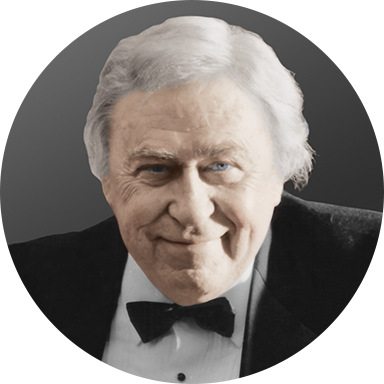
Willard A. Palmer

Willard A. Palmer built a prolific career spanning multiple keyboard instruments and pedagogical approaches. With 789 published compositions to his name, he mastered not only piano but accordion, Hammond organ, and guitar, creating methods and solo works that reached audiences across Germany, Japan, France, the Netherlands, and Spain. His foundation came early: a child prodigy who performed on radio at 13, he studied under Mae Vardeman, whose emphasis on technique and improvisation shaped his teaching philosophy for decades to come.

Palmer's academic contributions extended far beyond performance. He earned advanced degrees from institutions including the University of Houston, where he taught accordion courses for 18 years, establishing the first successful college program in that discipline. His later scholarly work centered on Baroque music ornamentation, earning him international recognition and leading to the creation of the acclaimed Alfred Masterworks series. In 1971 and 1983, he received honorary doctorates in Humanities and Music respectively, cementing his status as both a musician and a meticulous researcher.

Why we love this

This course translates the proven pedagogical framework of Alfred's Adult Piano method into a format that meets players where electronic keyboards actually are. Rather than forcing full 88-key piano technique onto limited-range instruments, Palmer and his coauthors engineered a curriculum that respects the electronic keyboard's unique capabilities, including practical guidance for single-finger and fingered chord modes across major brands. Students get a real learning path, not a compromise.

What to expect

Accessible and pragmatic. Rather than feeling like a scaled-down piano method, this course acknowledges the electronic keyboard as its own legitimate instrument with distinct techniques and sonic possibilities. Lessons unfold at a measured pace with clear targets, building both technical foundation and musicality without overwhelming players new to keyboard study.

Who it's for

Adult learners and returning players who own electronic keyboards and want structured, instrument-appropriate instruction rather than piano books that ignore their equipment's design. This course also suits teachers introducing students to keyboard literacy who may not have access to acoustic pianos or who want to build confidence on the instrument students already own.

How to get the most out of it

  • Consult the keyboard settings guide for your specific brand before starting lessons; having the correct registration locked in from the beginning prevents confusion between what you're playing and what your instrument can produce.
  • Practice the left-hand chord techniques separately at a slow tempo until the fingerings feel automatic; switching between single-finger and fingered chord modes requires muscle memory distinct from traditional piano playing.
  • Use the registration suggestions as starting points, not limits; once you understand the fundamentals, experiment with different sounds and effects to discover what engages your ear and keeps practice sessions fresh.

How to use it

Position this as the core curriculum for adult education programs or community music classes focused on electronic keyboards. It also serves as an excellent bridge for students learning keyboard basics before potentially transitioning to acoustic piano; the solid fundamental approach transfers directly, while the immediate success on their own instrument builds confidence and motivation.

Skills your students will build

  • Single-finger and fingered chord voicings specific to electronic keyboards
  • Reading treble and bass clefs in coordination with left-hand accompaniment patterns
  • Electronic keyboard registration and sound selection appropriate to musical style
  • Tempo control and rhythmic independence between hands
  • Basic music theory as applied to keyboard playing

You May Also Like