

Alfred's Basic All-in-One Course Universal Edition, Book 1: Piano Book
$9.99 USD
Sale price
$9.99 USD
Regular price
Skip to product information


Alfred's Basic All-in-One Course Universal Edition, Book 1: Piano Book
Lesson * Theory * Solo
By Willard A. Palmer, Morton Manus, and Amanda Vick Lethco
Level: 1
Item: 00-14504
$9.99
One moment…
Description
The Universal Edition is designed for all English-speaking countries outside of the United States, including Canada, the U. K., and Australia. This edition uses the British system of terminology for rhythmic values such as "crotchet" for quarter note. This course is most effective when used under the direction of a piano teacher or experienced musician.


Alfred's Basic All-in-One Course Universal Edition, Book 1: Piano Book isn't in MakeMusic Cloud just yet...but it could be. Let us know you'd like to see it, and you'll help shape what comes next. In the meantime, start a free trial and dive into thousands of interactive titles your students can play along with today.
Request This Title
Tell us you want it.
Start Your Free Trial
Explore everything that's ready to play right now.
Sample Audio
No sample audio found.
Sample Video
No sample videos found.
Additional Details
More about this title
About the Authors
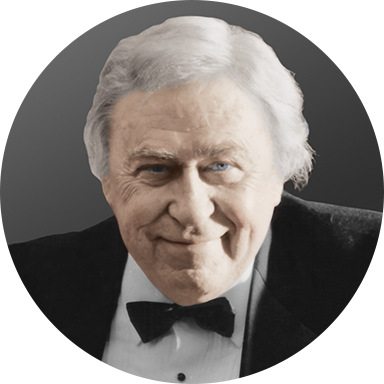
Dr. Willard Palmer stands as a distinguished musician, educator, and scholar whose influence spans multiple instruments and genres. A child prodigy who performed piano on radio at age 13, he built his career on a foundation of piano and accordion study under Mae Vardeman, whose mentorship shaped his improvisational gifts. His professional path took him through Whitworth College and Millsaps College, where he earned his Bachelor's degree before studying at the Conservatory of Leipzig on a prestigious two-year scholarship.
Palmer's prolific output encompasses 789 published compositions spanning accordion methods, piano methods, Hammond Chord Organ instruction, guitar methods, solo pieces, and choral works. His publications have reached audiences globally through translations into German, Japanese, French, Dutch, and Spanish. At the University of Houston, he pioneered college-level accordion instruction, teaching for 18 years and establishing the first successful accordion courses at the university level. His scholarly expertise in Baroque music ornamentation became internationally recognized and formed the foundation for the acclaimed Alfred Masterworks publication series.
Throughout his career, Palmer held positions as choir director at Memorial Lutheran Church in Houston and director of the Riemenschneider Bach Institute. His contributions to musicological research earned him a Doctor of Humanities degree in 1971 and a Doctor of Music degree in 1983. He maintained active membership in the American Federation of Musicians Local #65, the American Accordionists' Association, and the American Society of Composers, Authors and Publishers.
Palmer's prolific output encompasses 789 published compositions spanning accordion methods, piano methods, Hammond Chord Organ instruction, guitar methods, solo pieces, and choral works. His publications have reached audiences globally through translations into German, Japanese, French, Dutch, and Spanish. At the University of Houston, he pioneered college-level accordion instruction, teaching for 18 years and establishing the first successful accordion courses at the university level. His scholarly expertise in Baroque music ornamentation became internationally recognized and formed the foundation for the acclaimed Alfred Masterworks publication series.
Throughout his career, Palmer held positions as choir director at Memorial Lutheran Church in Houston and director of the Riemenschneider Bach Institute. His contributions to musicological research earned him a Doctor of Humanities degree in 1971 and a Doctor of Music degree in 1983. He maintained active membership in the American Federation of Musicians Local #65, the American Accordionists' Association, and the American Society of Composers, Authors and Publishers.
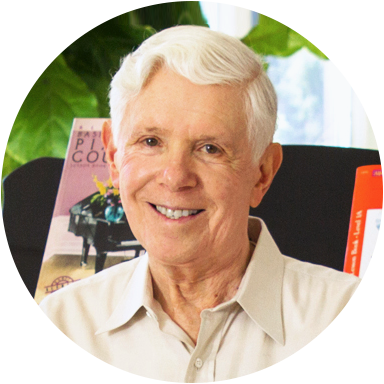
Morton Manus served as president of Alfred Music Publishing Co., Inc. throughout a transformative period spanning from 1952 to 2016. He inherited the company from his father Sam, who had established Manus Music in 1922 during New York's Tin Pan Alley era and later merged it with Alfred & Company to create Alfred Music. Morton brought fresh energy to the organization after earning a business degree from City College of New York.
During his tenure, Morton fundamentally reimagined Alfred Music's direction and scope. A accomplished clarinetist and pianist himself, he championed the development of instructional materials across multiple instruments, including accordion, guitar, piano, and recorder. This shift in focus transformed Alfred Music from a popular sheet music publisher into a leading educational music resource. The company's expansion was remarkable; by the mid 1970s, growth necessitated relocating the main office to Los Angeles in 1975, while establishing a distribution center in upstate New York.
Under Morton's leadership alongside his sons Ron (who joined in 1988) and Steve (who joined in 1992), Alfred Music grew into a truly global enterprise. The company established international offices in Australia, Germany, Singapore, and the United Kingdom while continuing to develop world-class instructional methods and performance materials. A significant milestone came in 2005 when Alfred Music acquired Warner Bros. Publications, securing rights to the EMI Catalogue Partnership and forging a long-term relationship with Warner/Chappell Music.
During his tenure, Morton fundamentally reimagined Alfred Music's direction and scope. A accomplished clarinetist and pianist himself, he championed the development of instructional materials across multiple instruments, including accordion, guitar, piano, and recorder. This shift in focus transformed Alfred Music from a popular sheet music publisher into a leading educational music resource. The company's expansion was remarkable; by the mid 1970s, growth necessitated relocating the main office to Los Angeles in 1975, while establishing a distribution center in upstate New York.
Under Morton's leadership alongside his sons Ron (who joined in 1988) and Steve (who joined in 1992), Alfred Music grew into a truly global enterprise. The company established international offices in Australia, Germany, Singapore, and the United Kingdom while continuing to develop world-class instructional methods and performance materials. A significant milestone came in 2005 when Alfred Music acquired Warner Bros. Publications, securing rights to the EMI Catalogue Partnership and forging a long-term relationship with Warner/Chappell Music.
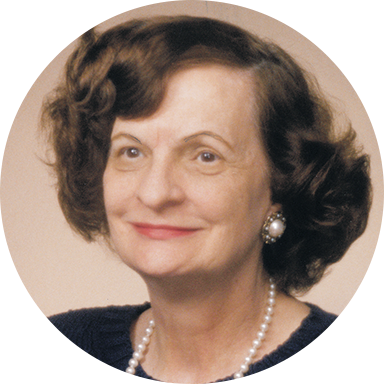
Dr. Amanda Vick Lethco is best known as co-author of Alfred's Basic Piano Library, the internationally acclaimed method she developed with Dr. Willard Palmer and Morton Manus. A Professor Emeritus of Piano Pedagogy at the University of Texas at Austin, she brought together training from some of the finest institutions and teachers in America, including studies at Juilliard under James Friskin and at Northwestern University, where she earned degrees in piano performance and music education.
Her career encompassed both scholarly contributions and extensive performance work. Dr. Lethco co-authored Creating Music at the Piano with Dr. Willard Palmer and received an honorary Doctor of Humanities degree from Whitworth College in Brookhaven, Mississippi. She performed recitals across the United States and served as a clinician at numerous American conventions.
Beyond her home base, Dr. Lethco conducted workshops internationally throughout Europe, Canada, Japan, Hong Kong, Korea, New Zealand, Malaysia, Singapore, Australia, Thailand, and Indonesia. She maintained a private teaching practice in major American cities including New York City, San Antonio, Austin, and Houston. Her contributions to music education earned her recognition in both the International Who's Who of Musicians and the World Who's Who of Women.
Her career encompassed both scholarly contributions and extensive performance work. Dr. Lethco co-authored Creating Music at the Piano with Dr. Willard Palmer and received an honorary Doctor of Humanities degree from Whitworth College in Brookhaven, Mississippi. She performed recitals across the United States and served as a clinician at numerous American conventions.
Beyond her home base, Dr. Lethco conducted workshops internationally throughout Europe, Canada, Japan, Hong Kong, Korea, New Zealand, Malaysia, Singapore, Australia, Thailand, and Indonesia. She maintained a private teaching practice in major American cities including New York City, San Antonio, Austin, and Houston. Her contributions to music education earned her recognition in both the International Who's Who of Musicians and the World Who's Who of Women.