
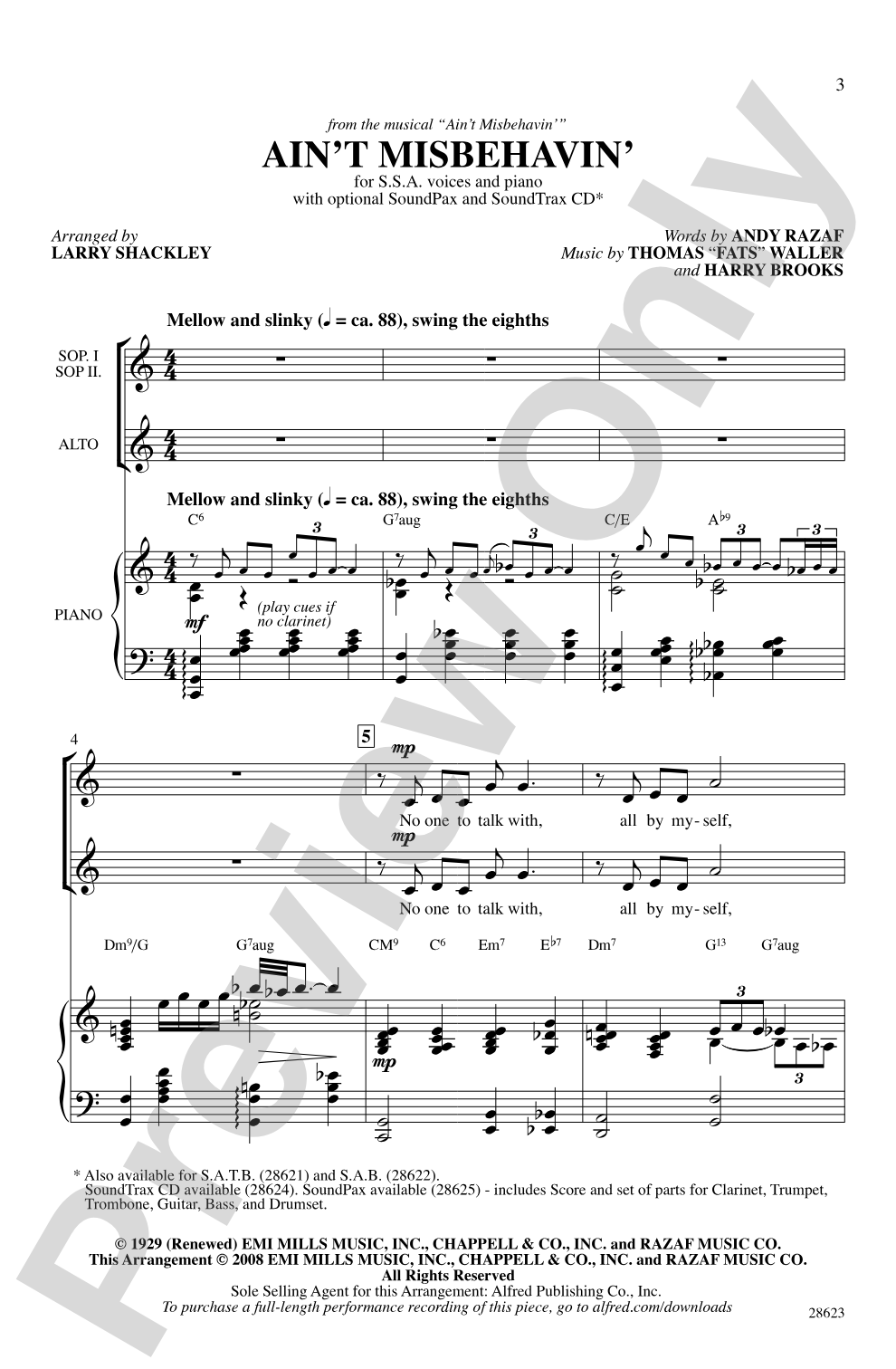
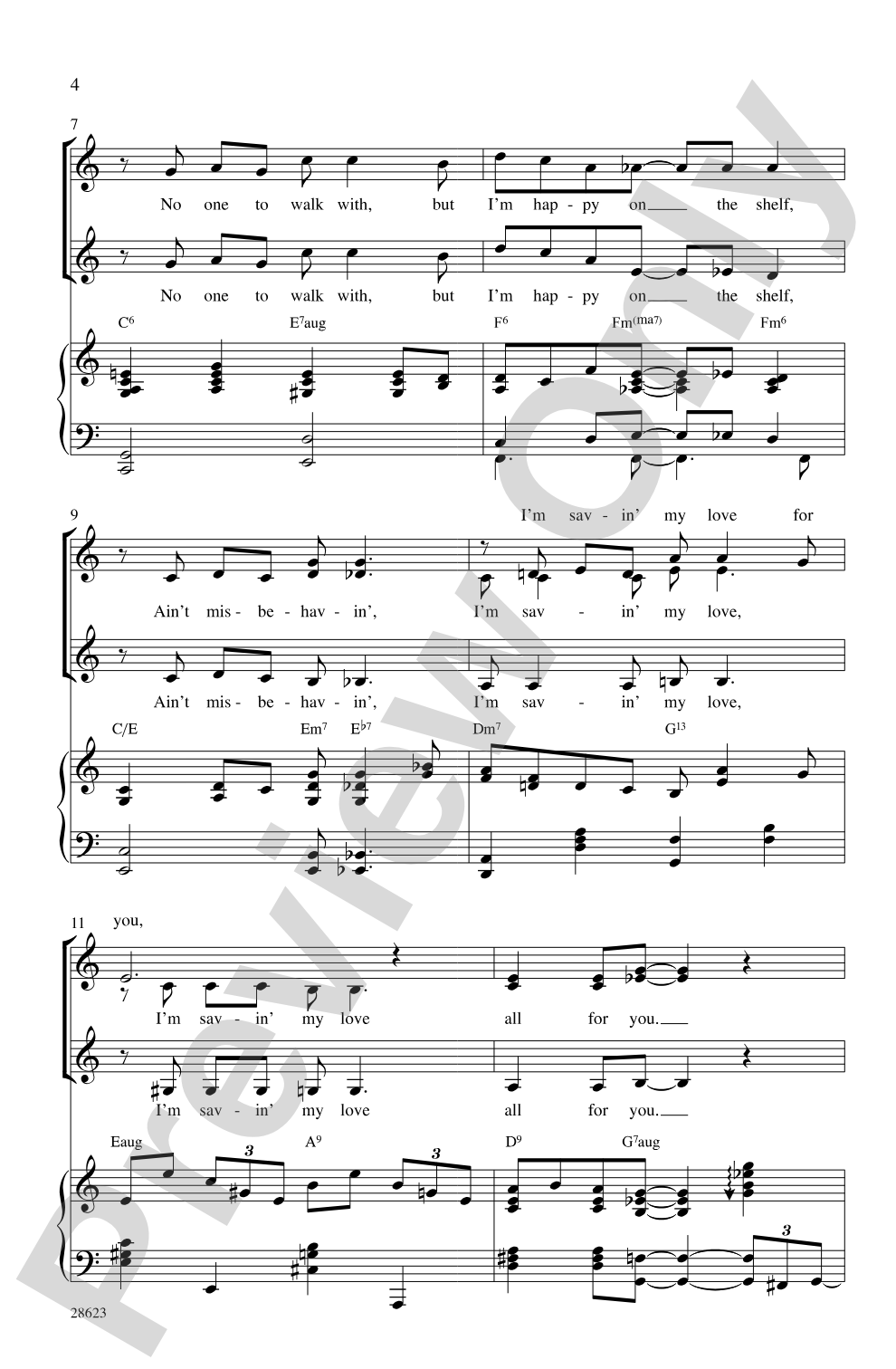

Ain't Misbehavin': SSA Choral Octavo
From the Musical Ain't Misbehavin'
Words by Andy Razaf, music by Thomas "Fats" Waller and Harry Brooks / arr. Larry Shackley
Item: 00-PO-0007705
$2.10
Minimum order quantity: 20 copies
Pickup currently not available
Related Items
Ain't Misbehavin': SAB Choral Octavo |
$2.25
|
View | |
Ain't Misbehavin' (from the musical Ain't Misbehavin'): Choral SoundPax |
$30.00
|
View | |
Ain't Misbehavin': SAB Choral Octavo |
$2.25
|
View | |
Ain't Misbehavin': SSA Choral Octavo |
$2.10
|
View | |
Ain't Misbehavin': Choral Octavo SoundTrax CD |
$27.99
|
View | |
Ain't Misbehavin': Choral SoundPax |
$30.00
|
View |
Description
Here's a jammin' and jivin', red hot, razzmatazz setting of the title song from the musical Ain't Misbehavin', just perfect for show, jazz, or concert choirs.


Discover MakeMusic Cloud: thousands of interactive titles your students can play along with today.
Sample Audio
1
Audio File
--:--
0:00
0:00
Sample Video
No sample videos found.
Additional Details
Series:
Alfred Pop Choral Series
Publisher:
Alfred Music
Page Count:
12
SKU:
00-PO-0007705
More about this title
About the Composer: Thomas "Fats" Waller
Thomas "Fats" Waller (1904, 1943) was a pianist, organist, and composer who shaped the sound of stride piano and early jazz. His gift for melody and rhythmic sophistication made him one of the most recorded artists of the 1920s and 1930s, and his songs remain central to the jazz and popular music repertoire. Waller's compositions balance harmonic complexity with infectious joy, making them enduring vehicles for ensemble musicianship.
Beyond his technical innovations, Waller was a bandleader and entertainer whose personality infused his music with warmth and humor. His collaborative works with lyricist Andy Razaf, including songs for the Broadway musical Ain't Misbehavin', proved that sophisticated composition and popular appeal could coexist. For choral directors, his melodies offer rich material for teaching swung rhythm, jazz phrasing, and the art of stylistic authenticity.
Why we love this
Larry Shackley's arrangement captures the swagger and infectious energy of Waller's original without losing the harmonic sophistication that makes the song work. The SSA voicing opens this jazz standard to treble choirs while the optional instrumental parts let you lean into the groove with rhythm section support, making it equally at home in a spring concert or a jazz showcase.
What to expect
This is pure joy and optimism expressed through stride-piano grooves and tight harmonic sophistication. The arrangement radiates the casual confidence of a performer who knows how to work a room, with the kind of rhythmic bounce that makes singers want to move and audiences want to smile.
Who it's for
Show choirs and jazz ensembles will find an immediate home for this piece, but concert choirs seeking accessible, energetic material with jazz credentials belong here too. Directors developing singers' ability to navigate swing rhythms and jazz harmony will appreciate both the musical authenticity and the pedagogical scaffolding Shackley's arrangement provides.
How to get the most out of it
- Lock the ensemble's entrance together on beat one of the main section; the groove needs clarity before the parts can swing freely.
- Encourage singers to think of each phrase in longer lines rather than note-by-note, letting the jazz harmony breathe naturally.
- Balance the recorded accompaniment so the choir sits just over the rhythm section, not buried beneath it; your singers carry the melody.
- Mark the sections where voices trade or overlap with light rehearsal letters to prevent rhythm ensemble from rushing during handoff moments.
How to use it
Position this in a concert where you want to shift energy and showcase your choir's ability to swing. It pairs beautifully with other Broadway-sourced jazz standards or as a energetic closer to a mixed-repertoire show that opens with more classical material.
Skills your students will build
- Swing rhythm interpretation and triplet feel
- Jazz chord harmony reading (seventh chords, chromatic movement)
- SSA voice leading and part independence
- Coordination with rhythm section and recorded accompaniment
- Phrasing and legit singing in jazz contexts