
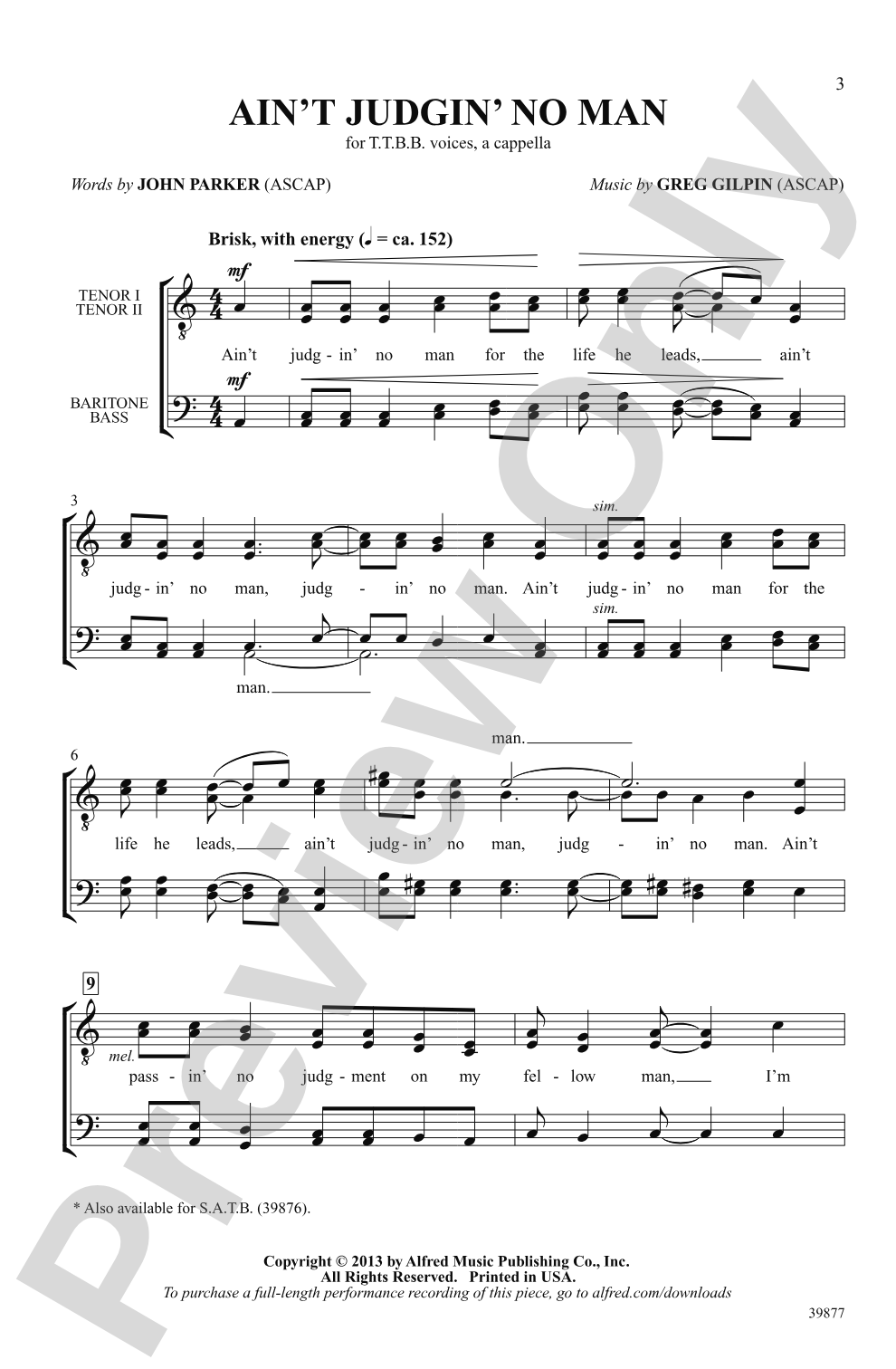
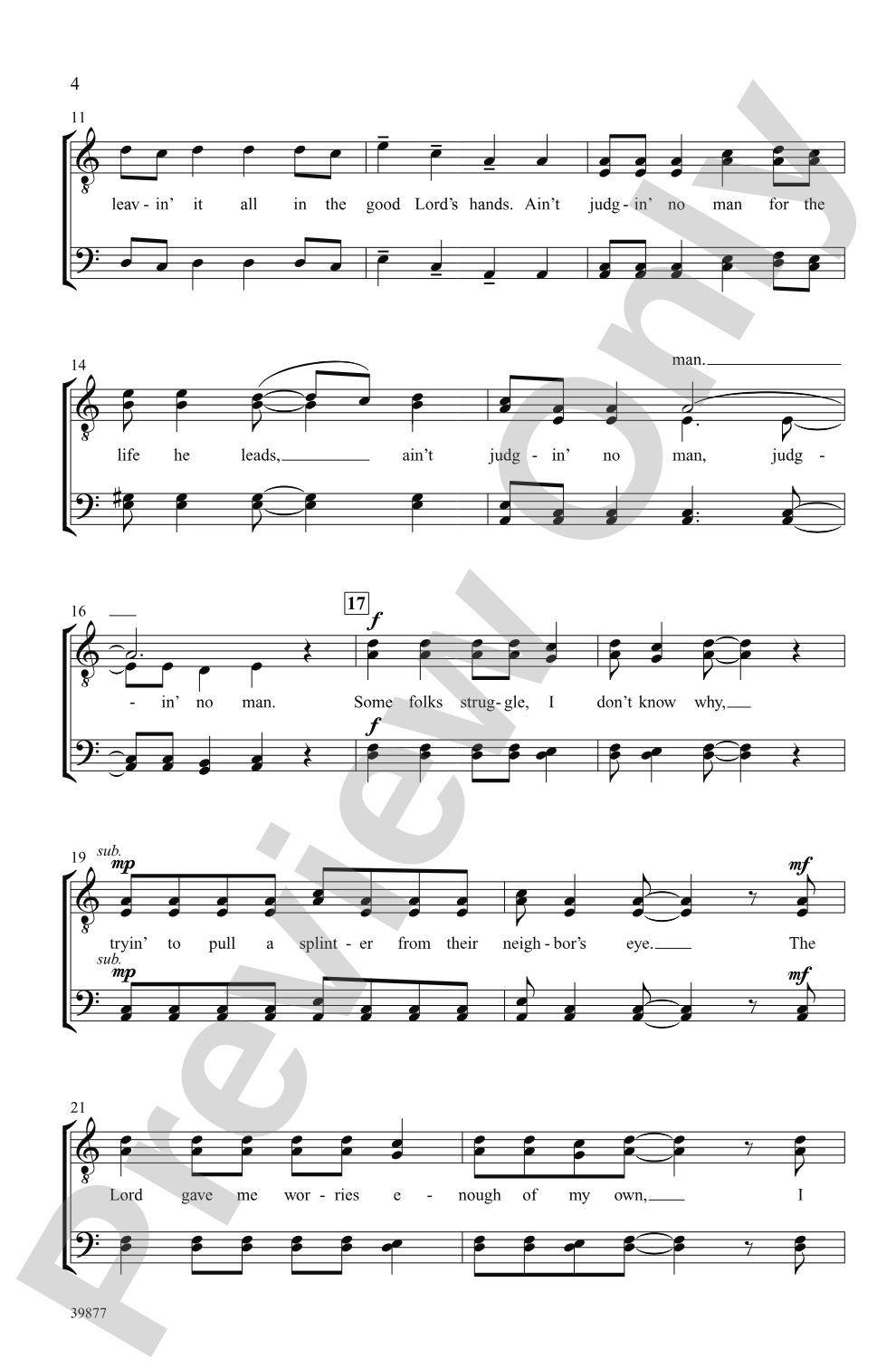

Ain't Judgin' No Man: TTBB, a cappella Choral Octavo
Words by John Parker, music by Greg Gilpin
Item: 00-PO-0001676
$1.85
Minimum order quantity: 20 copies
Pickup currently not available
Description
Cut from the same cloth as the great traditional spirituals, this riveting original boasts unwavering rhythmic intensity, gripping minor key sonorities, and a tenacious, meaningful text. Presented in a musical form that builds and builds to the big finish!


Ain't Judgin' No Man: TTBB, a cappella Choral Octavo isn't in MakeMusic Cloud just yet...but it could be. Let us know you'd like to see it, and you'll help shape what comes next. In the meantime, start a free trial and dive into thousands of interactive titles your students can play along with today.
Request This Title
Tell us you want it.
Start Your Free Trial
Explore everything that's ready to play right now.
Sample Audio
1
Audio File
--:--
0:00
0:00
Sample Video
No sample videos found.
Additional Details
Series:
Alfred Choral Designs
Publisher:
Alfred Music
Page Count:
12
SKU:
00-PO-0001676
More about this title
About the Composer: Greg Gilpin

Greg Gilpin stands among today's most performed choral composers, with his works heard regularly in concert halls across North America and beyond. His conducting experience spans prestigious venues including Carnegie Hall, Lincoln Center, the Sydney Opera House, and Royal Festival Hall, while his role as Director of Educational Choral Publications at Shawnee Press has shaped the landscape of accessible, meaningful choral literature. An ASCAP award winner and active member of ACDA, he brings both compositional craft and deep understanding of what works in the rehearsal room.
Beyond music, Gilpin has pursued parallel careers as a recording industry producer and, since 2020, as a certified financial coach and professional organizer. His film scoring work earned him a Best Score award for the short film "Rosie's Rescue," and he has collaborated with renowned artists including soprano Angela Brown on concert arrangements. His memberships in SAG-AFTRA, NAfME, and Phi Mu Alpha Sinfonia reflect his wide engagement across the entertainment and education sectors.
Why we love this
Gilpin writes with the spiritual tradition's authenticity while bringing fresh compositional energy. The cumulative power of this piece makes it a natural closer for a concert or festival set, and the a cappella format demands focused blend and rhythmic precision that pays dividends across your entire choir's musicianship.
What to expect
Built on the harmonic and emotional foundation of traditional spirituals, this original work carries the weight of its ancestors while charting its own path. The relentless rhythmic drive and minor key intensity create an immersive, grounded sound that builds toward a climax of unmistakable power.
Who it's for
This is essential repertoire for tenor and bass voices seeking substantial a cappella literature with real musical substance. Directors programming festival sets, concert finales, or sacred concerts will find a powerful vehicle that challenges and showcases male voices in equal measure.
How to get the most out of it
- Shape the building intensity carefully. Resist the urge to rush as the piece gains momentum; let the rhythm speak through steady, locked ensemble pulse rather than accelerating tempo.
- Pay particular attention to the minor key sonorities and their harmonic color. Balance chord tone emphasis so the minor inflections land with clear intention, not murkiness.
- Craft distinct dynamic contrast between sections to support the structural build. The progression from verse to finish should feel inevitable, not abrupt.
- Communicate the spiritual text with conviction throughout. This piece demands singers who understand and own the message; authenticity in delivery transforms the final payoff.
How to use it
The piece's architecture makes it ideal as a concert finale or a high-impact entry in a festival performance, where the cumulative dramatic arc will resonate with both singers and audience. It also serves the sacred concert well, bringing new compositional voice to spiritual tradition while maintaining the genre's spiritual authenticity.
Skills your students will build
- Sustaining rhythmic intensity across a cappella ensemble without accompaniment
- Blending minor key sonorities and understanding harmonic function in close harmony
- Building dynamic shape and structural momentum through strategic sectional contrast
- Interpreting text-driven sacred music with conviction and emotional ownership
- Balancing part independence in four-part male voicing while maintaining unified ensemble sound