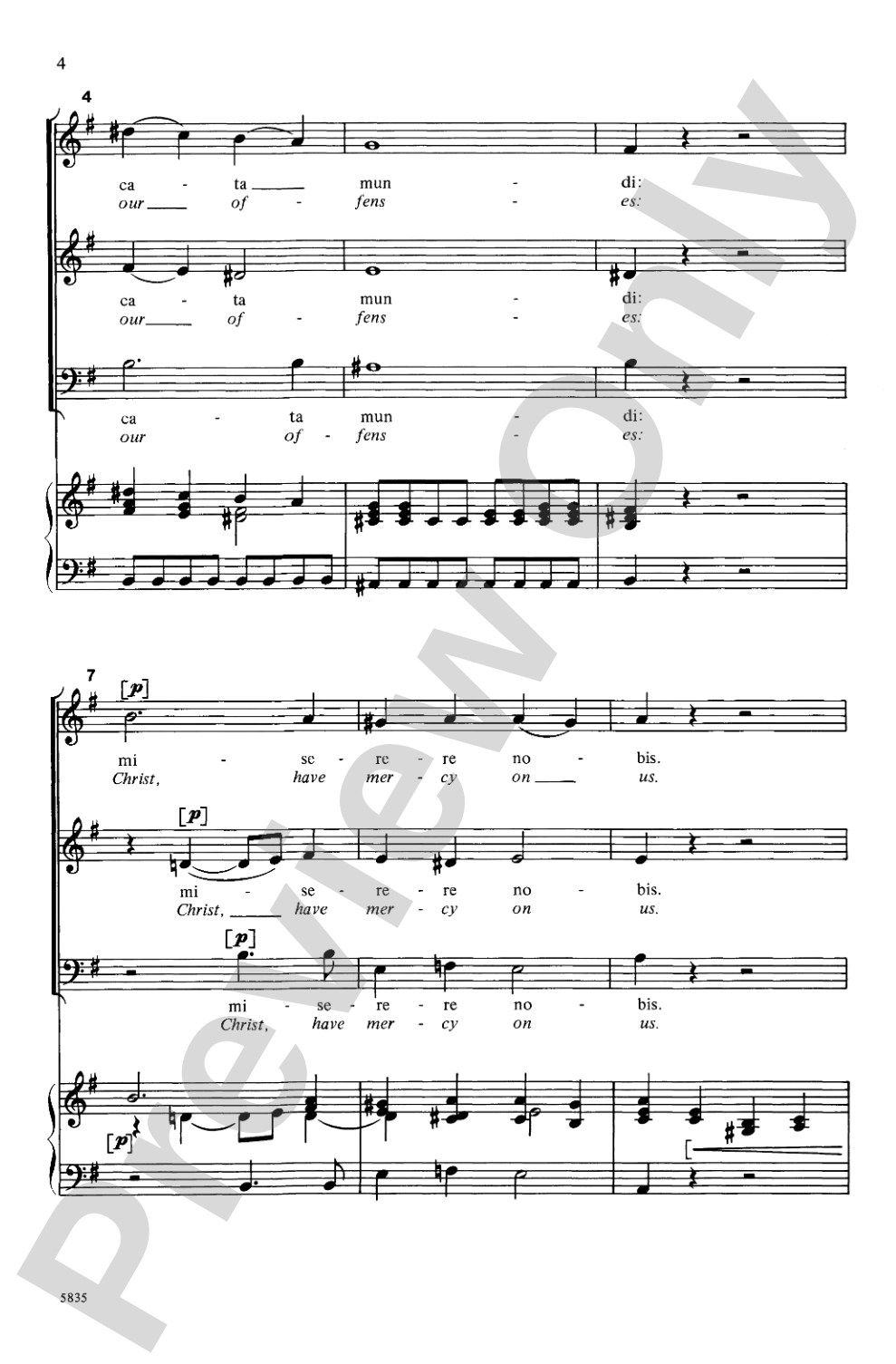
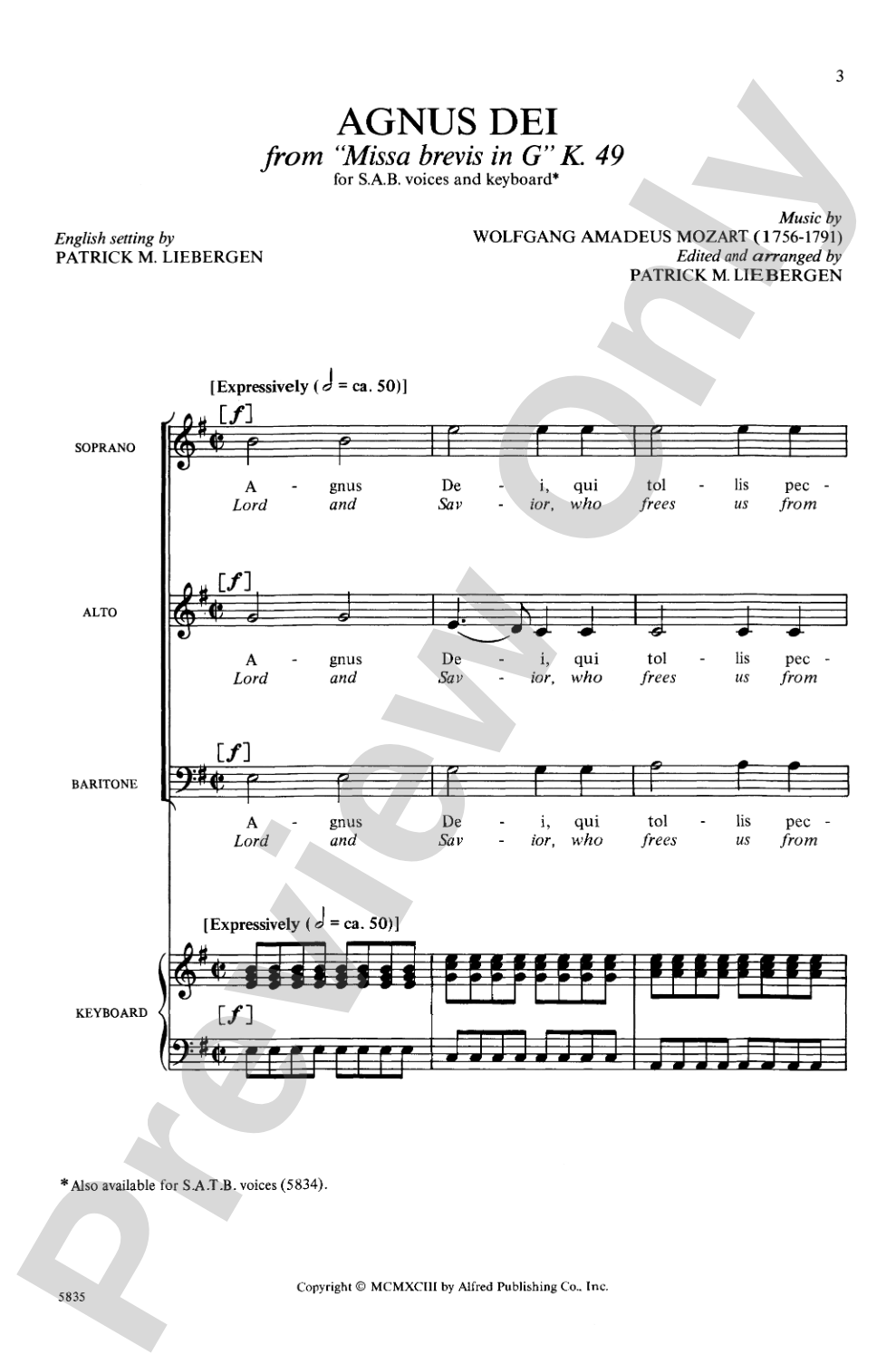
Agnus Dei (from <i>Missa Brevis in G</i>) Sheet Music Preview

Agnus Dei (from Missa Brevis in G): SAB Choral Octavo

From Missa Brevis in G

Music by Wolfgang Amadeus Mozart / arr. Patrick M. Liebergen

Item: 00-PO-0004503

Digital Download
$2.25

Minimum order quantity: 20 copies

Description
This publication provides the Agnus Dei movement found in Mozart's "Missa brevis in G," K.49. In Mozart's time, a Missa brevis (brief Mass) was quite concise and few instruments were employed, since it was composed for use in the main worship service of the Catholic Church. Mozart originally scored the Agnus Dei of this Mass for S.A.T.B. voices with an accompaniment of strings and continuo.

Agnus Dei (from Missa Brevis in G): SAB Choral Octavo isn't in MakeMusic Cloud just yet...but it could be. Let us know you'd like to see it, and you'll help shape what comes next. In the meantime, start a free trial and dive into thousands of interactive titles your students can play along with today.

Sample Audio
No sample audio found.
Sample Video
Additional Details
Series: Alfred Archive Edition: Alfred Choral Designs
Publisher: Alfred Music
Page Count: 12
SKU: 00-PO-0004503

More about this title

About the Composer: Wolfgang Amadeus Mozart

Wolfgang Amadeus Mozart (1756-1791) composed across every major genre of his era, from opera to symphony to sacred music, often while still in his teens. His sacred works reveal the same elegant clarity and emotional directness that distinguish his instrumental music; he wrote masses, requiems, and motets throughout his career, adapting his style to the liturgical contexts and performance circumstances of the churches where they would be sung.

Why we love this

A Missa brevis offers singers the chance to engage with a Mozart masterwork without the time commitment of a full Latin Mass. This SAB arrangement opens the piece to ensembles that might otherwise lack the SATB range, and the Agnus Dei's gentle, intimate character rewards careful attention to line and balance.

What to expect

The Agnus Dei unfolds with serene confidence, its clean harmonic language and spare orchestration creating an atmosphere of quiet devotion. Mozart's melody flows naturally across the registers, supported by restful chord progressions that feel inevitable rather than ornate.

Who it's for

Treble-dominant or mixed choirs seeking repertoire that connects to the classical canon without requiring a full four-part ensemble. This arrangement works well for high school or early college singers building confidence with masterwork literature.

How to get the most out of it

  • Shape the opening phrases with a subtle lean toward the downbeats; Mozart's eight-note melodies need breathing room, not breathless phrasing.
  • Balance the alto and bass lines equally with the soprano melody. In three-part writing, each voice carries structural weight, and the harmony depends on clarity from below.
  • Let the text "dona nobis pacem" unfold naturally without dramatic emphasis. Restraint and transparency suit the prayer's intimate tone better than projection.
  • Attend to the harmonic movement and allow longer notes to resonate fully, especially at cadential moments where the voice leading becomes most exposed.

How to use it

Pair this with a longer choral work to create a sacred concert segment, or use it as a festival entry where concise, polished performances are valued. The piece's twelve-page length makes it practical for programming alongside contemporary works or other classical movements.

Skills your students will build

  • Balancing three independent vocal lines with equal presence
  • Singing text declamation in Latin with clear vowels and natural phrasing
  • Reading classical harmonic progressions and understanding voice leading
  • Sustaining long tones with consistent tone quality and breath control
  • Maintaining pure vowels across a range of pitches without tension

You May Also Like