
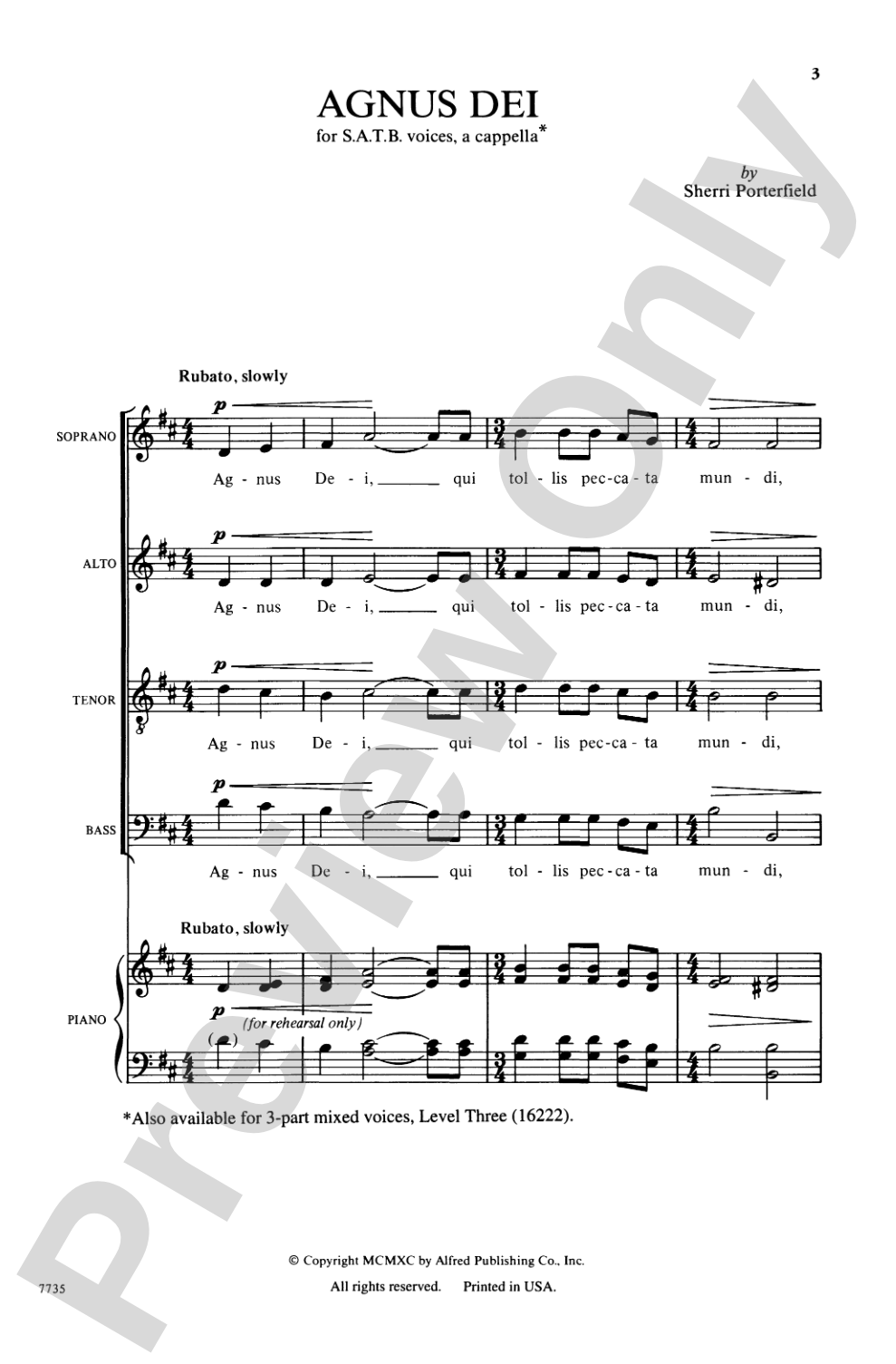

Agnus Dei: SATB, a cappella Choral Octavo
Music by Sherri Porterfield
Item: 00-PO-0004570
$2.25
Minimum order quantity: 20 copies
Pickup currently not available
Description
Breathtaking! This gorgeous setting of the Agnus Dei text begins with piano and gradually crescendos to a mezzo forte before ending in a pure, hushed final major chord. Easy to teach, this ABA-form piece will show off your choir in concerts, festivals and adjudications. It's a winner! This title is available in MakeMusic Cloud.


Agnus Dei: SATB, a cappella Choral Octavo isn't in MakeMusic Cloud just yet...but it could be. Let us know you'd like to see it, and you'll help shape what comes next. In the meantime, start a free trial and dive into thousands of interactive titles your students can play along with today.
Request This Title
Tell us you want it.
Start Your Free Trial
Explore everything that's ready to play right now.
Sample Audio
1
Audio File
--:--
0:00
0:00
Sample Video
No sample videos found.
Additional Details
Series:
Alfred Archive Edition: Alfred Choral Designs
Publisher:
Alfred Music
Page Count:
8
SKU:
00-PO-0004570
More about this title
About the Composer: Sherri Porterfield
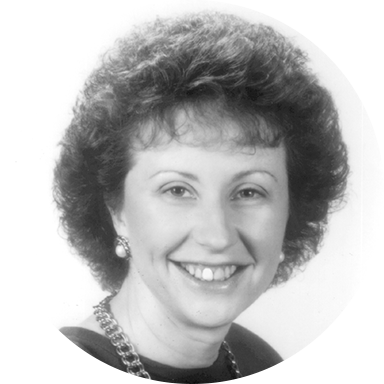
Sherri Porterfield directs choirs at Cedar Park Middle School in Cedar Park, Texas, and has built a distinguished career across Missouri, Kansas, and Texas. Her ensembles have earned numerous first-place and sweepstakes awards at competitions and performed at state music educators conventions. She has also served as an adjunct assistant professor of music education at the University of Missouri-Kansas City Conservatory of Music and worked as a clinician and guest conductor with honor choirs throughout the United States.
With more than 175 choral compositions in print, Porterfield has been recognized annually by ASCAP since 1997 for her contributions to choral music. Her work appears in catalogs from Alfred Music Publishing and other major publishers. A graduate of the University of Memphis (B.S.E. in music education) and the University of Missouri-Kansas City (Master of Music in choral conducting), she holds membership in the Texas Music Educators Association, Texas Choral Directors Association, American Choral Directors Association, and Pi Kappa Lambda national music honor society.
Why we love this
Porterfield's setting captures the reflective weight of the Agnus Dei text while remaining technically accessible for developing choirs. The ABA architecture gives singers a clear roadmap, and the dynamic arc from piano to mezzo forte to a final hushed major chord creates memorable liturgical moment that adjudicators and audience members consistently respond to at festivals and competitions.
What to expect
The opening unfolds with quiet introspection, a moment of prayer rendered in pure vocal harmony. As the piece builds, voices layer and intensify, creating an emotional swell that crests before returning to intimate stillness. That final major chord resolves with unexpected brightness, offering both closure and transcendence.
Who it's for
This piece works beautifully for intermediate to advanced SATB choirs preparing for concert programs, festivals, or adjudication rounds. Directors seeking repertoire that balances technical accessibility with emotional depth will find this setting rewarding to teach and perform with singers at the middle school through early high school level.
How to get the most out of it
- Shape the opening piano section with care; even though voices are silent, the acoustic foundation you establish determines how the entrance will land.
- Build the crescendo toward mezzo forte deliberately across the middle section, resisting the urge to jump dynamics too quickly early on.
- Return to the final hushed moment with intentional restraint; this major chord resolution should feel earned and contemplative rather than merely soft.
- Use the final fermata to let the harmonic resonance settle completely before releasing; resist cutting off too quickly.
How to use it
Program this as an anchor piece for a sacred or liturgical concert set, or use it to close a mixed program with something spiritually grounded and accessible. Its elegant brevity and emotional clarity also make it an excellent choice for festival competition, where its distinctive architecture and musical maturity will stand out among conventional entries.
Skills your students will build
- Singing a cappella with intonation control across four-part harmony
- Interpreting dynamic and textural shifts (piano opening to mezzo forte to pianissimo)
- Sustaining long phrases and managing breath across major melodic arcs
- Balancing blend and balance in ABA form structures
- Understanding and performing liturgical text with appropriate reverence and musicality