

Agnus Dei: 3-Part Mixed, a cappella Choral Octavo
Music by Sherri Porterfield
Item: 00-PO-0003936
$2.25
Minimum order quantity: 20 copies
Pickup currently not available
Description
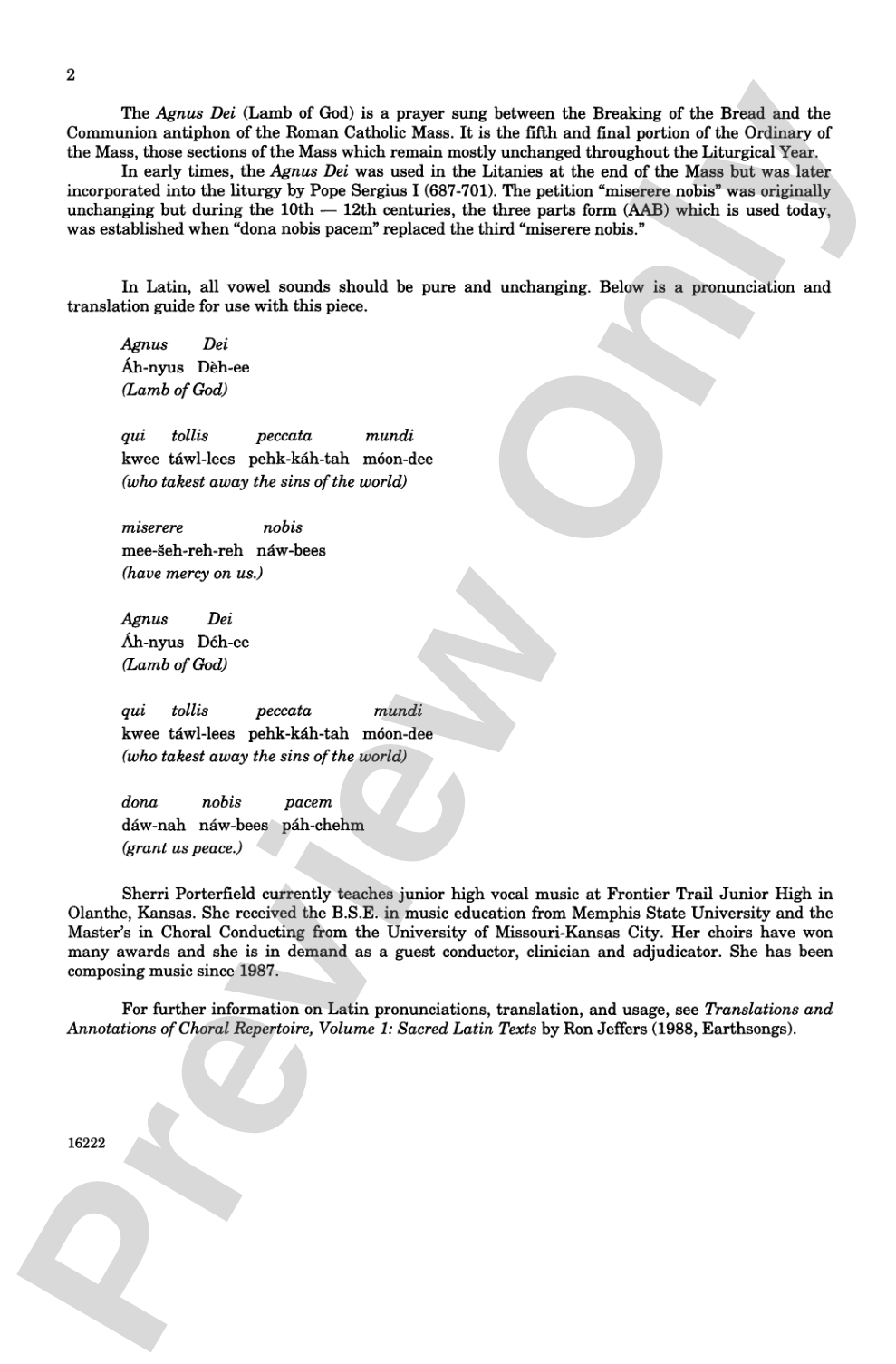
Breathtaking! This gorgeous setting of the Agnus Dei text begins with piano and gradually crescendos to a mezzo forte before ending in a pure, hushed final major chord. Easy to teach, this ABA-form piece will show off your choir in concerts, festivals and adjudications. It's a winner!


Agnus Dei: 3-Part Mixed, a cappella Choral Octavo isn't in MakeMusic Cloud just yet...but it could be. Let us know you'd like to see it, and you'll help shape what comes next. In the meantime, start a free trial and dive into thousands of interactive titles your students can play along with today.
Request This Title
Tell us you want it.
Start Your Free Trial
Explore everything that's ready to play right now.
Sample Audio
1
Audio File
--:--
0:00
0:00
Sample Video
No sample videos found.
Additional Details
Series:
Alfred Archive Edition: Alfred Choral Designs
Publisher:
Alfred Music
Page Count:
8
SKU:
00-PO-0003936
More about this title
About the Composer: Sherri Porterfield

Sherri Porterfield directs choirs at Cedar Park Middle School in Cedar Park, Texas, and has previously taught in Missouri and Kansas. Her choirs have earned numerous first place and sweepstakes awards at competitions and have been invited to perform at state music educators conventions. She has served as an adjunct assistant professor of music education at the University of Missouri-Kansas City Conservatory of Music and maintains an active career as a composer with over 175 choral compositions published through Alfred Music and other major publishers.
Since 1997, Porterfield has received annual ASCAP awards recognizing her contributions to choral music. She holds a B.S.E. in music education from the University of Memphis and a Master of Music in choral conducting from the University of Missouri-Kansas City. Throughout her career, she has worked as a clinician and guest conductor with honor choirs across the United States, and has been recognized four times in Who's Who Among America's Teachers as well as in multiple national directories of accomplished educators.
Why we love this
The ABA structure provides clear formal anchoring while the dynamic arc from piano opening through mezzo forte climax to a hushed final chord creates genuine emotional shape. This piece showcases how elegant writing for three parts requires no instrumental support yet sounds complete, making it ideal when your singers need to stand alone confidently.
What to expect
The piece opens in intimate prayer and gradually builds emotional presence through carefully layered harmony before resolving into a moment of transcendent stillness. The final major chord feels like light breaking through after contemplation, leaving listeners with a sense of peaceful completion.
Who it's for
Middle and high school choirs looking for a sacred piece that sounds polished without requiring excessive rehearsal time. The three-part mixed voicing accommodates changing voices while remaining singable for developed ensembles, and the accessible range makes it suitable for groups new to a cappella singing.
How to get the most out of it
- Shape the opening carefully so the piano entrance (where voices enter) feels like a natural emergence rather than an interruption; the contrast depends on clear distinction between pure quiet and supported sound.
- Manage the crescendo as a unified gesture across all three parts; SAB voicing means your altos carry considerable weight in the middle, so ensure they feel the swell equally with sopranos and baritones.
- Protect the final major chord by arriving at it with clear intention and allowing it to ring without pulling back; let the hushed quality come from the beauty of the tuning, not from lack of support.
- Rehearse the return to the A section with attention to how it differs from the initial statement; even subtle interpretive shifts will register more strongly in a cappella writing.
How to use it
This works beautifully as an opening sacred work on a concert program, setting a reverent tone before more energetic repertoire. It also shines at festivals and adjudications where its polished ABA form and clean choral writing communicate musical maturity, and the brief length (8 pages) makes it practical to pair with contrasting works on the same program.
Skills your students will build
- Singing a cappella with secure intonation in three parts
- Shaping long phrase lines with dynamic control and breath placement
- Balancing vocal weights across SAB voicing
- Performing text with reverence and attention to word-painting
- Responding to formal structure (ABA form) as a guide for interpretation