

Agnus Dei: SATB Choral Octavo
By John Leavitt
Item: 00-PO-0001349
$1.80
Minimum order quantity: 20 copies
Pickup currently not available
Related Items
Agnus Dei: SoundTrax Digital Audio Download |
$26.99
|
View | |
Agnus Dei: SAB Choral Octavo |
$1.80
|
View | |
Agnus Dei: SSA Choral Octavo |
$1.80
|
View | |
Agnus Dei: TTB Choral Octavo |
$1.80
|
View | |
Agnus Dei: 2-Part Choral Octavo |
$1.80
|
View | |
Agnus Dei: Choral SoundPax |
$40.00
|
View | |
Agnus Dei: SATB Choral Octavo |
$2.25
|
View | |
Agnus Dei: SATB Choral Octavo |
$1.80
|
View | |
Agnus Dei: SAB Choral Octavo |
$1.80
|
View | |
Agnus Dei: SSA Choral Octavo |
$1.80
|
View | |
Agnus Dei: TTB Choral Octavo |
$1.80
|
View | |
Agnus Dei: 2-Part Choral Octavo |
$1.80
|
View | |
Agnus Dei: Choral Octavo SoundTrax CD |
$26.99
|
View | |
Agnus Dei: Choral SoundPax |
$40.00
|
View |
Description
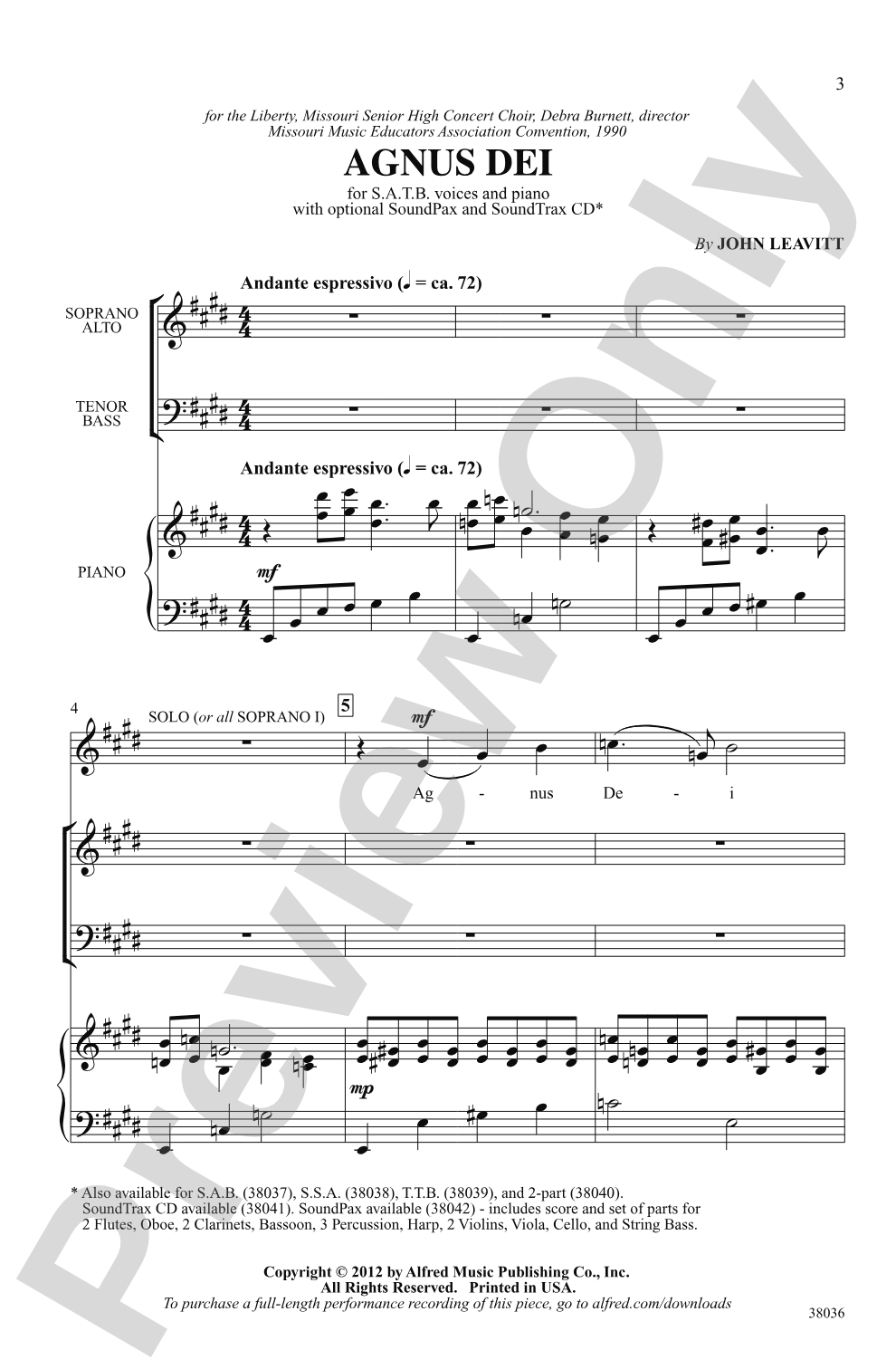
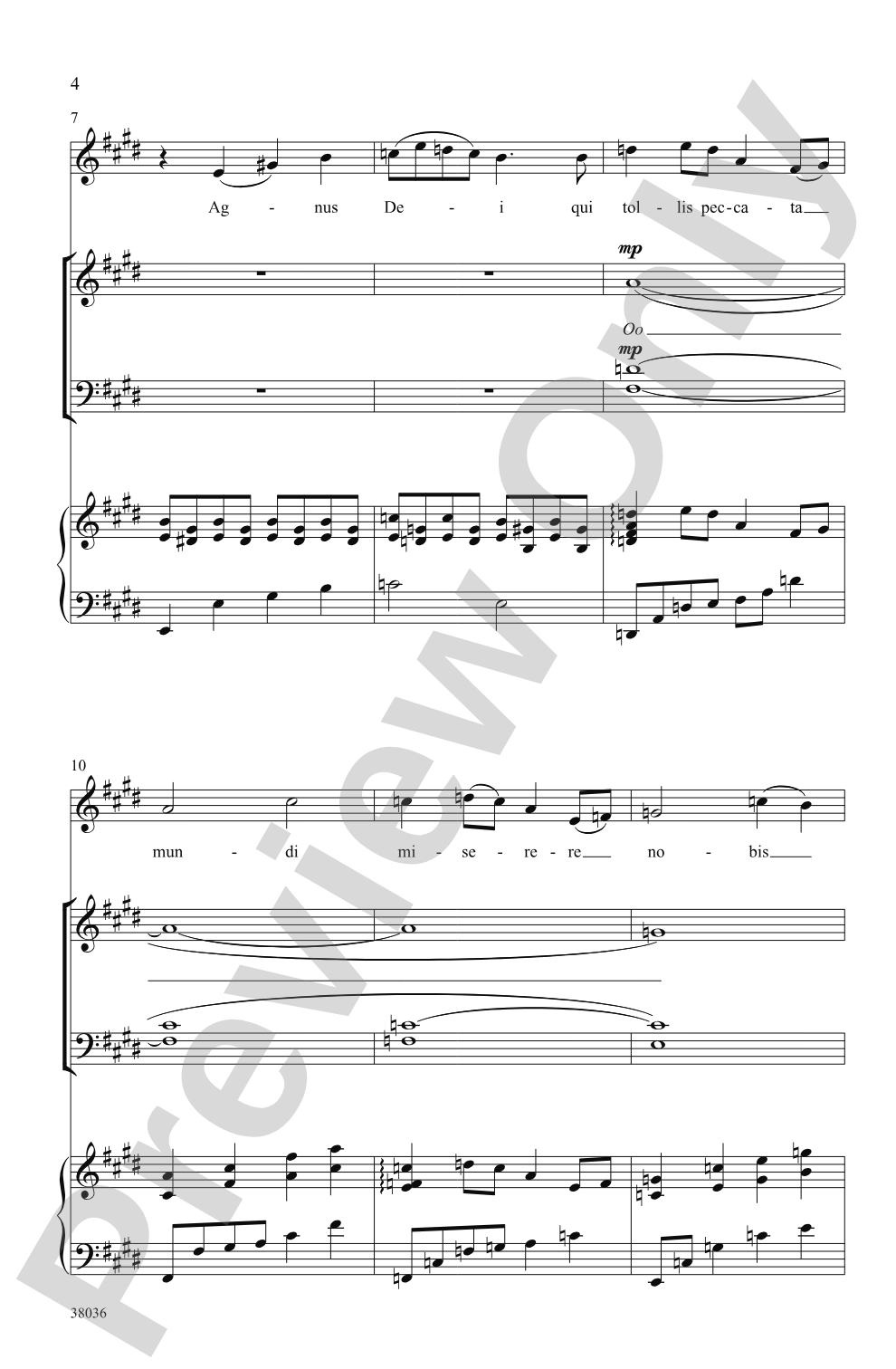
This, the stirring final movement from John Leavitt's world-famous Missa Festiva, is presented in newly engraved octavos, available for all choirs. A superb new chamber orchestration enhances the musical texture and color of this captivating modal work.


Agnus Dei: SATB Choral Octavo isn't in MakeMusic Cloud just yet...but it could be. Let us know you'd like to see it, and you'll help shape what comes next. In the meantime, start a free trial and dive into thousands of interactive titles your students can play along with today.
Request This Title
Tell us you want it.
Start Your Free Trial
Explore everything that's ready to play right now.
Sample Audio
1
Audio File
--:--
0:00
0:00
Sample Video
No sample videos found.
Additional Details
Series:
Alfred Choral Designs
Publisher:
Alfred Music
Page Count:
8
SKU:
00-PO-0001349
More about this title
About the Composer: John Leavitt
John Leavitt stands among the most performed choral composers in America, with a catalog spanning sacred anthems, secular part songs, and large-scale works for choir and orchestra. His music combines accessible melodic writing with sophisticated harmonic language, making it equally at home in collegiate choirs, church services, and community concert halls. Leavitt's prolific output and keen understanding of choral sonority have earned him a central place in contemporary American choral repertoire.
Beyond composition, Leavitt has shaped choral music through his work as an arranger and editor, bringing refined musical vision to both original works and adaptations. His pieces are known for their modal and contemporary harmonic vocabulary, which challenges singers while remaining musically rewarding. Directors return to Leavitt's writing again and again because his music captures emotional depth without sacrificing singability.
Why we love this
Extracting the final movement from Leavitt's Missa Festiva into a standalone octavo gives choirs immediate access to one of his most luminous and contemplative works. The newly engraved presentation is clean and conductor-friendly, while the optional chamber orchestration lifts the piece beyond the a cappella norm without overwhelming the voices. This is a thoughtful choice for any program seeking a moment of genuine spiritual reflection.
What to expect
The Agnus Dei unfolds with quiet intensity, its modal harmonic landscape creating an almost timeless quality that feels both modern and ancient. The piece invites listeners into a space of contemplation, where each voice part contributes to a luminous whole. Singers experience the meditative quality that comes from sustained harmonies and carefully paced text setting.
Who it's for
Choirs of intermediate to advanced capability will find this movement both musically satisfying and technically achievable. Sacred music programs, church choirs aiming for repertoire beyond hymn-based anthems, and concert choirs seeking contemporary American choral literature will all benefit from adding this to their libraries.
How to get the most out of it
- Balance the modal harmonies by bringing out inner voices; the beauty of Leavitt's writing lies in the interplay of all four parts, not just the sopranos.
- Shape each phrase with gentle dynamic contours rather than sitting at one dynamic level; the text deserves moment-to-moment attention.
- If using the chamber orchestration, rehearse the ensemble parts early so singers can hear how the instruments support and enhance their lines.
- Attend to diction on repeated text; Leavitt's modal harmony can obscure clarity if consonants aren't crisp and unified.
How to use it
This octavo works beautifully as the concluding work on a sacred or ecumenical concert, offering a moment of collective stillness after more energetic pieces. It pairs naturally with other contemporary American choral works or with liturgical settings from earlier traditions. Consider it for spring concert programs, worship services, or any venue where a reverent finish will leave a lasting impression.
Skills your students will build
- Singing modal harmony with intonation clarity
- Balancing ensemble sonority across all four voice parts
- Sustaining legit tone in a slow, contemplative tempo
- Coordination with instrumental accompaniment (if using chamber orchestration)
- Expressive phrasing and text interpretation in sacred context