
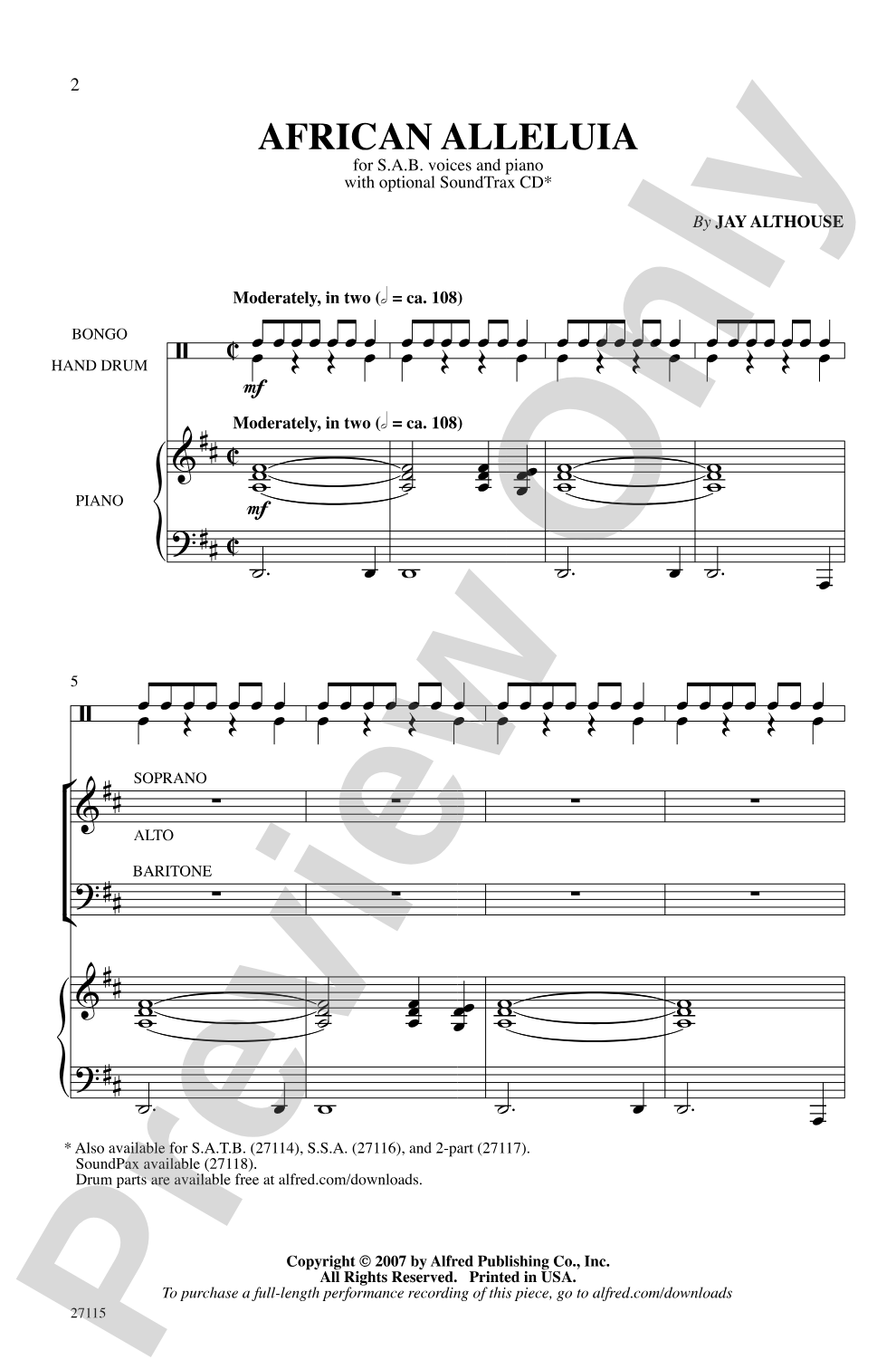

African Alleluia: SAB Choral Octavo
By Jay Althouse
Item: 00-PO-0000305
$2.20
Minimum order quantity: 20 copies
Pickup currently not available
Related Items
African Alleluia: SoundTrax Digital Audio Download |
$27.99
|
View | |
African Alleluia: SATB Choral Octavo |
$2.20
|
View | |
African Alleluia: SSA Choral Octavo |
$2.20
|
View | |
African Alleluia: 2-Part Choral Octavo |
$2.20
|
View | |
African Alleluia: SATB Choral Octavo |
$2.20
|
View | |
African Alleluia: SAB Choral Octavo |
$2.20
|
View | |
African Alleluia: SSA Choral Octavo |
$2.20
|
View | |
African Alleluia: 2-Part Choral Octavo |
$2.20
|
View | |
African Alleluia: Choral Octavo SoundTrax CD |
$27.99
|
View |
Description
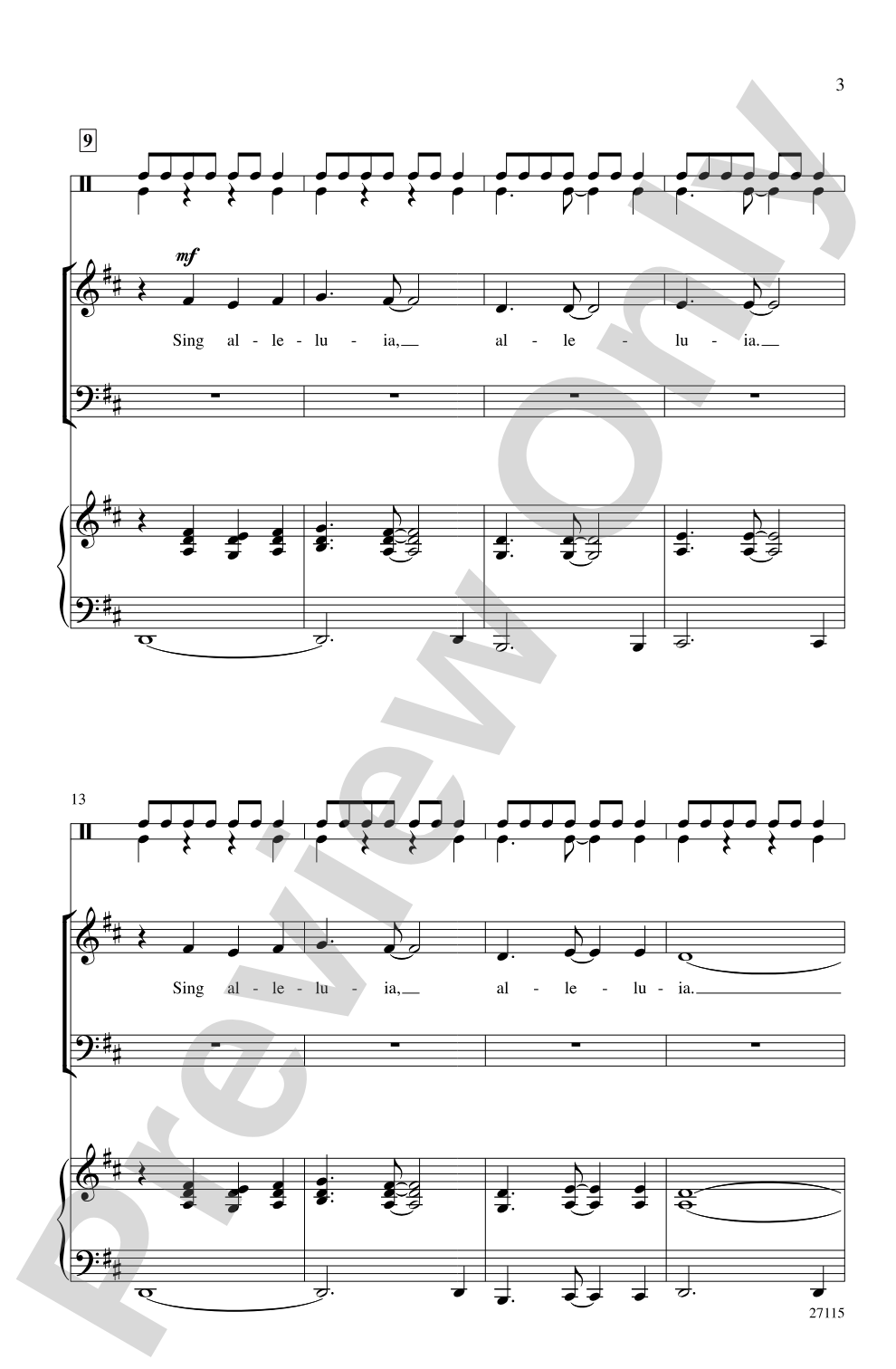
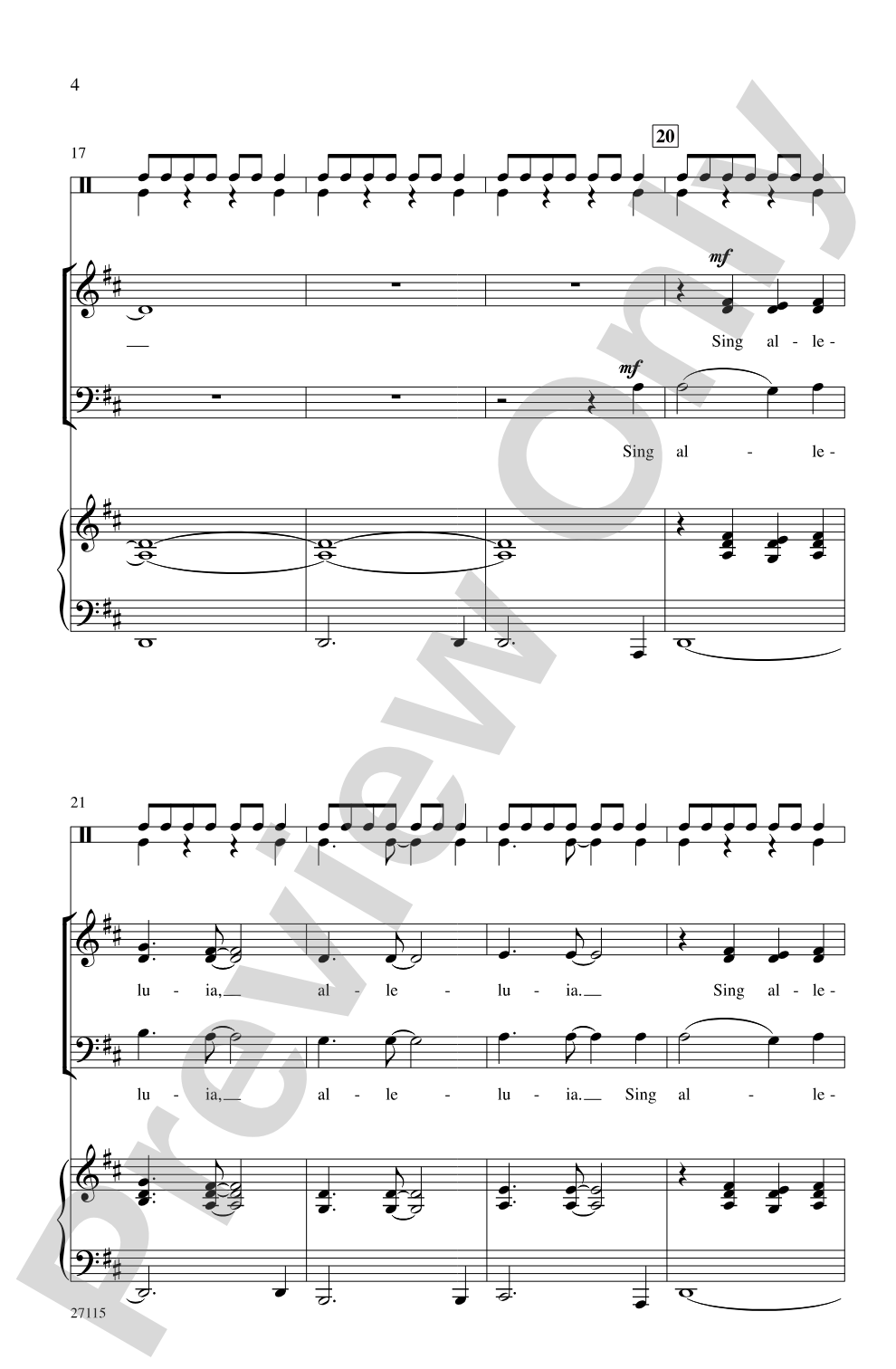
Bongo and hand drum accompaniment highlight this African-styled work filled with rhythmic intensity. The simple "alleluia" text allows the melodic and rhythmic lines to take center stage. An add-on section makes it an exciting piece, building to a powerful finish.


African Alleluia: SAB Choral Octavo isn't in MakeMusic Cloud just yet...but it could be. Let us know you'd like to see it, and you'll help shape what comes next. In the meantime, start a free trial and dive into thousands of interactive titles your students can play along with today.
Request This Title
Tell us you want it.
Start Your Free Trial
Explore everything that's ready to play right now.
Sample Audio
1
Audio File
--:--
0:00
0:00
Sample Video
No sample videos found.
Additional Details
Series:
Alfred Choral Designs
Publisher:
Alfred Music
Page Count:
16
SKU:
00-PO-0000305
Instrumentation:
Opt. Percussion
More about this title
About the Composer: Jay Althouse

Jay Althouse studied music education and music at Indiana University of Pennsylvania, where he later received the Distinguished Alumni award. His career spans both the publishing side of music education and prolific composition; he spent eight years in rights and licensing administration at a major educational publisher and served on the Executive Board of the Music Publishers Association of America. His compositions have earned him consistent recognition, including multiple ASCAP Special Awards.
With more than 800 choral works in print, Althouse has become a fixture in music programs across the English-speaking world. Beyond his individual compositions, he has co-written children's musicals with his wife Sally K. Albrecht, compiled respected vocal solo collections, and authored several classroom resources including The Complete Choral Warm-up Book, Accent on Composers, and Ready to Read Music. His work I Hear America Singing, co-written with Albrecht, was performed by the San Francisco Girls and Boys Choirs at President Obama's 2009 Inauguration.
Why we love this
Althouse crafts a piece that lets rhythm and melody drive the narrative without the weight of complex text. The SAB voicing keeps accessibility high while the percussion parts create genuine musical texture, not mere ornamentation. Programs seeking a concert closer that energizes both singers and audience without demanding extensive rehearsal will find this delivers.
What to expect
The driving bongo and hand drum patterns create momentum from the opening, pulling singers into a rhythmic landscape that feels both grounded and celebratory. The repeated alleluia text functions almost as an instrument itself, allowing the melodic line and percussion interplay to emerge as the real musical conversation.
Who it's for
Directors programming SAB choirs who want a piece with contemporary energy and authentic percussion color. This works equally well for middle school honor choirs, high school developing ensembles, and community groups seeking material that sounds substantial without excessive technical demands.
How to get the most out of it
- Strike a balance between the hand drum patterns and choral pulse; the percussion should propel the ensemble rather than compete with it.
- The add-on section's building intensity depends on controlled dynamics in the earlier sections. Reserve your full dynamic range for the final push.
- Establish the rhythmic feel in rehearsal before layering in the optional percussion parts. Let singers own the groove first.
- Recorded accompaniment provides harmonic and rhythmic security; use it selectively during early rehearsals, then gradually phase it out as confidence grows.
How to use it
Place this in a concert's second half where you need an energy shift and a moment of celebration. It pairs well alongside other world music repertoire or creates a striking contrast when programmed between more introspective pieces. The compact performance time makes it valuable for festival settings where slots are tight.
Skills your students will build
- Maintaining rhythmic independence while singing against syncopated percussion
- Shaping phrases with limited text through melodic contour and dynamic control
- Responding to non-traditional accompaniment textures and world music idioms
- Building ensemble cohesion in a piece driven by groove rather than harmonic complexity