

Adoramus Te: 2-Part / SSA Choral Octavo
By Andy Beck
Item: 00-PO-0005955
$2.05
Minimum order quantity: 20 copies
Pickup currently not available
Description
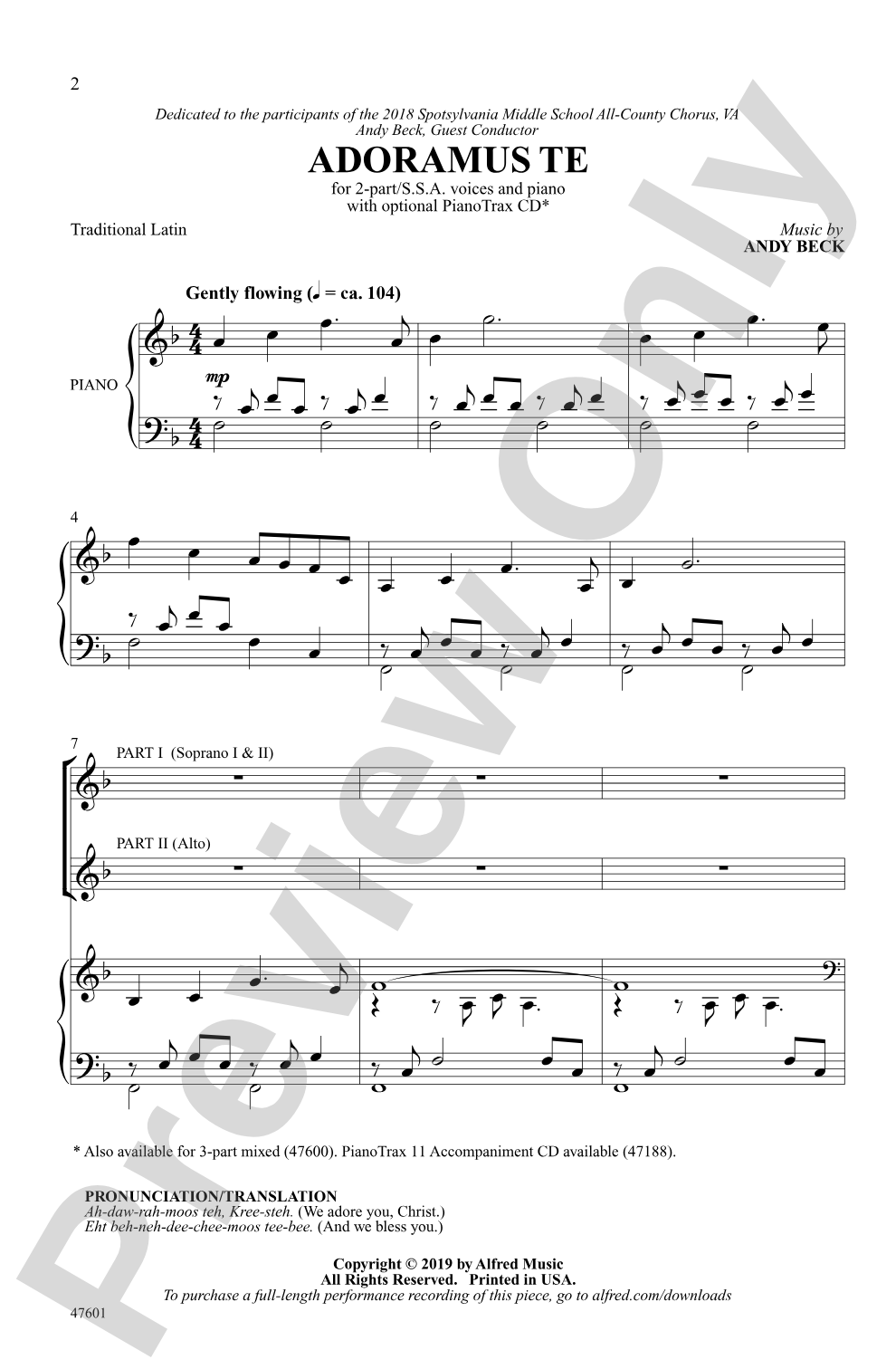
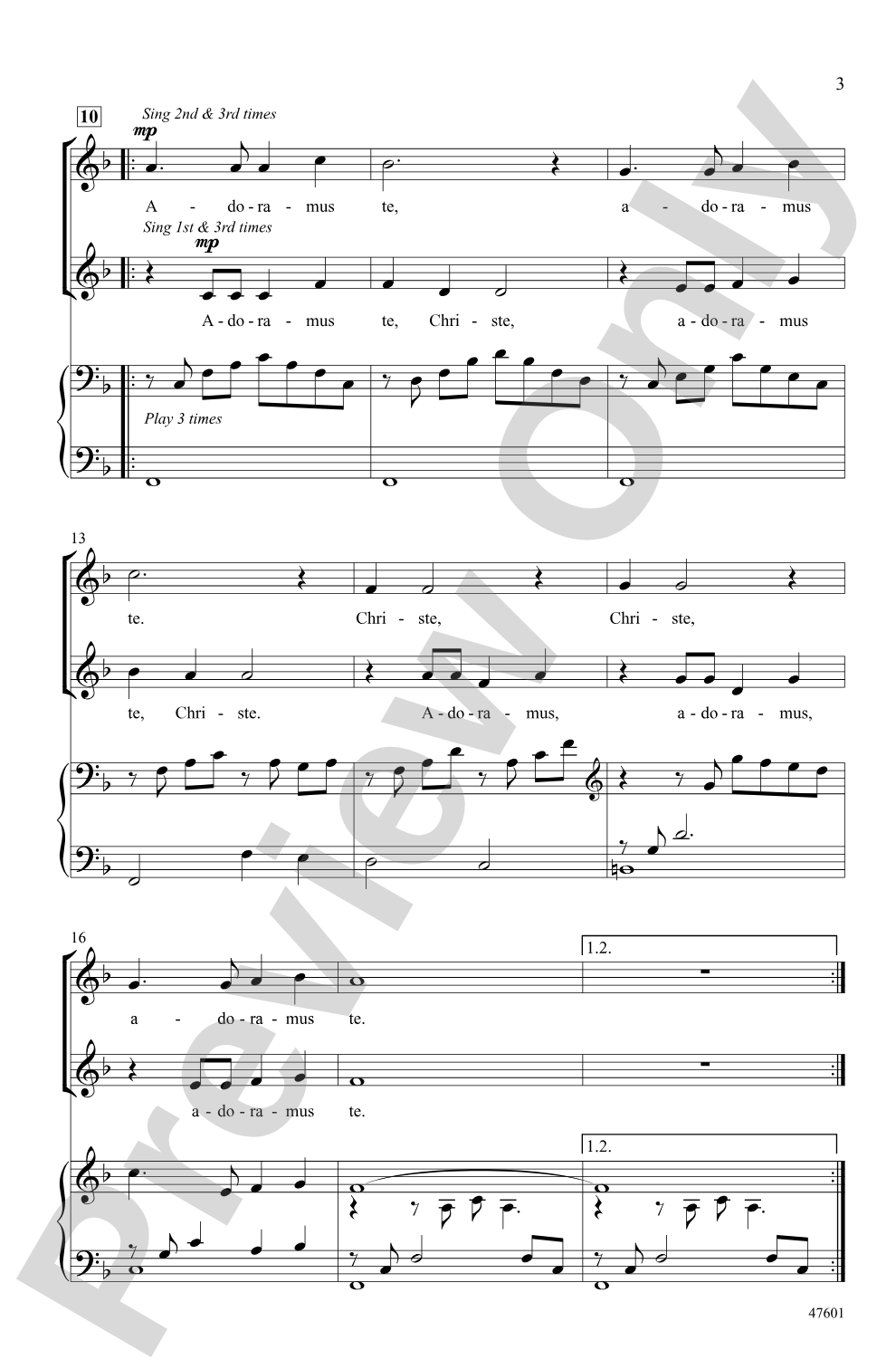
This simple yet elegant setting is sung on just two short Latin phrases. A partner song approach gives each voice part independence, while a brief B section includes some homophonic choral harmonies. Halfway through the piece, a delicate descant-like third part is introduced and floats gently above when the lyrical theme and counter theme return. Excellent concert or contest repertoire for developing groups.


Adoramus Te: 2-Part / SSA Choral Octavo isn't in MakeMusic Cloud just yet...but it could be. Let us know you'd like to see it, and you'll help shape what comes next. In the meantime, start a free trial and dive into thousands of interactive titles your students can play along with today.
Request This Title
Tell us you want it.
Start Your Free Trial
Explore everything that's ready to play right now.
Sample Audio
1
Audio File
--:--
0:00
0:00
Sample Video
Additional Details
Series:
Alfred Choral Designs
Publisher:
Alfred Music
Page Count:
8
SKU:
00-PO-0005955
More about this title
About the Composer: Andy Beck

Andy Beck leads Alfred Music's choral publications division and has established himself as one of today's most performed choral composers, with over 450 works for choir, vocalists, and young performers in active use. His pedagogical expertise shows across multiple dimensions: he authored influential choral sight-singing resources (Sing at First Sight, Foundations in Choral Sight Singing) and the technique-focused collection Vocalize! 45 Vocal Warm-Ups That Teach Technique. Beck holds a Bachelor's degree in Music Education from Ithaca College and a Master's degree in Music Education from Northwest Missouri State University.
Beyond his publishing work, Beck maintains an active presence in music education as a guest conductor, adjudicator, and clinician at state honors choirs and festivals throughout the United States. He sings as a tenor with the North Carolina Master Chorale Chamber Choir and has appeared as a studio vocalist for Alfred Music since 1992. His background in musical theatre direction and his work as a commissioned conductor for all-state choirs reflect a deep commitment to both choral artistry and music literacy instruction.
Why we love this
Beck's partner song design gives singers genuine musical independence while keeping the piece accessible for developing groups. The subtle addition of a floating descant in the second half rewards careful listening and adds textural interest without overwhelming young voices, making this a sophisticated choice that still feels achievable.
What to expect
Quiet reverence unfolds through two simple Latin phrases, each with its own melodic character that weaves rather than competes. When the delicate descant enters, the soundscape opens upward, floating gracefully above the familiar themes and creating an intimate moment of choral vulnerability.
Who it's for
Intermediate choral groups ready to explore part independence and layered textures will find this piece ideally suited to their stage. Singers with a year or two of ensemble experience can manage the two-part structure, while the optional SSA voicing accommodates groups with mixed or treble voice ranges.
How to get the most out of it
- Introduce the two melodic lines separately before combining. Have one section sing the lyrical theme while the other holds a single note or listens, then reverse. This clarity prevents the voices from converging into unison.
- Balance the counter theme carefully when both lines enter together. The accompaniment (if used) should support but not double the inner voice, preserving the independence of each part.
- When the descant enters at the midpoint, rehearse it as a solo line first. Even one voice per part singing the descent will help singers hear its gentle, floating character before you blend it with the full choir.
- Honor the Latin text with clarity and correct pronunciation. Take time on "Adoramus Te" to ensure clean vowels and a unified vowel sound across the choir, especially in the homophonic B section.
How to use it
Program this as a centerpiece for a sacred or liturgical concert section, where its brevity and elemental beauty create a moment of reflection. It also stands alone as a strong festival or adjudicated contest piece, giving developing choirs a chance to showcase their ability to balance multiple lines and maintain textural clarity.
Skills your students will build
- Singing independent melodic lines while maintaining ensemble cohesion
- Reading and performing partner songs (two simultaneous melodies)
- Latin diction and vowel unification in choral setting
- Listening to and balancing a descant line above supporting harmonies
- Recognizing and performing homophonic texture in contrast to polyphonic sections