
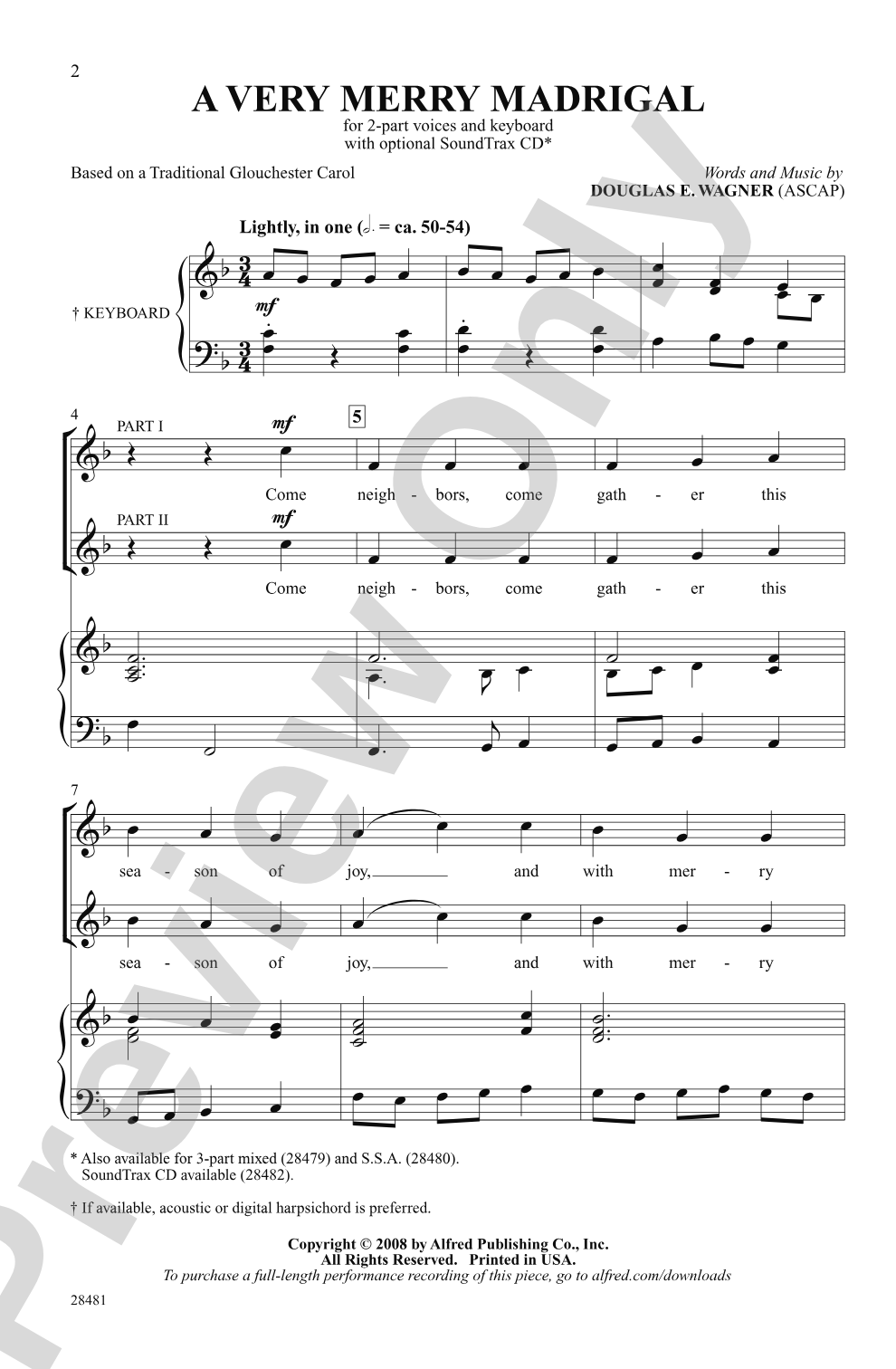
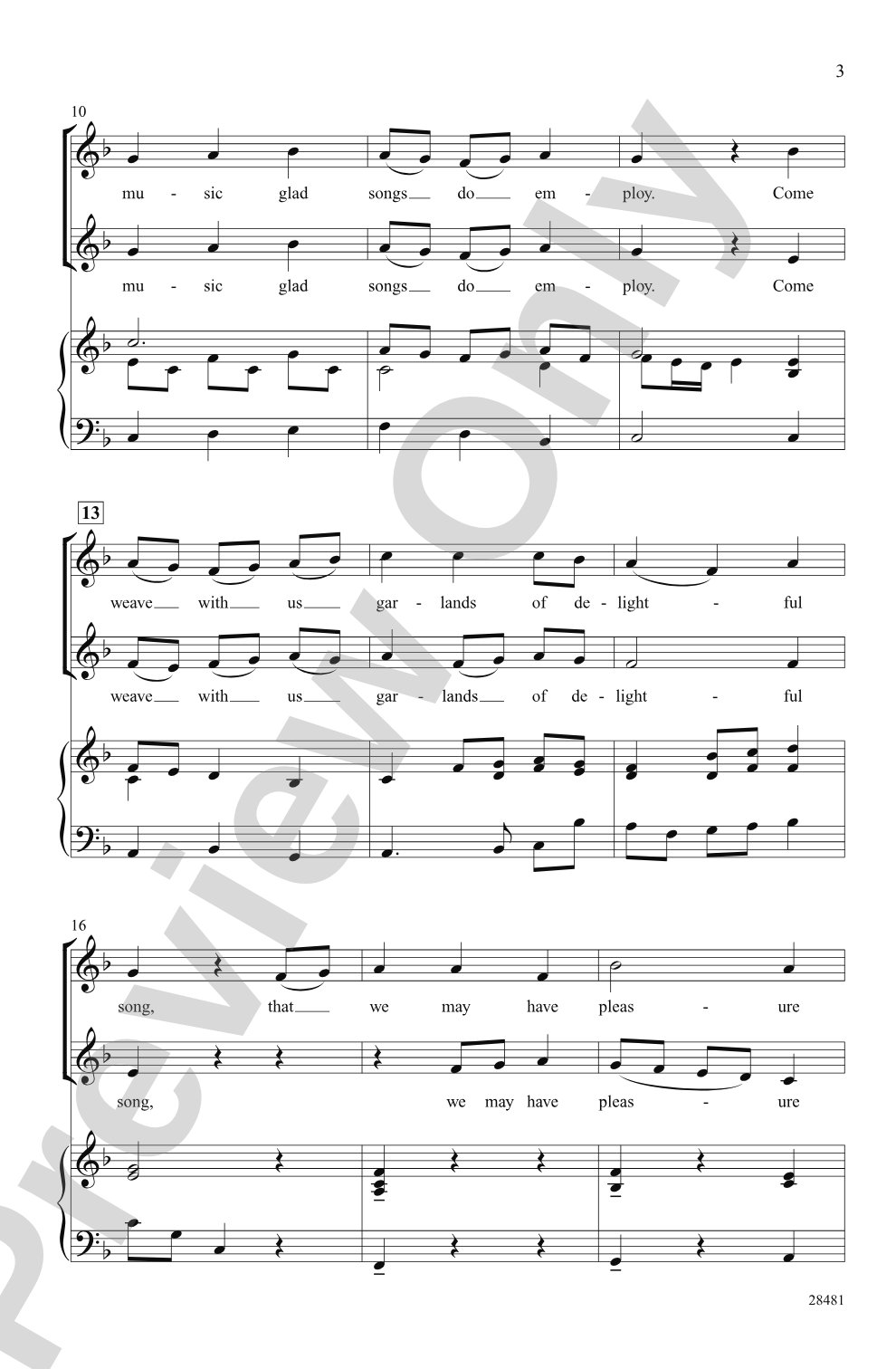

A Very Merry Madrigal: 2-Part Choral Octavo
Based on a Traditional Glouchester Carol, words and music by Douglas E. Wagner
Item: 00-PO-0000454
$1.75
Minimum order quantity: 20 copies
Pickup currently not available
Related Items
A Very Merry Madrigal: SoundTrax Digital Audio Download |
$24.95
|
View | |
A Very Merry Madrigal: 3-Part Mixed Choral Octavo |
$1.75
|
View | |
A Very Merry Madrigal: SSA Choral Octavo |
$1.75
|
View | |
A Very Merry Madrigal: 3-Part Mixed Choral Octavo |
$1.75
|
View | |
A Very Merry Madrigal: 2-Part Choral Octavo |
$1.75
|
View | |
A Very Merry Madrigal: Choral Octavo SoundTrax CD |
$24.95
|
View |
Description
Greet seasonal concertgoers with this festive original sung in the madrigal style. Joyful (and mostly step wise) "fa la la" refrains are sung following each of two welcoming verses, arranged with slightly different choral colors the second time. A wonderful Renaissance inspired SoundTrax sets the early music tone, or consider playing the keyboard part on a harpsichord synthesizer.


A Very Merry Madrigal: 2-Part Choral Octavo isn't in MakeMusic Cloud just yet...but it could be. Let us know you'd like to see it, and you'll help shape what comes next. In the meantime, start a free trial and dive into thousands of interactive titles your students can play along with today.
Request This Title
Tell us you want it.
Start Your Free Trial
Explore everything that's ready to play right now.
Sample Audio
1
Audio File
--:--
0:00
0:00
Sample Video
No sample videos found.
Additional Details
Series:
Alfred Choral Designs
Publisher:
Alfred Music
Page Count:
12
SKU:
00-PO-0000454
More about this title
About the Composer: Douglas E. Wagner

Douglas E. Wagner grew up in Chicago and earned degrees in music from Butler University before spending three decades as a high school music director and administrator. Since 1973, he has composed and arranged over 3,500 works across virtually every ensemble type: choir, concert band, orchestra, handbell ensemble, organ, piano, and voice.
Wagner's prolific output has generated more than seventeen million copies in circulation worldwide, with performances documented across concert halls, broadcasts, and international stages. He now lives in Indianapolis and works full-time as a composer.
Why we love this
Wagner's command of the madrigal idiom shines here, delivering authentic Renaissance flavor without sacrificing accessibility for 2-part singers. The "fa la la" refrains are genuinely singable and joyful, and his choice to vary the choral colors on the second verse keeps the performance from feeling repetitive, even in a short piece. The option to use a synthesized harpsichord or the included SoundTrax creates real atmosphere without requiring specialized period instrument expertise.
What to expect
Warm, inviting, and genuinely celebratory. The "fa la la" refrains have a playful lilt that recalls Renaissance street celebrations and carol traditions, while the welcoming verses create moments of tenderness. The madrigal style feels both familiar and slightly elevated, offering concertgoers a taste of historical music-making without pretension.
Who it's for
Directors programming festive choral concerts who want material with genuine historical flavor but don't require specialized vocal maturity. The 2-part voicing works well for middle school choirs, beginning high school singers, or community choirs seeking accessible seasonal repertoire that still sounds polished.
How to get the most out of it
- Shape the stepwise "fa la la" refrains with gentle articulation and even vowel consistency to let the Renaissance character breathe rather than rush the text.
- Use the recorded accompaniment to establish the early music tempo and harmonic color, particularly helpful if keyboard accompaniment is limited to piano.
- Balance the two verses carefully; since the second verse features different choral colors, mark your vocal parts clearly to show which singers carry melody or harmony in each section.
- If performing with harpsichord synthesizer, adjust the rehearsal balance so singers aren't competing with the keyboard's brightness; the continuo should frame the voices, not dominate them.
How to use it
Open a winter concert with this to set a festive tone immediately, or position it alongside other seasonal repertoire to create a historical sweep from Renaissance through modern holiday music. Its brevity and clear character make it ideal for pacing longer programs and gives audiences a moment of unguarded joy.
Skills your students will build
- Singing in madrigal style with attention to text projection and period articulation
- Balancing two-part independence while maintaining harmonic blend
- Reading and performing "fa la la" refrains with rhythmic precision and ensemble unity
- Responding to varied choral colors and textural changes within a short form
- Working confidently with early music accompaniment styles and synthesized continuo