
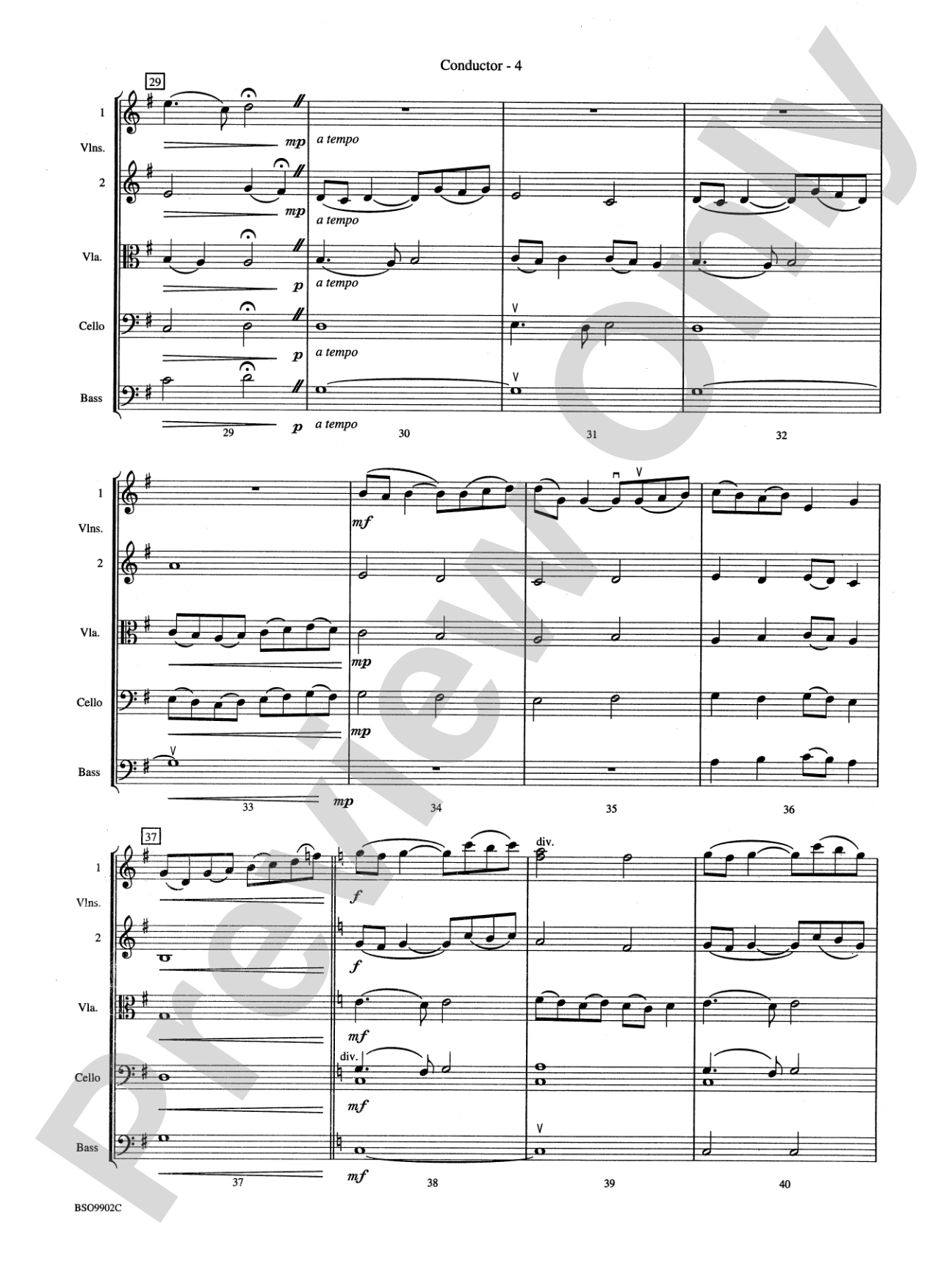
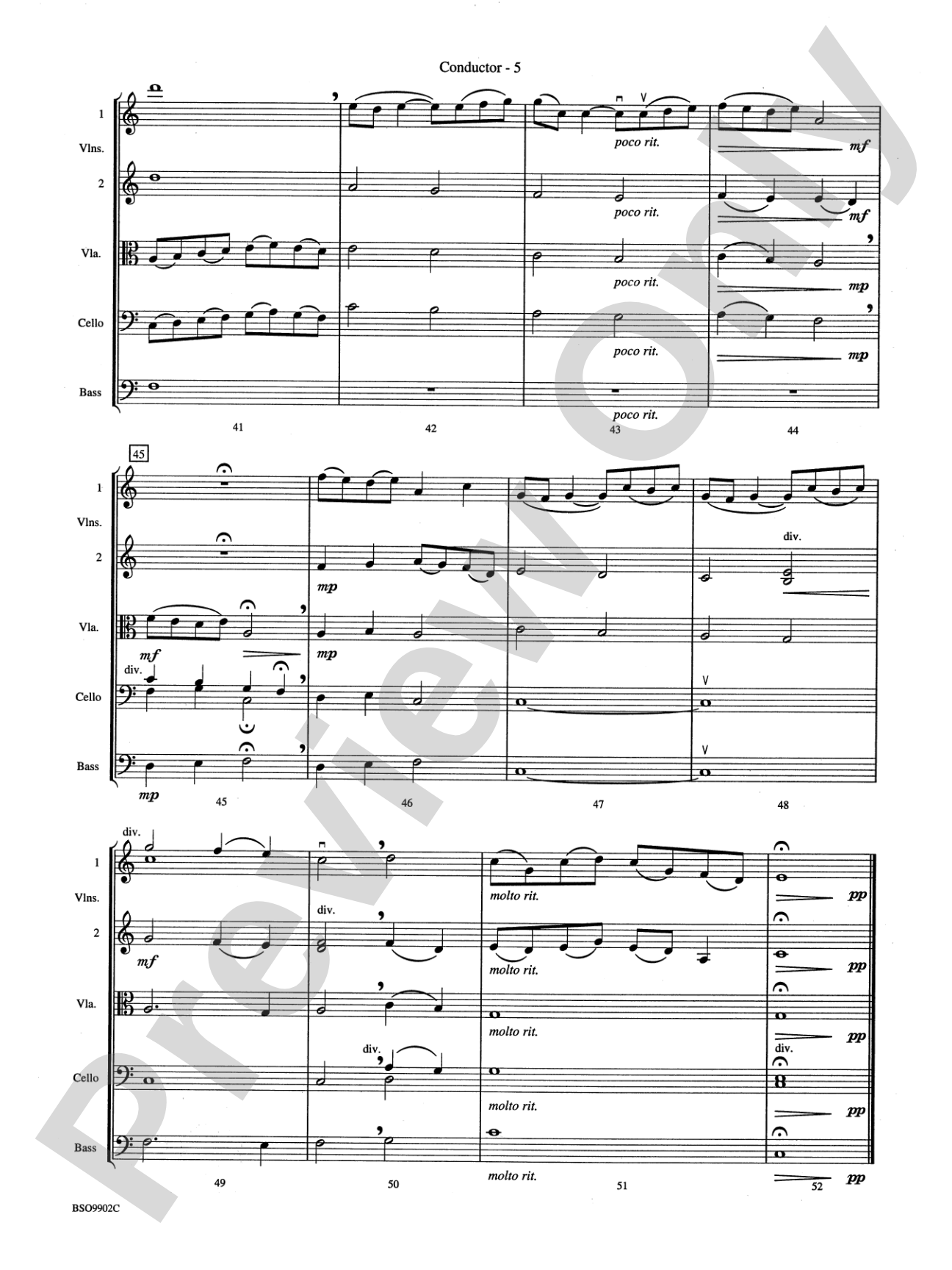



A Quiet Music: String Orchestra Conductor Score & Parts
By Douglas E. Wagner
Grade: 2.5
Item: 00-PK-0002289

$48.00
Pickup currently not available
Buy Extra Parts (Digital PDF Download)
| Product | Price | Quantity |
|---|---|---|
| A Quiet Music: Score | $9.00 | |
| A Quiet Music: 1st Violin | $5.99 | |
| A Quiet Music: 2nd Violin | $5.99 | |
| A Quiet Music: 3rd Violin (Viola [TC]) | $5.99 | |
| A Quiet Music: Viola | $5.99 | |
| A Quiet Music: Cello | $5.99 | |
| A Quiet Music: String Bass | $5.99 |
Parts Added to Cart!
Related Items
A Quiet Music: Concert Band Conductor Score & Parts |
$67.00
|
View | |
A Quiet Music: Concert Band Conductor Score & Parts |
$67.00
|
View | |
A Quiet Music: Concert Band Conductor Score |
$10.00
|
View | |
A Quiet Music: String Orchestra Conductor Score & Parts |
$48.00
|
View | |
A Quiet Music: String Orchestra Conductor Score |
$9.00
|
View |
Description
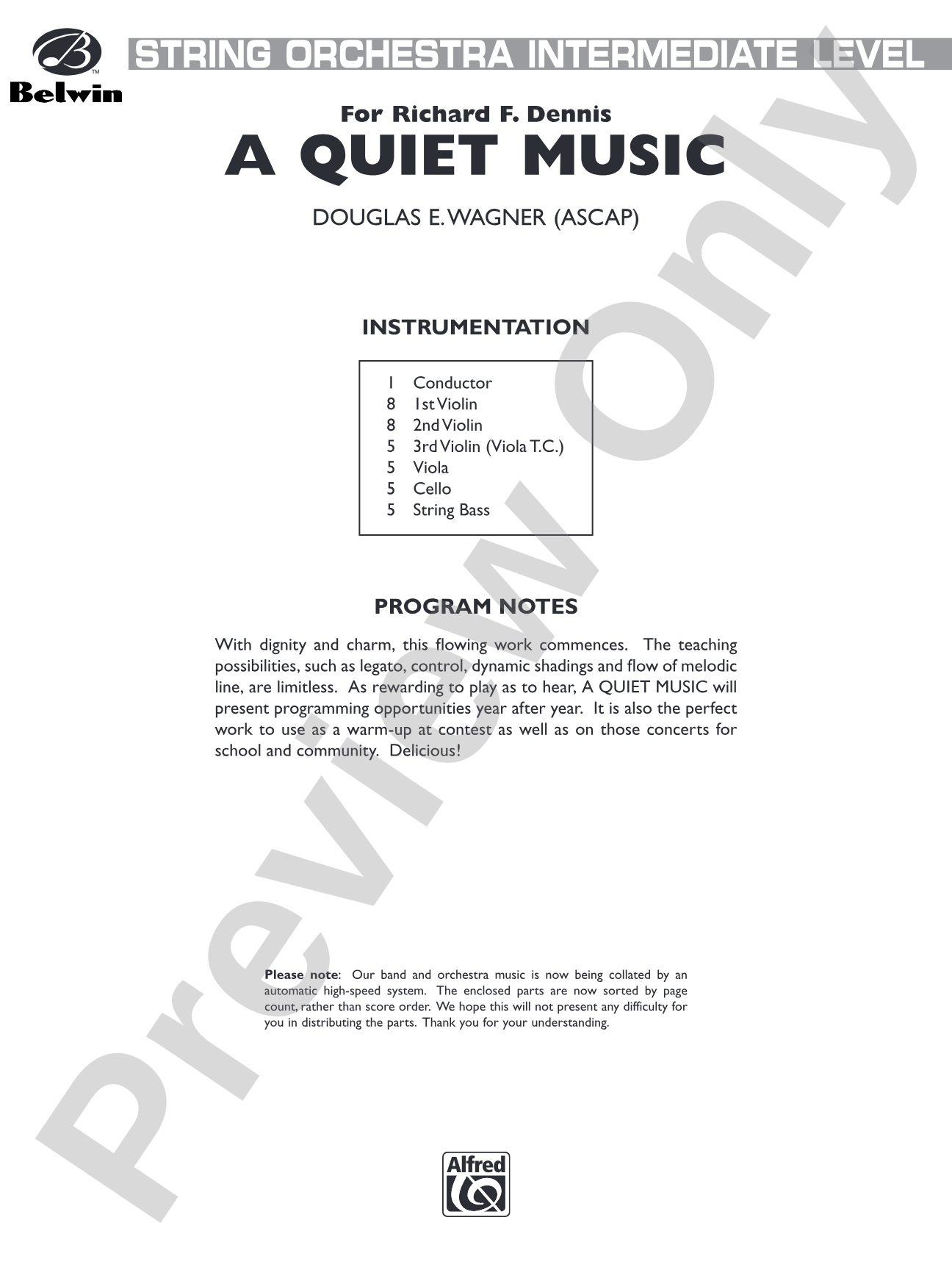
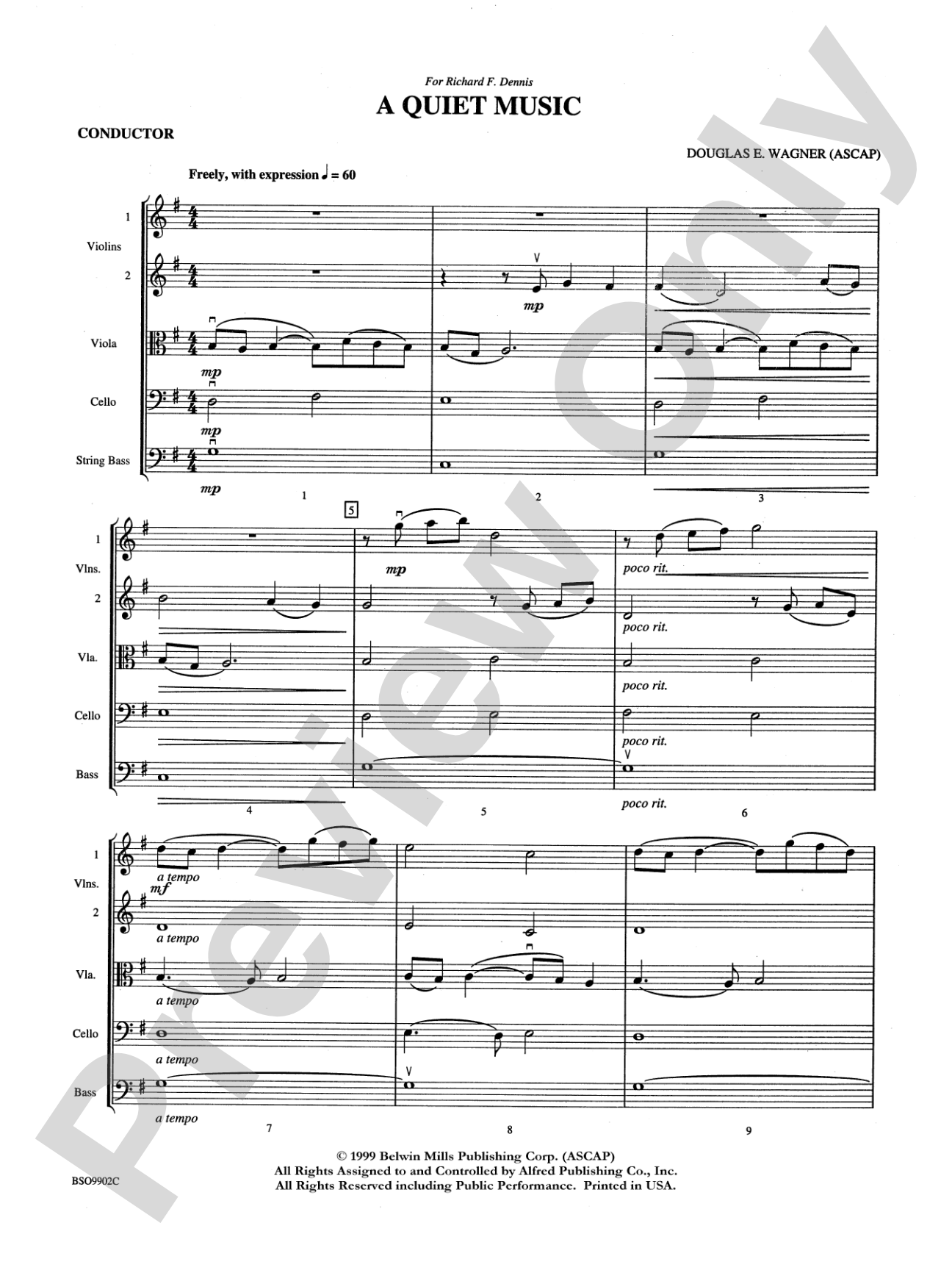
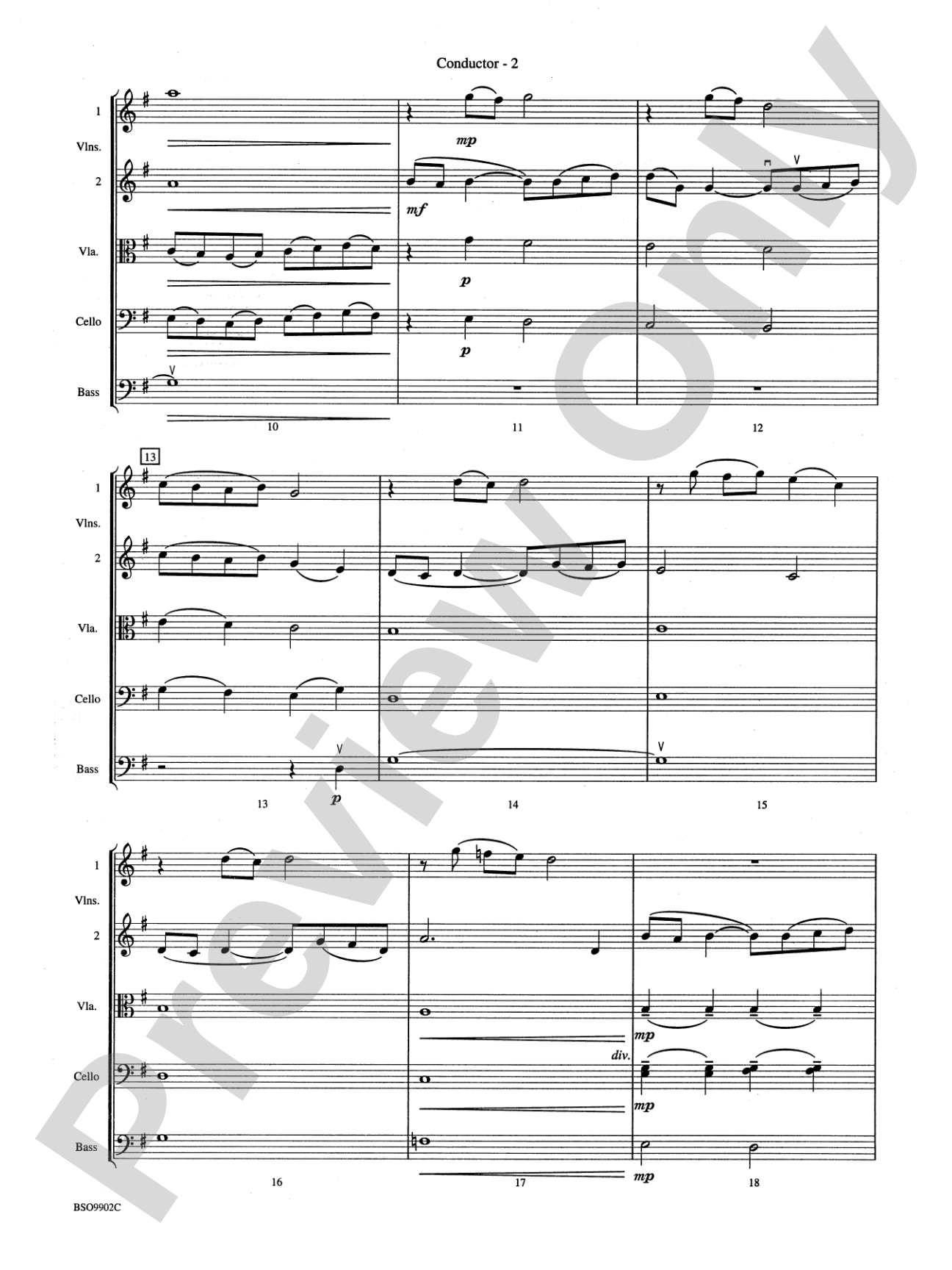
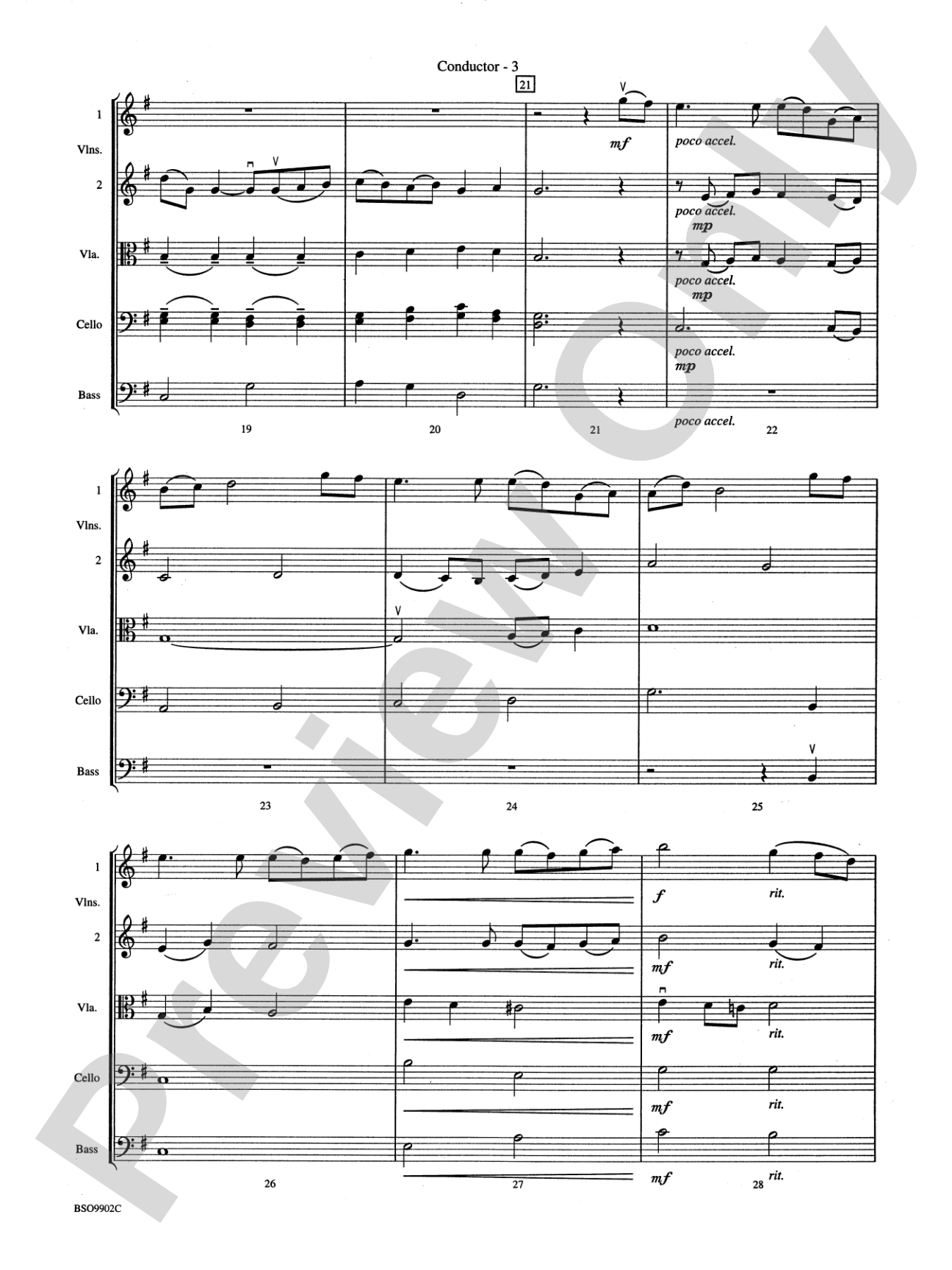
With dignity and charm, this flowing work commences. The teaching possibilities, such as legato, control, dynamic shadings, and flow of melodic line, are limitless. As rewarding to play as to hear, A Quiet Music will present programming opportunities year after year. Here is also the perfect work to use as a warm-up at contest as well as on those concerts for school and community. Delicious! (3:45) This title is available in MakeMusic Cloud.


Don't just read it, hear it, play along with it, and watch your students grow with it. In MakeMusic Cloud, A Quiet Music: String Orchestra Conductor Score & Parts comes alive with professional accompaniment, adjustable tempo, and built-in practice tools that turn solo practice into real progress.
Open in the Player
Jump straight in and assign it today.
Start Your Free Trial
Open this title and explore the full library in minutes.
Sample Audio
1
Audio File
--:--
0:00
0:00
Sample Video
No sample videos found.
Additional Details
Series:
Belwin Intermediate String Orchestra
Publisher:
Alfred Music
Page Count:
80
SKU:
00-PK-0002289
More about this title
About the Composer: Douglas E. Wagner

Douglas E. Wagner began his career as a high school music educator and administrator, spending three decades in the classroom before committing fully to composition. A Butler University graduate with degrees in both undergraduate and graduate music study, Wagner brought deep pedagogical insight into his compositional work.
Since 1973, Wagner has published more than 3,500 titles spanning choral music, concert band, orchestra, handbells, organ, piano, and vocal works. His output has reached well over seventeen million copies worldwide, with performances documented across American concert halls, television, and radio, as well as international venues. He currently resides in Indianapolis with his wife, Sandy.
Why we love this
Wagner's hand is unmistakable here: a piece that sounds effortless to the listener but demands real musical thinking from the players. The orchestration sits comfortably on intermediate instruments while the melodic writing rewards careful phrasing and attention to dynamic shape, making it equally valuable in the rehearsal room and on stage.
What to expect
The opening radiates quiet confidence, unfolding with a dignity that never sacrifices warmth or accessibility. Throughout its 3:45 duration, the piece maintains a reflective character while its flowing melodic lines invite singers (or in this case, string players) to discover the joy of sustained legato playing.
Who it's for
String orchestras at the 2.5 grade level gain significant musicianship from this work. It serves equally well for concert programs and festival appearances, offering substantive pedagogical content without overwhelming less experienced ensembles.
How to get the most out of it
- Shape the opening statement by thinking of it as a single, unbroken phrase rather than measure-by-measure blocks. Let the legato singing quality emerge naturally from sustained tone production.
- Balance solo lines against the accompaniment texture; Wagner layers melodic material so that supporting voices must remain transparent without disappearing entirely.
- Build dynamics gradually across longer spans rather than jumping between terraced levels. The piece breathes best when crescendos and diminuendos feel organic to the harmonic progression.
How to use it
Consider opening a concert or festival performance with this work to establish an elegant tone and settle your ensemble into focused listening. Its moderate length and graceful demeanor also make it an ideal warm-up selection before competition rounds, allowing players to settle nerves while building confidence in ensemble balance.
Skills your students will build
- Sustained legato playing and bow control across phrase lengths
- Dynamic shaping and control within individual melodic lines
- Balancing solo material against accompanying textures
- Responding to subtle harmonic movement for intonation accuracy
- Interpreting flow and direction in lyrical writing