

A Piece of Pi: SATB Choral Octavo
Words and music by Pepper Choplin
Item: 00-PO-0007591
$2.30
Minimum order quantity: 20 copies
Pickup currently not available
Description
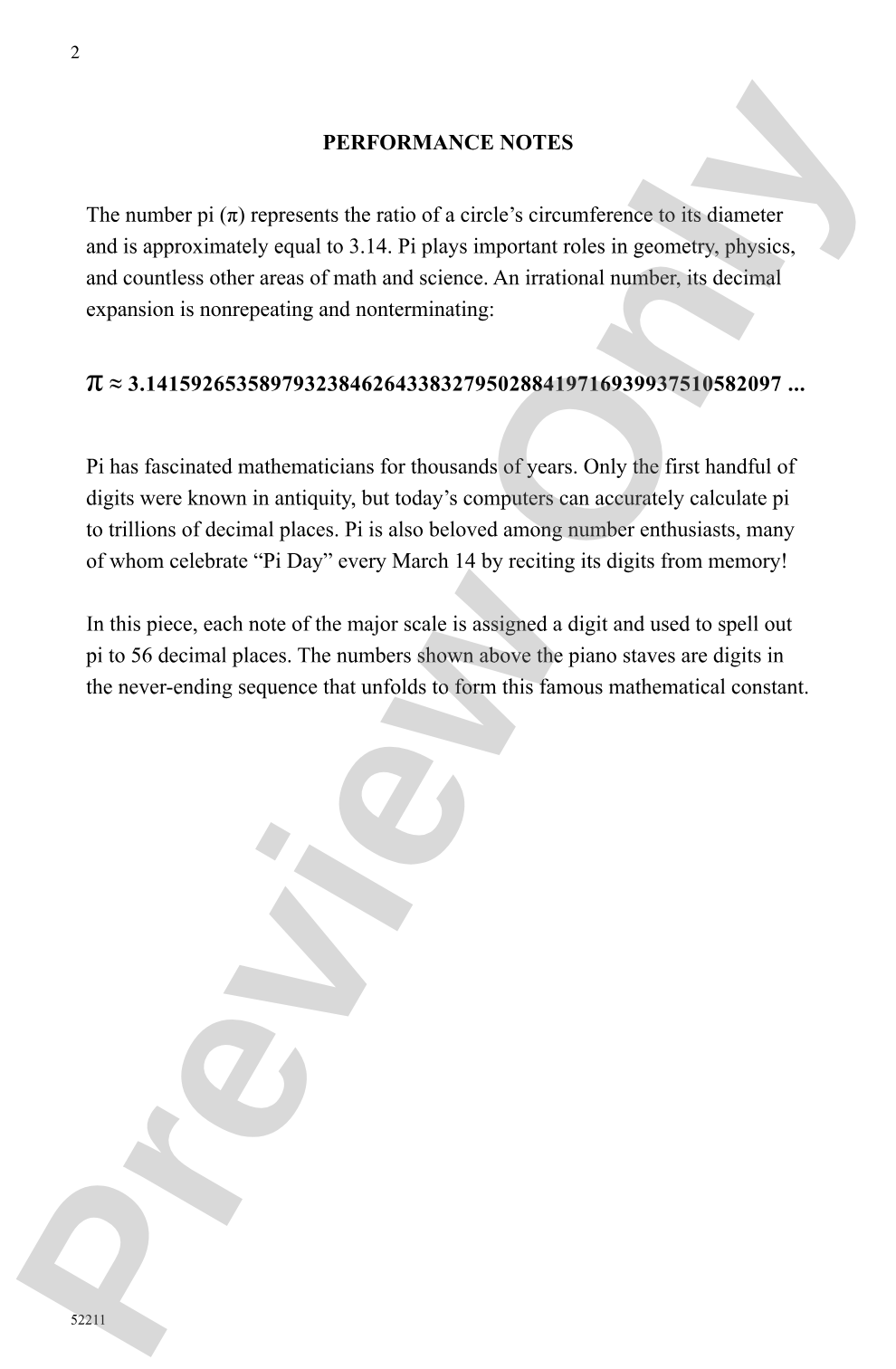
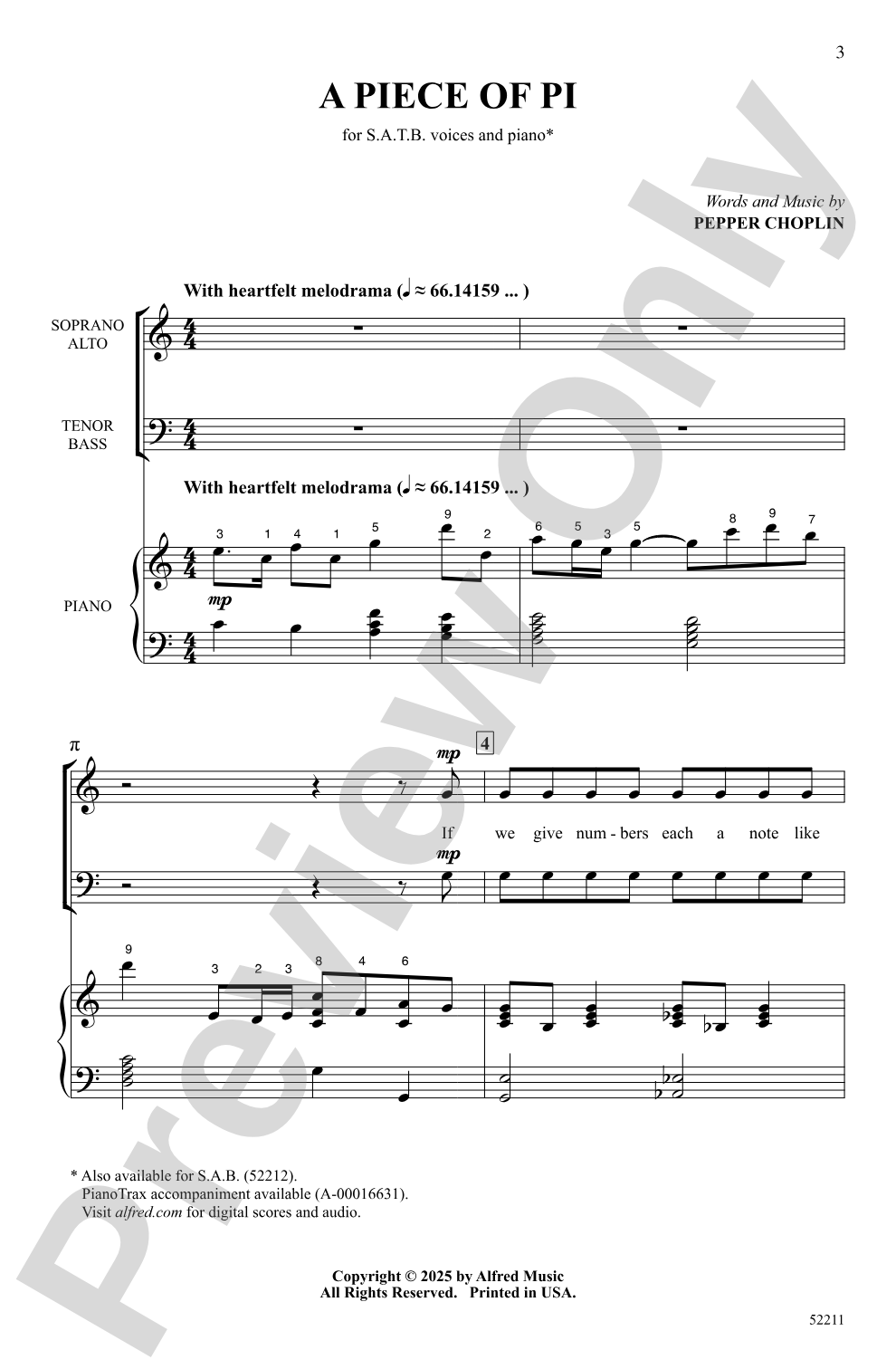
Here's an ode to the beloved mathematical constant that will delight singers and number enthusiasts alike. Each digit of the never-ending number is assigned a note of the major scale, revealing a surprisingly musical melody. In an unexpected twist, the circle-inspired pattern stacks into a remarkable round. Well worth the learning curve, this spectacular song doubles as a sight-singing exercise with the power to fortify skills!


Discover MakeMusic Cloud: thousands of interactive titles your students can play along with today.
Sample Audio
1
Audio File
--:--
0:00
0:00
Sample Video
Additional Details
Series:
Alfred Choral Designs
Publisher:
Alfred Music
Page Count:
12
SKU:
00-PO-0007591
More about this title
About the Composer: Pepper Choplin

Pepper Choplin holds degrees in music from the University of North Carolina at Greensboro (Bachelor of Music) and Southwestern Baptist Theological Seminary in Fort Worth, Texas (Master of Music in composition). His catalog includes over two hundred anthems and seven choral musicals, drawing from a performance background that spans rock, classical, bluegrass, and theme park entertainment.
As Minister of Music at Greystone Baptist Church in Raleigh, North Carolina, Choplin channels much of his creative output into designing worship experiences that move audiences through both laughter and reflection. He conducts clinics and performs nationwide as a composer, clinician, and entertainer, with several recordings to his name including "Pepper Is My Real Name" (a collection of humorous songs) and "Hold On" (solo inspirational work). His core mission remains constant: to compose music that invites authentic worship and genuine human connection.
Why we love this
Choplin has crafted something genuinely clever here: a novelty with real pedagogical weight. The concept (digits of pi mapped to scale degrees) is memorable enough that singers will engage mentally while learning, and the round structure rewards preparation with a payoff that feels earned rather than gimmicky. This lands perfectly as a concert opener or closer that entertains an audience without condescending to your singers.
What to expect
Witty and buoyant, with an undertone of intellectual delight. The melody feels organic once singers internalize the pattern, and when the round locks in, there's a satisfying sense of discovery that performers and audiences both experience. The humor lands not as parody but as celebration.
Who it's for
Choirs with intermediate to advanced readers who can handle the cognitive demand of a round while processing an unfamiliar melodic concept. This works beautifully for programs celebrating Pi Day or for any group seeking a concert piece that generates conversation and demonstrates that math and music share deep connections.
How to get the most out of it
- Map out the digit-to-note relationships in rehearsal so singers understand the "hidden code." Once they see how the melody emerges from the mathematical pattern, intonation and phrasing improve naturally.
- Because this doubles as a sight-singing exercise, move the round sections gradually: teach each voice part solo first, then layer them in pairs, then all four together. This scaffolding prevents the circle from becoming chaotic.
- Lean into the playfulness in your conducting without sacrificing precision. The novelty lands best when the ensemble performs with genuine musicality and clean entrances.
How to use it
Open a concert with this to set a warm, engaged tone and signal that your program will surprise listeners. Alternatively, program it after something substantial to reset the energy and remind an audience that choral music can be joyful and clever simultaneously. Schools observing Pi Day in March have an obvious fit, but any concert benefits from this kind of opener.
Skills your students will build
- Sight-reading in SATB voicing with non-traditional melodic contours
- Singing rounds and layered voice parts with clean entrances and independent lines
- Understanding how mathematical sequences can generate musical meaning
- Maintaining intonation and phrasing while processing a concept-driven melody