
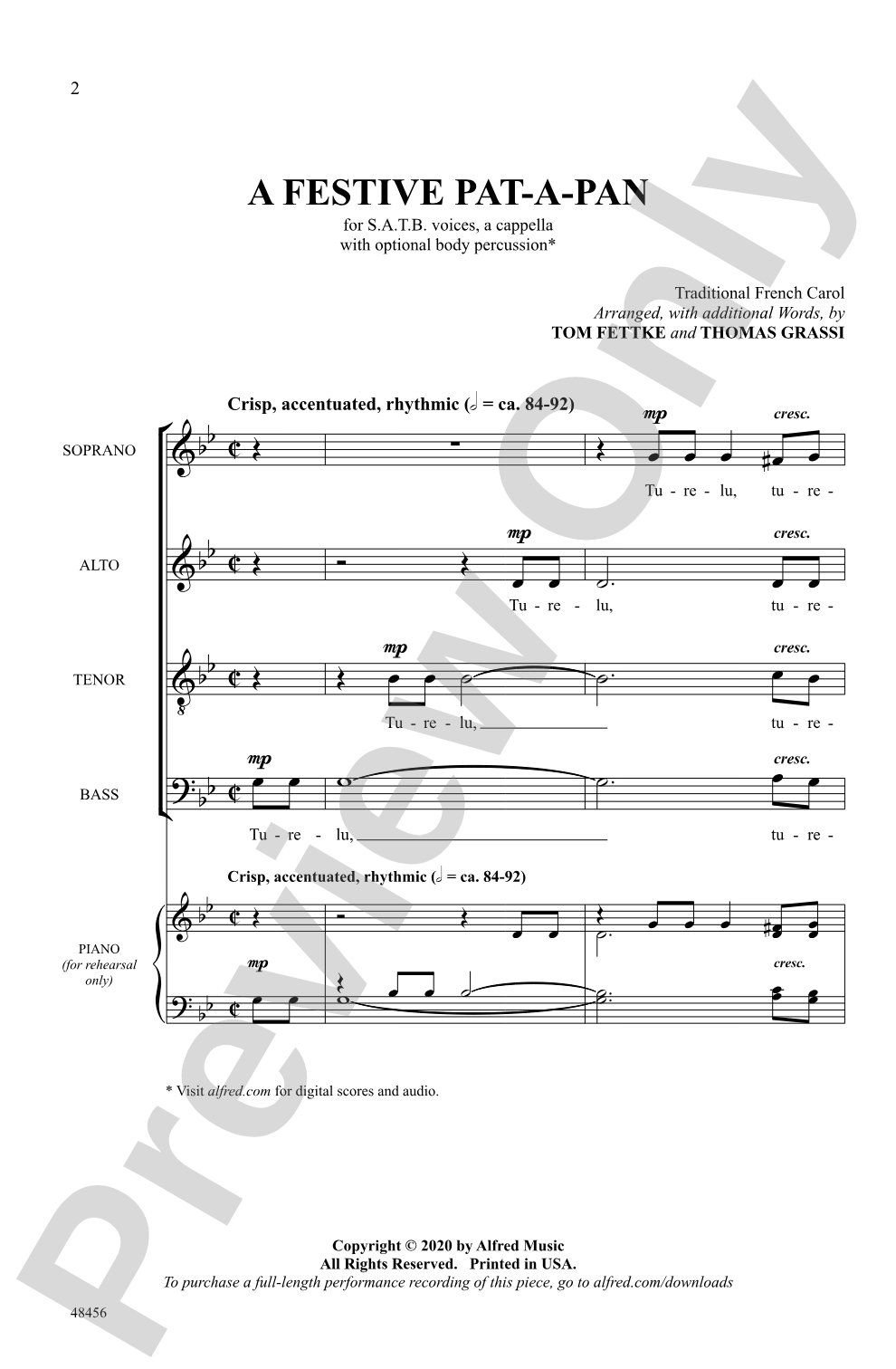

A Festive Pat-A-Pan: SATB a cappella Choral Octavo
Traditional French Carol / arr., with additional words, by Tom Fettke and Thomas Grassi
Item: 00-PO-0006432
$2.20
Minimum order quantity: 20 copies
Pickup currently not available
Related Items
A Festive Pat-A-Pan: SATB a cappella Choral Octavo |
$2.20
|
View |
Description
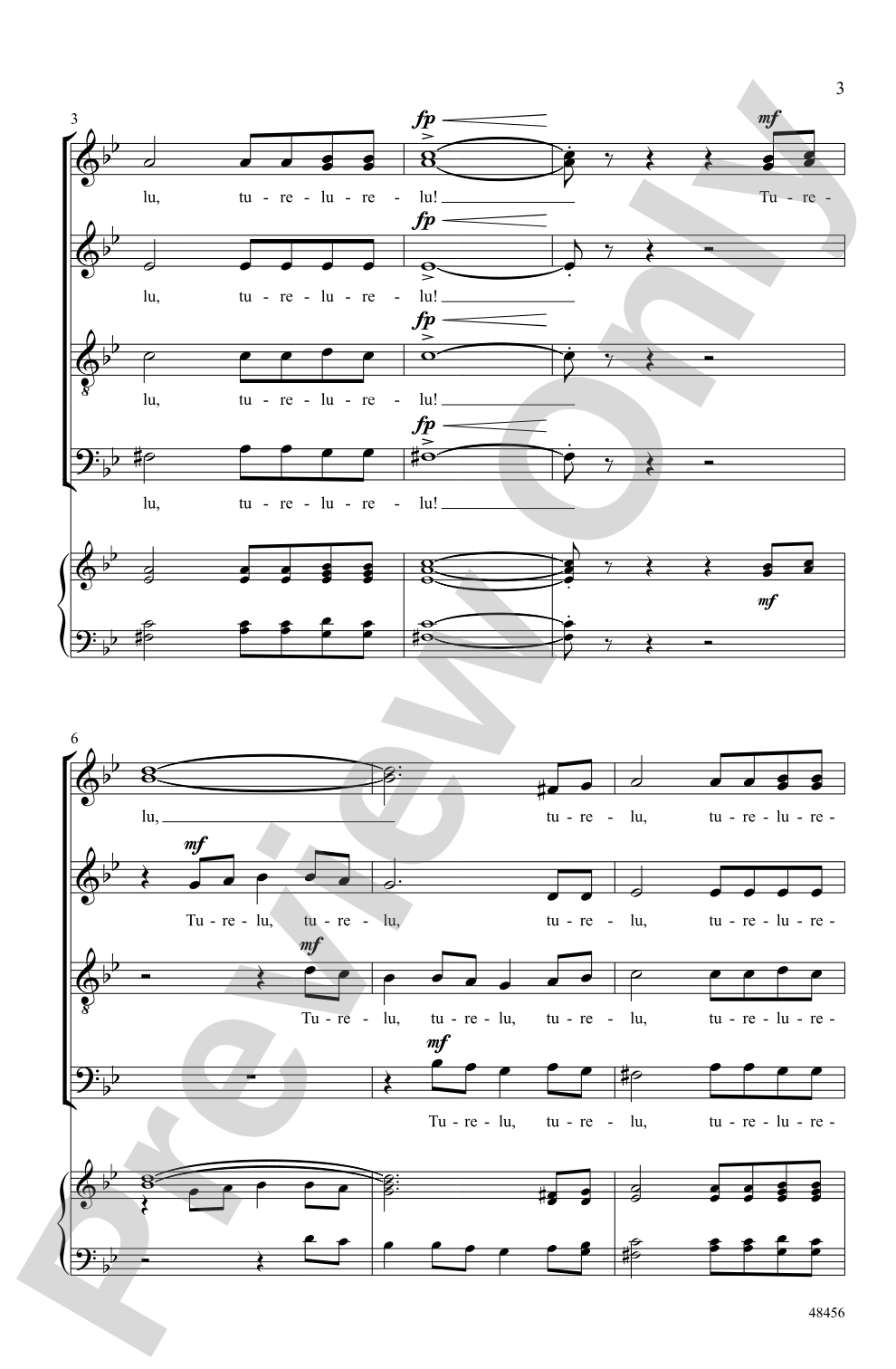
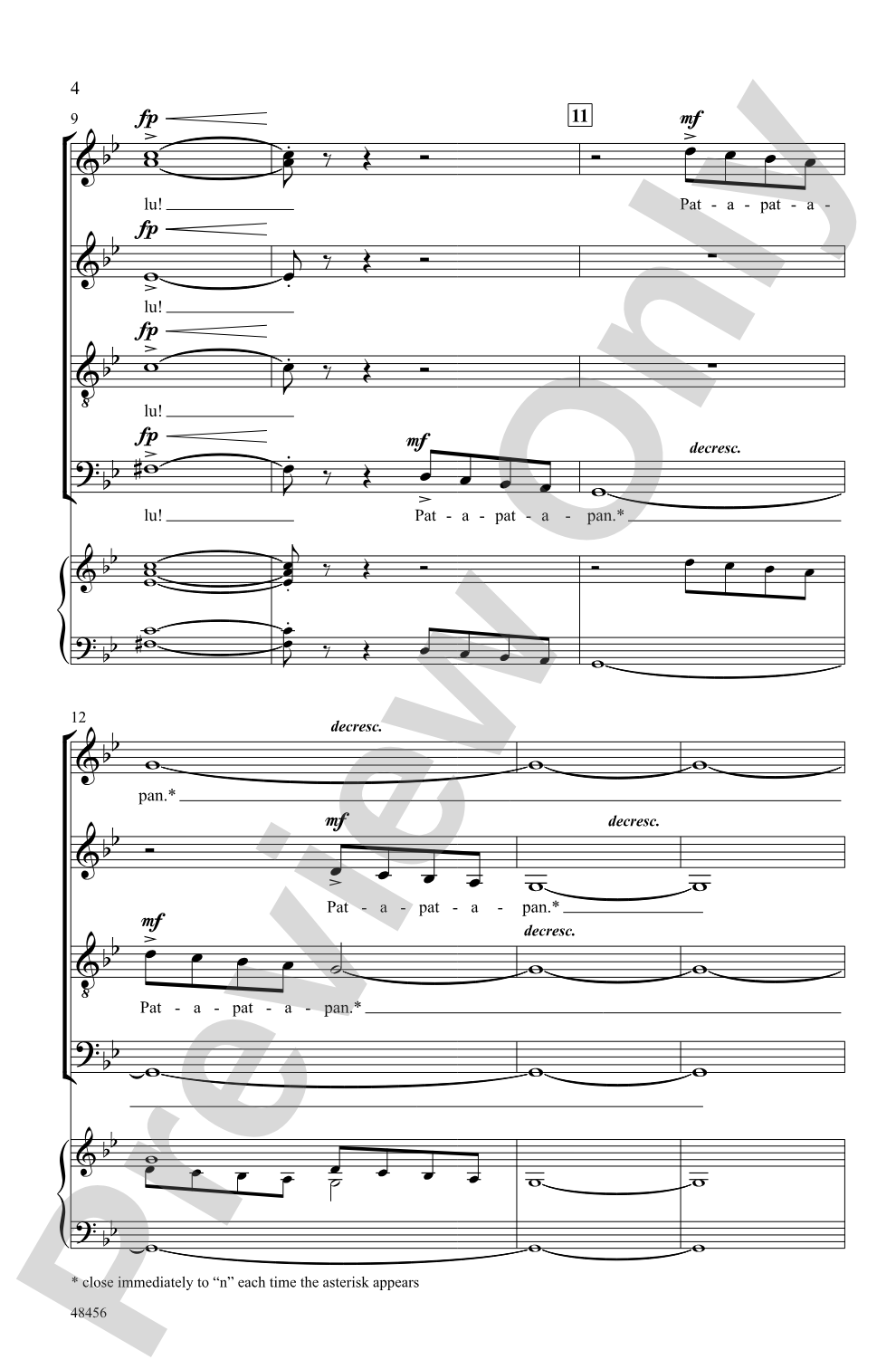
A Christmas time stunner that truly stands out! This a cappella arrangement is brilliantly crafted with a constantly evolving undercurrent of motives that imitate the sounds of flutes and drums ("tu-re-lu, pat-a-pan, fa la la"). The addition of body percussion gives a remarkably anthemic feel for today's choirs.


A Festive Pat-A-Pan: SATB a cappella Choral Octavo isn't in MakeMusic Cloud just yet...but it could be. Let us know you'd like to see it, and you'll help shape what comes next. In the meantime, start a free trial and dive into thousands of interactive titles your students can play along with today.
Request This Title
Tell us you want it.
Start Your Free Trial
Explore everything that's ready to play right now.
Sample Audio
1
Audio File
--:--
0:00
0:00
Sample Video
1 / 2
Additional Details
Series:
Alfred Choral Designs
Publisher:
Alfred Music
Page Count:
16
SKU:
00-PO-0006432
More about this title
About the Arranger: Tom Fettke
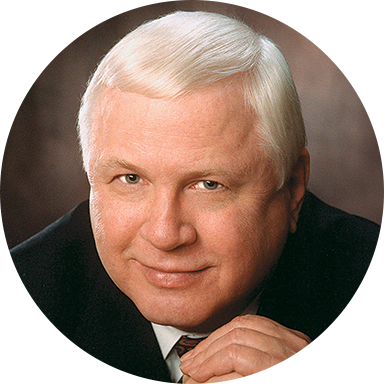
Tom Fettke has spent more than five decades creating choral music for worship and educational settings. A composer, arranger, and producer with hundreds of published works to his name, he shaped congregational singing through his editorial leadership on two landmark hymnals: The Hymnal for Worship and Celebration (1986) and The Celebration Hymnal, both of which have influenced church music programming across North America.
Fettke's background spans public school vocal music instruction in California, church music direction at multiple congregations, and administrative roles overseeing choral activities in Christian school systems. His compositions, most notably The Majesty and Glory of Your Name, continue to be performed regularly by school and church choirs worldwide. He holds degrees from Oakland City College and California State University at Hayward, as well as a California Lifetime Music Credential in Secondary Music.
Why we love this
Fettke and Grassi have transformed a beloved carol into something genuinely fresh without abandoning what makes it work. The interlocking vocal motives create rhythmic momentum that feels propulsive rather than static, while the optional body percussion turns a concert moment into something kinetic and participatory. Few arrangements at this level manage to sound both sophisticated and utterly joyful.
What to expect
The piece has the kinetic energy of a toy soldier march translated into vocal music. Rhythmic motives dance across the texture like the flutes and drums referenced in the text, creating momentum that pulls listeners forward. There's an infectious, almost orchestral quality to the a cappella writing that belies its simplicity.
Who it's for
Choirs with solid four-part blend and rhythmic independence will thrive with this arrangement. It works equally well for high school choirs, college ensembles, church choirs, and community singers who want to program something familiar yet inventive.
How to get the most out of it
- Keep the imitative figures (tu-re-lu, pat-a-pan) rhythmically tight across all four voices; this is what makes the texture dance rather than muddy.
- If your ensemble includes body percussion, rehearse it separately first, then layer it in gradually so singers maintain their vocal focus.
- The fa la la sections work best when voices stay energized and forward; resist the urge to slow down or become precious.
- Balance the constantly shifting inner-voice lines carefully during rehearsal to ensure the harmonic movement remains clear.
How to use it
This works beautifully as a centerpiece in a Christmas concert, especially paired with slower, more reflective holiday music that lets you showcase range. It also makes an excellent encore or closing piece for a holiday program because its celebratory energy leaves audiences smiling. The relatively brief page count means it won't require excessive rehearsal time despite its detailed writing.
Skills your students will build
- Singing rhythmic motives that repeat and overlap across voice parts
- Maintaining rhythmic independence while other voices carry different patterns
- Balancing four-part writing with constantly shifting inner voices
- Coordinating body percussion with vocal entrances and rests
- Singing a cappella with locked intonation in a faster-paced arrangement