
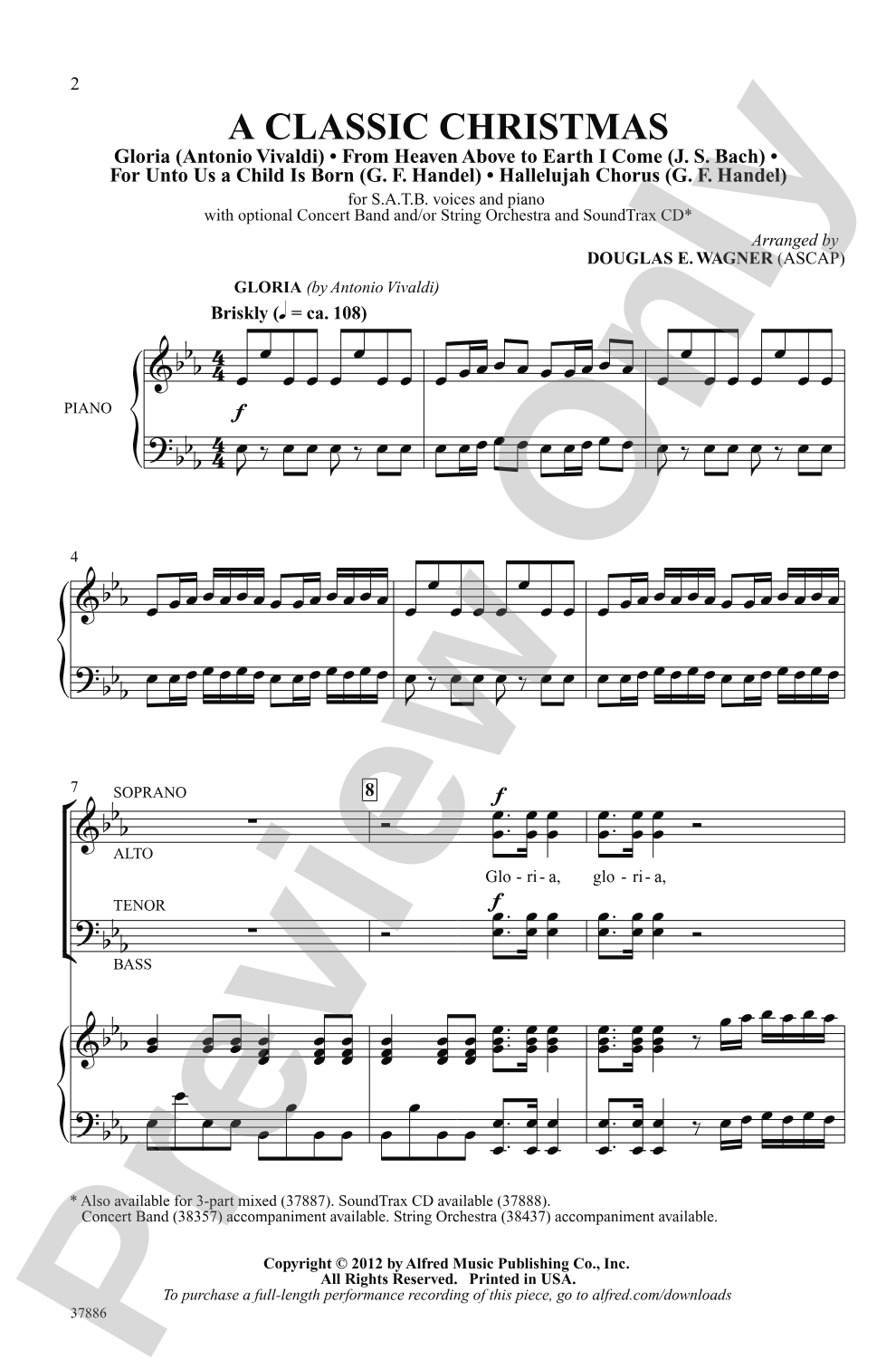
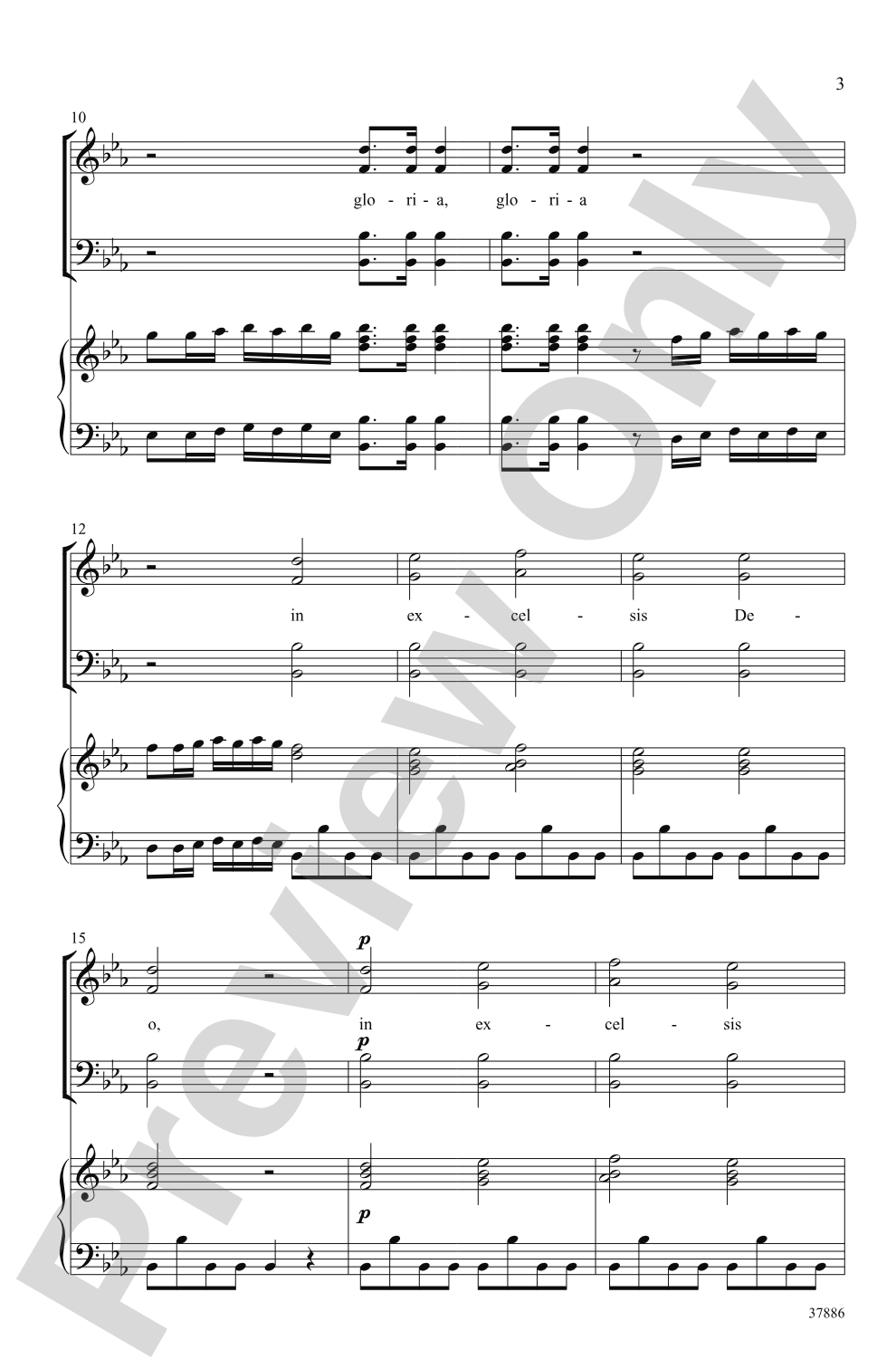
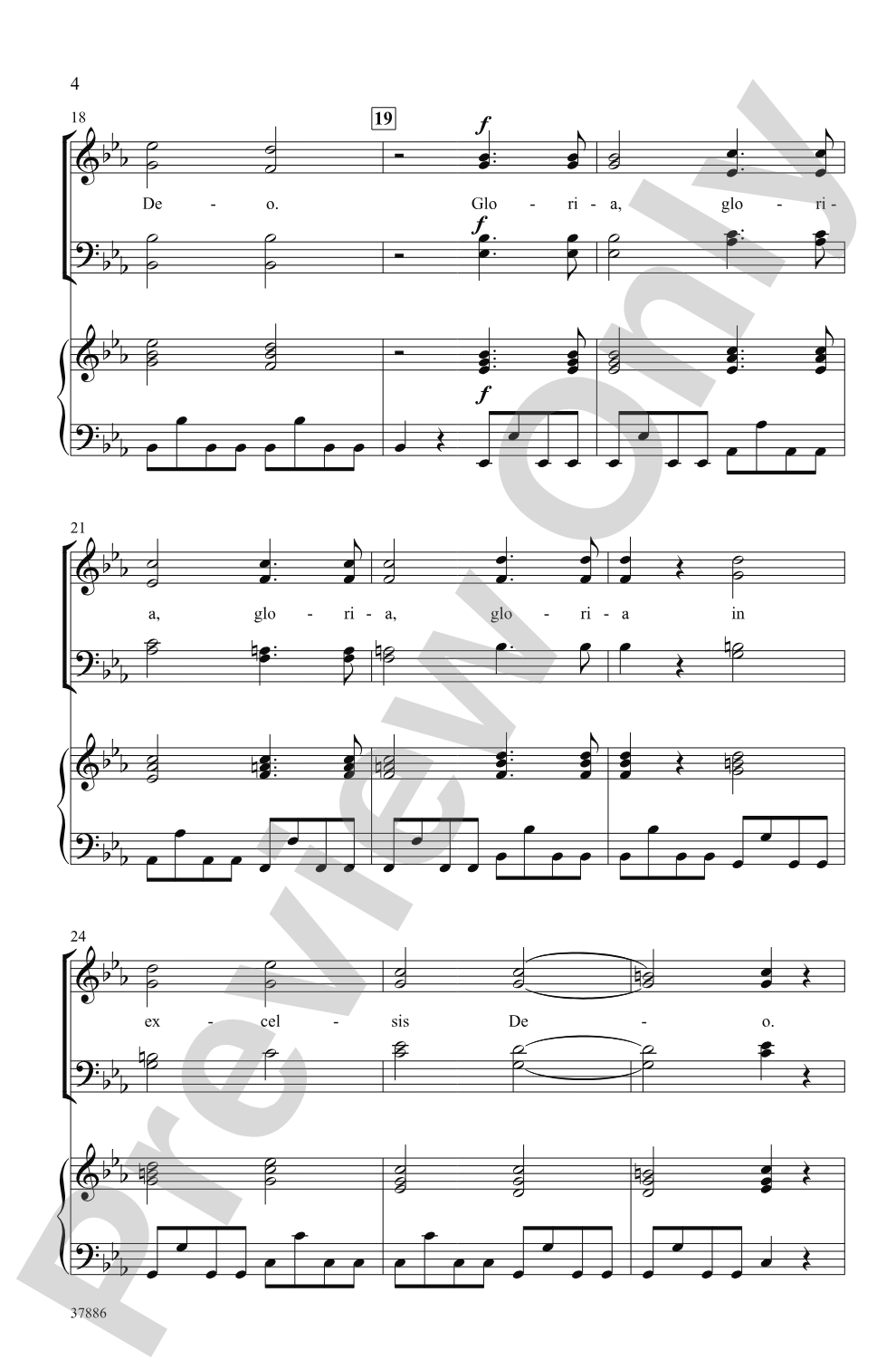

A Classic Christmas: SATB Choral Octavo
Featuring: Gloria (Vivaldi) / From Heaven Above to Earth I Come (Bach) / For Unto Us a Child Is Born (Handel) / Hallelujah Chorus (Handel)
Arr. Douglas E. Wagner
Item: 00-PO-0001249
$2.20
Minimum order quantity: 20 copies
Pickup currently not available
Related Items
A Classic Christmas: SoundTrax Digital Audio Download |
$27.99
|
View | |
A Classic Christmas: Concert Band Conductor Score & Parts |
$72.00
|
View | |
A Classic Christmas: String Orchestra Conductor Score & Parts |
$56.00
|
View | |
A Classic Christmas: 3-Part Mixed Choral Octavo |
$1.95
|
View | |
A Classic Christmas: Concert Band Conductor Score & Parts |
$72.00
|
View | |
A Classic Christmas: Concert Band Conductor Score |
$10.00
|
View | |
A Classic Christmas: String Orchestra Conductor Score & Parts |
$56.00
|
View | |
A Classic Christmas: String Orchestra Conductor Score |
$7.00
|
View | |
A Classic Christmas: SATB Choral Octavo |
$2.20
|
View | |
A Classic Christmas: 3-Part Mixed Choral Octavo |
$1.95
|
View | |
A Classic Christmas: Choral Octavo SoundTrax CD |
$27.99
|
View |
Description
A holiday medley containing three cherished Baroque masterworks woven together in a festive musical celebration of the season. Showcase your entire music department on Vivaldi, Bach, and Handel by combining with the band, orchestra, or both!


A Classic Christmas: SATB Choral Octavo isn't in MakeMusic Cloud just yet...but it could be. Let us know you'd like to see it, and you'll help shape what comes next. In the meantime, start a free trial and dive into thousands of interactive titles your students can play along with today.
Request This Title
Tell us you want it.
Start Your Free Trial
Explore everything that's ready to play right now.
Sample Audio
1
Audio File
--:--
0:00
0:00
Sample Video
Additional Details
Series:
Alfred Choral Designs
Publisher:
Alfred Music
Page Count:
16
SKU:
00-PO-0001249
More about this title
About the Arranger: Douglas E. Wagner

Douglas E. Wagner studied music at Butler University and spent three decades as a high school music director before committing himself fully to composition and arrangement. His catalog of over 3,500 published works spans choirs, bands, orchestras, handbells, and solo instruments, with more than seventeen million copies in circulation worldwide.
Wagner's music reaches performers and audiences across concert halls, broadcast media, and schools internationally. Based in Indianapolis, he continues to craft accessible, performance-friendly arrangements that serve the needs of music programs at all levels.
Why we love this
Wagner threads three Baroque monuments into a single coherent medley without losing the distinctive voice of each composer. The arrangement gives you genuine flexibility to feature your full music department; you can scale from choir alone to a full instrumental collaboration, making it equally valuable for a December concert or a spring showcase.
What to expect
A festive procession through three centuries of genius, arranged to feel like one continuous celebration rather than a compilation. The Baroque vocabulary creates natural dignity and warmth, while Wagner's hand in the orchestration keeps the energy buoyant and the emotional arc clear.
Who it's for
Choral directors seeking a show-stopping holiday arrangement that works for mixed voices and rewards an ensemble willing to collaborate across departments. This sits comfortably for high school choirs with solid fundamentals and church music programs looking to refresh their seasonal rotation.
How to get the most out of it
- Balance the texture between voices and any instrumental forces you add. Since this medley draws from three different harmonic languages, the choir carries the narrative through diction and phrasing more than dynamic volume.
- Let the recorded accompaniment anchor the choir's sense of unity across the three movements. Use it during rehearsals to establish clear section entrances, then gradually reduce reliance as internal confidence grows.
- Shape each Baroque section with its own character before linking them together. Vivaldi calls for brighter articulation; Bach rewards sustained tone and harmonic awareness; Handel sits somewhere between.
- If combining with instruments, rehearse with them early enough to establish who leads the texture in each passage. The choir and ensemble need to agree on where the weight lives.
How to use it
Program this as a centerpiece for a joint concert with your band or orchestra, or use it to open a holiday pops concert where the choir shares the stage with other ensembles. It also works beautifully as the finale of a winter concert, giving your full music department a unified bow.
Skills your students will build
- Baroque articulation and text setting across three distinct compositional styles
- Blend and balance in SATB voicing while listening to independent instrumental lines
- Sustained phrase construction in extended harmonic passages
- Collaborative ensemble awareness when combining choir with instruments
- Score reading across parts written in different harmonic contexts